Festivals and Holidays in Bulgaria
Bulgaria's festival year runs from masked kukeri in January to fire-dancing on embers in June and free jazz in a Sofia park in July, and the Orthodox calendar sets the big family holidays. This guide goes month by month through the festivals worth planning around, the ones you can reach from Sofia, and the public holidays when offices and banks close.
Bulgarian festivals by month
Most Bulgarian festivals keep the same season every year and move their exact dates, and the religious ones follow the Orthodox calendar.
| Month | Festival or holiday | Where |
|---|---|---|
| 1 January | New Year, with kukeri in Razlog | Everywhere |
| Mid-January | Survakari for the old New Year | Villages of the Pernik region |
| Late January | Surva, the masquerade festival | Pernik, 30 km from Sofia |
| 14 February (1 February in some places) | Trifon Zarezan, the wine growers' day | Wine regions across Bulgaria |
| 1 March | Baba Marta and the martenitsa | Everywhere |
| 3 March | Liberation Day, the national holiday | Everywhere |
| March | Sofia International Film Festival | Sofia |
| April or May | Orthodox Easter | Every church |
| 6 May | Gergiovden, St George's Day | Everywhere |
| 24 May | Day of the Bulgarian alphabet and culture | Everywhere, with a big procession in Sofia |
| First weekend of June | Rose Festival | Kazanlak |
| 3 and 4 June | Nestinarstvo, fire-dancing | Bulgari, Strandzha mountains |
| July and August | Summer music festivals | Sofia, Plovdiv, Bansko, Varna, Gela |
| Every five years, next in 2030 | National Folklore Festival | Koprivshtitsa |
| 6 and 22 September | Unification Day and Independence Day | Everywhere |
| September | KvARTal Festival | Sofia |
| Mid-October to early November | Cinelibri, the book-to-film festival | Sofia |
| November | Kinomania film festival | Sofia, National Palace of Culture |
| 24 to 26 December | Christmas | Family homes, Christmas markets |
Winter festivals in Bulgaria
Surva and the kukeri in January
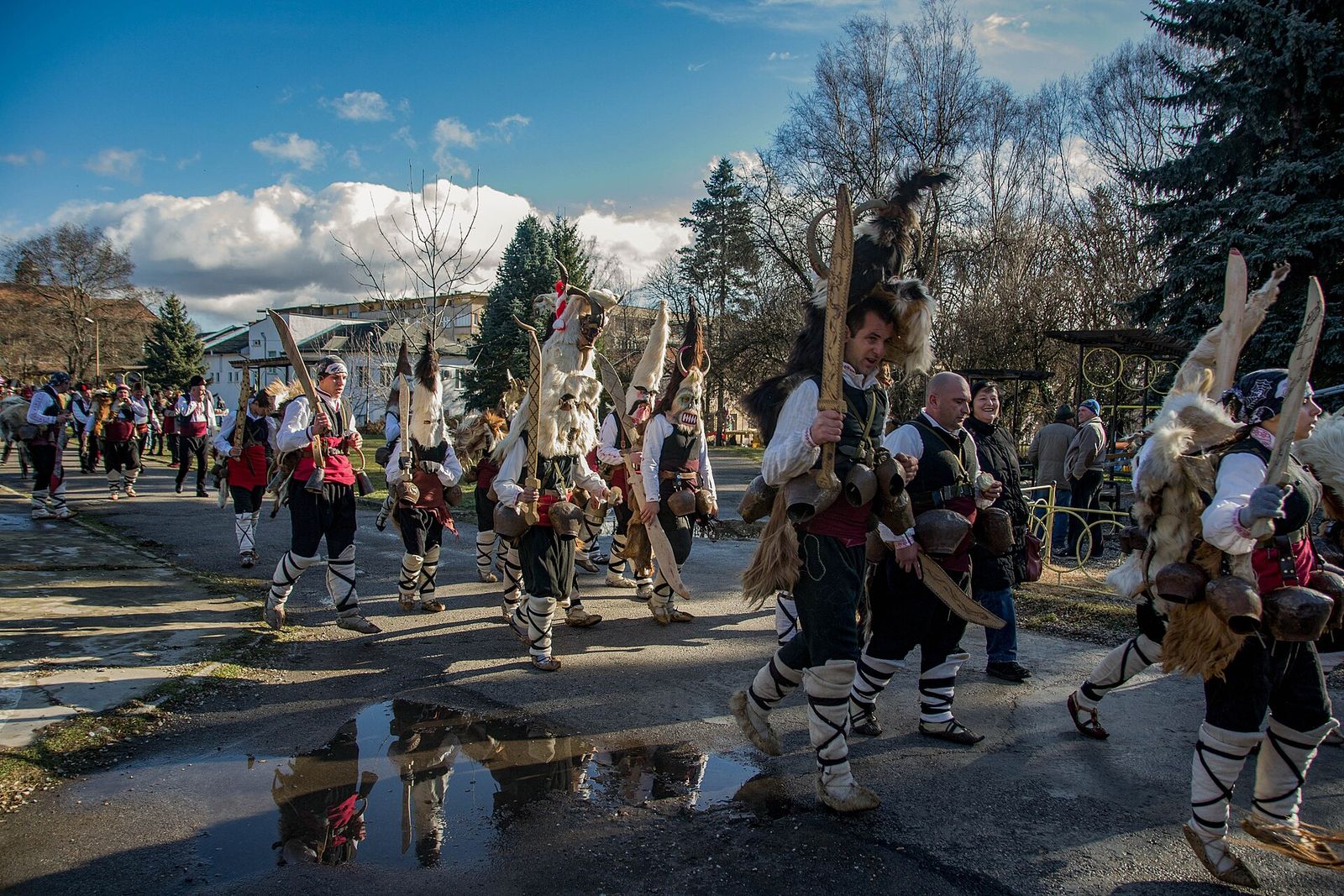
Winter belongs to the kukeri, masked dancers in goat and sheep hides with belts of heavy bells, who leap through the villages to drive out evil and the old year. Razlog sends its kukeri out on New Year's Day, and the villages around Pernik come out around the old New Year, on 13 and 14 January.
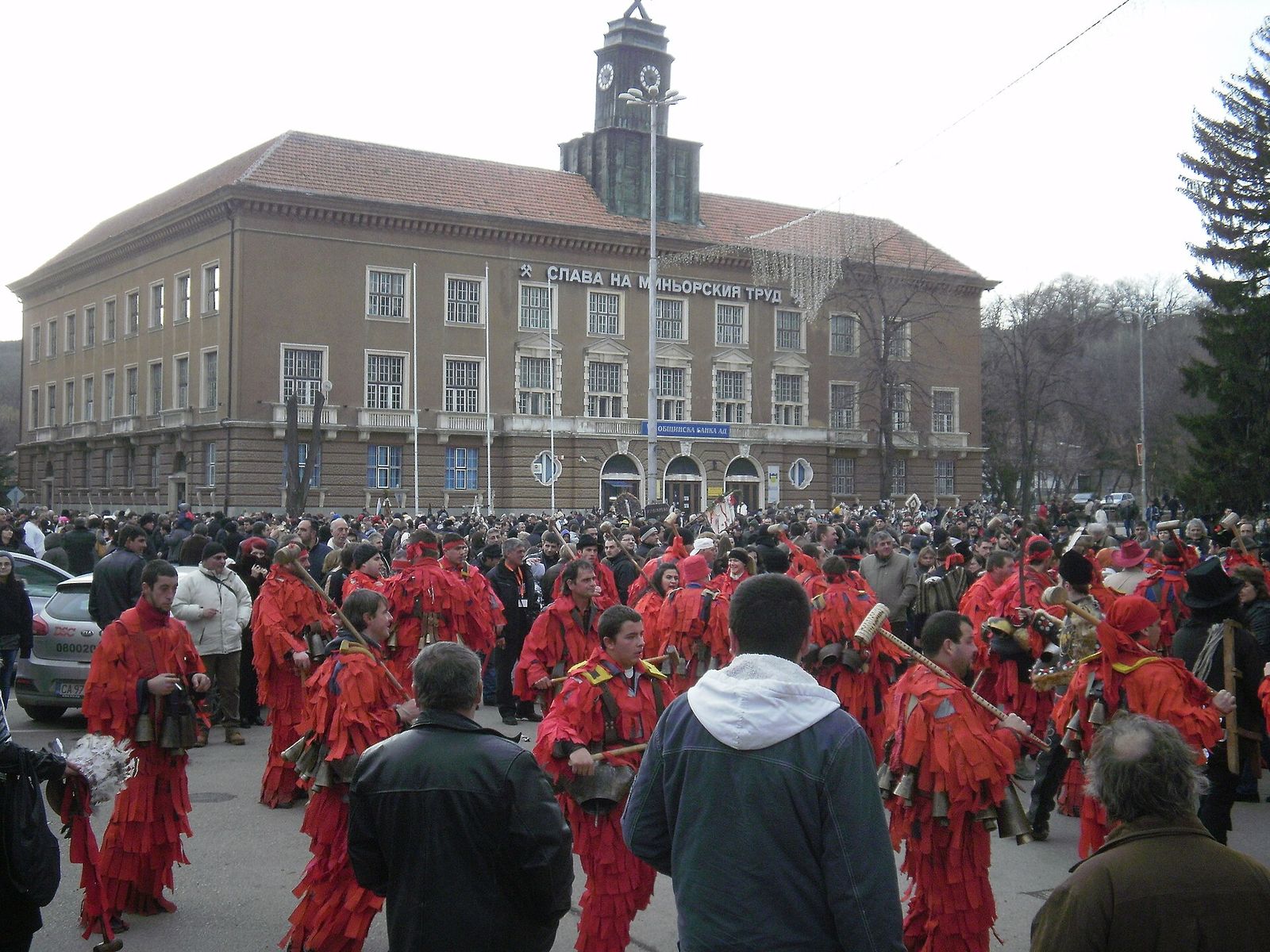
The big event is Surva, the International Festival of Masquerade Games in Pernik, held since 1966 and listed by UNESCO in 2015. It usually runs from the last Friday to the last Sunday of January, with around 10,000 performers, and over 12,000 in both 2024 and 2025. In 2026 it ran from 16 to 25 January over two weekends. Entry is free, and Pernik is about an hour from Sofia by train.
Trifon Zarezan, the wine growers' day
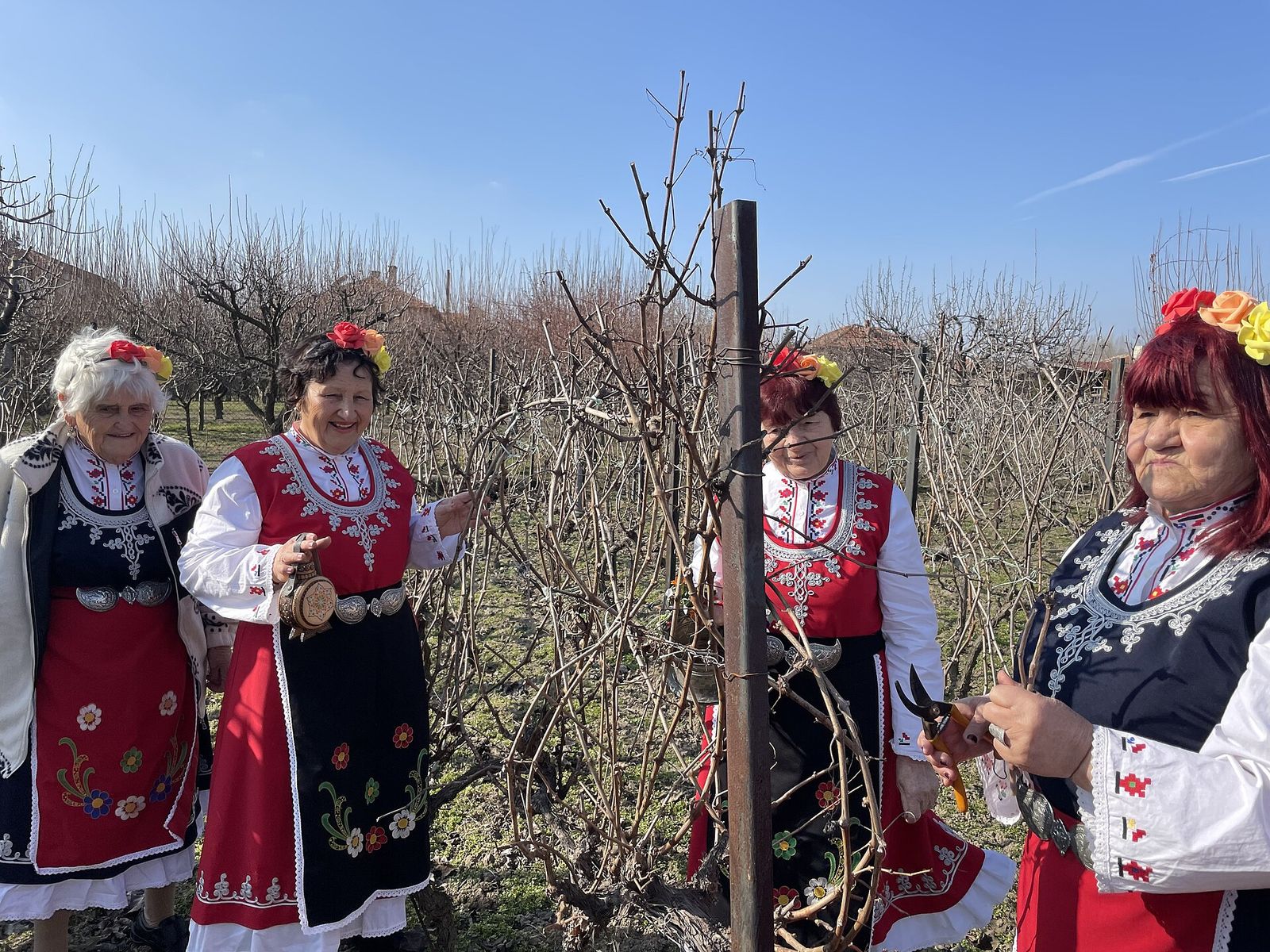
Trifon Zarezan falls on 14 February, and some places mark it on 1 February instead. It is the day of St Trifon, patron saint of wine growers, and it marks the start of the year's vine pruning, so growers go out to the vineyards to make the first cuts. It is also the name day of every Trifon.
Valentine's Day falls on the same date. If you are in Bulgaria on 14 February, I'd mark it with a glass of Mavrud, the local red grape that Bulgarian wine is best known for.
Spring festivals and holidays
Baba Marta and the martenitsa on 1 March
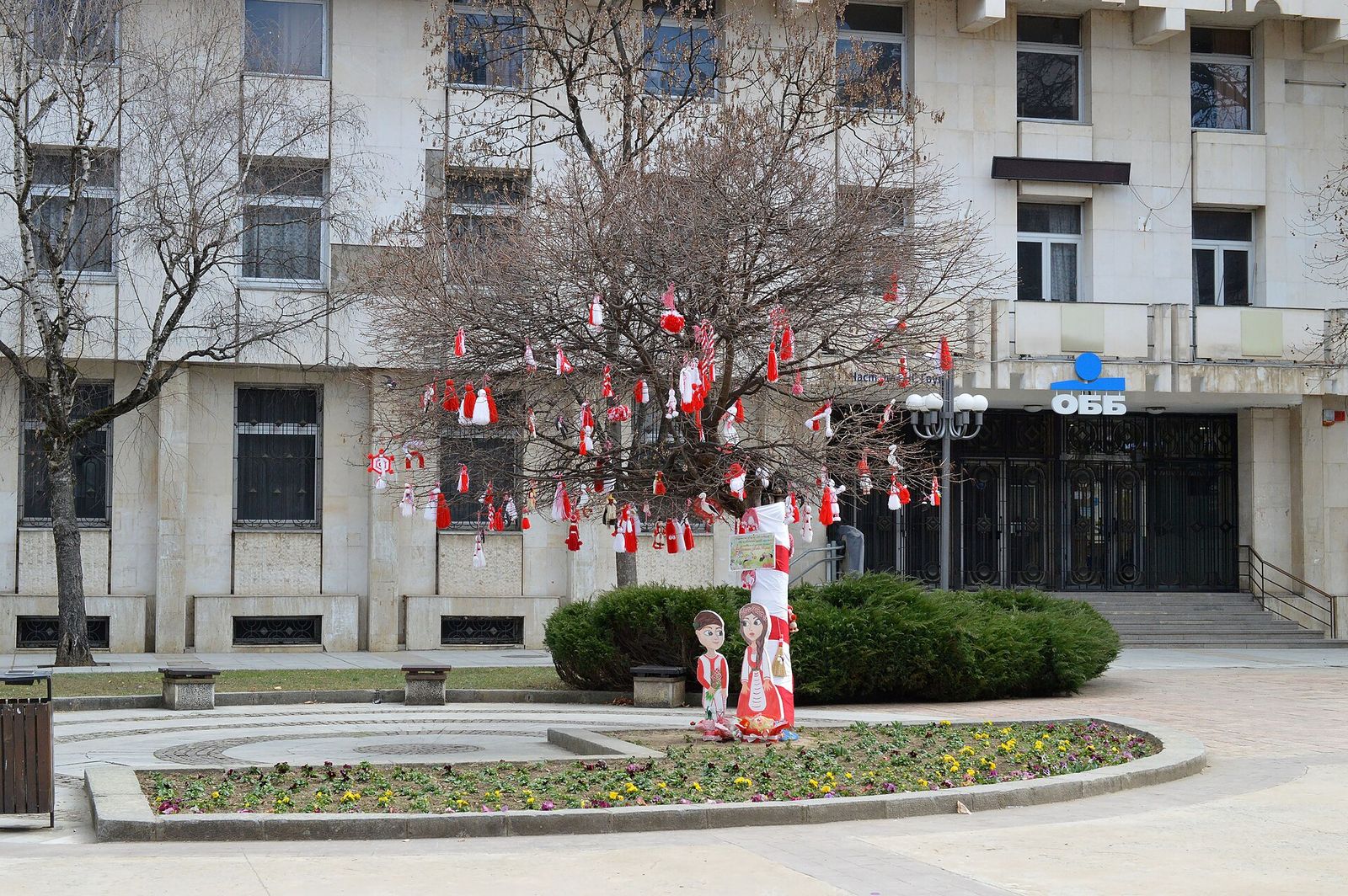
On 1 March, Baba Marta Day, Bulgarians tie red and white threads called martenitsi on each other's wrists as a wish for health. You wear the martenitsa until you see a stork, a swallow or a tree in blossom, then tie it to a blossoming tree, so by late March the trees in every town are hung with red and white.
Two days later, on 3 March, comes Liberation Day, the national holiday. It marks the Treaty of San Stefano, signed on 3 March 1878, which ended nearly five centuries of Ottoman rule and recognized a Bulgarian state, a turning point of Bulgarian history. It is a day off for offices and schools across the country.
Orthodox Easter
Easter, Velikden, is the biggest religious holiday of the year. Bulgaria follows the Orthodox calendar, so Easter often falls on a different Sunday from Western Easter: in 2027 it is on 2 May. Good Friday, Easter Sunday and Easter Monday are public holidays.
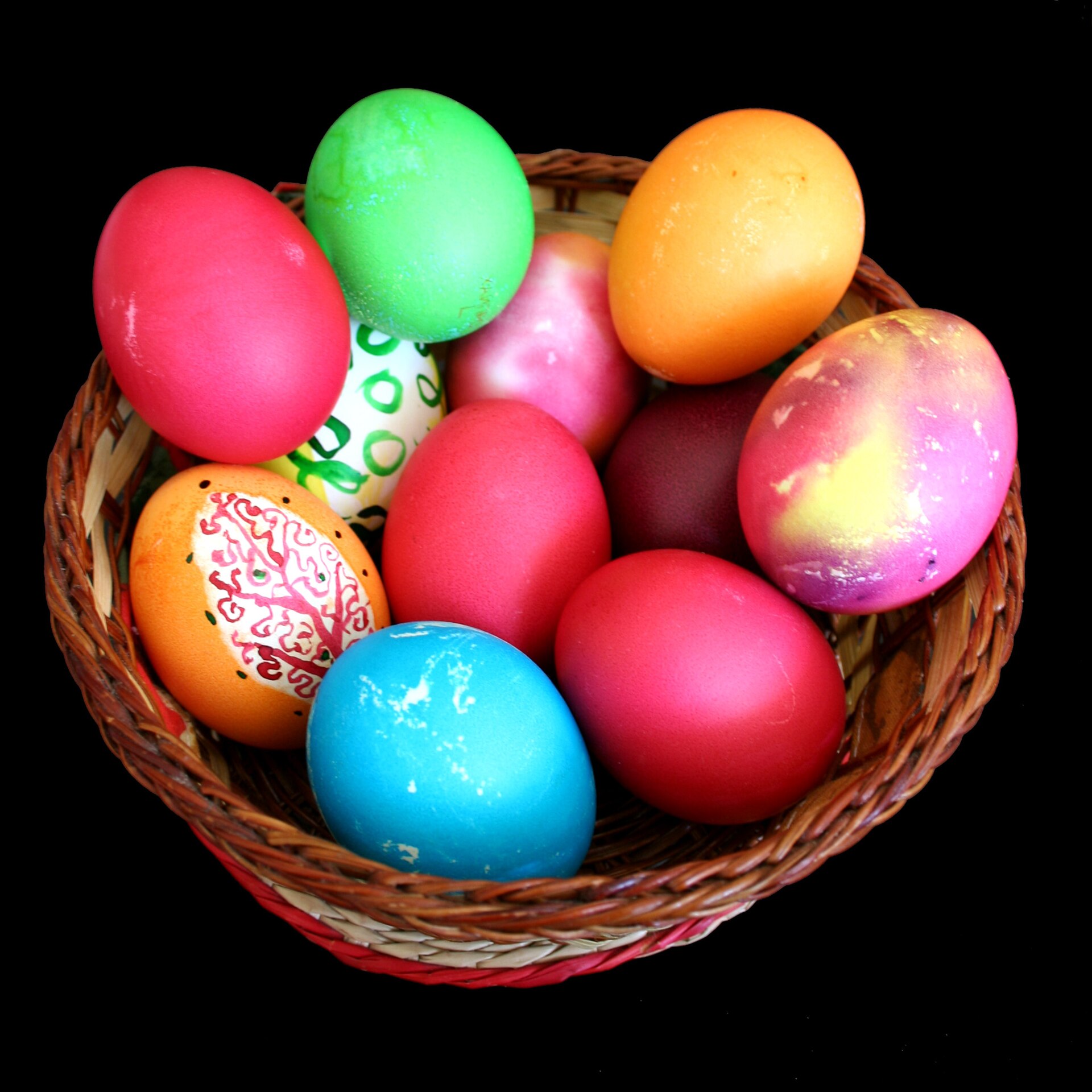
Eggs are dyed red on the Thursday before, and on Easter Sunday people knock eggs together to see whose survives. Families eat roast lamb and kozunak, the sweet braided bread. The emotional peak of Easter in Bulgaria is the midnight service on Holy Saturday, when people carry lit candles out of the churches and try to get them home without letting the flame go out.
St George's Day and 24 May
Gergiovden on 6 May is St George's Day, Bulgaria's Armed Forces Day and the name day of every Georgi and Gergana. On 24 May the country celebrates the Cyrillic alphabet, education and culture. Pupils, students and teachers march through central Sofia with flowers, past Sofia University and the National Library, and in 2026 the procession ended at Alexander Nevsky Cathedral with a concert by Sofia schoolchildren.
Summer festivals in Bulgaria
June is the peak month for folklore and one of the best months to visit Sofia, with daytime highs around 23°C.
The Rose Festival in Kazanlak
From late May to mid-June, the Rose Valley around Kazanlak harvests its Damask roses, picked by hand early each morning, between about 5 and 10 AM, before the heat burns off the oil. The Rose Festival falls on the first weekend of June, in the middle of the harvest, with rose-picking in the villages around town, a parade through Kazanlak and the crowning of a Rose Queen.
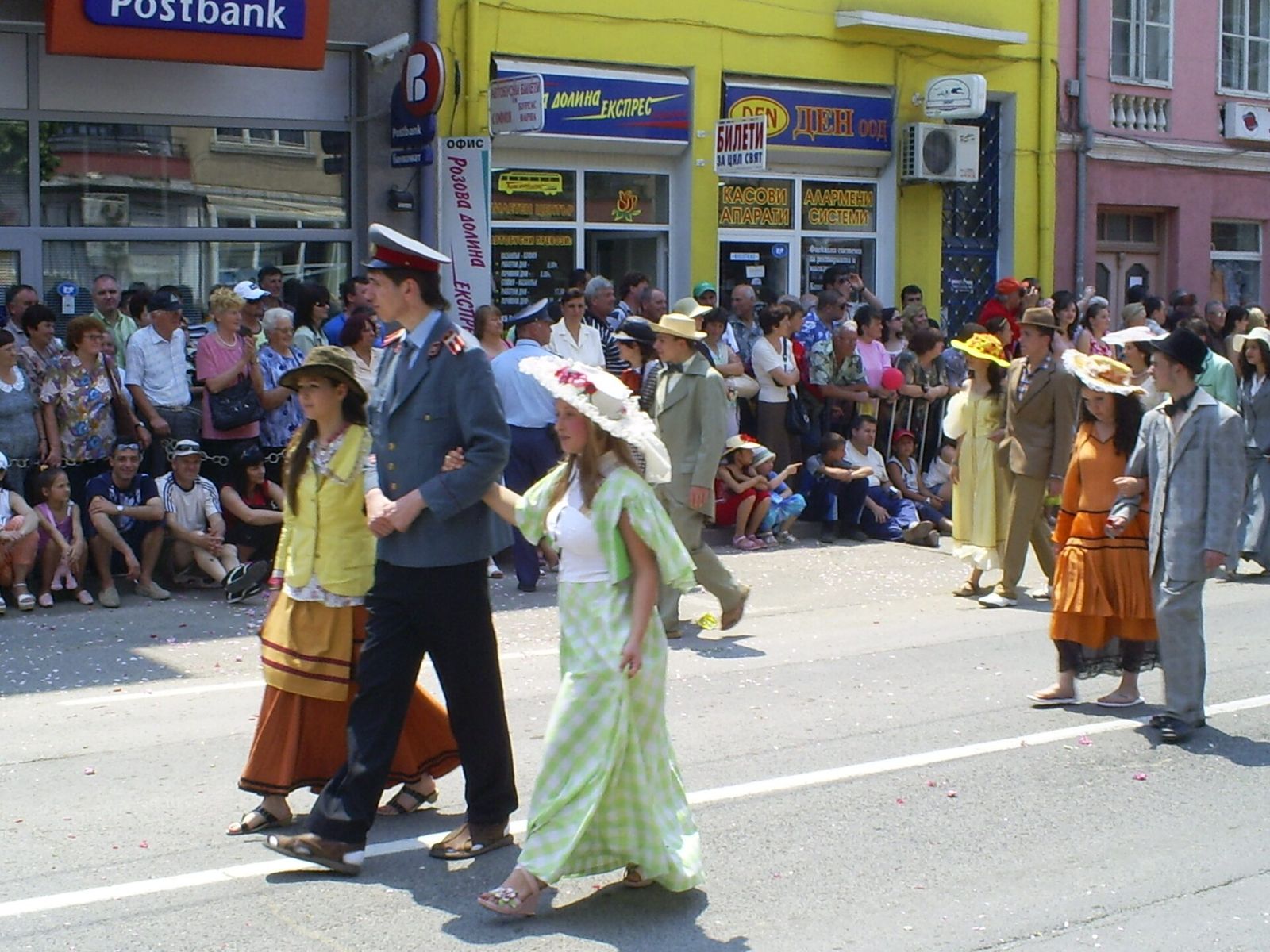
Kazanlak also has the Thracian Tomb of Kazanlak, a UNESCO site from the 4th century BC, so the trip fills a full day.
Nestinarstvo: fire-dancing on 3 and 4 June
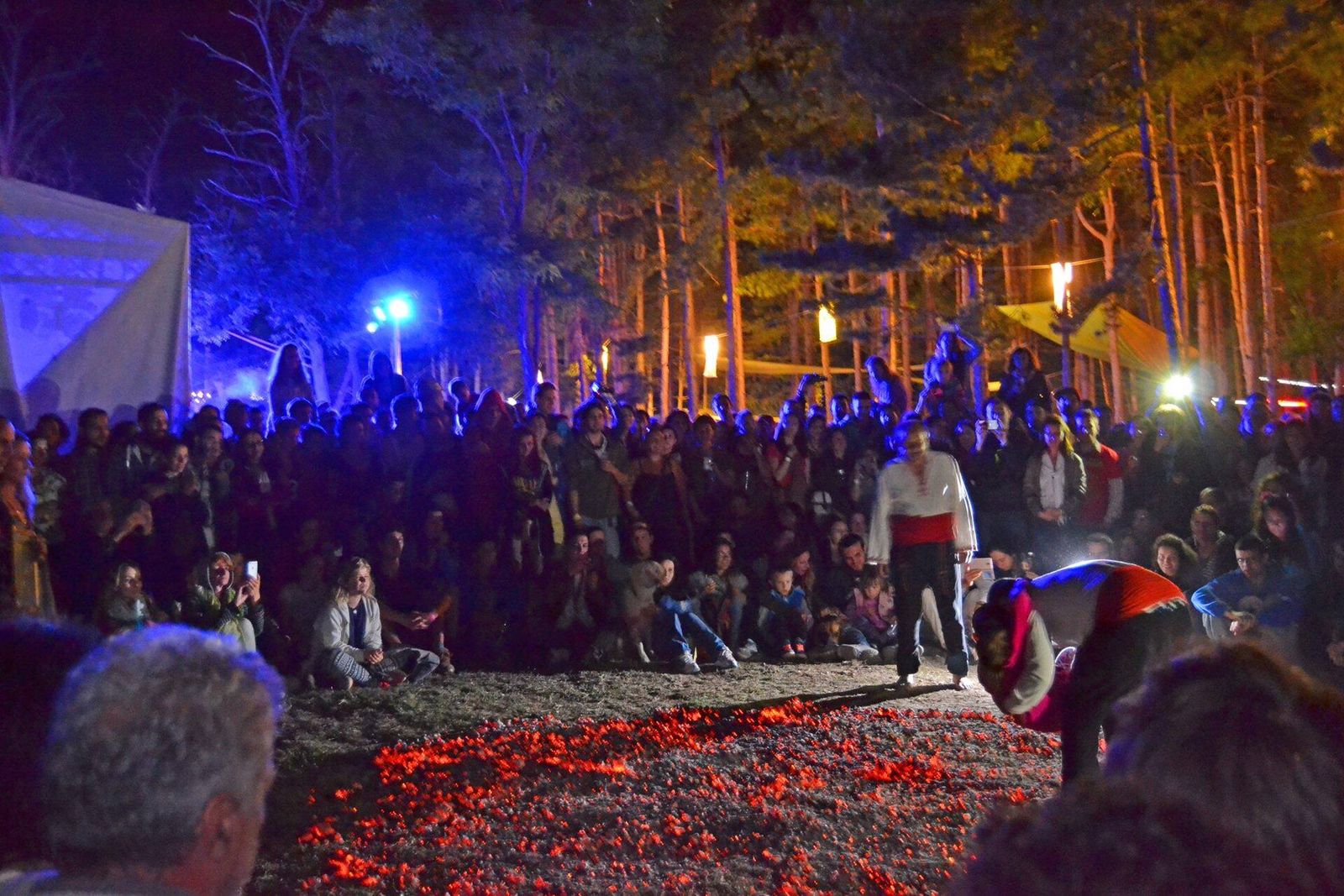
On 3 and 4 June, the feast of Saints Constantine and Helena, the village of Bulgari in the Strandzha mountains holds its nestinarstvo. The day starts with a procession carrying the saints' icons, wrapped in red cloth, to a holy spring, to the sound of a drum and a gaida. After dark the village gathers around a bed of glowing embers, the sacred drum starts, and the nestinari dance across the coals barefoot.
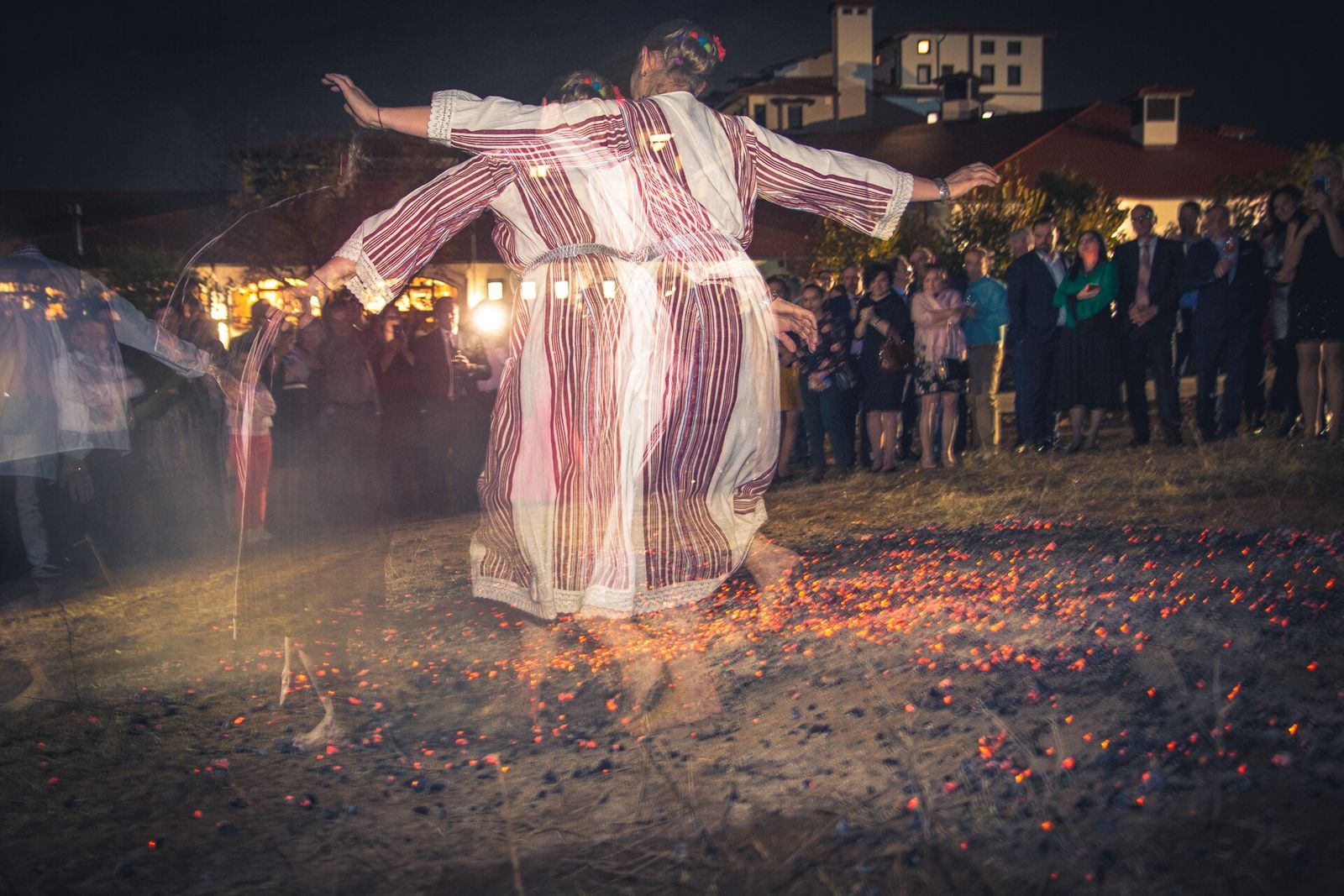
The dance is a devotional act, believed to keep the village and its crops healthy, and UNESCO listed it in 2009.
The National Folklore Festival in Koprivshtitsa
Every five years, the town of Koprivshtitsa, about 110 km east of Sofia, hosts the National Folklore Festival, the biggest gathering of Bulgarian folk music and dance. It started in 1965, the 2015 edition ran from 7 to 9 August, and the most recent was in 2025, so the next is due in 2030. Village groups from all over the country come to sing, dance and play.
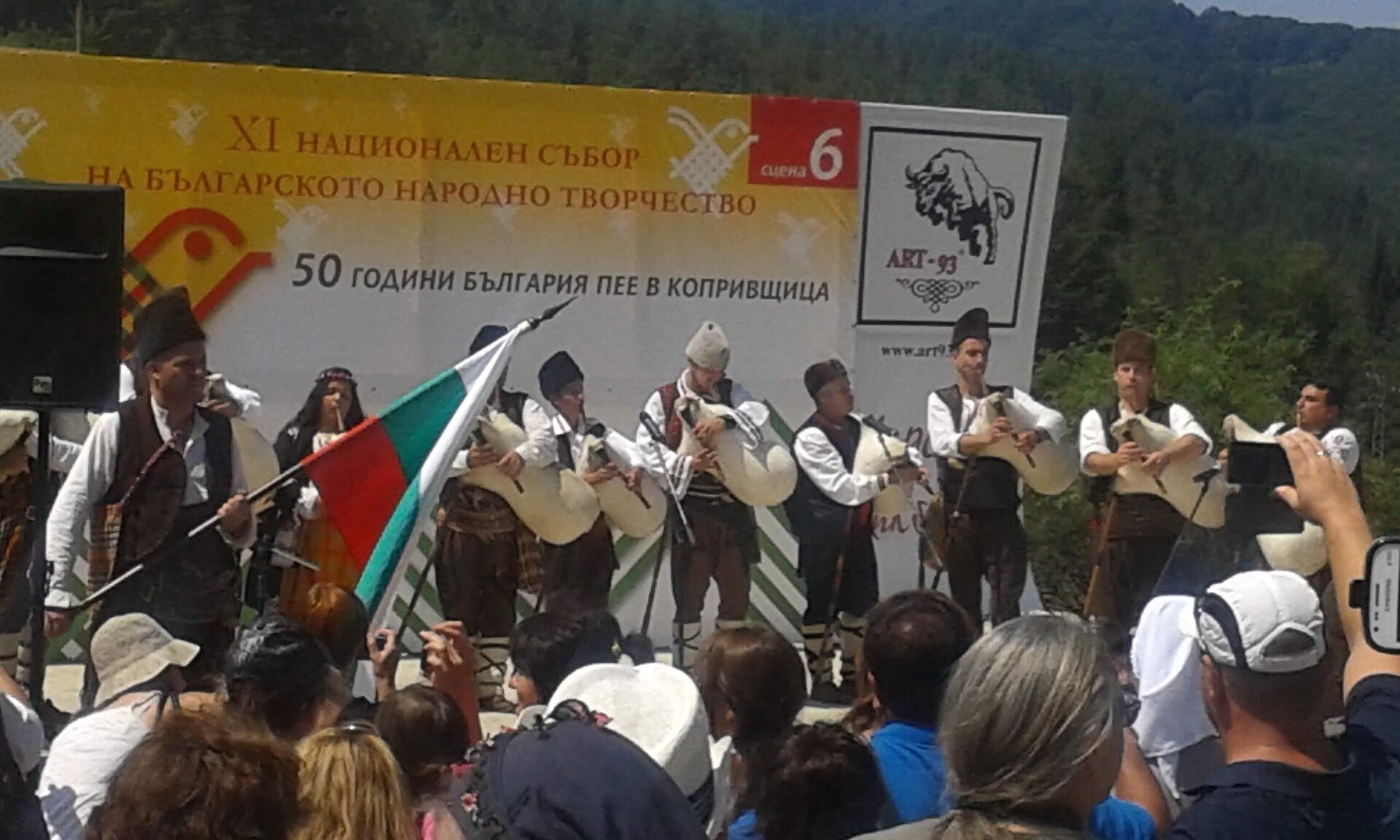
Between festival years, Bulgarian folk music and dance still has the bagpipe festival in Gela every August and the mehana bands of Sofia all year.
Summer music festivals
Bulgaria's summer music festivals cover everything from classical concerts to rock and metal. Multi-day tickets for the big paid ones start at about €50, and Beglika Fest costs less.
| Festival | When | Where | Music |
|---|---|---|---|
| A to JazZ | Early July | Sofia, the field behind Park Center | Jazz, free entry |
| July Morning | Night of 30 June to 1 July | Black Sea beaches | Sunrise gathering to Uriah Heep's song |
| Hills of Rock | July | Plovdiv and Sofia | Rock and metal |
| Varna Summer | June to September | Varna | Classical music, since 1926 |
| International Bagpipe Festival | Early August | Gela, Rhodope Mountains | Gaida players, free entry |
| Bansko Jazz Festival | August | Bansko | Jazz |
| Beglika Fest | August | Golyam Beglik reservoir, Rhodopes | Eight days of music, tickets from about €25 |
July Morning is the odd one out: on the night before 1 July, people head to the Black Sea beaches to welcome the first sunrise of July, a habit that began in the 1980s. Plovdiv for Hills of Rock and the mountain town of Bansko for its jazz both make an easy weekend from Sofia, and Plovdiv has enough old town and Roman ruins to fill the daytime. Bansko pairs its August jazz with the Pirin trails, and the town is about two hours from Sofia by road. The beach end of the summer, from July Morning to Varna Summer, is the season on the Bulgarian Black Sea coast.
Autumn festivals and holidays
Autumn has two public holidays close together. On 6 September Bulgaria marks Unification Day, the union with Eastern Rumelia in 1885, and on 22 September Independence Day, the declaration of 1908. The Day of the National Awakeners falls on 1 November.
In Sofia, autumn is film season. Cinelibri, the festival of films made from books, runs from mid-October to early November, and Kinomania has filled the halls of the National Palace of Culture every November since 1987. September brings the KvARTal Festival to Sofia.
Festivals in Sofia
Sofia's own festival year runs from the martenitsa stalls of late February to the New Year concerts at the National Palace of Culture.
| When | Festival | Where in Sofia |
|---|---|---|
| 1 March | Martenitsa stalls | Vitosha Boulevard, Sveta Nedelya |
| March | Sofia International Film Festival | Cinemas and the National Palace of Culture |
| 24 May | Alphabet day procession | Center, ending at Alexander Nevsky in 2026 |
| Early July | A to JazZ, free open-air jazz | The field behind Park Center |
| Mid-October to early November | Cinelibri | Cinemas |
| November | Kinomania | National Palace of Culture |
| Mid-November to December | Christmas markets | In front of the National Palace of Culture in December |
| Around New Year | New Year Music Festival | National Palace of Culture |
The New Year Music Festival has run at the National Palace of Culture since 1986 and ends with a concert on 1 January, the musical end of Christmas and New Year in Sofia.
Surva, Koprivshtitsa and Kazanlak each make one of the better day trips from Sofia on their festival days.
Public holidays in Bulgaria
These are the non-working days in Bulgaria: 10 fixed public holidays and 3 more for Orthodox Easter.
| Date in 2027 | Holiday |
|---|---|
| 1 January | New Year's Day |
| 3 March | Liberation Day, the national holiday |
| 30 April | Orthodox Good Friday |
| 1 May | Labor Day |
| 2 May | Orthodox Easter Sunday |
| 3 May | Orthodox Easter Monday |
| 6 May | St George's Day and Armed Forces Day |
| 24 May | Day of the Bulgarian alphabet, education and culture |
| 6 September | Unification Day |
| 22 September | Independence Day |
| 24 December | Christmas Eve |
| 25 and 26 December | Christmas |
Other days are marked without a day off: 1 March for Baba Marta and 8 March for Mother's Day. The Easter holidays move every year, and 2027 has a crowded spring, with Good Friday, Labor Day, Easter and St George's Day all between 30 April and 6 May.
Key takeaways
- January is kukeri month, with Surva in Pernik, near Sofia, as the biggest show.
- 1 March is Baba Marta Day and 3 March is Liberation Day, the national holiday.
- Orthodox Easter is the biggest family holiday; in 2027 it falls on 2 May.
- June brings the Rose Festival in Kazanlak and fire-dancing in Bulgari on 3 and 4 June.
- The National Folklore Festival in Koprivshtitsa comes every five years, next in 2030.
Frequently asked questions
What is the biggest festival in Bulgaria?
The biggest traditional festival is Surva in Pernik, where over 12,000 masked kukeri and survakari took part in both 2024 and 2025. It is the largest masquerade festival on the Balkan Peninsula and usually runs over the last weekend of January.
What are the major celebrations in Bulgaria?
The biggest are Orthodox Easter, Christmas and New Year, followed by Baba Marta on 1 March and Liberation Day on 3 March. The famous folk celebrations are the kukeri in January, the Rose Festival in June and the fire-dancing in Bulgari on 3 and 4 June.
What is the rose festival in Bulgaria?
Kazanlak, in the Rose Valley, holds the Rose Festival on the first weekend of June, during the harvest of the Damask roses used for rose oil. It includes rose-picking at dawn in the villages, a parade through town and the crowning of a Rose Queen.
What are the national holidays in Bulgaria?
Bulgaria's public holidays are 1 January, 3 March, 1 May, 6 May, 24 May, 6 September, 22 September and 24 to 26 December, plus Orthodox Good Friday, Easter Sunday and Easter Monday. The national day is 3 March, Liberation Day.
What holidays are celebrated in autumn in Bulgaria?
Unification Day on 6 September and Independence Day on 22 September are public holidays. 1 November is the Day of the National Awakeners, and Sofia has its Cinelibri and Kinomania film festivals from October into November.
Is Bulgaria Orthodox or Catholic?
Bulgaria is mainly Eastern Orthodox, and its religious holidays follow the Orthodox calendar. That is why Bulgarian Easter often falls on a different Sunday from Catholic Easter, as in 2027, when it is on 2 May.
When is the best month for festivals in Bulgaria?
June has the most folklore, with the Rose Festival and the fire-dancing, and July and August have the music festivals. For the masks and bells, come in late January for Surva.
Are Bulgarian festivals free?
Many are. Surva in Pernik, A to JazZ in Sofia and the bagpipe festival in Gela are all free to attend, while the big rock and multi-day music festivals sell tickets from about €50.
Bulgarian Culture and Traditions: A Visitor's Guide
Bulgaria gave the world Cyrillic, and has kukeri, fire-dancers and a nod that means no. Here is what to know.
Read the guide
Bulgarian Phrases for Travelers: The Words I'd Learn First
Bulgarian is written in Cyrillic and read the way it looks. Here are the phrases I would learn before a trip to Sofia.
Read the guide
A Short History of Bulgaria
Bulgaria has kept its name since 681. Here is its history era by era, and where each chapter still stands in Sofia.
Read the guide