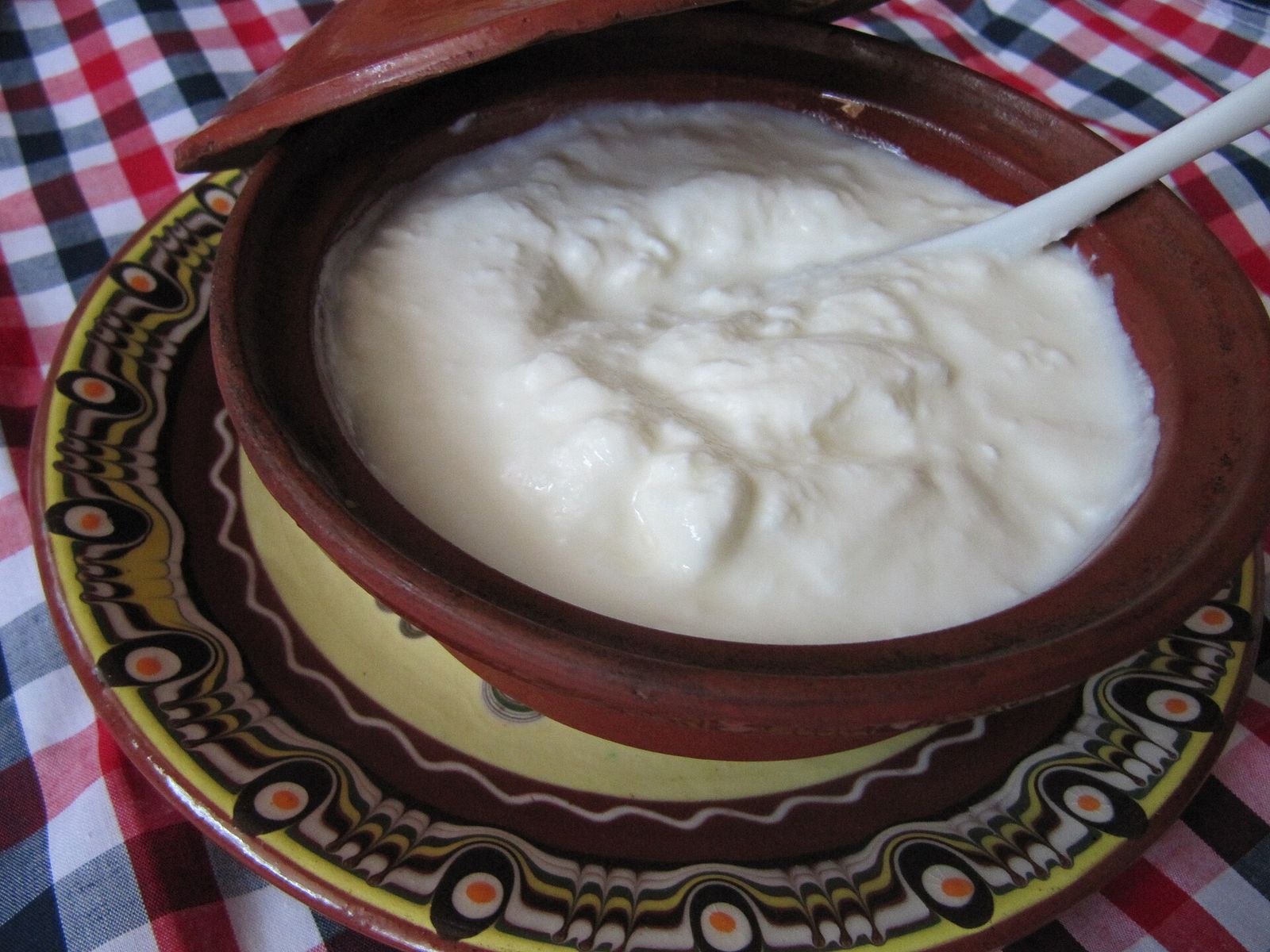
Bulgarian Yogurt: What Kiselo Mlyako Is and Where to Eat It in Sofia
Bulgarian yogurt, kiselo mlyako, is thick, tart and made from nothing but milk and two bacteria, one of which carries the country's name. Bulgarians eat it every day: in cold soups, dips and pastries, as a salty drink, and with honey for dessert. This post covers what makes it different, who discovered its bacterium, and where to eat and buy it in Sofia.
What Bulgarian yogurt is
Kiselo mlyako is cultured milk, nothing more. Warm milk is mixed with a little yogurt from the last batch, or a starter culture, and kept at about 43°C for some hours until it sets.
Two bacteria do the work. Lactobacillus bulgaricus, named after Bulgaria, and Streptococcus thermophilus live together and turn the milk sugar into lactic acid, which thickens the milk and gives it the tang. The balance between the two strains sets the taste, and the Bulgarian balance gives a yogurt that is creamy and clearly sour.
Legend puts Bulgarian yogurt at 4,000 years old or more. One story credits the Thracians, who lived in these lands before the Slavs and Bulgars, with fermenting sheep's milk in lambskin bags tied around the waist, warmed by the body. The early Bulgars had a soured milk of their own, katuk.
Stamen Grigorov and Lactobacillus bulgaricus
In 1905, Stamen Grigorov, a Bulgarian medical student in Geneva, isolated the bacterium that ferments yogurt from a homemade batch he had brought from his village. It was named Lactobacillus bulgaricus, and he went on to identify Streptococcus thermophilus living alongside it. Yogurt makers around the world still use Lactobacillus bulgaricus.
The Russian biologist Ilya Mechnikov, a Nobel laureate at the Institut Pasteur in Paris, built on Grigorov's work. He found that more people lived to 100 in Bulgaria than in any of the other 36 countries he studied, put it down to the yogurt Bulgarian villagers ate every day, and worked to popularize yogurt across Europe. He called the bacterium the "Bulgarian bacillus."
Grigorov was born in Studen Izvor, a village about 8 km southwest of Tran in Pernik province, close to the Serbian border, and he came back to work there as a country doctor. The village opened a Museum of Yogurt on 29 June 2007, in a two-story house in the center near his childhood home. The ground floor is a mid-19th-century household utility room, and upstairs a library and exhibition cover the history of yogurt, how it is made at home and in factories, and its nutritional value. Studen Izvor also holds a yogurt festival. The village is out in the far west of the country, so I'd only make the trip if yogurt is the reason you came, and the day trips from Sofia give you bigger sights for the same time in a car.
Bulgarian yogurt vs Greek yogurt
Greek yogurt starts from the same two bacteria, and the big difference is the straining.
| Bulgarian yogurt | Greek yogurt | |
|---|---|---|
| How it is made | Cultured milk, set in the pot without stirring | Cultured, then strained to remove whey |
| Texture | Thick and creamy | Denser and creamier |
| Taste | Balanced, clearly tart | Milder |
| Bacteria | L. bulgaricus and S. thermophilus | The same two |
If you know Greek yogurt, expect Bulgarian yogurt to be looser in the spoon and sharper on the tongue. Skyr, the Icelandic one, is thicker than both. Bulgarians strain their own yogurt when a dish needs it thick, and snezhanka salad is made that way.
Cow, sheep and buffalo yogurt
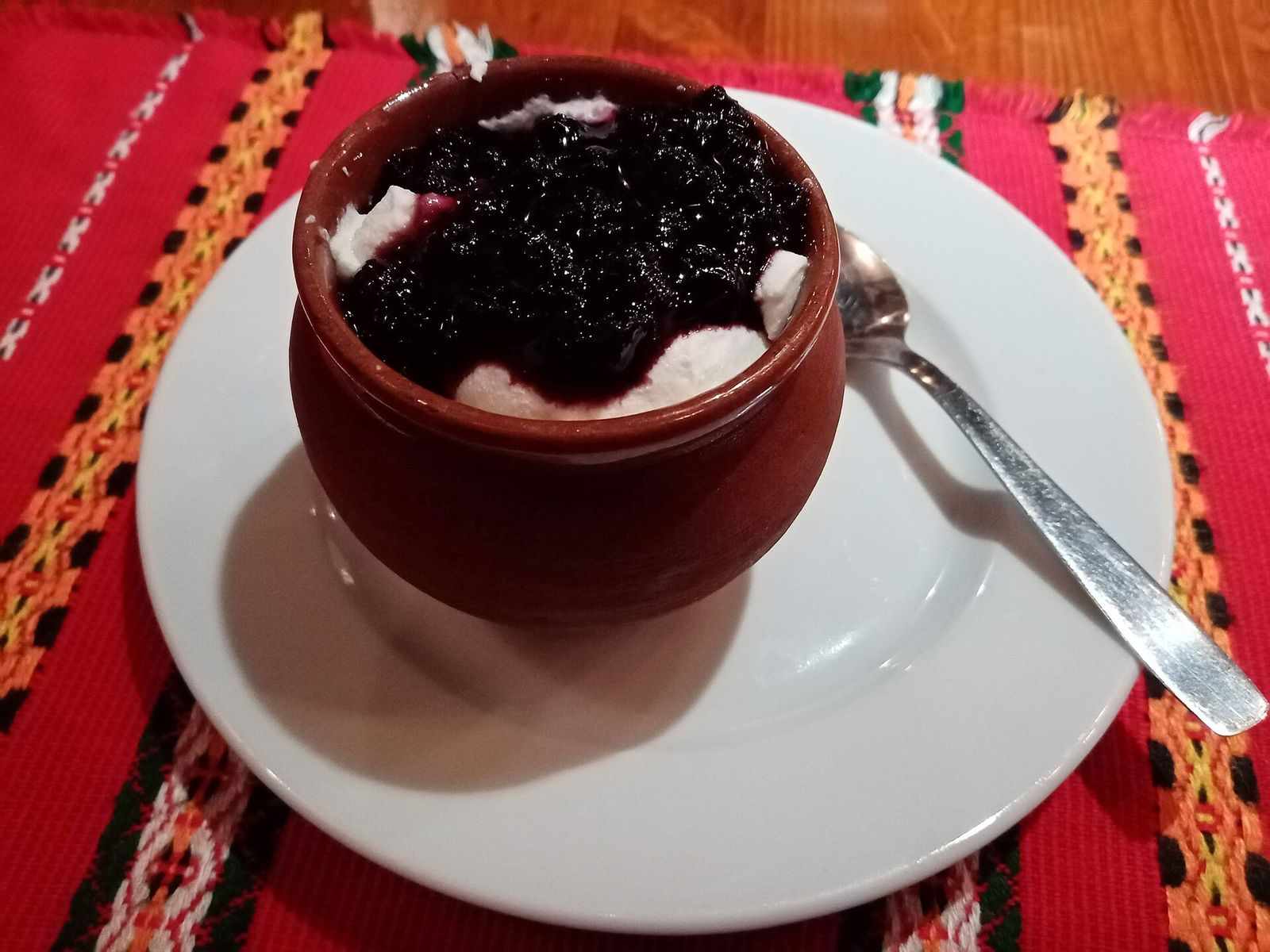
Most yogurt is made from cow's milk, and it is the everyday tub in a Bulgarian fridge. Sheep's milk yogurt is the older tradition, going back to the Thracian lambskin bags, and buffalo milk yogurt is the specialty. I find both richer than cow's milk yogurt, and buffalo yogurt is the one I'd eat with jam.
The small bakery just outside the courtyard wall at Rila Monastery sells thick buffalo and sheep's milk yogurt next to hot mekitsi, and if you are going there anyway, it is the best place I know to taste them side by side. In Sofia, Gelato & Latte makes its gelato with milk from its own herd of Jersey cows and Murrah buffalo.
How Bulgarians eat yogurt
Yogurt runs through Bulgarian food from breakfast to dessert, and in three cold dishes it is the main ingredient.
Tarator
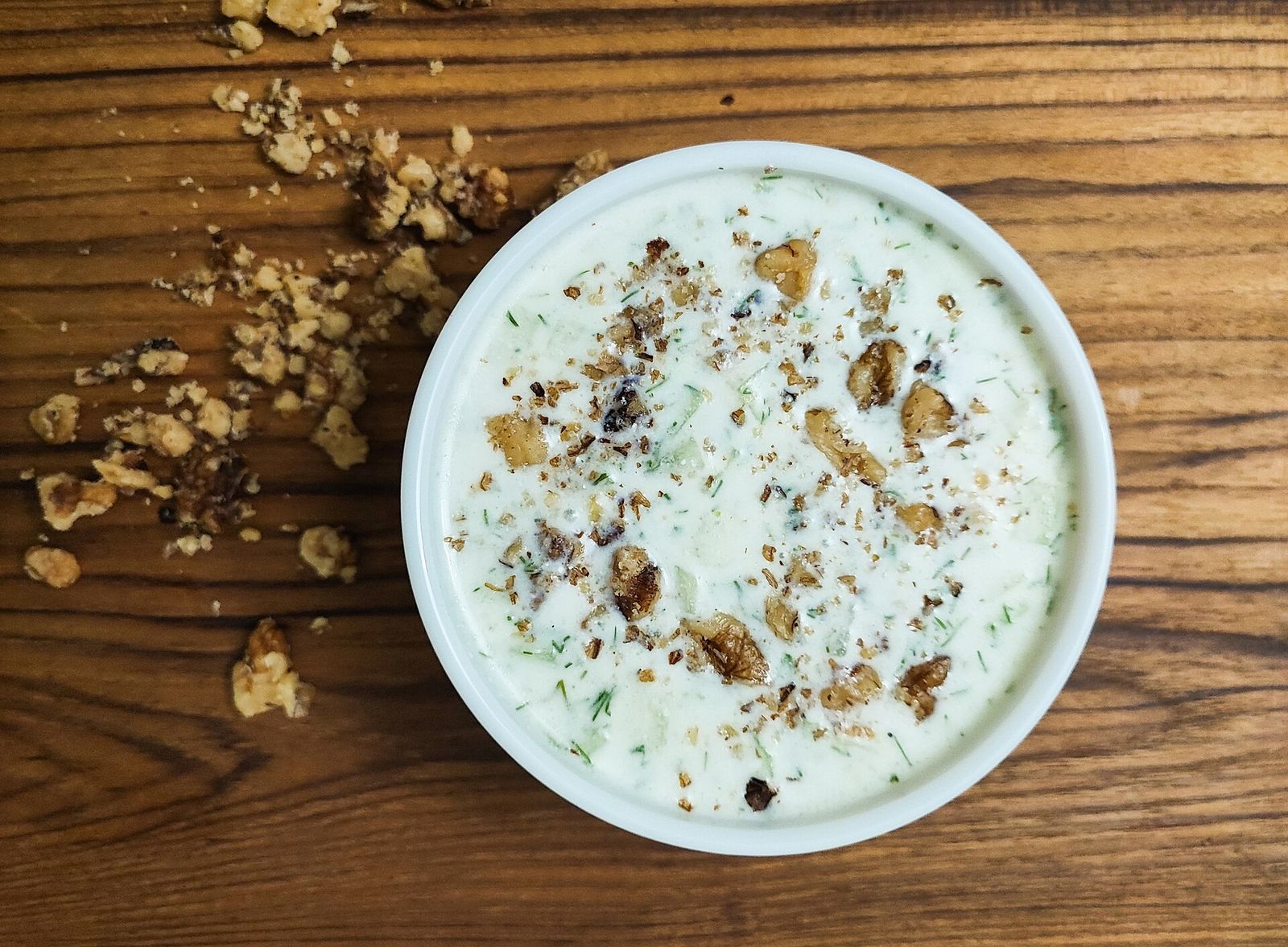
Tarator is the cold summer soup: yogurt thinned with water, with chopped cucumber, garlic, dill, walnuts and a little sunflower oil. Restaurants all over Bulgaria serve it in the warm months, and it sits with shopska salad and lyutenitsa among the cold starters on almost every menu.
Snezhanka
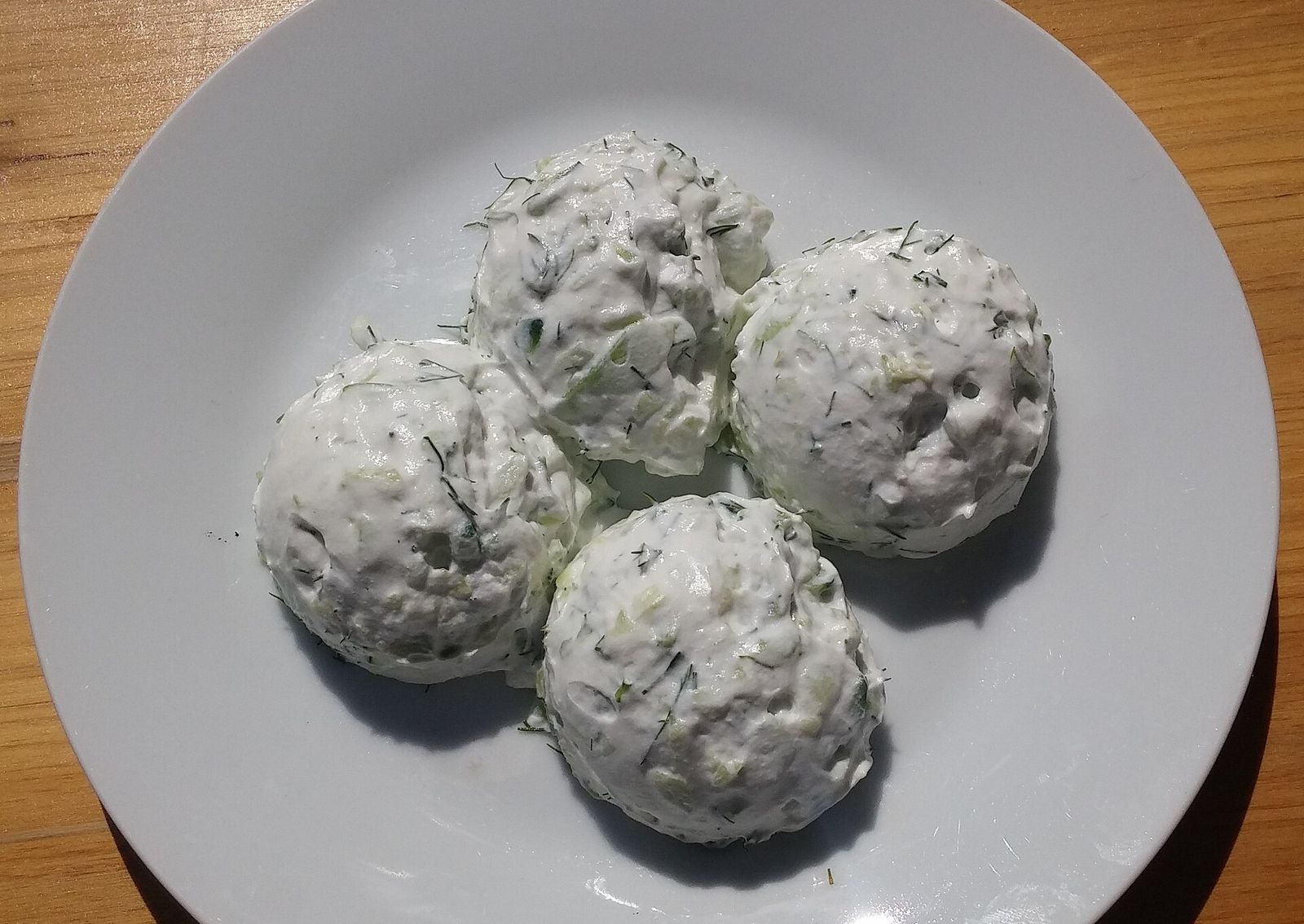
Snezhanka, which means Snow White, is the thick version of the same idea: strained yogurt with chopped cucumber, garlic, dill and walnuts, often served in scoops. Bulgarians eat it all summer. Vegetarians can order it in any tavern, while vegans need one of the vegan kitchens in Sofia, since the yogurt is the dish.
Katak
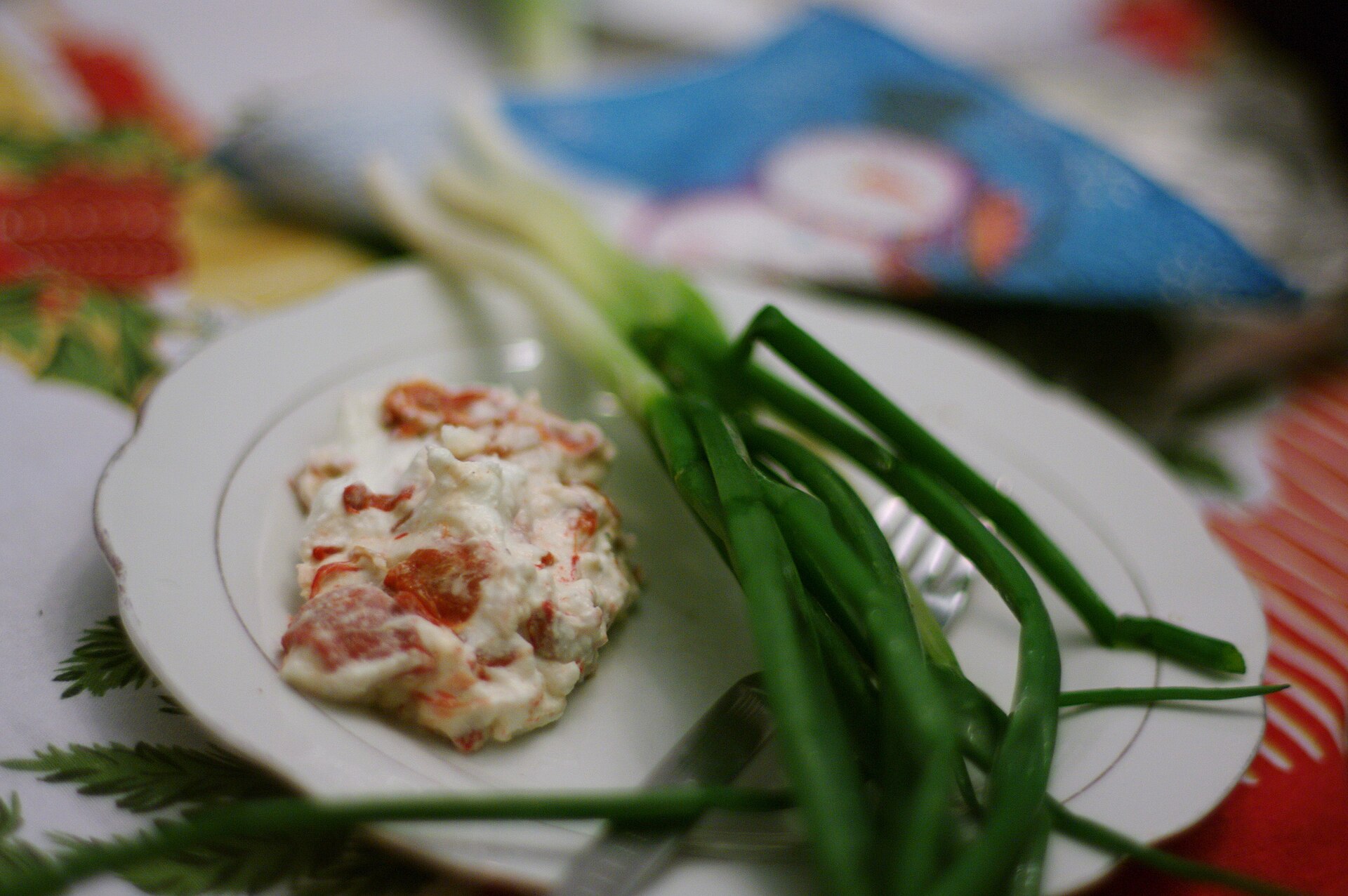
Katak is a spread of yogurt, crumbled sirene cheese, roasted red pepper and garlic, eaten with bread before the main course. Shtastlivetsa, with a branch on Vitosha Boulevard, is one Sofia restaurant that has it on the menu, and I'd order it with a basket of bread and a cold beer.
| Dish | Where the yogurt goes |
|---|---|
| Ayran | Whisked with water and salt into a cold drink |
| Banitsa | Into the egg and cheese filling of the filo pastry |
| Mekitsi | Into the dough of the fried breakfast pastry |
| Chushki burek | As a garlic yogurt sauce over the fried stuffed pepper |
| Moussaka | Into the baked egg and yogurt crust |
| Panagyurishte eggs | Under poached eggs, with garlic, butter and paprika |
| Kazanlak donuts and praskovki | Into the dough of the donuts and the peach cookies |
| Yogurt cake | As the base, with baking soda to make it rise |
| Yogurt with honey and walnuts | Eaten from the bowl as dessert |
Ayran is the one you will drink: yogurt, water and salt, ordered with banitsa at breakfast and with grilled kebapche at lunch. Ayran and boza are the two classic Bulgarian breakfast drinks.
Where to eat Bulgarian yogurt in Sofia
Yogurt turns up all over a Bulgarian menu, and these are the places I'd go when it is the point of the meal.
At breakfast
A slice of cheese banitsa with a cup of ayran is the yogurt breakfast of Sofia, and the banitsa bakeries in Sofia sell both from early morning. Furna on Stefan Stambolov Boulevard sells tubs of yogurt and bottles of boza next to its banitsa. Mekitsa and Coffee on Graf Ignatiev Street fries mekitsi, the pastry with yogurt in the dough, to order, with sweet and savory toppings from about €2.50.
In restaurants
Most traditional restaurants serve tarator in summer and snezhanka and katak as starters. For a yogurt-heavy meal, start with snezhanka or katak and bread, then chushki burek with its yogurt sauce, and finish with moussaka. Mehana Mamin Kolyo, a tavern with brightly colored tablecloths, has the chushki burek and, in summer, the tarator.
As dessert and ice cream
The simplest Bulgarian dessert is a bowl of yogurt with honey and walnuts, and of all the Bulgarian desserts, it is the one I'd order after a heavy meal. Moma, a Bulgarian restaurant in the center, has served yogurt ice cream with blueberries. Savi Gelato on San Stefano Street makes a yogurt gelato with rose oil, the most Bulgarian flavor among Sofia's ice cream shops.
Frozen yogurt
Chillbox, at The Mall on Tsarigradsko Shose Boulevard 115, is a frozen yogurt counter. The Mall is out east of the center, so I'd make it a stop only if you are there for the shops anyway.
Buying Bulgarian yogurt in Sofia

A supermarket tub is the cheapest way to eat Bulgarian yogurt. Cow's milk yogurt comes in different fat levels, and the same aisle stocks ayran: classic, unsalted, with mint or dill, and light.
If your room has a fridge, buy a tub of plain full-fat yogurt and a jar of honey for breakfast. It keeps for days and beats most hotel buffets.
Is Bulgarian yogurt healthy?
Bulgarian yogurt is a fermented food with live cultures of Lactobacillus bulgaricus and Streptococcus thermophilus, and plain yogurt has no added sugar. Grigorov found that the two bacteria come from outside the human gut and help it once eaten, and Mechnikov argued that eating them every day slowed aging.
Yogurt sits with rose oil and the Cyrillic alphabet among the things Bulgarian culture is best known for abroad. In Japan, Meiji even sells a yogurt under the name Bulgaria.
Key takeaways
- Kiselo mlyako is milk fermented by Lactobacillus bulgaricus and Streptococcus thermophilus, with nothing else added.
- Stamen Grigorov identified Lactobacillus bulgaricus in 1905, and his home village, Studen Izvor, has a Museum of Yogurt.
- It is more sour and less dense than Greek yogurt because it is not strained.
- In Sofia, eat it as tarator, snezhanka and katak, drink it as ayran with banitsa, and finish with yogurt, honey and walnuts.
Frequently asked questions
What is Bulgarian yogurt called?
Bulgarian yogurt is called kiselo mlyako. It is made from cow's, sheep's or buffalo milk fermented with Lactobacillus bulgaricus and Streptococcus thermophilus. Bulgarians eat it plain, in cold soups and dips, and as ayran.
What makes Bulgarian yogurt different?
Its main bacterium carries the country's name: Lactobacillus bulgaricus, working with Streptococcus thermophilus, sets the milk thick and clearly tart. The traditional recipe adds no thickeners or stabilizers, and the yogurt sets in the pot without stirring.
Is Bulgarian yogurt the same as Greek yogurt?
No. Both use the same two bacteria, but Greek yogurt is strained to remove whey, which makes it creamier and milder. Bulgarian yogurt is set in the pot without straining, so it is looser and more sour.
Who discovered Lactobacillus bulgaricus?
Stamen Grigorov, a Bulgarian medical student in Geneva, discovered it in 1905 in yogurt from his village of Studen Izvor. He also identified Streptococcus thermophilus, the second yogurt bacterium. Ilya Mechnikov then made the "Bulgarian bacillus" famous across Europe.
Which Bulgarian yogurt is the best?
For me, the best is thick sheep's or buffalo milk yogurt, like the pots sold at the bakery outside Rila Monastery. In a Sofia supermarket, plain full-fat cow's milk yogurt is the everyday choice.
What do Bulgarians eat with yogurt?
Bulgarians put yogurt into tarator, snezhanka, katak and banitsa, pour it over chushki burek and bake it on top of moussaka, and drink it as ayran. For dessert they eat it with honey and walnuts. At brunch it goes under Panagyurishte eggs, with garlic, butter and paprika.
Is there a yogurt museum in Bulgaria?
Yes, the Museum of Yogurt in Studen Izvor, the home village of Stamen Grigorov near Tran in western Bulgaria. It opened on 29 June 2007 in a two-story house near his childhood home, and it covers the history of yogurt and how it is made.
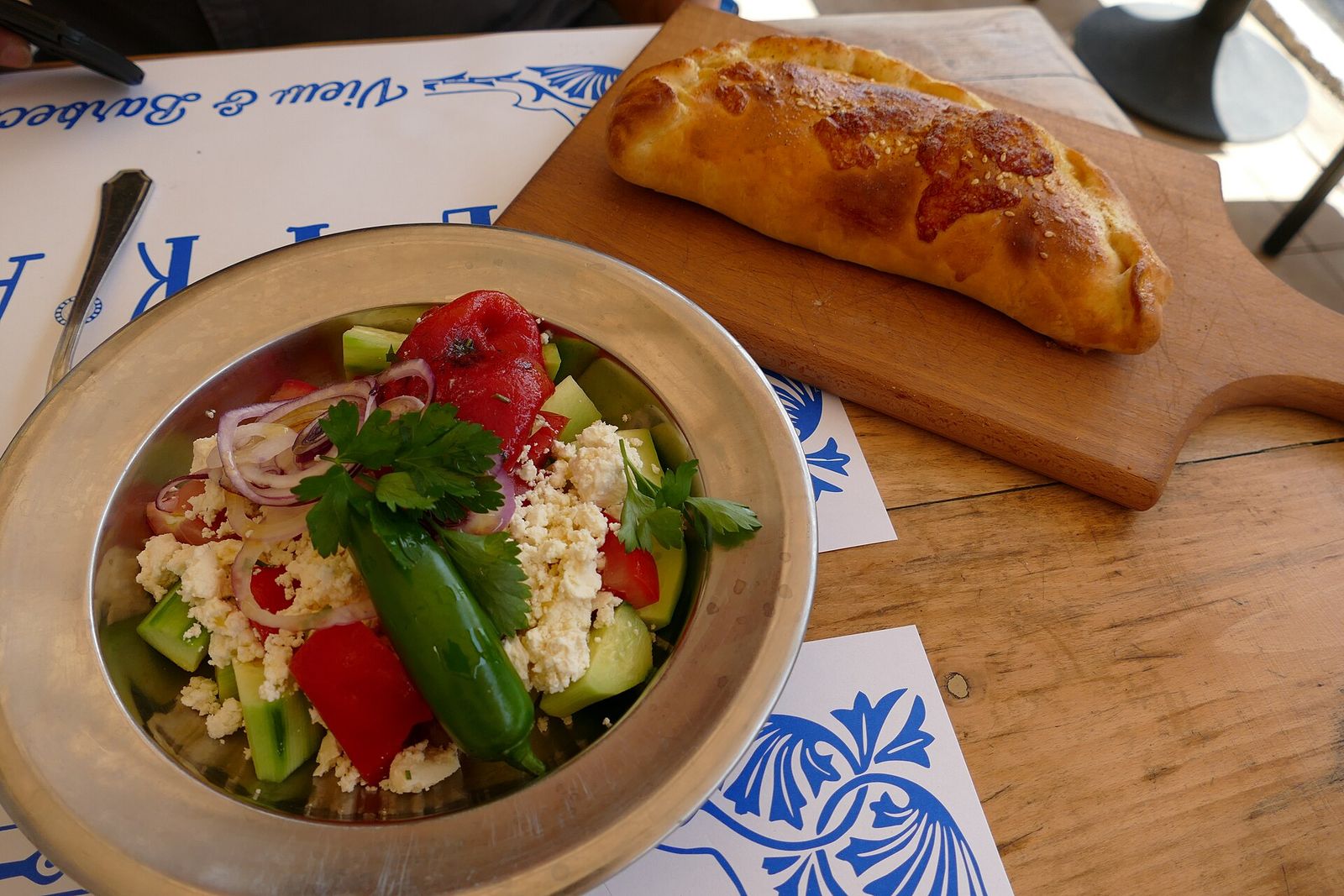
Sofia Food Guide: What to Eat and Where to Eat It
Sofia eats banitsa at breakfast and grills at night. Here is what to eat in the city, where to eat it and what it costs.
Read the guide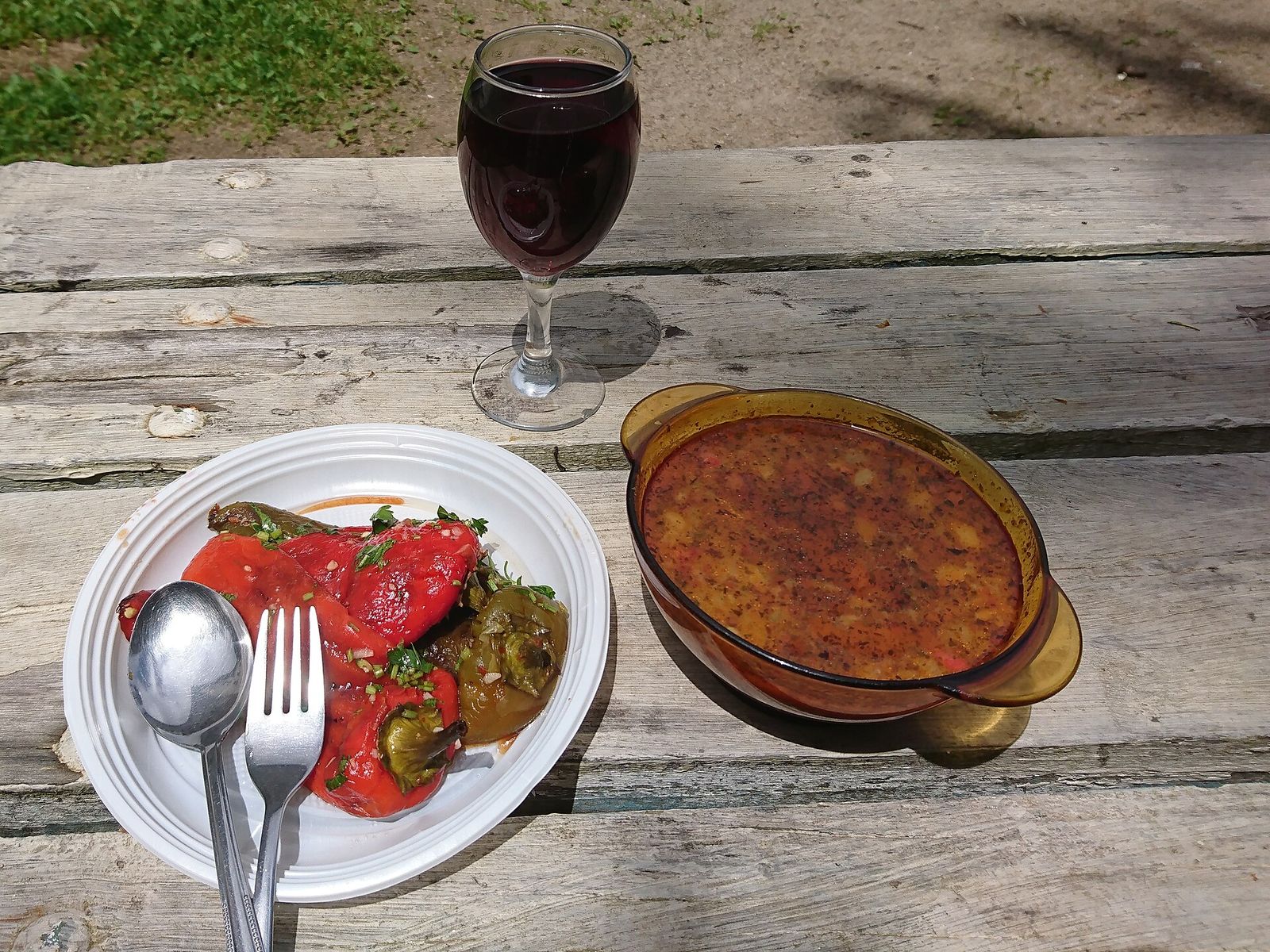
Bulgarian Food: 14 Traditional Dishes to Try in Sofia
Bulgarian food runs on white cheese, yogurt and the grill. Here are 14 dishes to order and where to eat them in Sofia.
Read the guide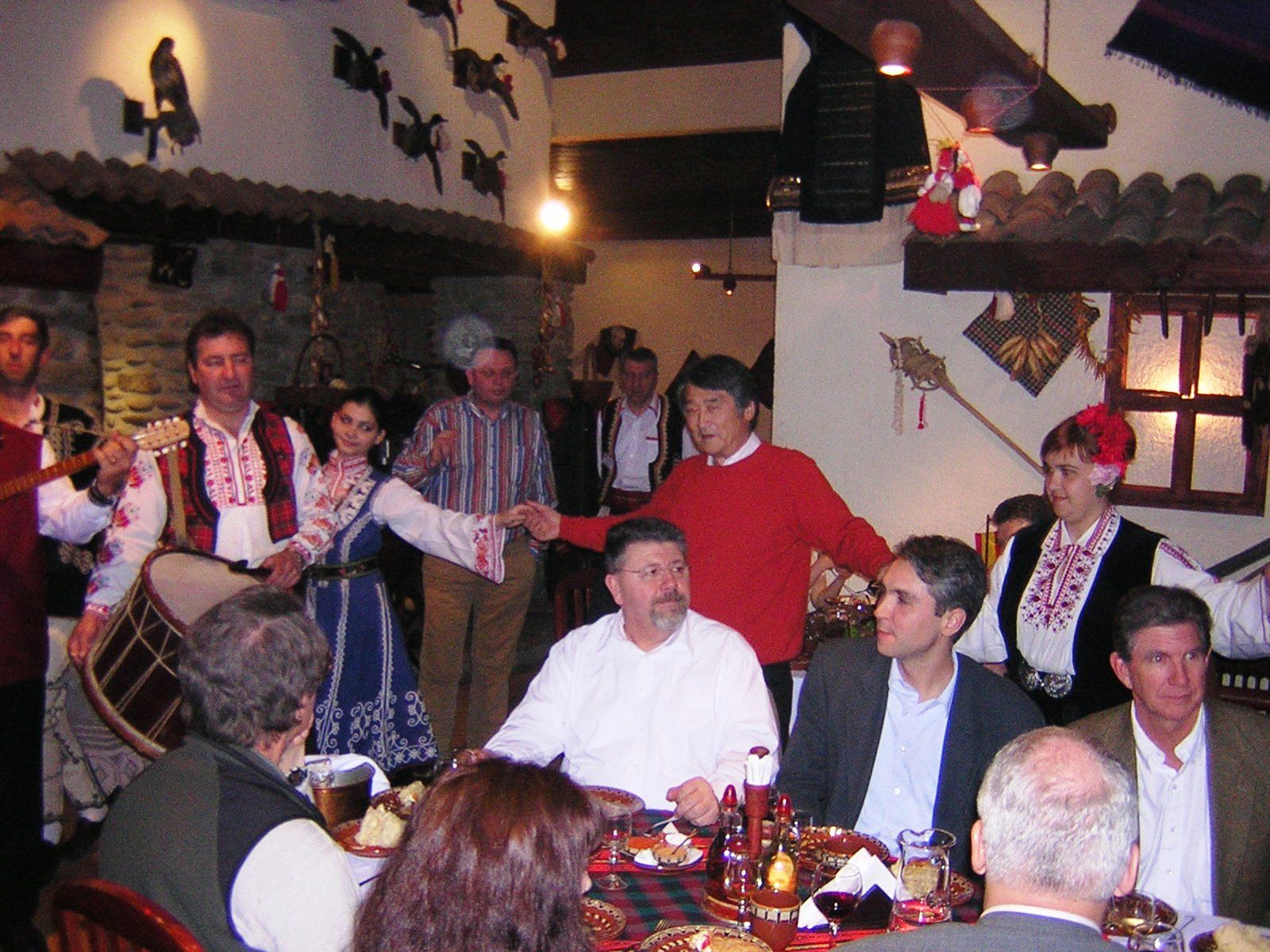
The Best Restaurants in Sofia: 20 Places I'd Book
Sofia eats out in mehanas, garden bistros and one bold tasting menu. These are the 20 restaurants I'd book.
Read the guide