Bulgarian Culture and Traditions: A Visitor's Guide
Bulgarian culture is Orthodox, Slavic and very old, with Thracian, Roman and Ottoman layers underneath. For a visitor it shows up in small things, like a nod that means no, and in big rituals like the masked kukeri of January. This guide covers the customs you will run into, the traditions worth timing a trip around, and where to see them from Sofia.
What Bulgarian culture is known for
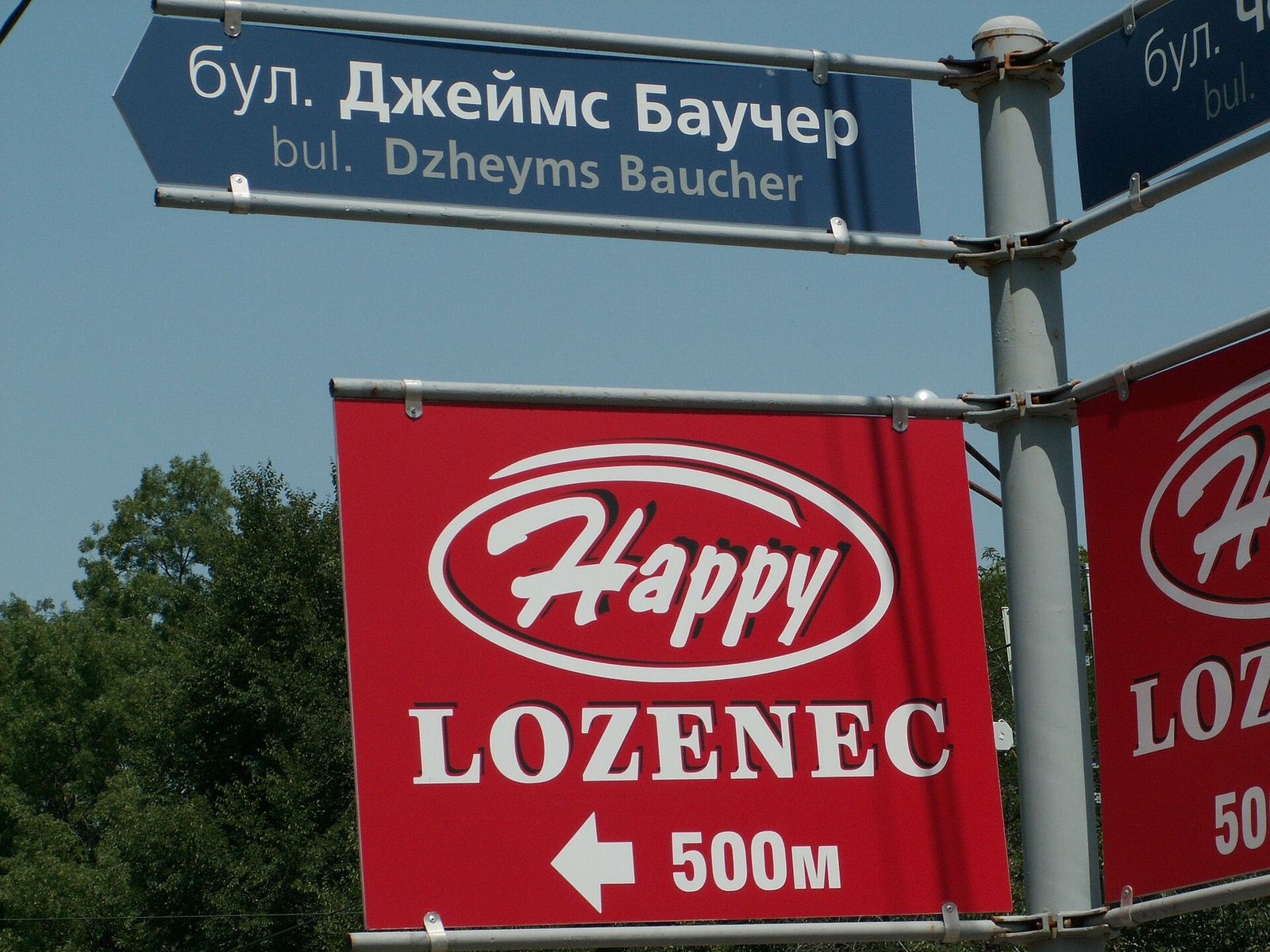
Bulgaria's best-known gift is the Cyrillic alphabet, created here in the 9th century and now used by about 250 million people. Bulgarians celebrate it every 24 May, a national holiday, and the Cyrillic alphabet is the first thing you need to read a street sign in Sofia.
Bulgaria makes rose oil from the roses of the Rose Valley around Kazanlak. It gave its name to Lactobacillus bulgaricus, the bacteria in Bulgarian yogurt, kiselo mlyako. A Bulgarian folk song traveled into space on the Voyager spacecraft. Rakia is the national spirit. For wine, I'd order a Mavrud, made from the local red grape of the same name.
Plovdiv has around 8,000 years of continuous life, the gold found at Varna dates to about 4,500 BC, and the Thracians left some 40,000 burial mounds across the country. Bulgaria's history also includes about five centuries of Ottoman rule, which ended in 1878, and many customs that survived it still mix pagan rituals with Orthodox feast days.
Yes and no: the Bulgarian head nod
Of all Bulgarian etiquette, the nod is the one I'd warn every visitor about. In Bulgaria an upward tilt or nod of the head usually means no, and a side-to-side shake usually means yes.
Plenty of younger Bulgarians in Sofia who speak English switch to the Western gestures with foreigners, so you can't always tell which system someone is using.
Hospitality and the Bulgarian table
At a formal welcome, Bulgarian hosts meet guests with bread and salt: a round ritual loaf with a bowl of salt on top, and you break off a piece and dip it.
At the table, wait for the hostess to start and say yes to a second helping, because refusing again and again reads as rejection. Glasses get topped up all evening, whether it is wine or rakia, so leave a little in yours when you have had enough. A family dinner can easily last three to four hours.
Name days in Bulgaria
Nearly every Bulgarian name has a saint's day in the Orthodox calendar, and the imen den, the name day, is often celebrated as much as a birthday or more. The person whose name day it is plays host: they open their home, put out food and drink and receive visitors all day. The greeting is Chestit imen den, happy name day.
A few name days are big public dates. Gergiovden on 6 May, St George's Day, is also Bulgaria's Armed Forces Day and the name day of every Georgi. Tsvetnitsa, on Palm Sunday, is the day for people with flower names, like Tsvetelina, Violeta or Rosa. Trifon Zarezan on 14 February honors the men named Trifon and is the wine growers' day too.
Baba Marta and the martenitsa
On 1 March, the feast of Baba Marta, Grandma March, Bulgarians give each other martenitsi: small charms of twisted red and white yarn. They come as tassels, bracelets and pairs of little dolls called Pizho, in white, and Penda, in red.
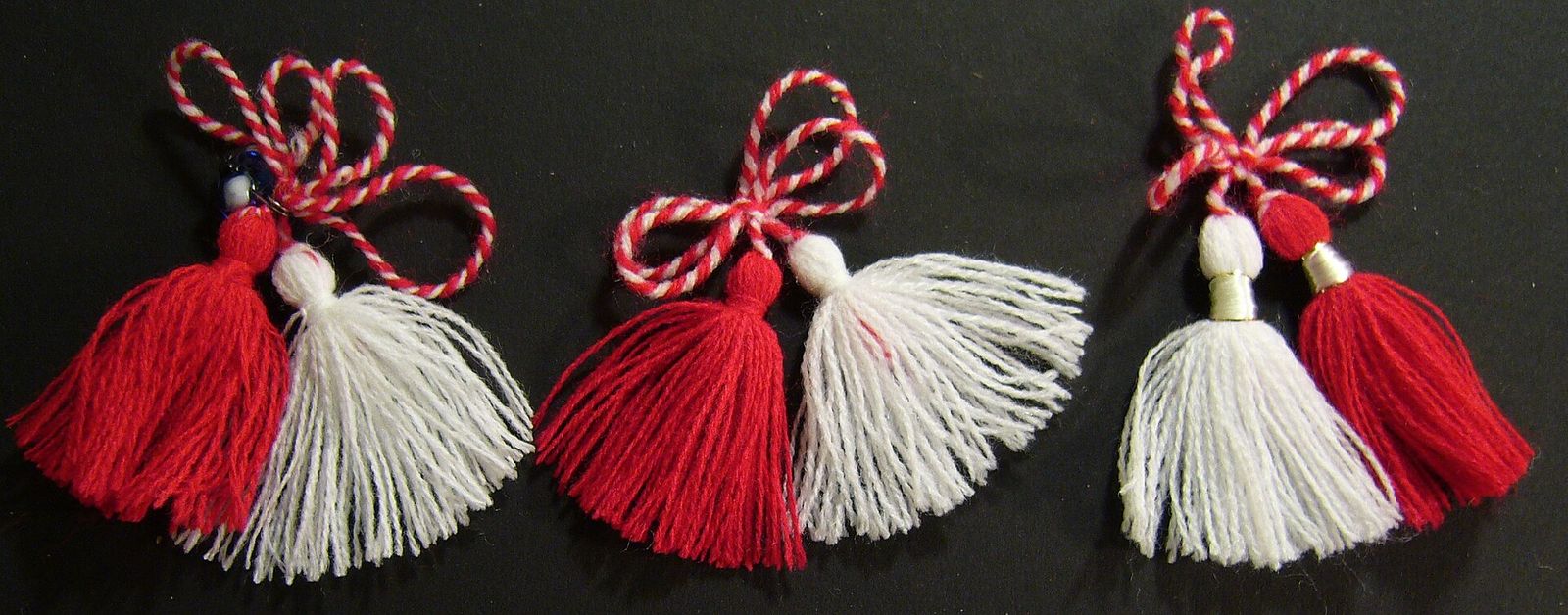
You wear yours pinned to a jacket or tied around your wrist until you see the first stork or a tree in blossom, then tie it to a branch. Because that depends on the spring, people wear them into late March or April. UNESCO listed the custom in 2017, shared with neighbors including Romania and North Macedonia, and the martenitsa is the easiest tradition for a visitor to join.
Kukeri and the Surva festival
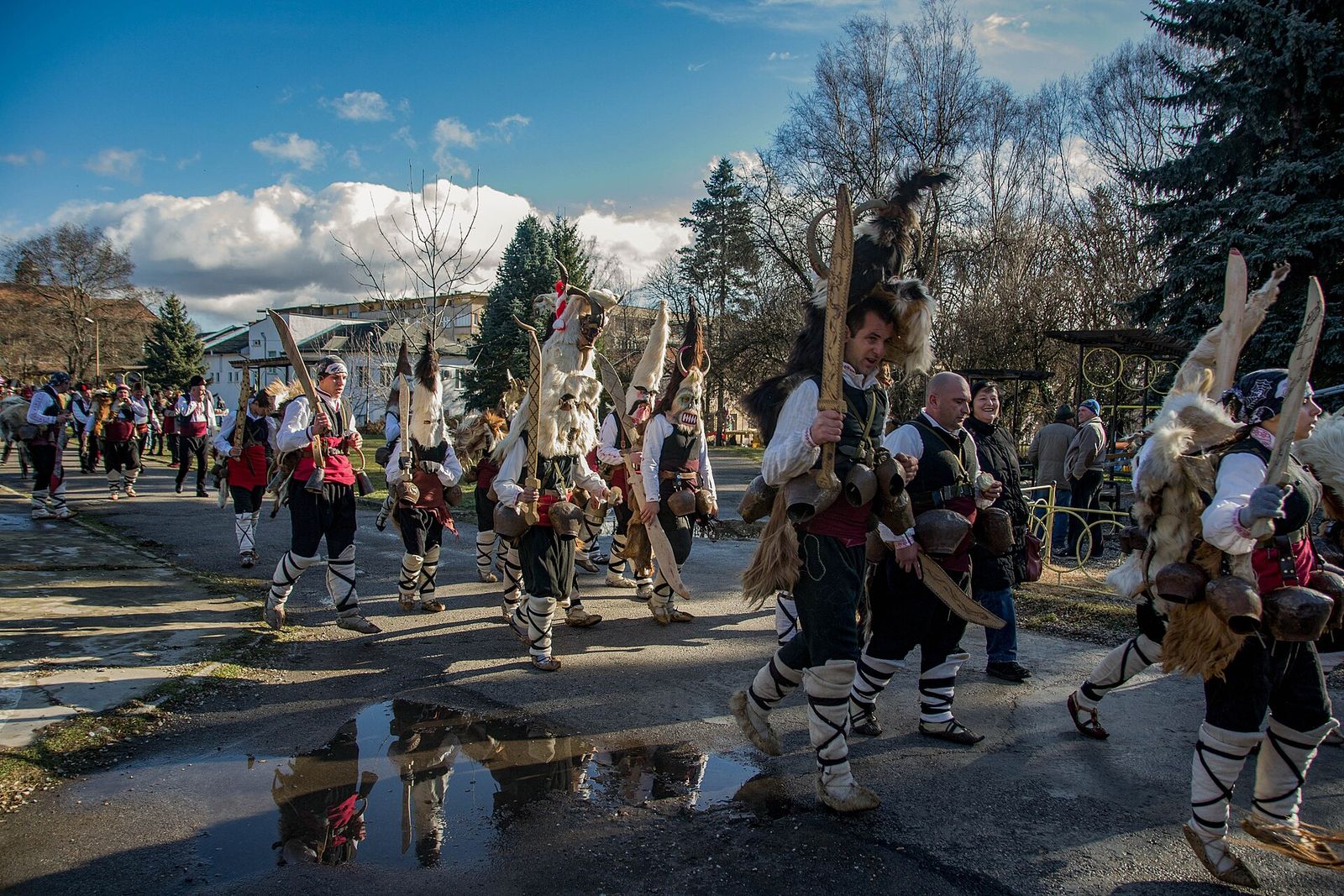
Each January, masked kukeri take over the towns and villages around Pernik. They wear huge animal-fur suits, carved wooden masks with horns and animal faces, and belts hung with heavy iron bells that clang with every step. The noise and the scary faces are there to drive off evil spirits and bring a good harvest.
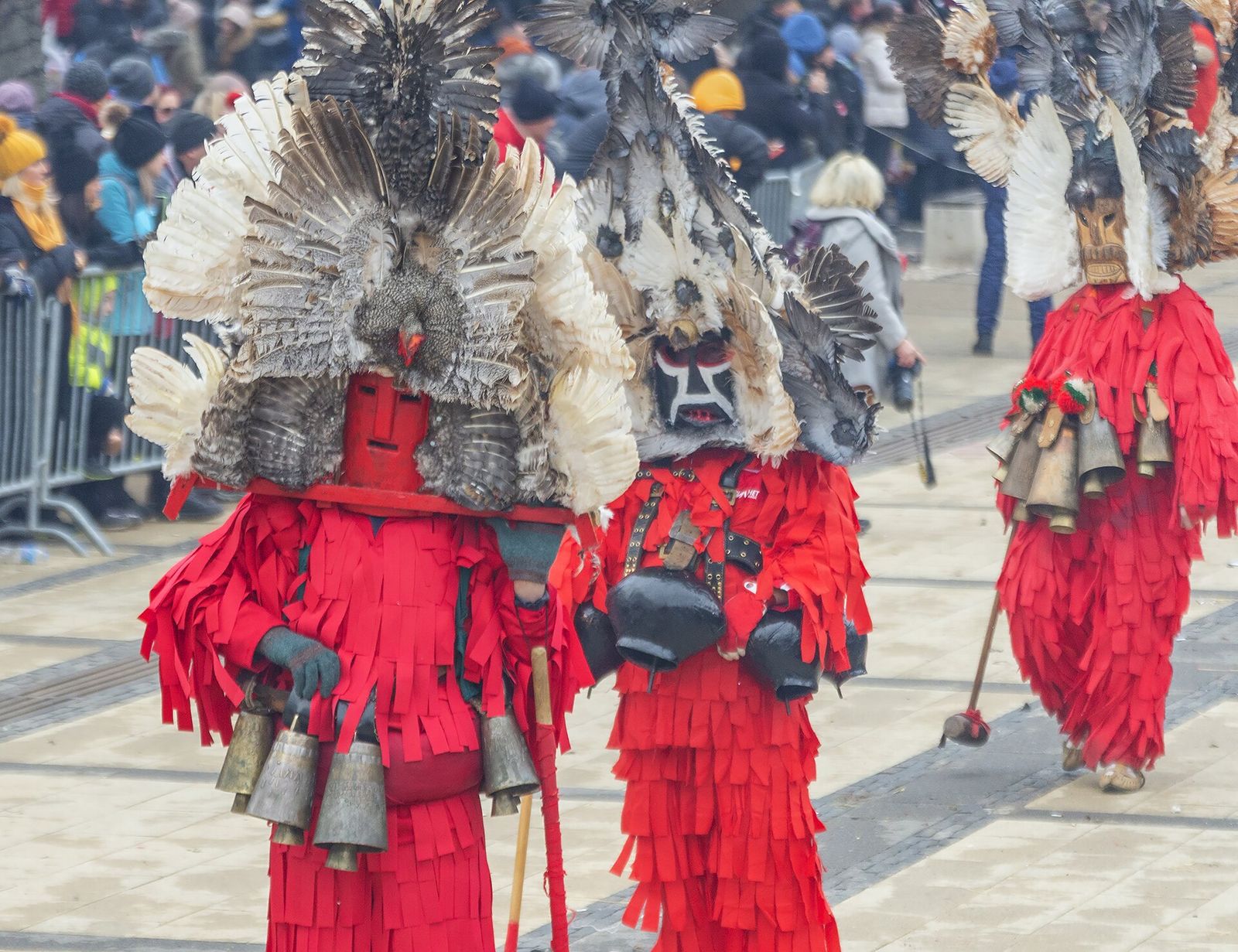
Smaller rituals happen around the old New Year, especially 13 January, when masked survakari groups come out in the villages of the Pernik region.
The biggest gathering is the Surva Masquerade Festival in Pernik, which in 2026 ran from 16 to 25 January over two weekends. UNESCO listed the Surova folk feast of the Pernik region in 2015. The kukeri are the one tradition I'd plan a winter trip around.
Nestinarstvo: fire-dancing in the Strandzha
On 3 and 4 June, the feast of Saints Constantine and Helena, the village of Bulgari in the Strandzha mountains holds its nestinarstvo, a feast with fire-dancing. The day starts with a procession carrying the saints' icons, wrapped in red cloth, to a holy spring, to the sound of a drum and a gaida, the goatskin bagpipe. Candles and holy water go around the crowd.
After dark, the people stand in a circle around a bed of glowing embers, the sacred drum starts, and the nestinari dance across the coals barefoot in a trance. It is a devotional act, believed to keep the village and its crops healthy, and UNESCO listed it in 2009.
Folk music, the horo and the Bistritsa Babi
The horo
At weddings, name days, village fairs and national holidays, the moment the music starts Bulgarians join a horo: a circle or open chain of dancers holding hands or shoulders. Bulgarian folk music runs in odd rhythms, 7/8, 9/8 and 11/16, which sound lopsided to ears raised on 4/4. The pravo horo, a simple straight chain, is the one I'd try first. The rachenitsa, in 7/8, is a faster solo or couples dance with fiddly footwork.
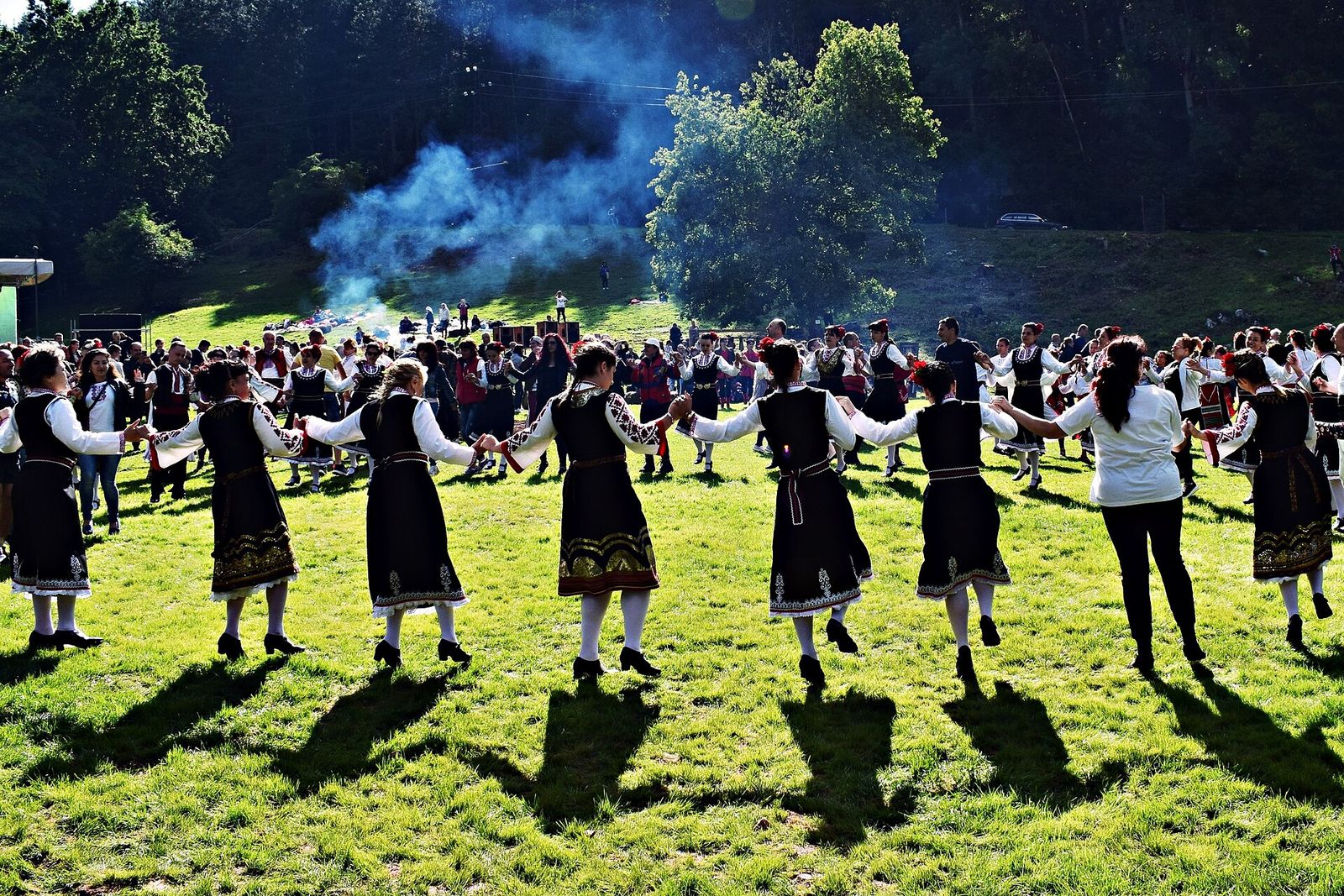
The instruments of Bulgarian folk music and dance are as distinctive as the rhythms: the gaida bagpipe with its steady drone, the kaval, an end-blown flute, the gadulka, a bowed string instrument held upright, and the tupan, a big double-headed drum. UNESCO added Bulgarian bagpipe playing to its list in 2025.
The Bistritsa Babi
The Bistritsa Babi are a group of mostly older women from the village of Bistritsa. In traditional dress, they hold each other by the belt and move around in a slow circle while singing the old polyphony of the Shoplouk, the region around Sofia. UNESCO listed the Bistritsa Babi in 2008, together with the dances and rituals of the Shoplouk.
Easter and Christmas in Bulgaria
Bulgarians follow the Orthodox calendar, so Easter, Velikden, often falls on a different Sunday from Western Easter. Many people keep the Lent fast before it, with no meat, fish, dairy or eggs. Eggs are dyed red on the Thursday before Easter, and on the day people knock them together to see whose egg lasts without a crack.
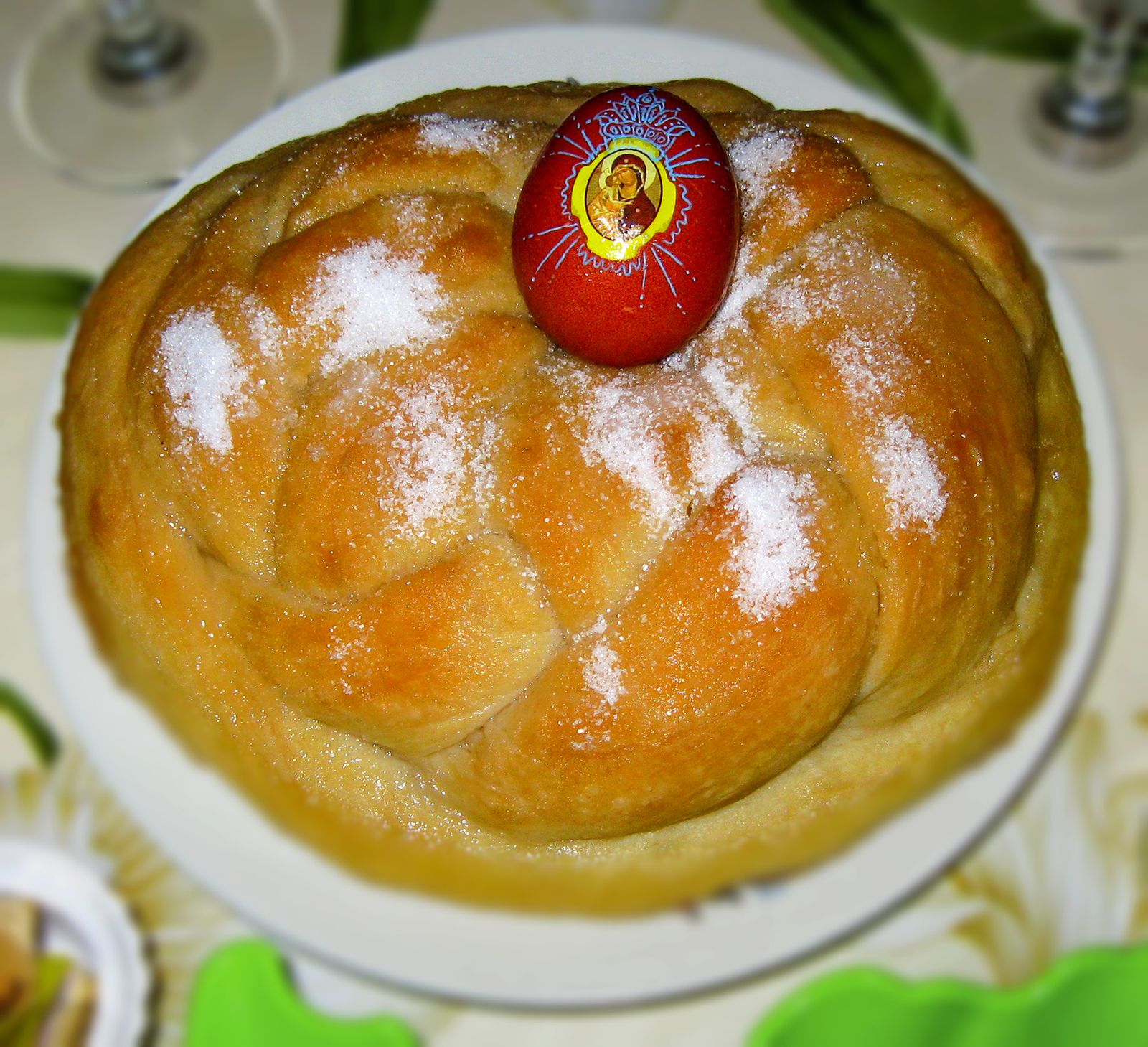
The Easter table centers on roast lamb and kozunak, a rich braided sweet bread. The midnight service on Holy Saturday is the emotional peak of Easter in Bulgaria, and afterwards people try to carry their lit candles home without letting them go out.
Christmas Eve, 24 December, is the main family night of Christmas and New Year in Sofia, as everywhere in Bulgaria. The dinner is all plant-based, closing the Advent fast, and the number of dishes must be odd: seven, nine or eleven. An oak log, the badnik, burns in the fireplace until morning, and groups of young men, the koledari, go from house to house singing carols. On New Year's Day children tap the grown-ups with decorated cornel sticks and recite wishes for health and a good year.
The rose harvest in the Rose Valley
From late May to mid-June, the Rose Valley around Kazanlak harvests its Damask roses, Rosa damascena. Bulgaria is one of the world's biggest producers of rose oil, and the roses are picked by hand every morning between about 5 and 10 AM, before the heat burns off the oil.
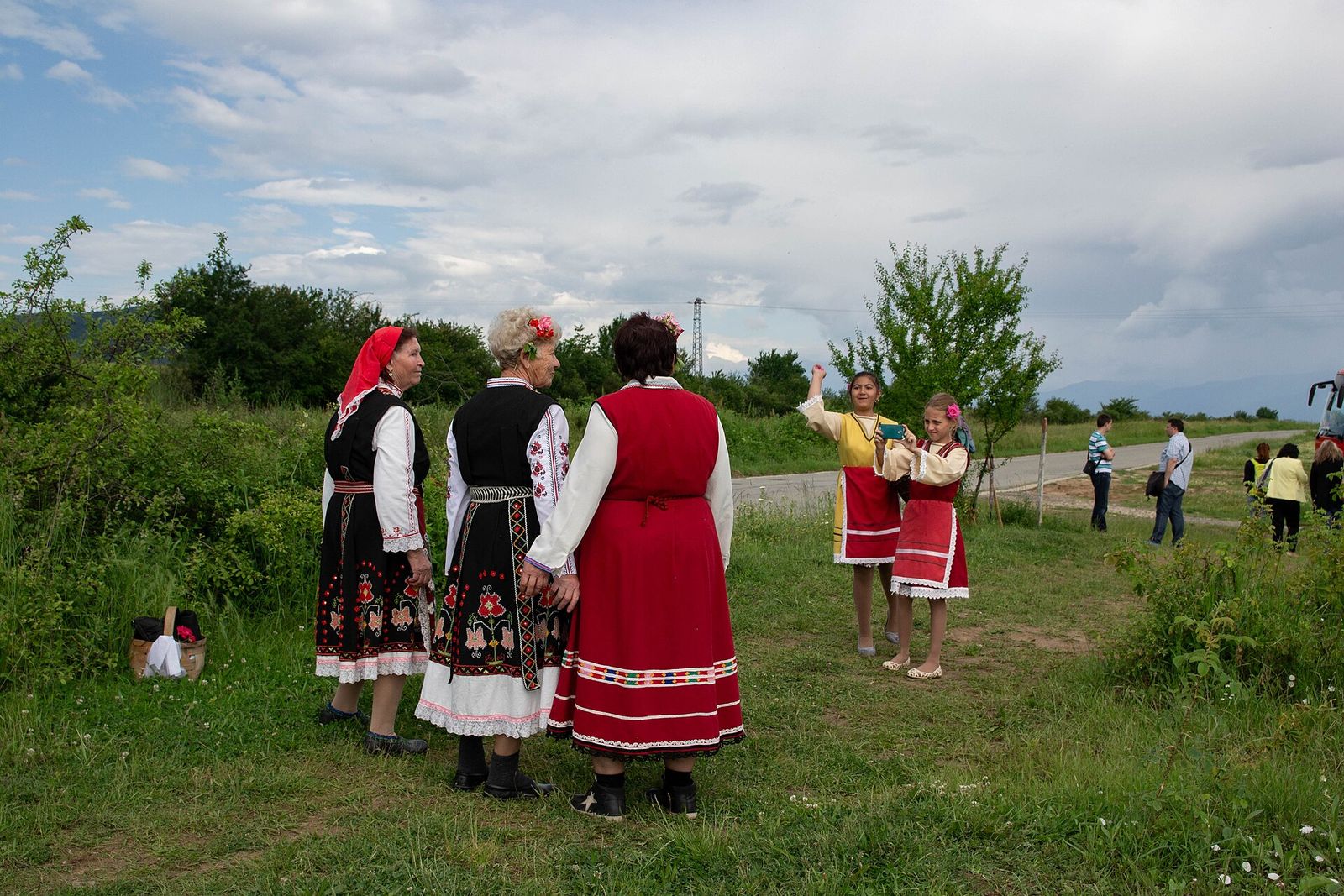
The Rose Festival in Kazanlak falls on the first weekend of June, with rose-picking in the villages around town, a parade and the crowning of a Rose Queen. The Thracian tomb of Kazanlak, on UNESCO's World Heritage list, is in the same town and makes the trip a full day.
Chitalishta and the Koprivshtitsa festival
Towns and villages all over Bulgaria have a chitalishte, a community center set up and run by local people. The first ones opened in 1856, and they still work as libraries, reading rooms and meeting places, where older members teach dancing and songs to children. Anyone can join. UNESCO listed them in 2017.
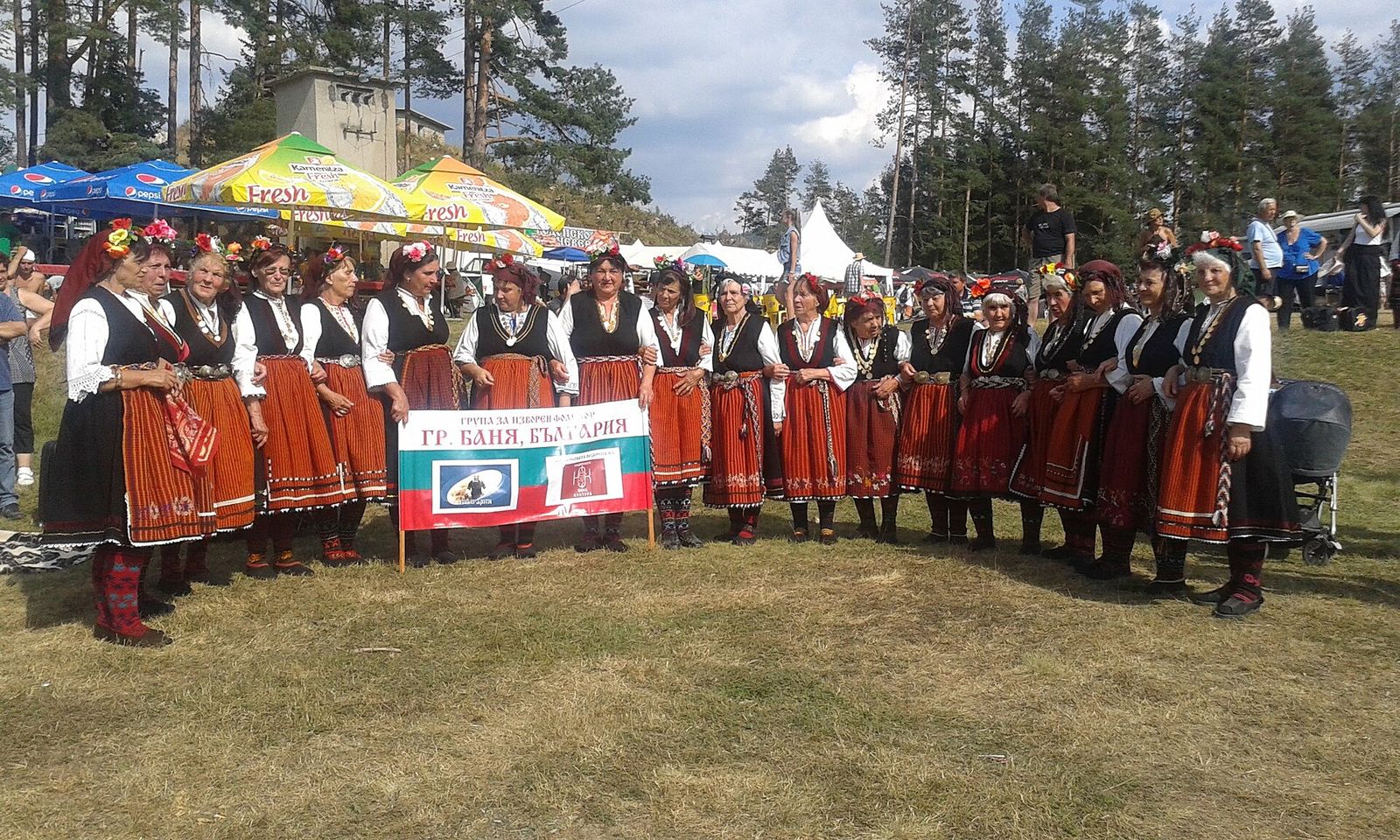
The biggest folklore gathering among Bulgaria's festivals is the National Folklore Festival in Koprivshtitsa, held every five years, most recently in 2025. Thousands of Bulgarians, people from the diaspora and foreign visitors come to watch the dances, songs and crafts, and UNESCO listed the festival in 2016.
Bulgaria's UNESCO living traditions
UNESCO's list of intangible cultural heritage has 9 Bulgarian entries, two of them on its register of good safeguarding practices.
| Tradition | Listed | Where |
|---|---|---|
| Bistritsa Babi polyphonic singing | 2008 | Bistritsa, on the edge of Sofia |
| Nestinarstvo fire-dancing | 2009 | Bulgari, Strandzha mountains |
| Chiprovtsi carpet-making | 2014 | Chiprovtsi, northwest Bulgaria |
| Surova folk feast (Surva) | 2015 | Pernik region |
| Koprivshtitsa folklore festival | 2016 | Koprivshtitsa |
| Chitalishte community centers | 2017 | Towns and villages everywhere |
| Martenitsa | 2017 | Everywhere, shared with neighbors |
| Visoko multipart singing | 2021 | Dolen and Satovcha |
| Bagpipe playing | 2025 | Across Bulgaria |
The Chiprovtsi carpets are woven by hand on vertical looms by the women of the village.
Bulgarian traditions calendar
| When | Tradition | Where to see it |
|---|---|---|
| Around 13 January | Survakari and village kukeri | Villages of the Pernik region |
| Late January | Surva Masquerade Festival | Pernik |
| 14 February | Trifon Zarezan, the wine growers' day | Across Bulgaria |
| 1 March | Baba Marta and the martenitsa | Everywhere, Sofia included |
| Orthodox Easter | Velikden, red eggs and the midnight service | Churches everywhere |
| 6 May | Gergiovden, St George's Day | Everywhere |
| 24 May | Day of the Cyrillic alphabet | Everywhere |
| Late May to mid-June | Rose harvest, festival on the first June weekend | Kazanlak and the Rose Valley |
| 3 and 4 June | Nestinarstvo | Bulgari, Strandzha |
| 24 December | Christmas Eve dinner and koledari | Family homes |
| 1 January | Children's New Year blessings | Family homes |
Orthodox Easter and the Surva weekends move from year to year; the other rows are fixed dates or seasons.
Where to see Bulgarian culture from Sofia
In Sofia itself, start with the Thracian gold at the National Archaeological Museum, first among the best museums in Sofia. Bistritsa, home of the Bistritsa Babi, is a village on the city's edge at the foot of Vitosha.
Farther out, the big traditions are day trips: Pernik, a short drive west, for Surva in January, Kazanlak for the rose harvest, and Koprivshtitsa when the folklore festival comes around every five years. For Orthodox Bulgaria, the day trip is Rila Monastery, in the mountains south of Sofia.
Key takeaways
- A nod means no and a head shake means yes in Bulgaria, so use da and ne.
- 1 March is martenitsa day: wear the red-and-white charm until you see a stork or a blossoming tree.
- The kukeri come out in January, with the Surva festival in Pernik as the biggest show.
- UNESCO lists 9 Bulgarian traditions, including fire-dancing in Bulgari on 3 and 4 June.
- As a guest, bring an odd number of flowers, never chrysanthemums, and take the second helping.
Frequently asked questions
What is Bulgarian culture known for?
Bulgaria is known for giving the world the Cyrillic alphabet, for rose oil and yogurt, and for folk traditions like the kukeri, fire-dancing and polyphonic singing. UNESCO lists 9 of those living traditions.
What religion are Bulgarians?
Bulgaria's main faith is Eastern Orthodox Christianity. Easter, Christmas Eve and the name days of the Orthodox calendar are the biggest dates of the family year.
Do Bulgarians shake their head for yes?
Yes, in Bulgaria a side-to-side shake usually means yes and a nod usually means no. Many younger Bulgarians switch to Western gestures with foreigners, so listen for da (yes) and ne (no) to be sure.
What are typical Bulgarian traditions?
The best known are the martenitsa on 1 March, the masked kukeri in January, fire-dancing on 3 and 4 June, and name days, which are often bigger than birthdays. The horo, a circle dance, turns up at every celebration.
What is a name day in Bulgaria?
A name day is the feast of the saint who shares your name, and in Bulgaria it is often celebrated more than a birthday. The person celebrating is the host and treats their visitors, who greet them with Chestit imen den.
Is Bulgarian culture similar to Greek or Turkish culture?
In parts. All three share Balkan food, music and Ottoman-era history, and Bulgaria shares Orthodox Christianity with Greece. The Slavic language and the Cyrillic alphabet set Bulgaria apart from both.
What should I be careful of in Bulgaria?
Watch the head nod, which means no, and confirm answers with da or ne. As a guest, do not bring chrysanthemums, lilies or gladioli, which are funeral flowers, and do not keep refusing food, which reads as rejection.
How do Bulgarians say "I love you"?
Bulgarians say obicham te. For a visitor, basic Bulgarian phrases like zdraveyte (hello) and blagodarya (thank you) are more useful day to day.
Bulgarian Phrases for Travelers: The Words I'd Learn First
Bulgarian is written in Cyrillic and read the way it looks. Here are the phrases I would learn before a trip to Sofia.
Read the guide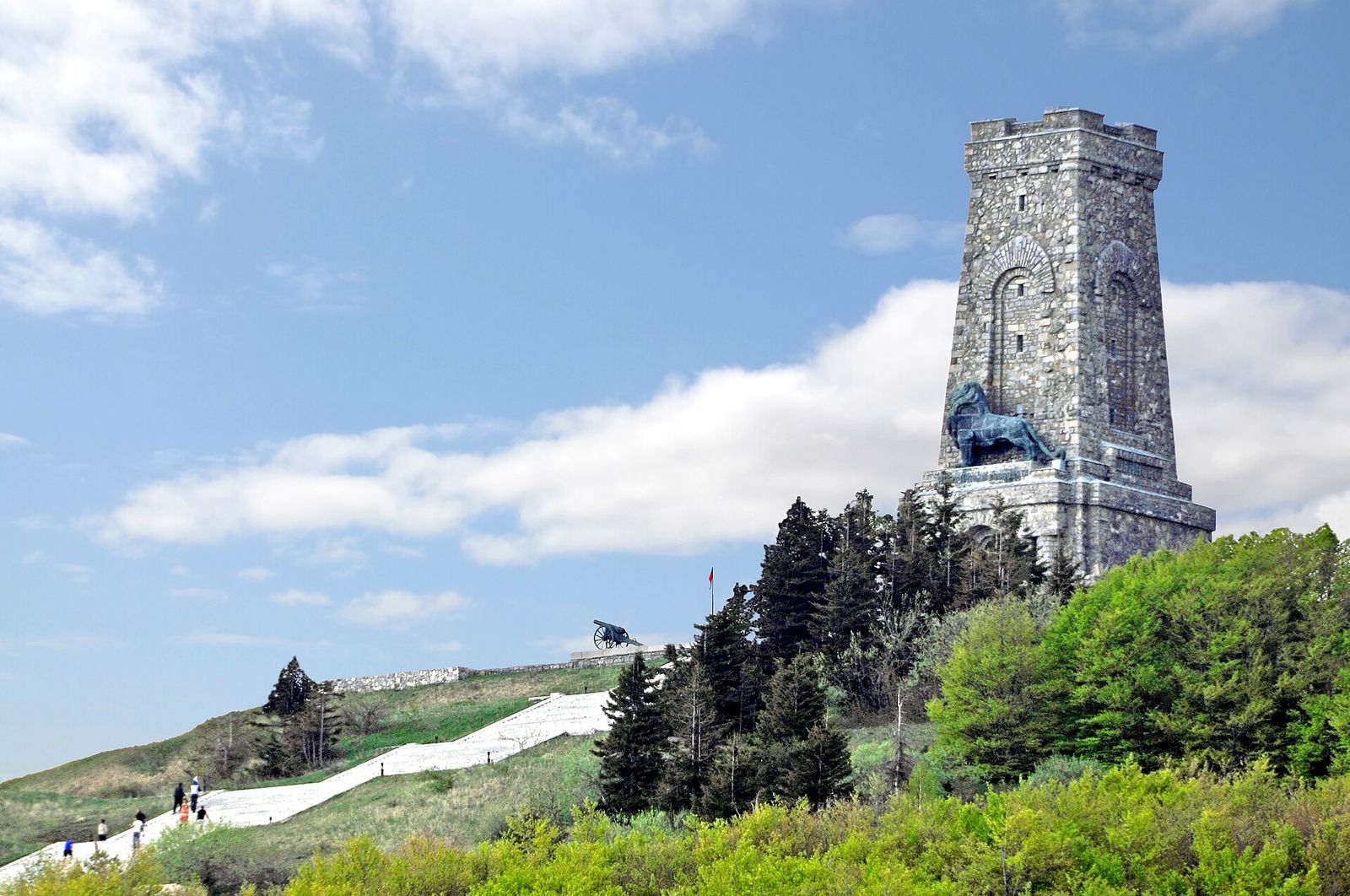
A Short History of Bulgaria
Bulgaria has kept its name since 681. Here is its history era by era, and where each chapter still stands in Sofia.
Read the guide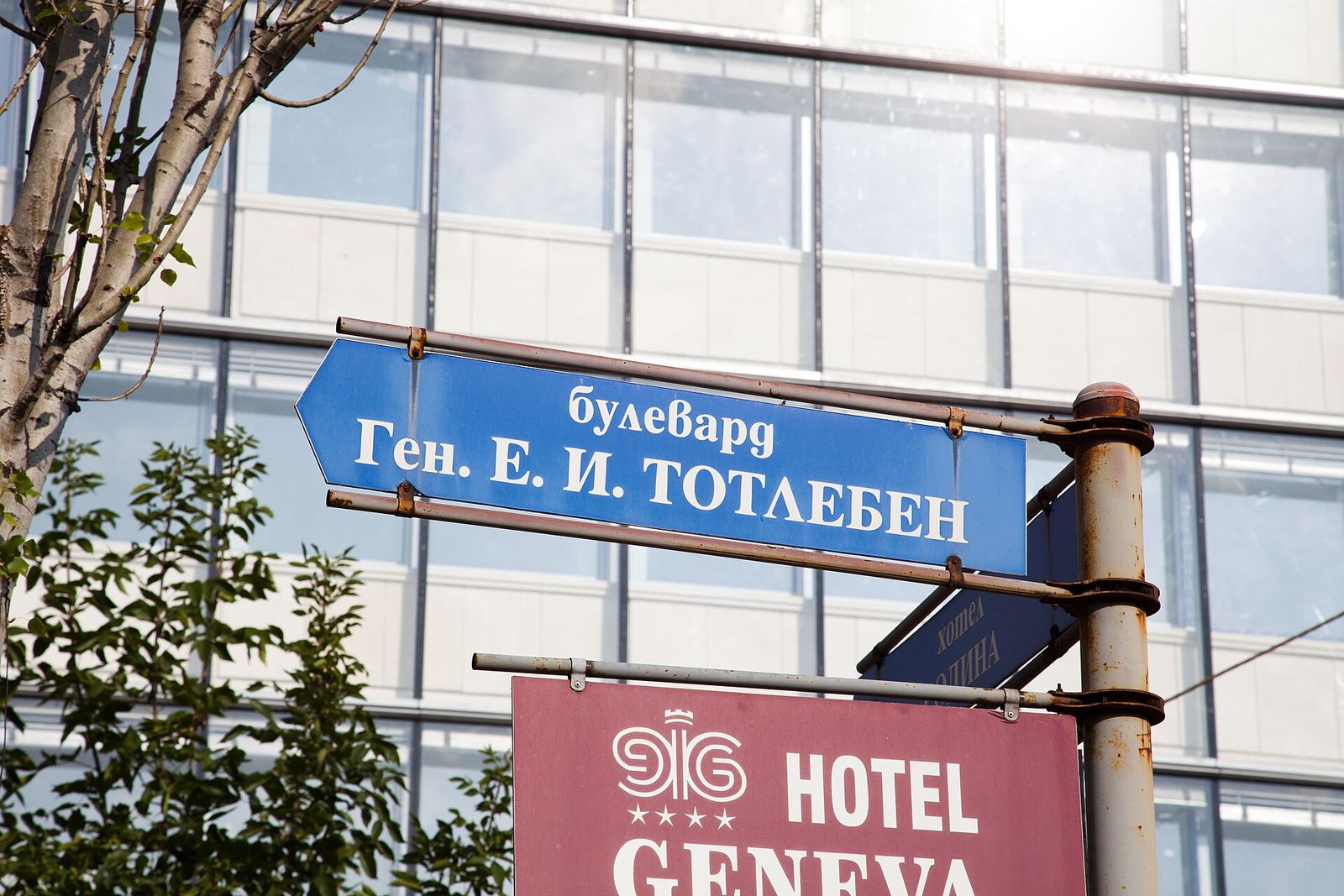
The Cyrillic Alphabet in Bulgaria
Cyrillic was born in Bulgaria. Here are its 30 letters, how to read a Sofia street sign, and what 24 May celebrates.
Read the guide