Getting Around Sofia: Metro, Trams, Buses and Taxis
Sofia is a compact capital with a cheap public transport network: four metro lines, plus trams, trolleybuses and buses, all on the same €0.80 fare. Here are the 2026 tickets and how to pay with a bank card, which line reaches which sight, what runs after midnight, and when I'd walk or take a taxi instead.
Getting around Sofia at a glance
For most visitors, Sofia comes down to walking in the center and the metro for anything farther. Trams and buses fill the gaps, mainly for Boyana and Vitosha Mountain, and taxis cover late nights.
| How | Best for | Price | Hours |
|---|---|---|---|
| Walking | The center between Serdika, NDK and Alexander Nevsky | Free | Any time |
| Metro | The airport, NDK, the railway station, Vitosha station | €0.80 | About 5 AM to midnight |
| Trams and trolleybuses | Rides beyond walking distance | €0.80 for 30 minutes | Daytime and evening |
| Buses | Boyana, Vitosha Mountain, the airport | €0.80 for 30 minutes | Daytime and evening |
| Night buses | Getting home after the metro stops | Included in the €3 24-hour card | Midnight to 4 AM |
| Taxi | Late nights, luggage, groups | About €5 for 5 km by day | 24 hours |
Walking around central Sofia
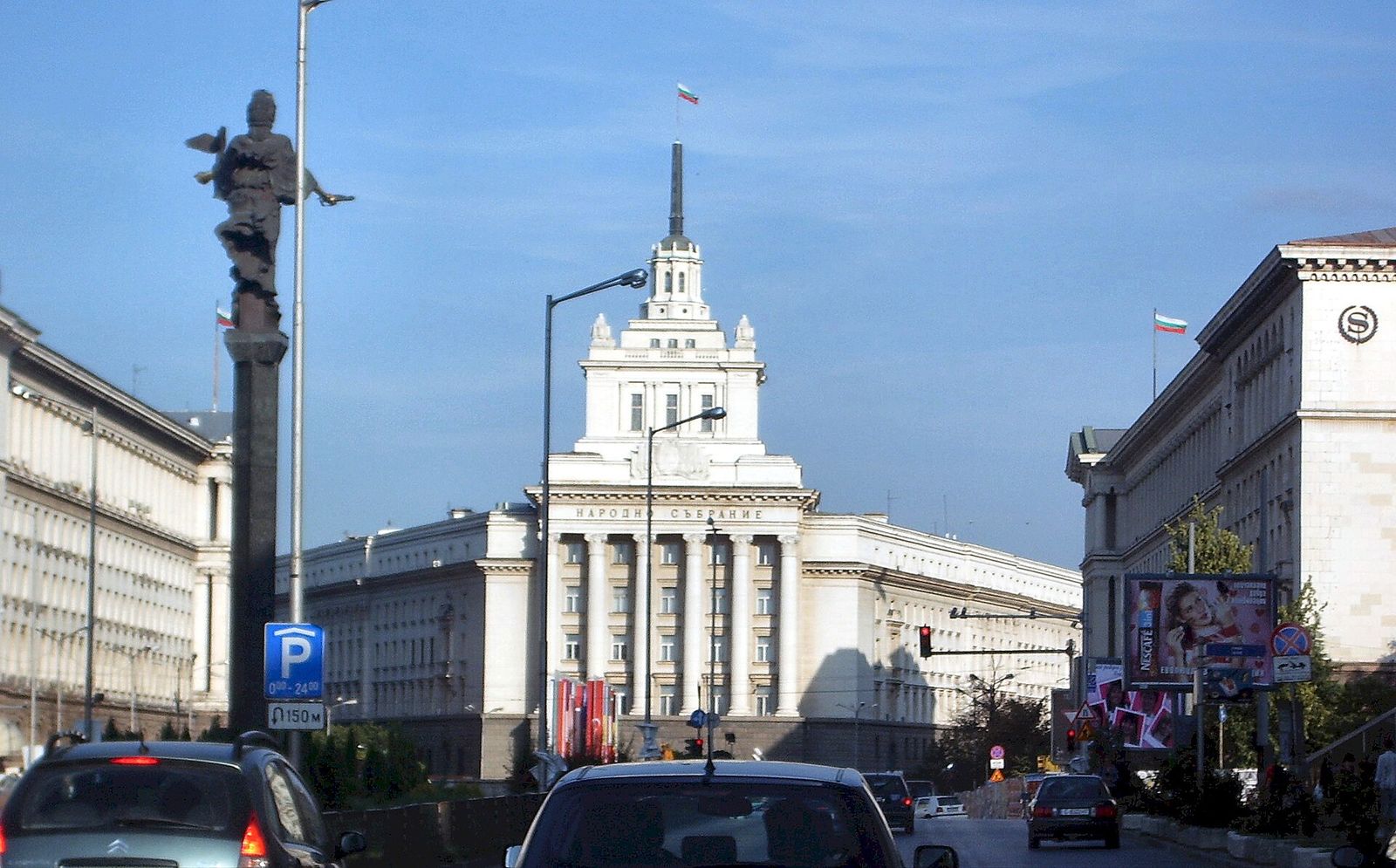
I'd walk almost everywhere in the center. Serdika station, the ruins of the Roman town, the Banya Bashi Mosque and the synagogue sit within a few minutes of each other. Alexander Nevsky Cathedral lies a short walk east, and the National Palace of Culture stands at the far end of Vitosha Boulevard.
Vitosha Boulevard runs 2.7 km from St Nedelya Square toward South Park, with a long car-free stretch through the middle, and it is the easiest walking route between the north and south of the center.
Public transport tickets and fares
Every fare has been in euros since 1 January 2026. The ticket most visitors use is the 30-minute ticket, which the operator calls Ticket 30 plus. It costs €0.80 and lets you change between the metro and any tram, trolleybus or bus within 30 minutes of the first validation. Validate it again in every vehicle you board.
| Ticket | Price | What it covers |
|---|---|---|
| Single metro ticket (paper) | €0.80 | One metro trip from the station where you bought it, within 60 minutes |
| Ticket 30 plus | €0.80 | Metro and surface transport, changes within 30 minutes |
| Ticket 60 plus | €1.10 | Metro and surface transport, changes within 60 minutes (card only) |
| Day card | €2 | Unlimited rides that day |
| 24-hour card | €3 | 24 hours, night lines included |
| 72-hour card | €7.60 | 72 hours, night lines included |
You do not need to buy any of these in advance. Tap a contactless bank card or phone on the reader at a metro gate or on the validator inside a tram or bus, and it buys the €0.80 ticket for you. Keep tapping the same card and the fares stop once you reach €2 in a day. Paper metro tickets do not count toward that cap.
The day cards load onto a Sofia City Card or an Ultralight card at the metro ticket desks, and the day pass is also sold in the Mpass app. Each passenger carries two pieces of luggage free, and each extra piece needs its own ticket.
The Sofia metro
The Sofia metro is the fastest way across the city, with four lines meeting in the center. On the airport line, trains come every 7 to 14 minutes on weekdays and every 12 to 15 minutes on weekends.
These are the lines and stations I'd expect a visitor to use:
- M4, the yellow line, starts at Sofia Airport next to Terminal 2 and reaches Serdika in about 20 minutes, with Sofia University, the stop for Alexander Nevsky, one station before it.
- M2, the blue line, crosses the center through Serdika II and NDK. Going north it reaches Central Railway Station two stops after Serdika II, and going south it ends at Vitosha station, where the buses to Boyana and the mountain leave.
- Serdika and Serdika II form the main interchange. The Roman streets and buildings of ancient Serdica were uncovered while the station was built, and you can walk through them for free during metro hours.
- Patriarh Evtimiy on line 3 sits a short walk from the bars around Tsar Shishman and Graf Ignatiev streets.
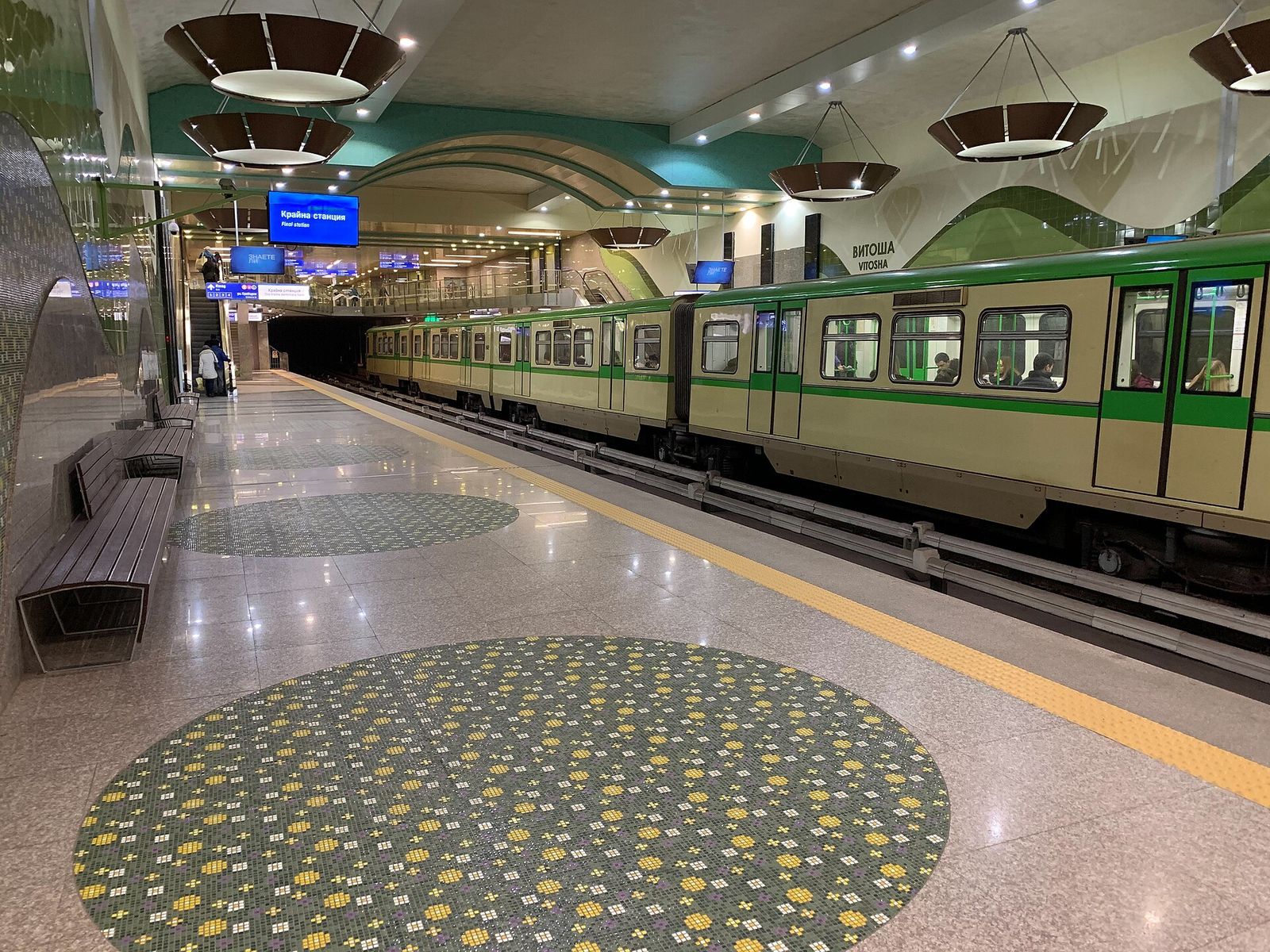
The first trains run a little after 5 AM. On weekdays, and Friday counts as one, the last train toward the airport passes Sofia University at 11:26 PM, line 3 leaves Patriarh Evtimiy just before midnight, and line 2 leaves NDK at 11:58 PM and 12:14 AM. On Saturdays, Sundays and holidays the last trains move by a few minutes, so check the time at the station before a late dinner.
The ride from Sofia Airport to the city center costs the same €0.80 as any other metro trip.
Trams, trolleybuses and buses
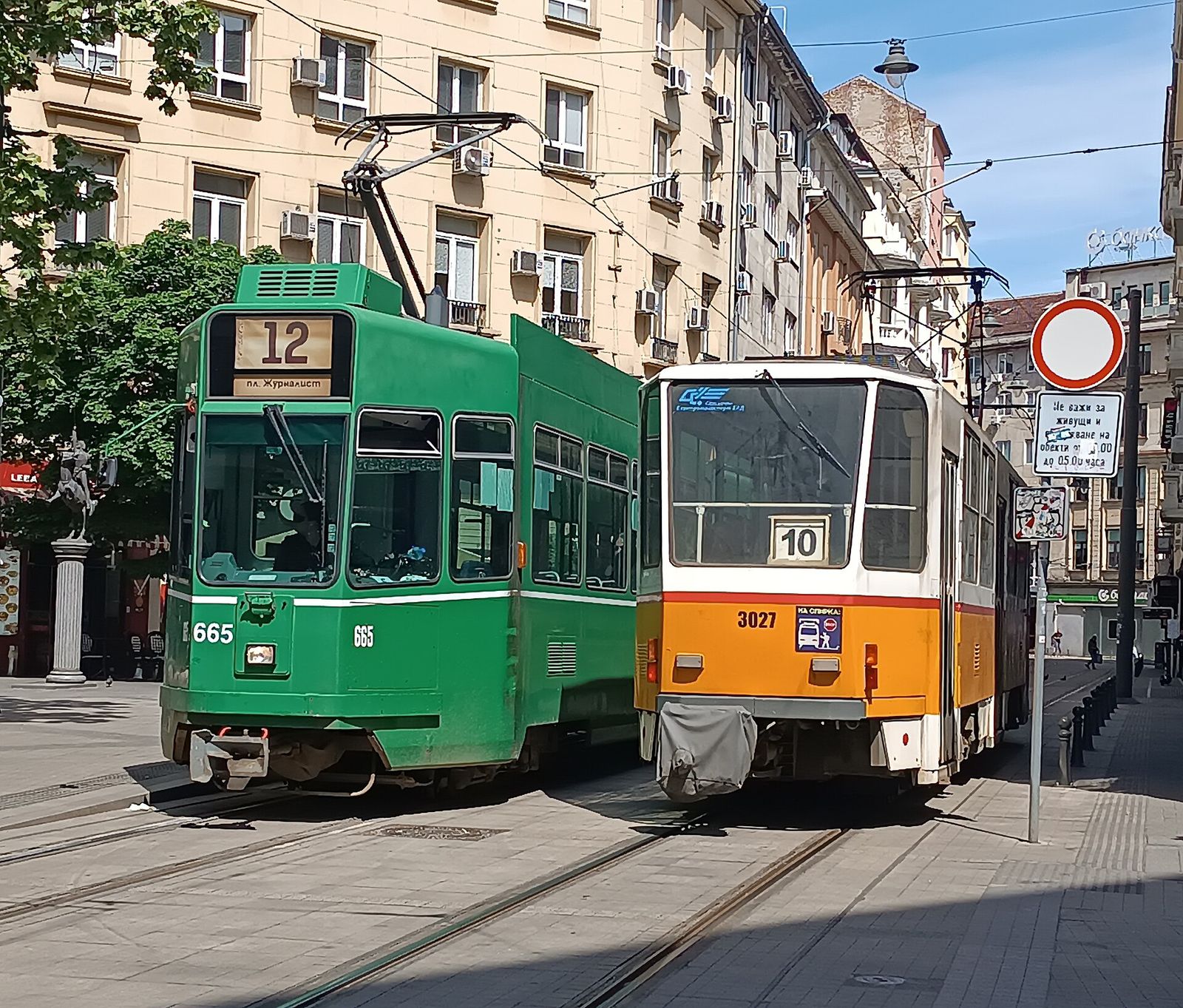
Sofia also runs trams, trolleybuses and buses, and the 30-minute ticket and card taps work on all of them. I'd save them for the edge of the city, since walking is quicker in the center.
The buses I'd point visitors to are the ones that reach the sights the metro misses. Bus 64 leaves from near Vitosha metro station for Boyana and runs every 15 to 20 minutes. Bus 66 runs from the same station up to Aleko on Vitosha Mountain, with more departures on weekends. Bus 84 links the airport with Gen. Gurko Street in the center, and bus 63 serves the National Historical Museum, which is not on the metro.
Getting to the sights by public transport
Here is how I'd reach the sights that most visitors ask about, from the center.
| Sight | How to get there | Time and notes |
|---|---|---|
| Alexander Nevsky Cathedral | Metro M4 to Sofia University | About 250 m from the station |
| Ancient Serdica | Metro to Serdika | Ruins inside the station complex, free |
| National Palace of Culture | Metro M2 to NDK | South end of Vitosha Boulevard |
| Boyana Church | M2 to Vitosha, then bus 64 to Boyansko Hanche | 30 to 40 minutes, then a 5-minute walk |
| Aleko on Vitosha Mountain | M2 to Vitosha, then bus 66 | More buses on weekends |
| National Historical Museum | Bus 63, or a taxi | Taxi about 20 to 25 minutes |
| Central Railway and Bus Stations | M2 from Serdika II toward Obelya | Second stop |
| Sofia Airport | M4 from Serdika | About 20 minutes |
For Boyana Church, the medieval church at the foot of Vitosha, the metro and bus 64 take 30 to 40 minutes, and a taxi from the center costs about €15 to €20. The same Vitosha station is the start for Vitosha Mountain, where bus 66 climbs to Aleko, the base for the hike to Cherni Vrah at 2,290 m.
Alexander Nevsky Cathedral is about 850 m from Serdika, a 10-minute walk, so the metro is only worth it there in rain or snow.
Public transport at night
Night buses N1 to N4 leave Knyaz Alexander I Square on the hour from midnight to 4 AM. N2 reaches Studentski Grad, the student district with the club streets, in about 30 minutes and comes back at half past, with the last run at 3:30 AM.
Most of Sofia's nightlife sits in the center, which stays busy late, so walking back from the bars around Vitosha Boulevard and Tsar Shishman Street is easy. For anywhere farther after the metro stops, I'd take a taxi.
Taxis and ride apps in Sofia
Uber left Bulgaria in 2015. Bolt runs no cars in the country, only e-bikes and scooters. What works is a licensed cab from a company such as TaxiMe, Yellow! or OK Supertrans, ordered in their apps or by phone. A 5 km ride across the center by day comes to about €5 on OK Supertrans's published tariff, and about €8.50 for 8 km at night.
A licensed cab is yellow, or green for hybrids and electric cars, with a roof sign and a checkered band on the doors. Taxis in Sofia all carry a price sticker on the windshield, and the meter must be running before the car moves.
Bikes and scooters
Bolt's Sofia app offers e-bikes and electric scooters. Borisova Gradina, the oldest and biggest park in the center, is where I'd ride one. On the streets, keep your wheels well clear of the tram tracks.
Apps for planning routes
Google Maps and Moovit both show Sofia's routes and departures for trams and buses as well as the metro, and I'd have one of them open on any ride outside the center.
Leaving Sofia by train and bus
Central Railway Station and the Central Bus Station stand next to each other in the north of the center, two stops from Serdika II on the blue M2 line. Trains and coaches to Plovdiv and the Black Sea coast leave from there, so getting around Bulgaria from Sofia starts on the blue line.
Staying safe on Sofia's public transport
Sofia's metro, trams and buses are safe to use, and the main risk is pickpockets in crowded vehicles and stations. Keep your phone and wallet in a front pocket or a closed bag at rush hour and on the airport line. Unlicensed taxis at the airport are a bigger risk than anything on the metro. After the last train, Sofia is safe to walk around Vitosha Boulevard.
Key takeaways
- Walk the center, and save the metro for the airport, NDK and the railway station.
- One €0.80 ticket covers 30 minutes across the metro, trams, trolleybuses and buses, changes included.
- Tap a contactless card and the fares stop at €2 a day, and validate in every vehicle.
- Take bus 64 for Boyana and bus 66 for Vitosha Mountain, both from Vitosha metro station.
- After about midnight, use the night buses from Knyaz Alexander I Square or a licensed taxi.
Frequently asked questions
How do I pay for public transport in Sofia?
Tap a contactless bank card or phone on the metro gate or on the validator inside a tram or bus, and it charges €0.80 for 30 minutes of travel. You can also buy paper tickets and day cards at metro ticket desks. Card taps stop charging once you reach €2 in a day.
How much is a metro ticket in Sofia?
A single metro ticket costs €0.80, and so does the 30-minute ticket that also covers trams and buses. A day card costs €2, a 24-hour card with night lines €3, and a 72-hour card €7.60.
Is there a day pass for Sofia public transport?
Yes, the day card costs €2 and covers unlimited rides on the metro, trams, trolleybuses and buses that day. Paying every ride with the same contactless card gives the same result, because the fares stop at €2.
What time does the Sofia metro close?
The last trains leave the central stations between about 11:25 PM and 12:15 AM on weekdays, and the weekend times differ by a few minutes. The first trains run a little after 5 AM, and night buses cover the hours in between.
Does Sofia have Uber?
No, Uber stopped in Bulgaria in 2015, and Bolt only offers e-bikes and scooters in Sofia. Use licensed taxis ordered through TaxiMe, Yellow! or OK Supertrans instead.
Is Sofia easy to walk around?
Yes, the center is compact, and Serdika, Alexander Nevsky Cathedral, the Roman ruins and Vitosha Boulevard are all within a short walk of each other. You only need transport for the airport, Boyana, Vitosha Mountain and the outer districts.
Is public transport in Sofia safe?
Yes, it is safe to use day and night. The thing to watch is pickpockets on crowded trams and metro trains, so keep your phone and wallet out of back pockets.
Sofia Travel Tips: What I'd Tell You Before a First Trip to Bulgaria
Sofia is easy once you know a few rules. What I'd tell a friend about visas, the euro, taxis and getting around.
Read the guide
Sofia Itinerary: 1 to 5 Days
Sofia fits its best sights into a walkable center. The day-by-day plan I'd follow for 1 to 5 days, with prices.
Read the guide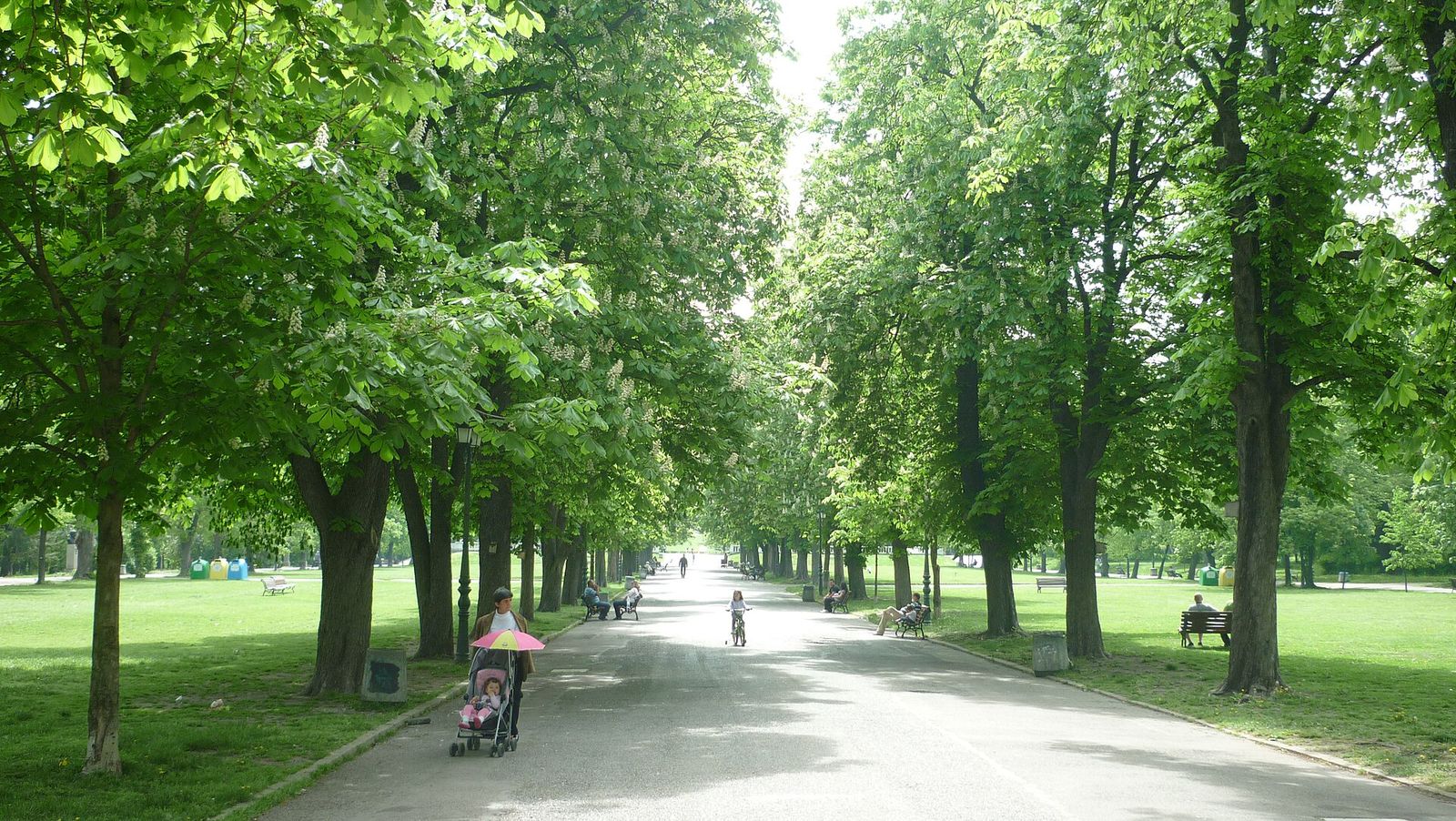
Best Time to Visit Sofia
Sofia has four real seasons. The months I'd pick for walking, hiking, skiing and saving money, with the weather.
Read the guide