Getting Around Bulgaria: Buses, Trains, Driving and Flights
Bulgaria is a compact country with cheap public transport, and almost every trip starts in Sofia. Intercity buses do most of the work, trains handle the night runs and the scenic lines, and a car opens up the mountains and monasteries. Here is how each one works in 2026, with times and euro fares from Sofia, the driving rules, and which way I'd travel for each kind of trip.
Getting around Bulgaria at a glance
| How | Best for | Typical cost | The catch |
|---|---|---|---|
| Intercity bus | Most town-to-town trips | About €7 to €20 from Sofia to the big cities | Coast routes sell out in July and August |
| Train | Night trips to the coast, scenic lines, Plovdiv | €4 to €8 to Plovdiv, about €15 to Varna | Slower than the bus on most routes |
| Car | Mountains, monasteries, wineries, villages | Small car about €15 to €25 a day plus fuel | E-vignette, mountain roads, winter tires |
| Domestic flight | Sofia to Varna or Burgas in summer | Varies by date | Only worth it on the long coast runs |
| Taxi | Short hops and the last stretch from a station | About €5 for 5 km in Sofia by day | Use licensed cabs only |
Buses in Bulgaria
The intercity bus is the default way between Bulgarian towns. On most routes it is faster and more frequent than the train, and it reaches far more towns than the railway.
Private companies run the routes, and Union Ivkoni, Biomet, Grup Plus and Etap are the names you will see most on the departure screens. FlixBus runs some of the international routes, including 3 buses a day to Istanbul.
Sofia's bus stations
Most intercity buses leave from Sofia Central Bus Station at 100 Knyaginya Maria Luiza Boulevard, next to the railway station and about 1 km north of the center. Inside are dozens of company ticket windows and a departures screen, and the Central Railway Station stop on metro line M2 is outside.
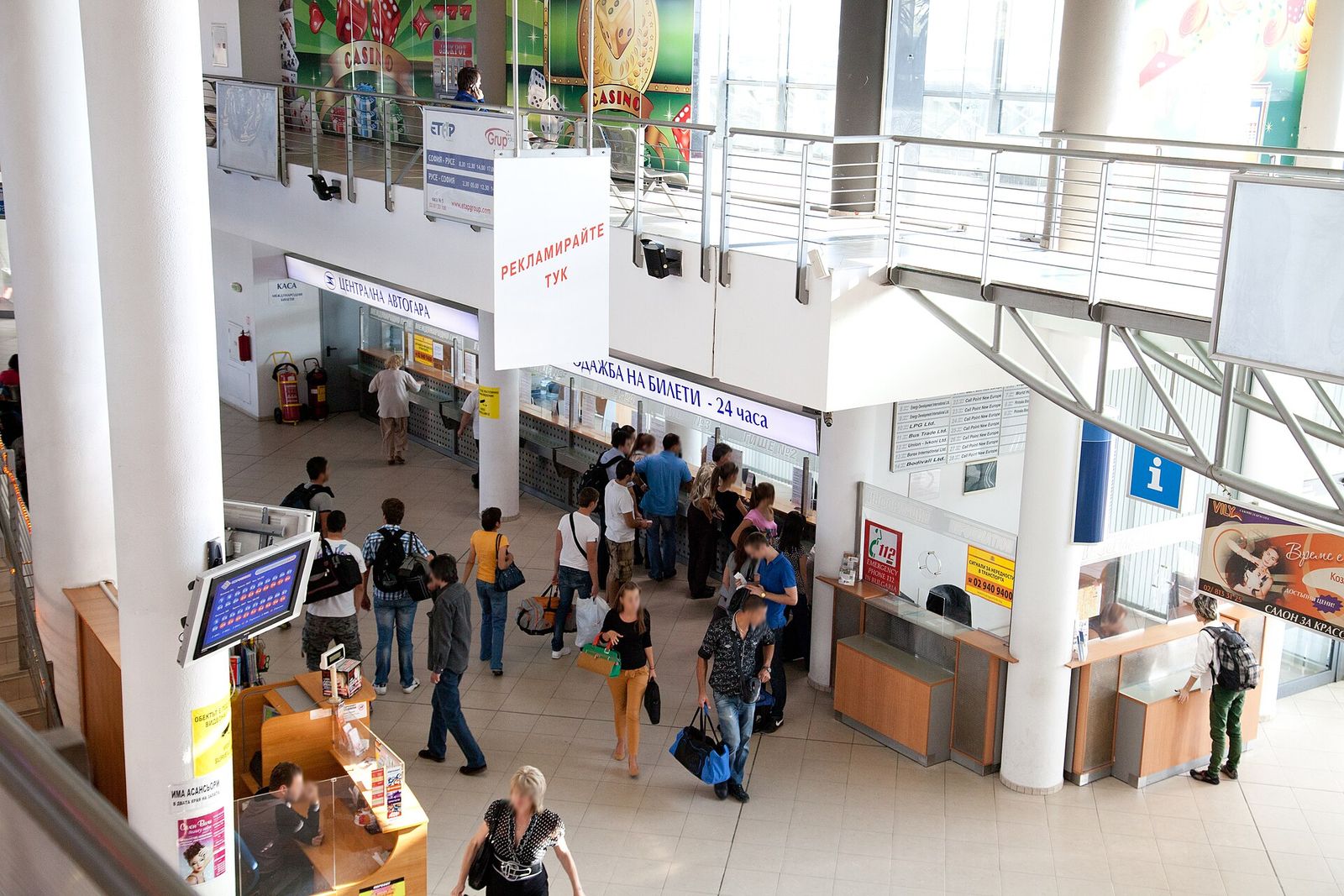
Serdika bus station stands right next door, and some international and domestic buses use it instead, so check which of the two your ticket names. Some southbound buses, to Dupnitsa, Blagoevgrad and Bansko among them, also leave from Ovcha Kupel bus station in the west of the city, and the direct buses to Borovets go from Yug bus station.
Buying bus tickets
For most routes you can buy at the company window on the day, and some companies also sell online. The coast is the exception in July and August, when the buses from Sofia to Burgas and Varna fill a day or two ahead. Small-town bus stations are slow to take cards, so carry some cash in euros for the window.
On the bus
Seats are assigned, so sit in the one on your ticket. Many station toilets charge a small fee, so keep a few coins. In Veliko Tarnovo, buses arrive at the South bus station outside the old center, and a short taxi ride covers the gap.
Trains in Bulgaria
Trains in Bulgaria are run by BDZ and are slower than the buses on most routes, but a little cheaper. They win in three cases: the night sleepers to Varna and Burgas, the slow scenic lines such as the narrow-gauge railway to Bansko, and short, easy trips such as Plovdiv, Koprivshtitsa or Pernik.
The trains leave from Sofia Central Station, next to the bus station. Tickets are sold on bileti.bdz.bg and at the station windows, and in November 2026 track works add a change to many trains out of Sofia, so read the details of each result before you buy.
Sofia to everywhere: times and fares
| From Sofia to | Bus | Train | Car |
|---|---|---|---|
| Plovdiv | About 2 h, hourly, €7 to €8 | 2 h 45 to 3 h 15, €4 to €8 | About 1.5 h, 145 km on the A1 |
| Veliko Tarnovo | About 3 h, 17 a day, €14.50 to €15.50 | About 4 h to Gorna Oryahovitsa, then a change, €8 to €14 | 3 to 3.5 h, 224 km |
| Varna | 6 to 7 h, about €18 | 7 h 50 to 9 h overnight, about €15 seat | About 450 km, motorway not finished |
| Burgas | 5 h 35 to 7 h 10, €18.80 to €19.50 | About 6 h by day, 7.5 h overnight | On the A1 most of the way |
| Bansko | About 2 h 50, about 5 a day, €11 to €16 | About 8 h via Septemvri | 2 to 2.5 h |
| Borovets | 8 AM and 10:30 AM from Yug, €7 | None | About 1.5 h, 73 km |
| Koprivshtitsa | 2 or 3 direct buses a day | About 2 h, then a minibus | About 2 h, 110 km |
| Rila Monastery | No regular direct bus | None | 2 to 2.5 h, 127 km |
| Belogradchik | 1 bus a day, about 4 h | 4 to 4.5 h to Oreshets, then a taxi | About 3 h, 170 km |
| Melnik | 1 bus a day at 2 PM, about 4 h | Damyanitsa, then a 12 km taxi | 2.5 to 3 h, about 180 km |
| Thessaloniki | 4 h 40 to 5 h 45, from about €12 | No direct train | About 294 km |
| Istanbul | 8 h or more, from about €38 | Nightly sleeper, from €38 | About 550 km |
For a day trip to Plovdiv, the first buses leave Sofia early in the morning, the last reliable one back runs around 8 PM, and the return seats sell out on Friday and Sunday evenings, so buy the return when you arrive. To Veliko Tarnovo the bus is the clear winner, because most trains stop at Gorna Oryahovitsa, about 10 km away, and leave you to change.
Bansko works well by bus in summer and winter, with direct coaches in about 2 hours 50 minutes. The two places that catch people out are Belogradchik and Melnik: each has a single direct bus a day, so a visit by bus means a night there.
Driving in Bulgaria
Mountain roads are the slow part of driving in Bulgaria: they narrow and twist, and the map's times run long.
The e-vignette
Motorways and most national roads need an electronic vignette, linked to your license plate, with no sticker on the windshield. Buy it on the official bgtoll.bg portal or app before you set off: it activates at once, and since 3 February 2026 there is a one-day vignette for a single day's drive. A car pays €5.30 for a day, €6.60 for a weekend, €10 for a week and €19.90 for a month. The Danube bridges to Romania charge their own separate toll.
Rules that catch foreign drivers
Since September 2025, average-speed cameras time cars between two points, so braking for each camera does not help. The drop from 90 to 50 km/h at every village sign is where I'd watch the speedometer most closely.
Dipped headlights are compulsory day and night, all year. The car must carry a warning triangle, a first-aid kit, a fire extinguisher and a reflective vest, so check all four are in the trunk before you leave the rental desk.
The alcohol limit is 0.5 g/l, and with taxis this cheap I'd never drive after a drink.
Roads, rental cars and licenses
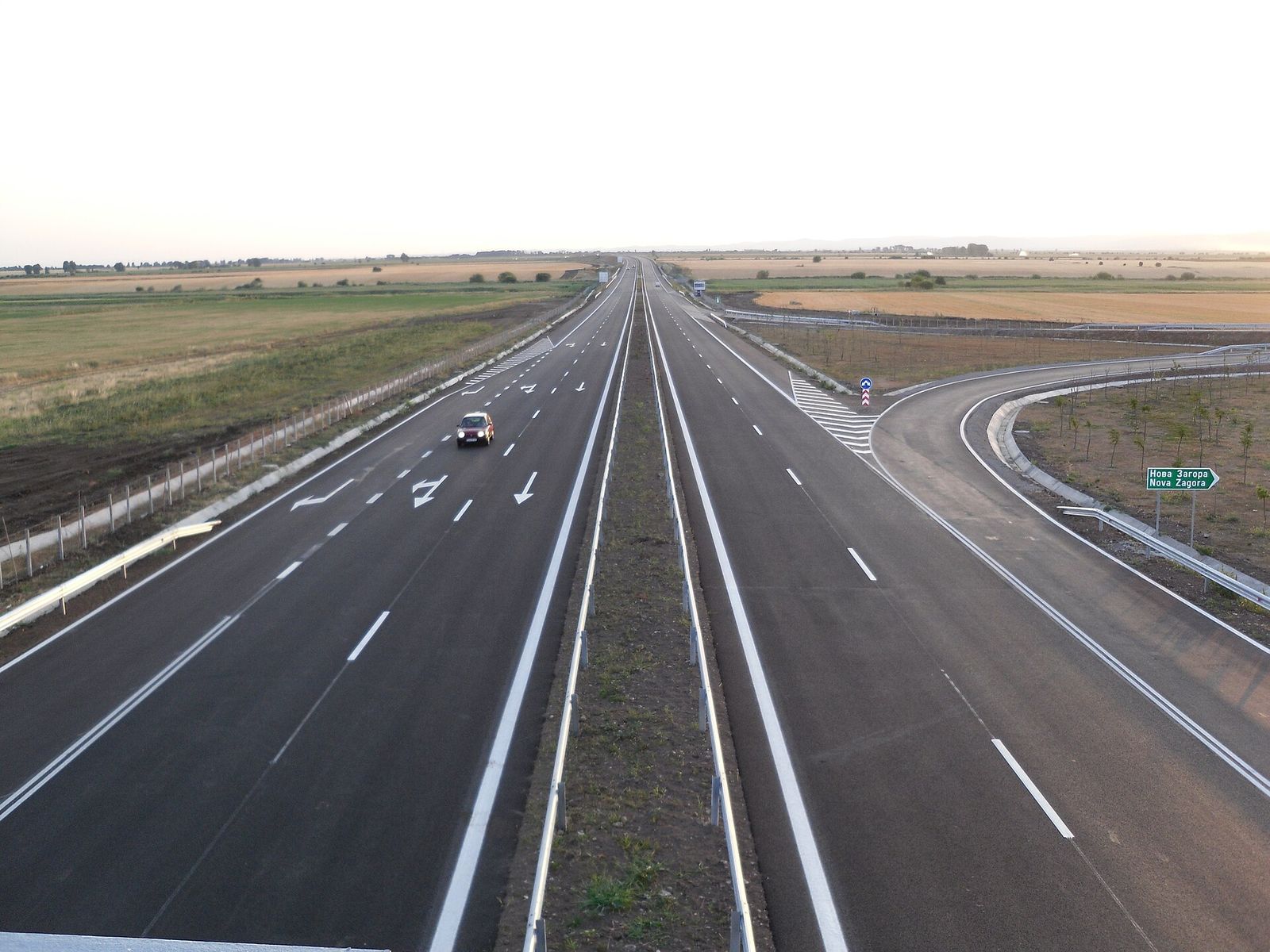
The A1 Trakia motorway runs from Sofia to Plovdiv and on to Burgas, and it is the easiest long drive in the country. The A3 Struma heads south toward Greece past Dupnitsa and Blagoevgrad. The A2 Hemus toward Varna is still unfinished in sections, so part of the drive to the north coast runs on slower two-lane roads, where I'd keep right and let faster cars past.
A small rental car costs about €15 to €25 a day before fuel. An EU license is valid as it is, and drivers from elsewhere should carry an International Driving Permit with their license. Inside Sofia itself I'd leave the car parked: the metro and taxis do the job better.
Where a car makes the difference
Public transport covers the cities and the corridors between them well, and thins out fast beyond them. These are the places where I'd rent a car, or plan around a long wait:
- Rila Monastery, 127 km south, with no regular direct bus from Sofia in 2026.
- The Seven Rila Lakes, where the chairlift above Panichishte is a 1.5 to 2-hour drive away, against a bus to Dupnitsa plus a taxi of about €15 without a car.
- Buzludzha, where no bus or train climbs to the monument.
- The wine country, since Bulgarian wine regions are best seen a winery at a time.
- The Rhodope villages and the small towns south of Burgas, where the buses thin out.
For the far northwest, Belogradchik's rocks are about a 3-hour drive against a single afternoon bus.
Domestic flights
Bulgaria Air flies Sofia to Varna 2 to 3 times a day in about 50 minutes, and there are flights to Burgas too. Varna's airport sits 8 km west of the center. With the airport transfers at both ends, I'd fly only on the long coast runs in summer, where the alternative is a 6 to 7-hour bus ride.
Ride-sharing and taxis
Ride-sharing in Bulgaria runs mostly through Facebook groups, where drivers post their trips and spare seats, and BlaBlaCar is not widely used here. A shared ride depends on someone driving your way on your day, so I'd treat it as a backup to the bus.
Uber left Bulgaria in 2015, and Bolt offers only scooters and bikes, so taxis come from licensed companies such as TaxiMe, Yellow! and OK Supertrans, ordered through their apps or by phone.
Getting around inside the cities
In Sofia the center is walkable, and the Sofia metro covers the airport, the railway and bus stations and the south end of Vitosha Boulevard for €0.80 a ride, with card taps capped at €2 a day. Plovdiv and Varna are smaller and mostly walkable, with city buses for the longer hops. After the last metro, around midnight, licensed taxis in Sofia ordered through an app are the way home.
Crossing the borders from Bulgaria
Bulgaria has been a full Schengen member since 1 January 2025, so the borders with Greece and Romania have no routine passport checks. Serbia, North Macedonia and Turkey are outside Schengen, with full checks both ways.
For Thessaloniki the bus is the only direct way without a car, since no train has run there since about 2018. The Sofia to Istanbul night train clears the Turkish border at Kapitan Andreevo, and the daily train to Bucharest crosses the Danube at Ruse.
Which way for which trip
| Trip | How I'd travel |
|---|---|
| Sofia and Plovdiv only | Bus or train, no car needed |
| The Black Sea coast | The night train or the bus, or a summer flight to Varna or Burgas |
| Veliko Tarnovo | The bus, 17 times a day |
| Ski resorts | The bus to Bansko or Borovets, or a car with winter tires |
| Rila, the Rhodopes and the wineries | A rental car |
| A loop of the country | Buses for the big cities, a car for the mountain stretch |
On the Bulgarian Black Sea coast, some buses from Sofia run on past Burgas to Nessebar, Sunny Beach or Sozopol, so you can often skip the change in Burgas. For a week or more, the mix of buses and a few days with a car is how I'd plan a Bulgaria itinerary that takes in both the cities and the mountains.
Key takeaways
- Take the bus between towns: it is faster and more frequent than the train on most routes.
- Most buses and all main trains leave Sofia from the Central Bus Station and Central Station, side by side on metro line M2.
- Use the train for night trips to the coast and for scenic lines.
- Drive with an e-vignette, headlights on and winter tires from 15 November to 1 March.
- Rent a car for Rila Monastery, the Seven Rila Lakes and the Rhodopes.
Frequently asked questions
Is it easy to get around Bulgaria without a car?
Yes, between the cities it is easy and cheap: buses run hourly from Sofia to Plovdiv and 17 times a day to Veliko Tarnovo. A car only becomes necessary for places like Rila Monastery, the Seven Rila Lakes and the Rhodope villages.
Is it better to take the bus or the train in Bulgaria?
The bus is better on most routes, because it is faster, more frequent and reaches more towns. The train is better for the night sleepers to the coast, for scenic lines and for a slightly cheaper ride to Plovdiv.
How do I buy bus tickets in Bulgaria?
Buy at the company's window at the bus station on the day, or online from the operator for busy routes. Book a day or two ahead for the coast in July and August, and carry cash for small-town stations.
Do I need a vignette to drive in Bulgaria?
Yes, an e-vignette is required on motorways and most national roads. Buy it online at bgtoll.bg before you drive; it is linked to your license plate and activates at once.
Is driving on the left or right in Bulgaria?
Bulgarians drive on the right. Headlights must be on day and night all year, and the motorway limit is 140 km/h.
Are buses free in Sofia?
No, a ride on Sofia's buses, trams and metro costs €0.80 for 30 minutes, and card taps stop at €2 a day. Children under 7 ride the metro free.
Is it safe to drive in Bulgaria?
Yes, with care. The A1 motorway is an easy drive, but mountain roads are narrow and winding, so leave extra time and keep to 50 km/h through villages. Sofia is safe for visitors, and the roads are the main risk to plan for.
Sofia Travel Tips: What I'd Tell You Before a First Trip to Bulgaria
Sofia is easy once you know a few rules. What I'd tell a friend about visas, the euro, taxis and getting around.
Read the guide
Sofia Itinerary: 1 to 5 Days
Sofia fits its best sights into a walkable center. The day-by-day plan I'd follow for 1 to 5 days, with prices.
Read the guide
Best Time to Visit Sofia
Sofia has four real seasons. The months I'd pick for walking, hiking, skiing and saving money, with the weather.
Read the guide