Folk Music and Dance in Sofia
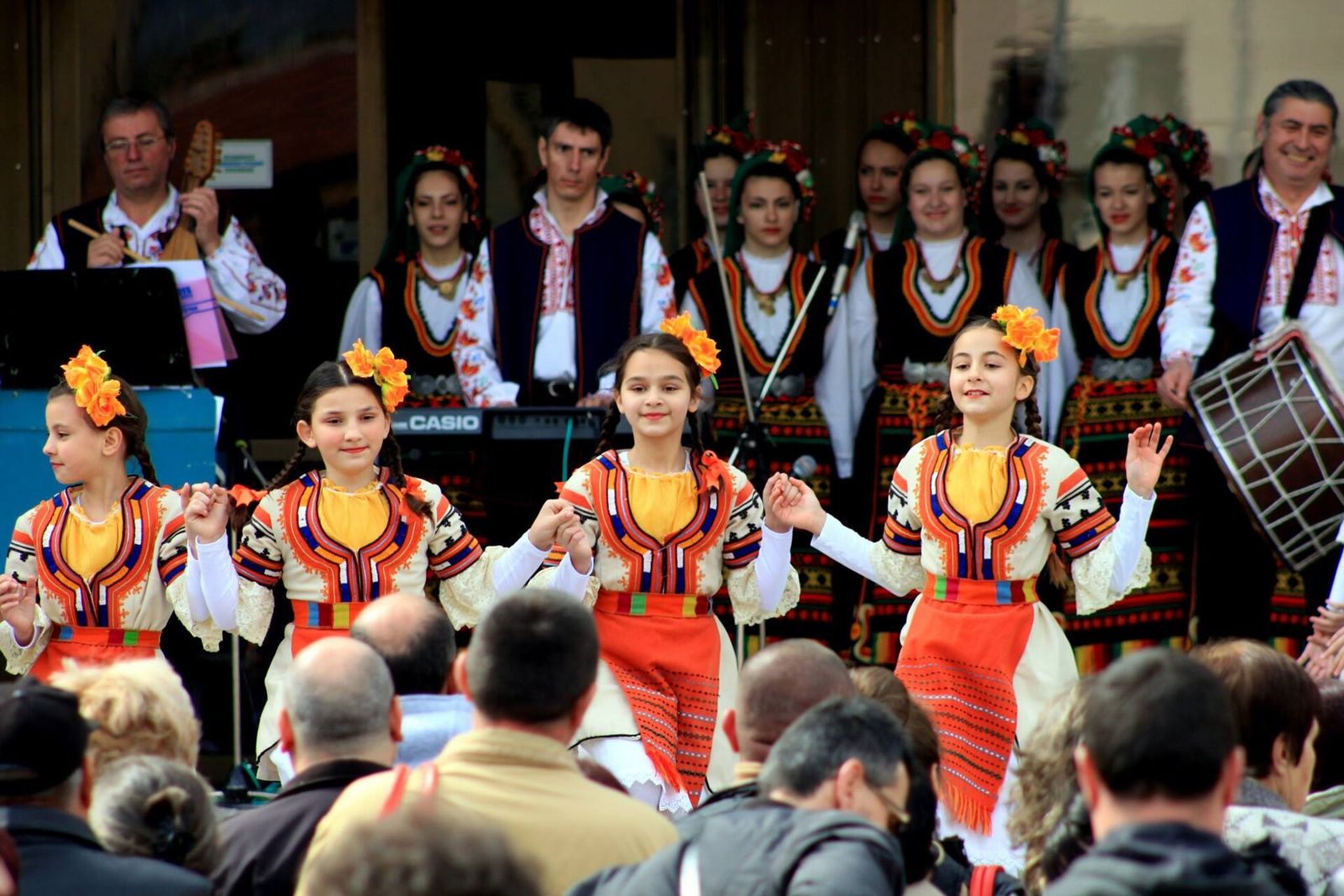
Bulgarian folk music is known for lopsided rhythms in 7/8 and 11/16, the drone of a goatskin bagpipe and women's voices that have won a Grammy and flown into space. It is also dance music: the horo, a chain of people holding hands, steps to those odd rhythms. This guide covers the sound, the instruments, the dances, and where to hear and join in from Sofia.
What Bulgarian folk music sounds like
Bulgarian folk music changes from region to region. Thrace is known for ornamented playing. The Rhodope Mountains sing wide, single-voice melodies over the deep kaba gaida. The Shopluk, the region around Sofia, has sharp two-part singing, and the Pirin region in the southwest has its own two-voice songs. Dobrudzha, the north and the Strandzha mountains each add their own sound.
Singing was mostly collective, and mostly the work of women. In the north and east they sang in unison. In the west and southwest, two groups answered each other or sang in parts, with a drone underneath the melody and voices pitched a tone apart, and that close, buzzing harmony is the sound I'd play first to anyone new to it. Women sang at work in the fields, at evening work parties, at betrothals and at funerals, where the lament was its own form of song.
In the villages, the Sunday dance on the square, and the three days of dancing at Easter, used to start with two groups of young women singing, one at each end of the line. The musicians took over later.
The instruments of Bulgarian folk music
A village band, or bitovi ensemble, is built from a handful of these five instruments.
| Instrument | What it is |
|---|---|
| Gaida | Goatskin bagpipe with one drone; the Thracian gaida is tuned in D or A, the kaba gaida in F |
| Kaval | Long wooden end-blown flute |
| Gadulka | Bowed string instrument held upright, with sympathetic strings |
| Tambura | Long-necked fretted lute |
| Tupan | Big double-headed drum worn over the shoulder, struck with a beater on one side and a thin stick on the other |
The accordion and the clarinet arrived in the 19th century, and wedding bands now play them next to the gaida and the kaval.
The gaida
The gaida is a bagpipe with a goatskin bag, one melody pipe and one drone. Bulgaria has two main kinds: the Thracian gaida, and the kaba gaida of the Rhodopes, which is bigger and has a much deeper sound.
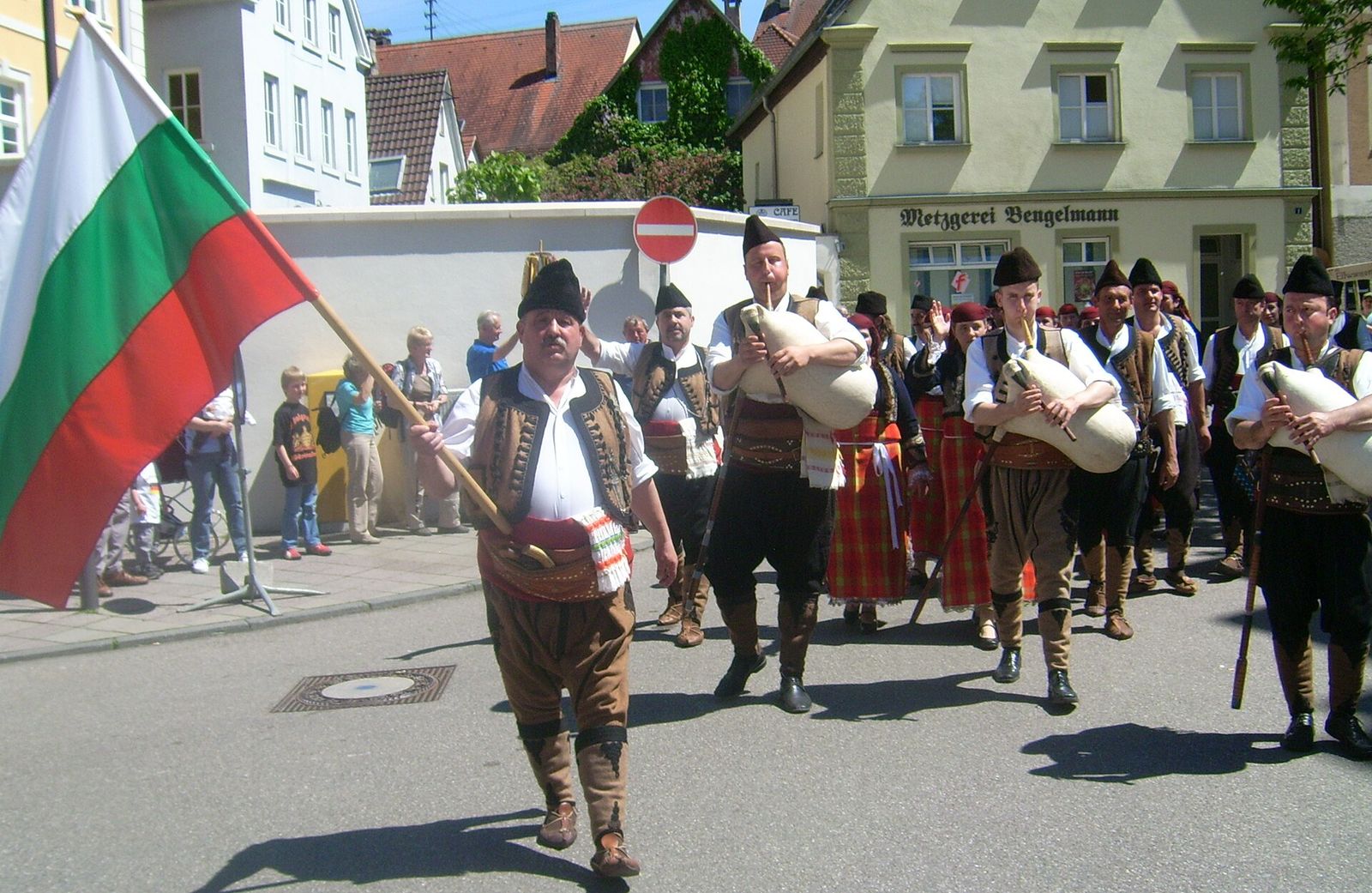
Men played the gaida, either to accompany singing or with the tupan drum for dancing.
The kaval
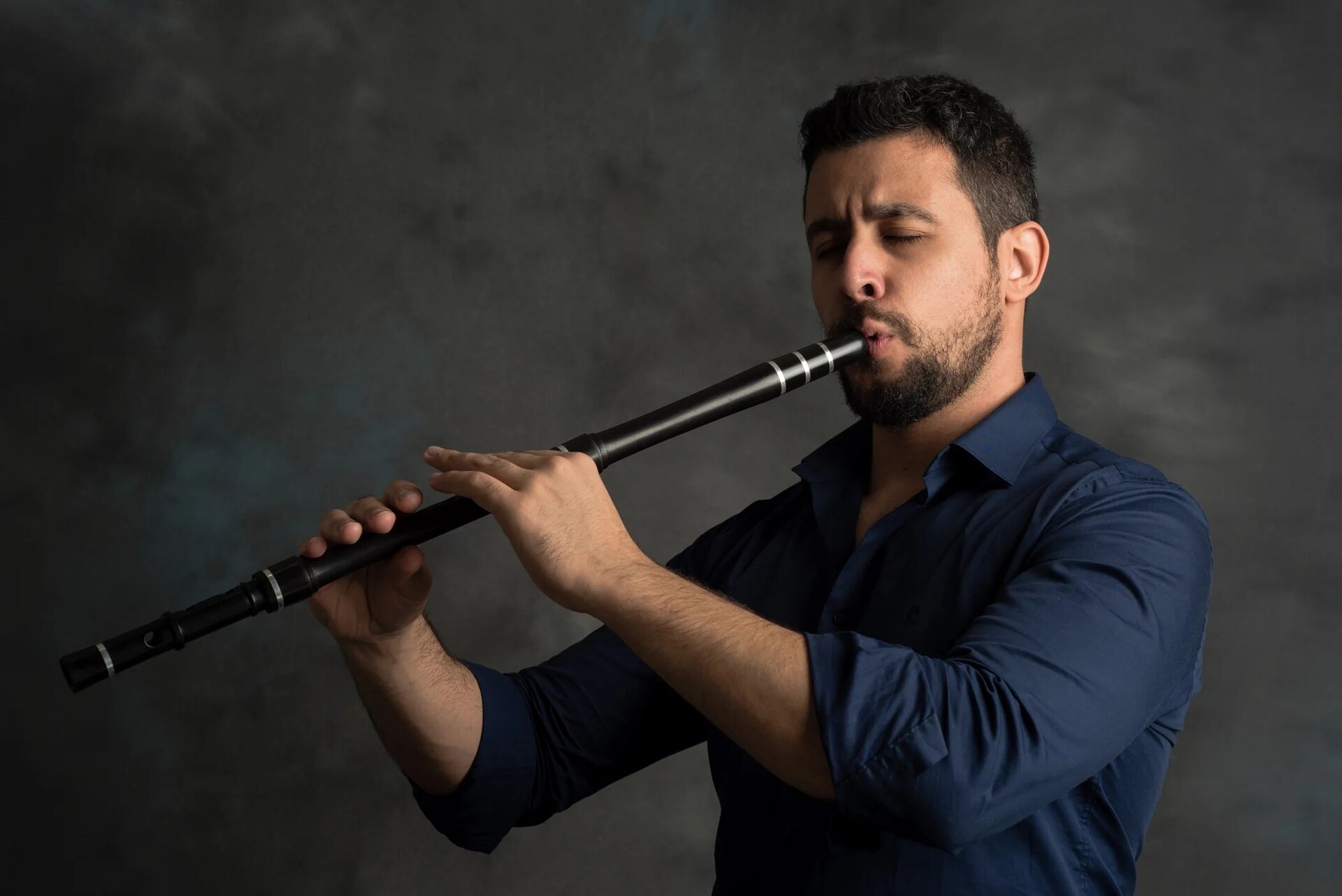
The kaval is a long, end-blown wooden flute. The Bulgarian kaval comes in three parts that fit together, usually made of cherry or another fruit wood, with eight holes, and it is mostly in D. Professional players such as Theodosii Spassov have taken it well past the village repertoire.
The gadulka
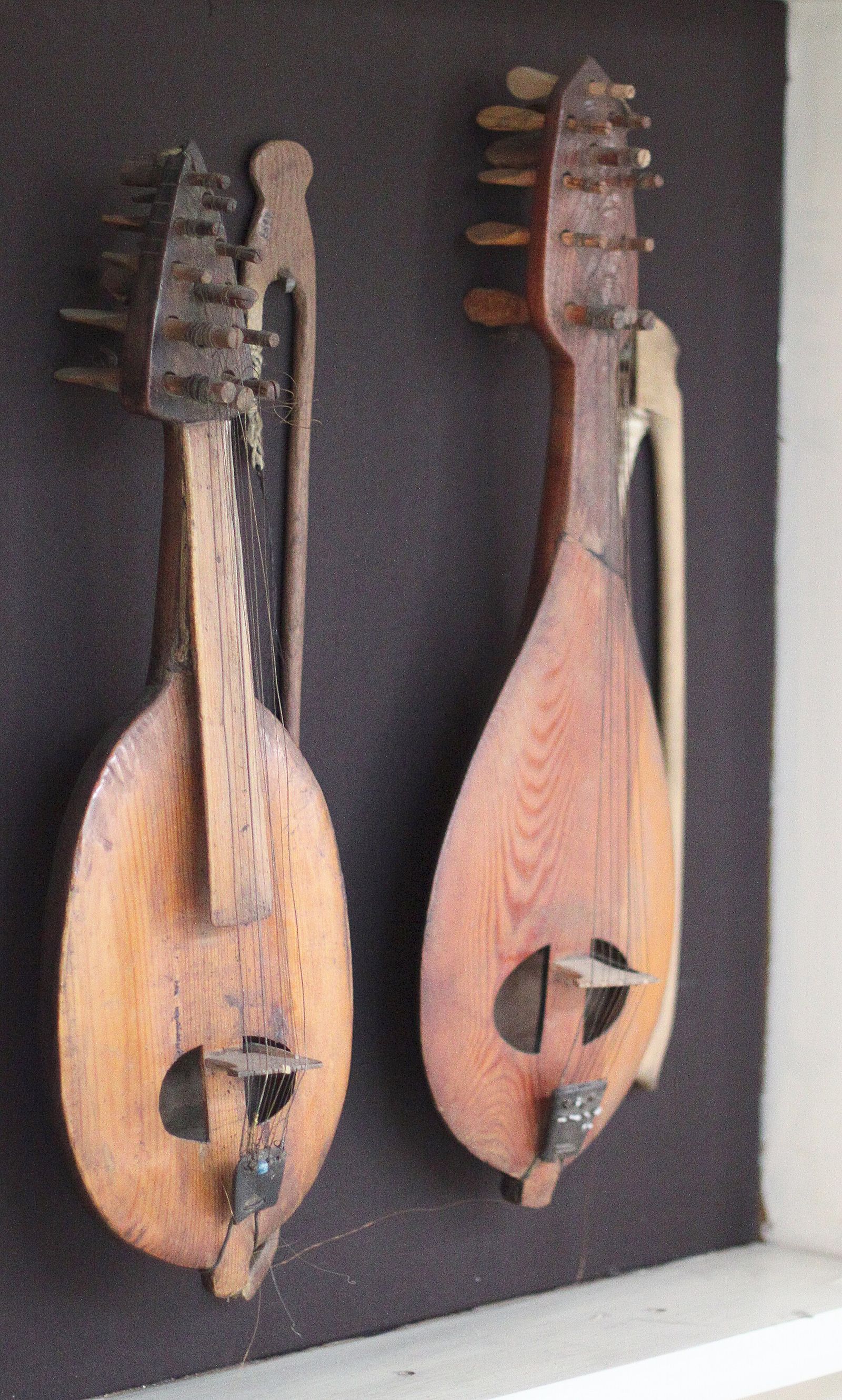
The gadulka is a bowed string instrument with a body traditionally carved from mulberry wood, held upright while it is played. It has three or four melody strings plus sympathetic strings that ring along with them.
Bulgarian rhythms: 7/8, 9/8 and 11/16
Bulgarian dance music uses ordinary meters such as 2/4, but it is famous for the uneven ones. The composer Bela Bartok called them "Bulgarian rhythms". Each bar is a mix of short beats (2 units) and long beats (3 units), and the short and long beats match the dancers' short and long steps. That is why the music sounds lopsided to an ear raised on 4/4 and feels natural once you are moving.
| Dance | Beats per bar | Grouping | How to count it |
|---|---|---|---|
| Pravo horo | 4/4 or 6/8 | Even | Straight, step by step |
| Paydushko horo | 5 | 2+3 | Quick, slow |
| Rachenitsa | 7 | 2+2+3 | Quick, quick, slow |
| Eleno mome | 7 | 2+2+1+2 | Quick, quick, short, quick |
| Daychovo horo | 9 | 2+2+2+3 | Quick, quick, quick, slow |
| Kopanitsa | 11 | 2+2+3+2+2 | Quick, quick, slow, quick, quick |
| Bucimis | 15 | 2+2+2+2+3+2+2 | Seven beats with one slow one |
The horo: Bulgaria's folk dance
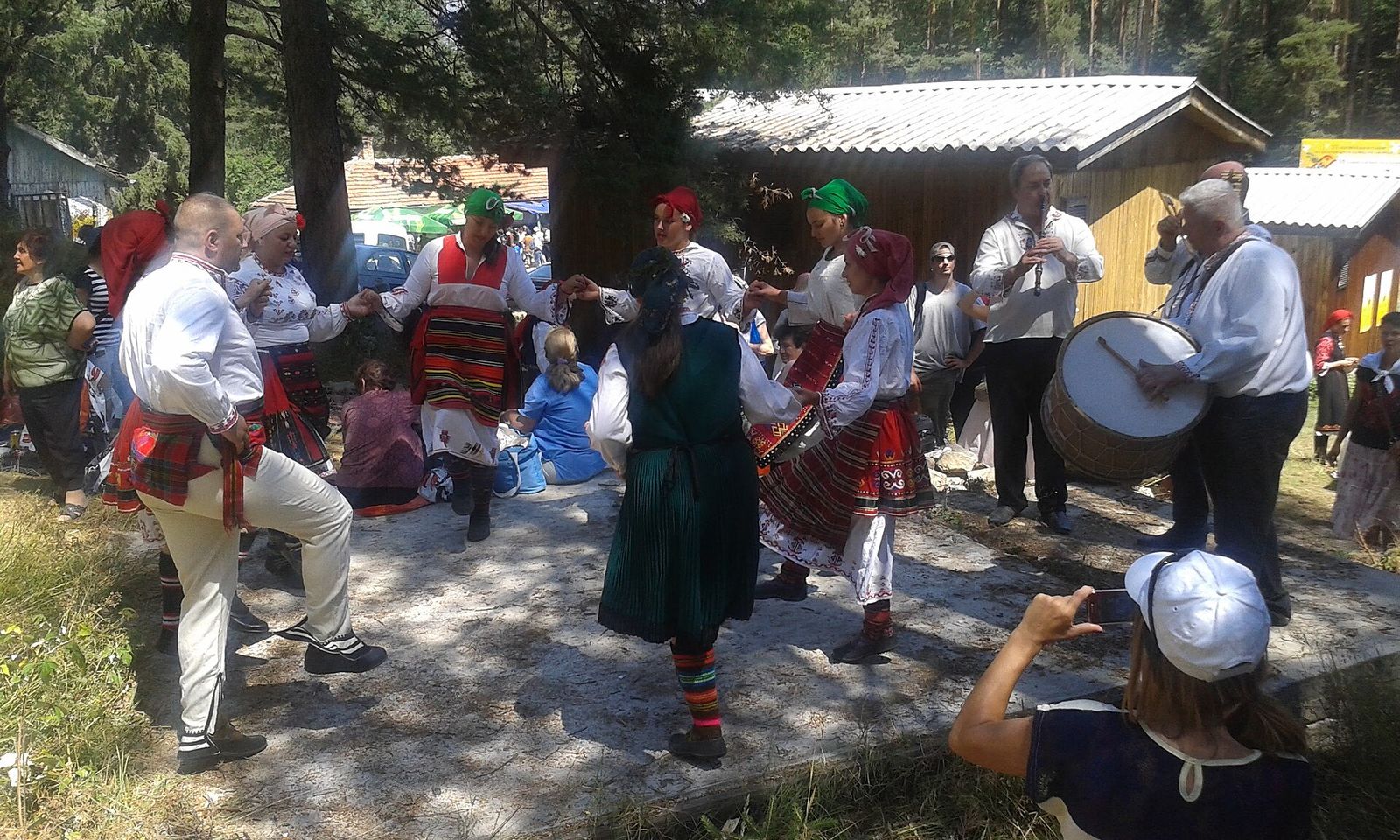
The horo is a group dance in a line or a circle, with dancers holding hands or linking arms, and an open, curving line counts as much as a closed circle. Depending on the type, the dancers take three to seven or eight steps forward and one to six back, and the steps and the rhythm change from region to region. Bulgaria probably has more than 100 kinds.
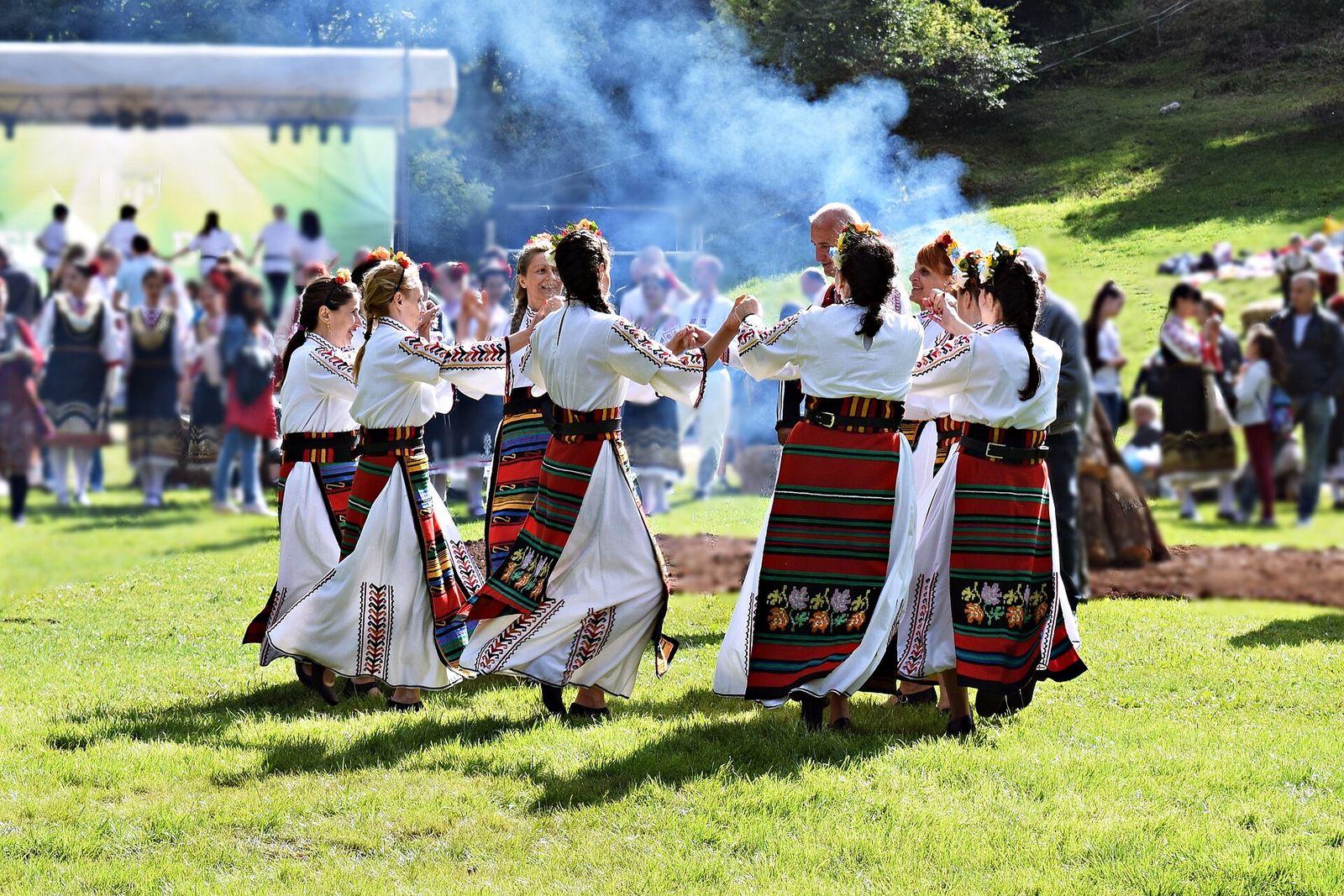
In the old villages the horo was fun, a contest of skill and a show, and that mix is why so many kinds grew up. Today it is the dance of weddings and festivals. The easy horos take five to ten minutes to learn, while the hardest ones are out of reach unless you already dance many of the simple ones.
Three a visitor will meet first:
- Pravo horo. The straight horo, in an even beat with a simple pattern of steps. It is the one I'd try first.
- Rachenitsa. A dance in 7/8, often danced in couples.
- Kopanitsa. A line dance in 11/16, its name taken from the word for digging.
Bulgarian voices and the Mystery of the Bulgarian Voices
Many people outside Bulgaria first heard Bulgarian folk music through its women's choirs. In 1951 the State Ensemble for Folk Songs and Dances was founded in Sofia, the first of the state folk ensembles, led by the composer Philip Koutev. He arranged village songs with harmonies that concert audiences could follow, and his early recordings were a favorite of Frank Zappa.
The international breakthrough came with Le Mystère des Voix Bulgares, the Mystery of the Bulgarian Voices, a series of recordings that introduced the world to the sound of the Bulgarian State Television Female Vocal Choir. The choir won a Grammy in 1990. Trio Bulgarka sang on two Kate Bush albums, The Sensual World and The Red Shoes. And Valya Balkanska's recording of the Rhodope song "Izlel ye Delyo Haydutin" went into space in 1977 on the Golden Record of the two Voyager spacecraft.
The Bistritsa Babi
The Bistritsa Babi are a group of mostly older women from Bistritsa, a village on the edge of Sofia at the foot of Vitosha. In their traditional dress they hold each other by the belt and move in a slow circle while singing the old polyphony of the Shopluk. UNESCO listed the Bistritsa Babi, with the dances and rituals of the Shopluk, in 2008, which makes them the earliest of the 9 entries from Bulgarian culture on its list of living heritage.
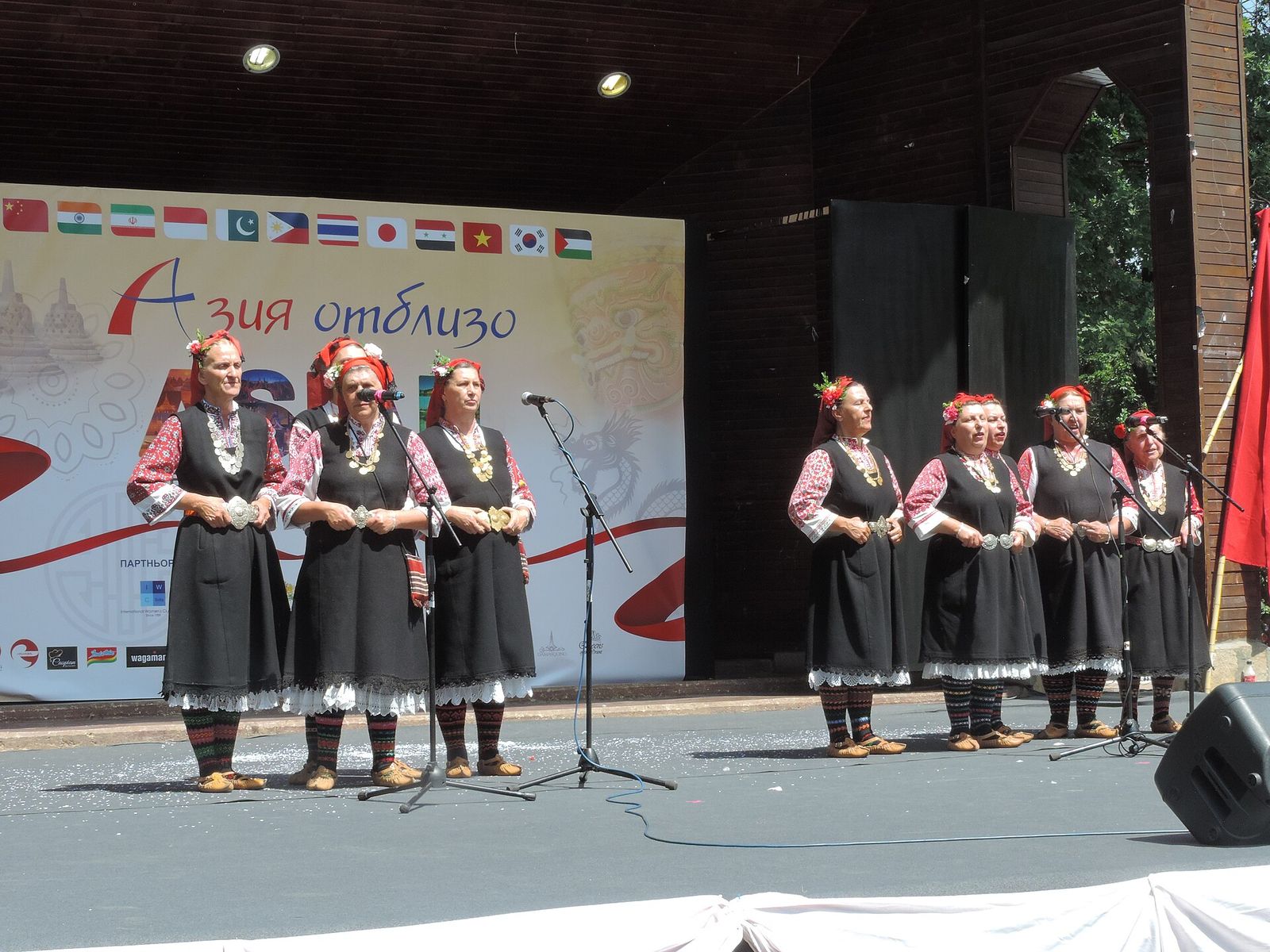
They have sung on open-air stages in the city, such as an Asian festival in 2017 in Borisova Gradina, Sofia's oldest park.
Where to hear Bulgarian folk music in Sofia
In Sofia the easiest place to hear folk music is over dinner in a mehana, a traditional tavern, with a band in the corner and a glass of rakia on the table. These three are the ones I'd book, all of them among the best restaurants in Sofia for traditional food.
Hadjidraganov's Cellars
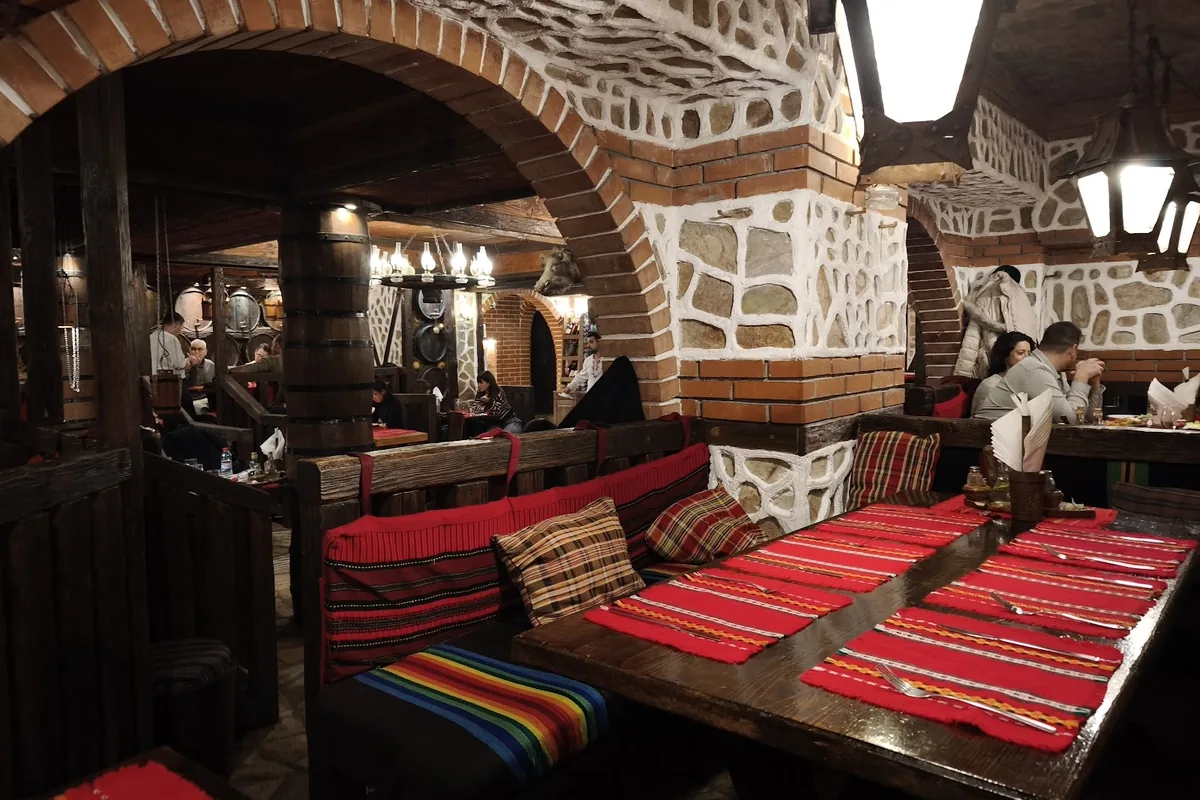
Hadjidraganov's Cellars, at Hristo Belchev 18 in the center, is an underground tavern with stone walls and old barrels, named after Hadji Dragan, a 19th-century merchant. Live folk music plays in the evenings from Wednesday to Sunday. The kitchen is strong on clay-pot stews and Rhodope dishes such as patatnik, the potato and cheese cake, and it is open from 11:30 AM to 11:30 PM. Book at weekends.
Hadjidraganov's House
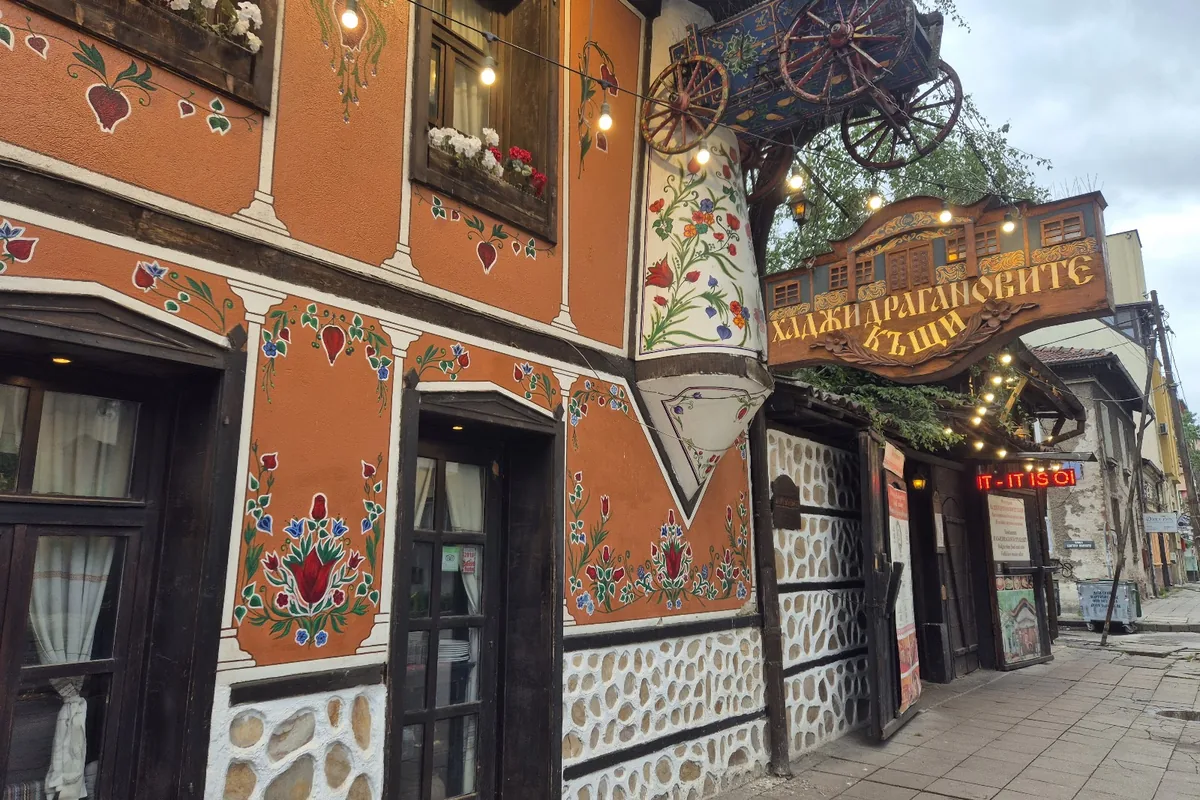
Hadjidraganov's House is the sister restaurant at Kozloduy 75, near Lion's Bridge north of the center. It fills four restored houses from 1886, with dining rooms styled after four Bulgarian towns, from Bansko to Melnik, and a band plays in the rooms. Mains run about €6 to €23, and it opens daily from 11:30 AM to 10 PM.
Chevermeto
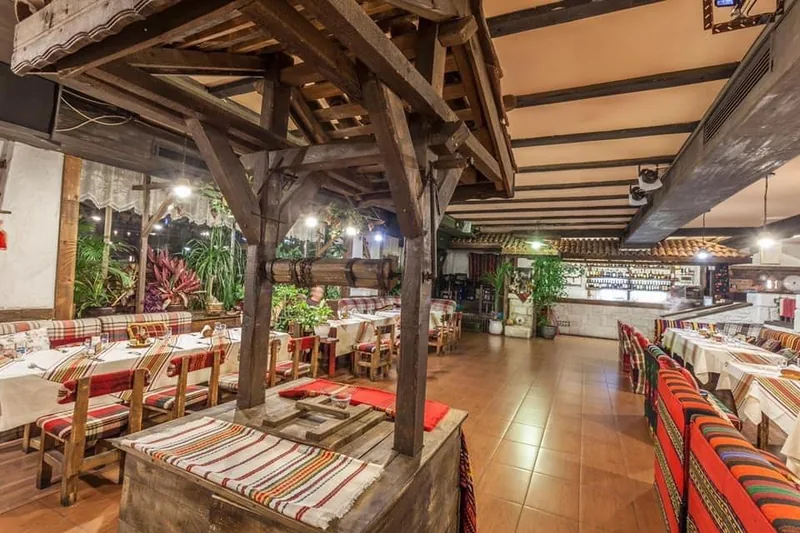
Chevermeto is a big covered restaurant that stages Bulgarian folk dance shows with dinner. Of the three it is the one built around a show, and the one I'd pick for a first evening if you want to see the costumes and the dancing on a stage.
Folk music has a modern cousin in chalga, the Bulgarian pop-folk of the clubs, which plays loudest in the chalga clubs of Studentski Grad. For jazz and rock, the biggest cluster of live music in Sofia is around the National Palace of Culture, where Sofia Live Club sits in the underpass.
Folk festivals worth the trip from Sofia
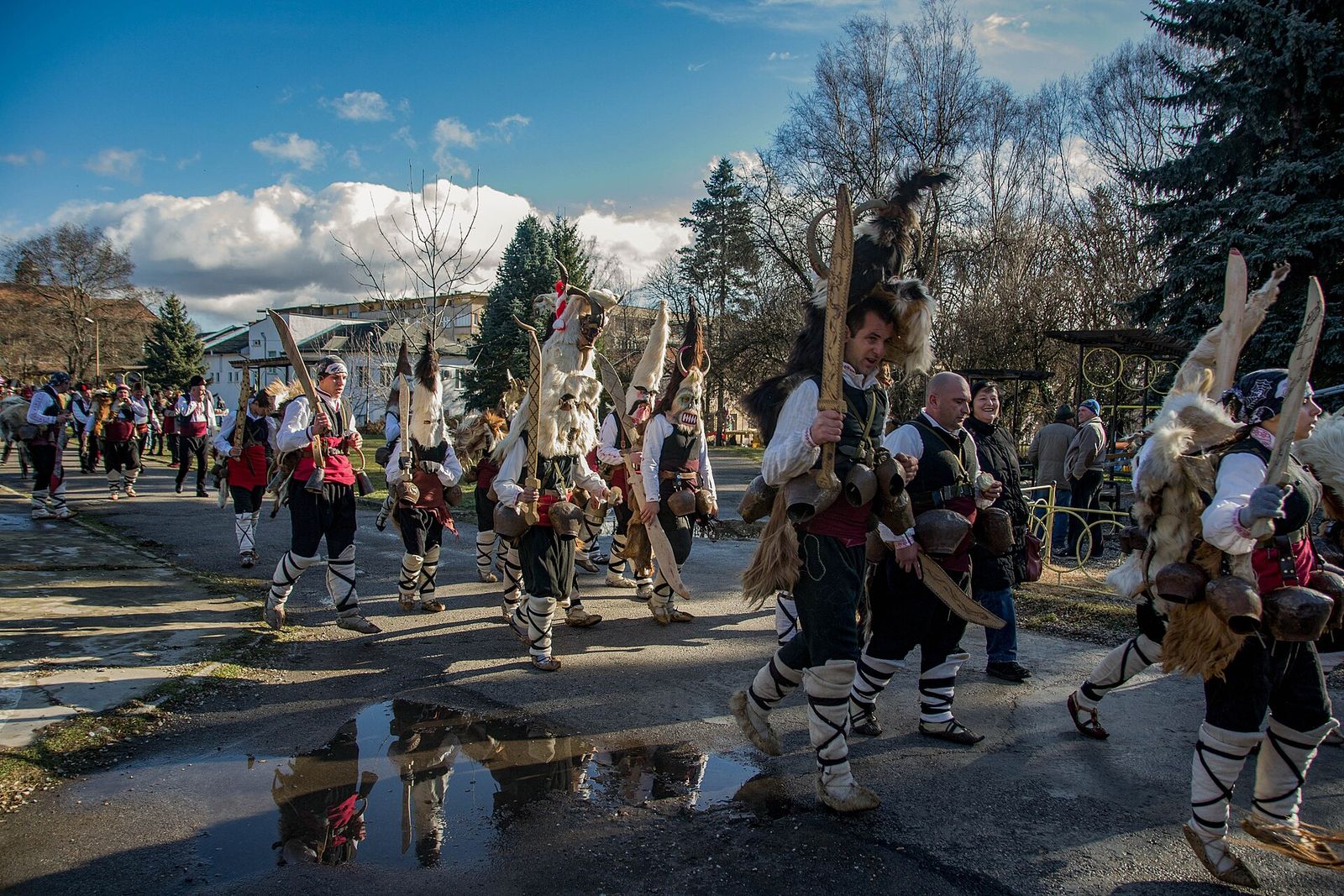
For folk music at full volume, time your trip to a festival. Bulgaria's calendar is full of them, from the kukeri of January to the summer gatherings in the mountains.
The Koprivshtitsa National Folklore Festival
The biggest folk gathering in Bulgaria is the National Folklore Festival in Koprivshtitsa, a town of 19th-century houses about 110 km east of Sofia. The Ministry of Culture started it in 1965, and it is held every five years, most recently in 2025, which puts the next one in 2030. Village groups from all over Bulgaria sing, dance and play, thousands of Bulgarians come to watch, and UNESCO listed the festival in 2016.
| Festival | When | Where | What you hear |
|---|---|---|---|
| Surva | Late January | Pernik, 30 km west of Sofia | The bells of the kukeri |
| Nestinarstvo | 3 and 4 June | Bulgari, Strandzha mountains | The sacred drum and the gaida at the fire-dance |
| International Bagpipe Festival | Early August | Gela, Rhodope Mountains | Gaida players on the Ilinden meadows, free |
| National Folklore Festival | Every five years, next in 2030 | Koprivshtitsa | Every regional style in one place |
Between the kukeri and the summer festivals, the festivals in Bulgaria carry on with the martenitsa on 1 March and the Rose Festival in Kazanlak on the first weekend of June.
Key takeaways
- Bulgarian folk music is built on uneven meters such as 7/8, 9/8 and 11/16, made of short and long beats.
- The gaida, kaval, gadulka, tambura and tupan are the core instruments, and UNESCO listed Bulgarian bagpipe playing in 2025.
- The horo is a hand-holding line dance with more than 100 regional variants; the pravo horo is the one to try first.
- In Sofia, hear it live at Hadjidraganov's Cellars from Wednesday to Sunday, or watch a show at Chevermeto.
- The Koprivshtitsa National Folklore Festival is the big one, every five years; the next is in 2030.
Frequently asked questions
What instruments are used in Bulgarian folk music?
Bulgarian folk bands are built on the gaida (a goatskin bagpipe), the kaval (an end-blown wooden flute), the gadulka (a bowed string instrument held upright), the tambura (a long-necked lute) and the tupan (a big drum). The accordion and the clarinet joined them in the 19th century, and both play in wedding bands today.
What is the horo dance?
The horo is Bulgaria's traditional group dance: a line or circle of people holding hands or linking arms, stepping in a set pattern to the music. There are probably more than 100 kinds, and it is still the dance at Bulgarian weddings and festivals.
Why does Bulgarian folk music use odd time signatures?
The meters follow the dance steps. Each bar mixes short beats of 2 units and long beats of 3 units, so a rachenitsa in 7/8 is quick, quick, slow, matching the dancers' feet.
Why is Bulgarian folk singing so unique?
Its sound comes from the rhythms, the harmony and the way the women produce their voices, with a drone held under the melody and parts pitched very close together, often a single tone apart. It is strongest in the Shopluk around Sofia and in the Pirin region, and the Mystery of the Bulgarian Voices recordings made it famous worldwide.
Where can I hear Bulgarian folk music in Sofia?
Hadjidraganov's Cellars on Hristo Belchev Street has live folk music from Wednesday to Sunday evenings, and Hadjidraganov's House near Lion's Bridge has a band in its dining rooms. Chevermeto stages folk dance shows with dinner.
What is the most famous Bulgarian folk dance?
The horo, in its many regional forms. The pravo horo is the simple straight one in an even beat, and the rachenitsa is the 7/8 dance often danced in couples.
Can tourists join a horo?
Yes. Step in at the end of the line, take the hand of the last dancer and copy the feet of the person next to you; Bulgarians are happy to see visitors join.
Which Bulgarian folk song went into space?
"Izlel ye Delyo Haydutin", a Rhodope song recorded by Valya Balkanska, is on the Golden Record carried by the two Voyager spacecraft launched in 1977.
Bulgarian Culture and Traditions: A Visitor's Guide
Bulgaria gave the world Cyrillic, and has kukeri, fire-dancers and a nod that means no. Here is what to know.
Read the guide
Bulgarian Phrases for Travelers: The Words I'd Learn First
Bulgarian is written in Cyrillic and read the way it looks. Here are the phrases I would learn before a trip to Sofia.
Read the guide
A Short History of Bulgaria
Bulgaria has kept its name since 681. Here is its history era by era, and where each chapter still stands in Sofia.
Read the guide