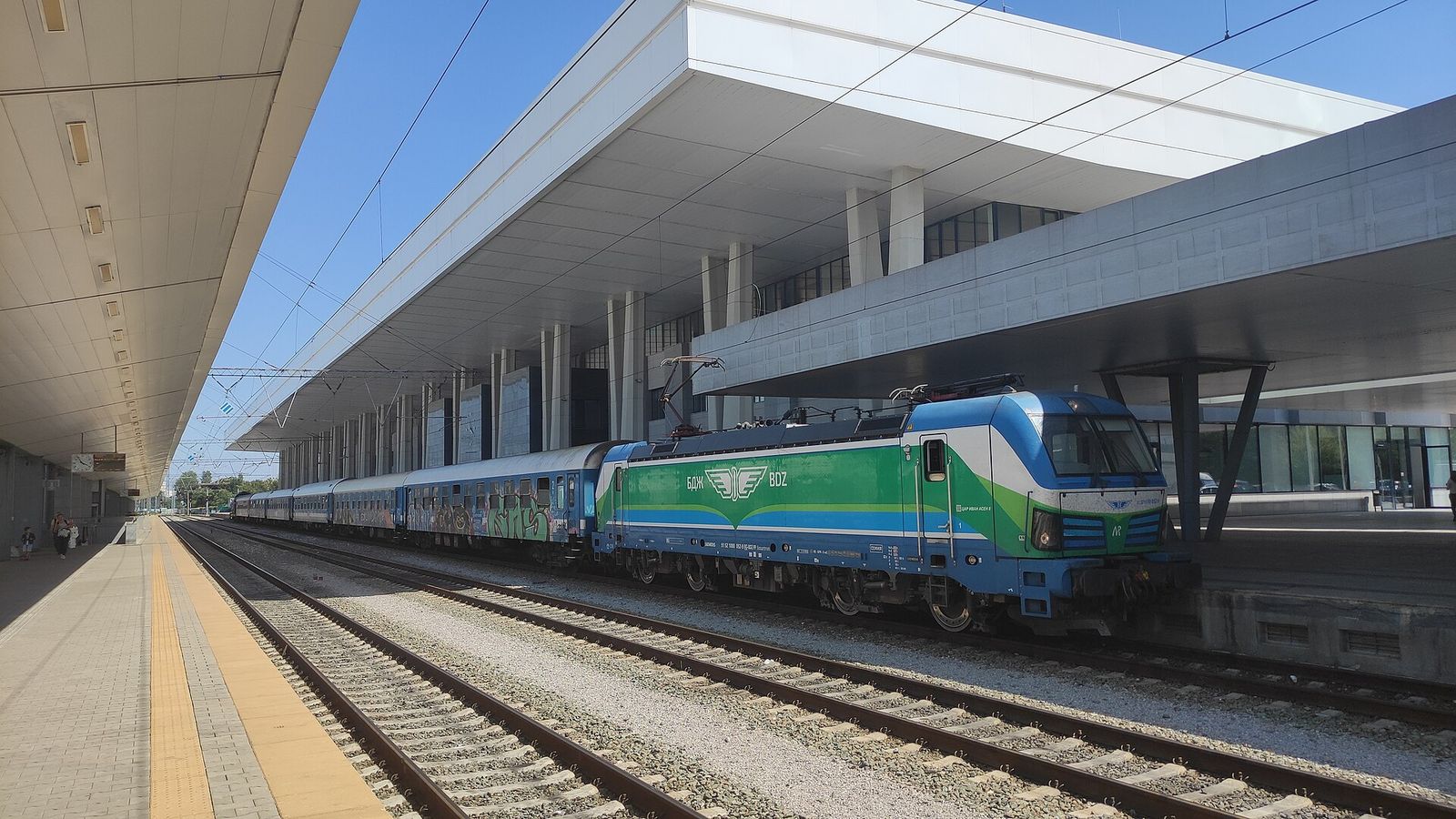
Trains in Bulgaria: BDZ Routes, Tickets, Sleepers and Tips
Trains in Bulgaria are slow, cheap and run by one company, Bulgarian State Railways (BDZ), on about 4,000 km of track. Here is when the train beats the bus, the main routes from Sofia with 2026 times and euro fares, how to buy tickets online or at the station, the night sleepers to the Black Sea and the scenic lines I'd ride for the view.
Trains in Bulgaria at a glance
Bulgarian trains connect all the big cities and many small towns, plus Istanbul and Bucharest across the borders. The fastest services reach 130 to 140 km/h on the main lines, but most trains run well below that.
Are trains in Bulgaria good?
They are reliable and cheap, and they are not fast. Delays are usually a few minutes, and the fares are low by European standards. The trade-off is old rolling stock on many lines, with second-hand coaches from Deutsche Bahn now joining the fleet.
Train or bus in Bulgaria
On most routes, getting around Bulgaria is faster by bus, and the buses reach towns the railway never did. The train still wins in a few cases:
- The night to the coast. A sleeper to Varna or Burgas saves a hotel night and a day on the road.
- Scenery. The narrow-gauge line through the Rhodopes and the Iskar gorge north of Sofia are rides you take for the view.
- Room to move. A compartment beats a coach seat with a big suitcase or small children.
- Plovdiv on a budget. The train costs a little less than the bus and drops you a 10-minute walk from the pedestrian zone.
The bus is the better pick for Veliko Tarnovo, Bansko, Rila Monastery, the Seven Rila Lakes and anywhere without a station, and on any trip where 2 or 3 hours matter.
Main train routes from Sofia
Times come from the BDZ timetable for November 2026 and are for the faster trains.
| From Sofia to | Time | Fare | Notes |
|---|---|---|---|
| Plovdiv | 2 h 45 to 3 h 15 | About €4 to €8 | About a dozen departures a day |
| Burgas | About 6 h by day, 7.5 h overnight | A little under the Varna fare | One direct day train at 6 AM, sleeper at 10:20 PM |
| Varna | 7 h 50 to 9 h overnight | About €15 seat, €34 single sleeper | Day trains need a change in November 2026 |
| Gorna Oryahovitsa (for Veliko Tarnovo) | About 4 h, then a short hop | About €8 to €14 to Veliko Tarnovo | Change to a local train, bus or taxi |
| Koprivshtitsa | About 2 h | A few euros | Station 8 to 10 km from town, minibus timed to the trains |
| Pernik | About 1 h | A few euros | About hourly |
| Oreshets (for Belogradchik) | 4 to 4.5 h | Varies | Then about 10 km by taxi |
| Bansko | About 8 h | Varies | Change at Septemvri onto the narrow-gauge line |
| Istanbul | 6:50 PM to 7:21 AM | From €38 in a couchette | Nightly sleeper |
| Bucharest | About 10 h | €36 | One train a day |
For Plovdiv the train is the cheapest way there, with the first departure at 5:15 AM and the fastest one at 4:20 PM. For Veliko Tarnovo, main line trains stop at Gorna Oryahovitsa, a junction about 10 km away, and only a few go on to Veliko Tarnovo station itself, so the bus from Sofia is quicker.
Koprivshtitsa is the day trip where the train makes most sense, because the station minibus is timed to meet it. Pernik is an hour away on a train that runs about once an hour, the easy way to the Surva festival of kukeri masks at the end of January.
Types of train and classes
The letters in front of the train number tell you what kind of train it is.
| Code | Type | What it means for you |
|---|---|---|
| IC-INT | International | The trains to Istanbul and Bucharest |
| ICF | Intercity fast | Major stations only, seat reservation compulsory |
| SU | Suburban | Commuter trains |
| REG or ORD | Regional or passenger | Stops almost everywhere, slow but reaches small towns |
On any intercity trip, pick an ICF or the fast train over a regional one. The EXP express category no longer runs.
Second class is the default and fine for a few hours. First class exists only on some trains, with three seats in a row where second class has four, so check the timetable before paying for a first-class pass. Overnight trains add couchettes and sleeping cars, listed online as berths.
How to buy train tickets in Bulgaria
BDZ sells tickets on its website and in the BDZ app, both of which take Visa and Mastercard, as well as at station windows, from machines and on board.
Online at bileti.bdz.bg
Register an account on bileti.bdz.bg with your name exactly as it appears on your passport, then search your route, pick a class and choose a seat on the seat map. Pay by card, and the ticket appears in your account. You don't need to print it: the conductor scans the QR code on your phone.
Online sales close 3 hours before departure. Regional and suburban trains are often not sold online. Return tickets sometimes fail, and if your trip has a change, the system may not combine the legs, so search and buy each leg on its own.
At the station
Every staffed station has ticket windows, and they sell everything the website does not: return tickets with the round-trip discount of 10 to 20%, international tickets and bike tickets. At Sofia Central, windows 1 to 13 downstairs sell tickets for today, windows 14 to 20 in the main hall sell tickets for later dates, and windows 21 to 23 sell international tickets.
On the train and from machines
If you board at a small stop with no ticket office, the conductor sells you a ticket during the check. It costs a couple of euros more than at the window, and conductors take cash only. Larger stations also have ticket machines with an English option, and those take cards only.
Rail passes
Interrail and Eurail passes are valid, and there is a single-country Eurail Bulgaria pass for 3, 4, 5, 6 or 8 travel days in a month. With fares this low I'd only buy one if Bulgaria is part of a longer trip on a multi-country pass.
Night trains to the Black Sea
The sleepers are the best thing on the Bulgarian railway. In November 2026 two direct night trains run from Sofia to Varna, at 8:50 PM and 11:00 PM, arriving at 5:50 AM and 6:50 AM. The direct night train to Burgas leaves at 10:20 PM and arrives at 5:49 AM. In summer BDZ adds trains, including one from Sofia at 11:30 PM that runs to Varna through Karlovo, Kazanlak and Sliven and arrives at 7:24 AM.
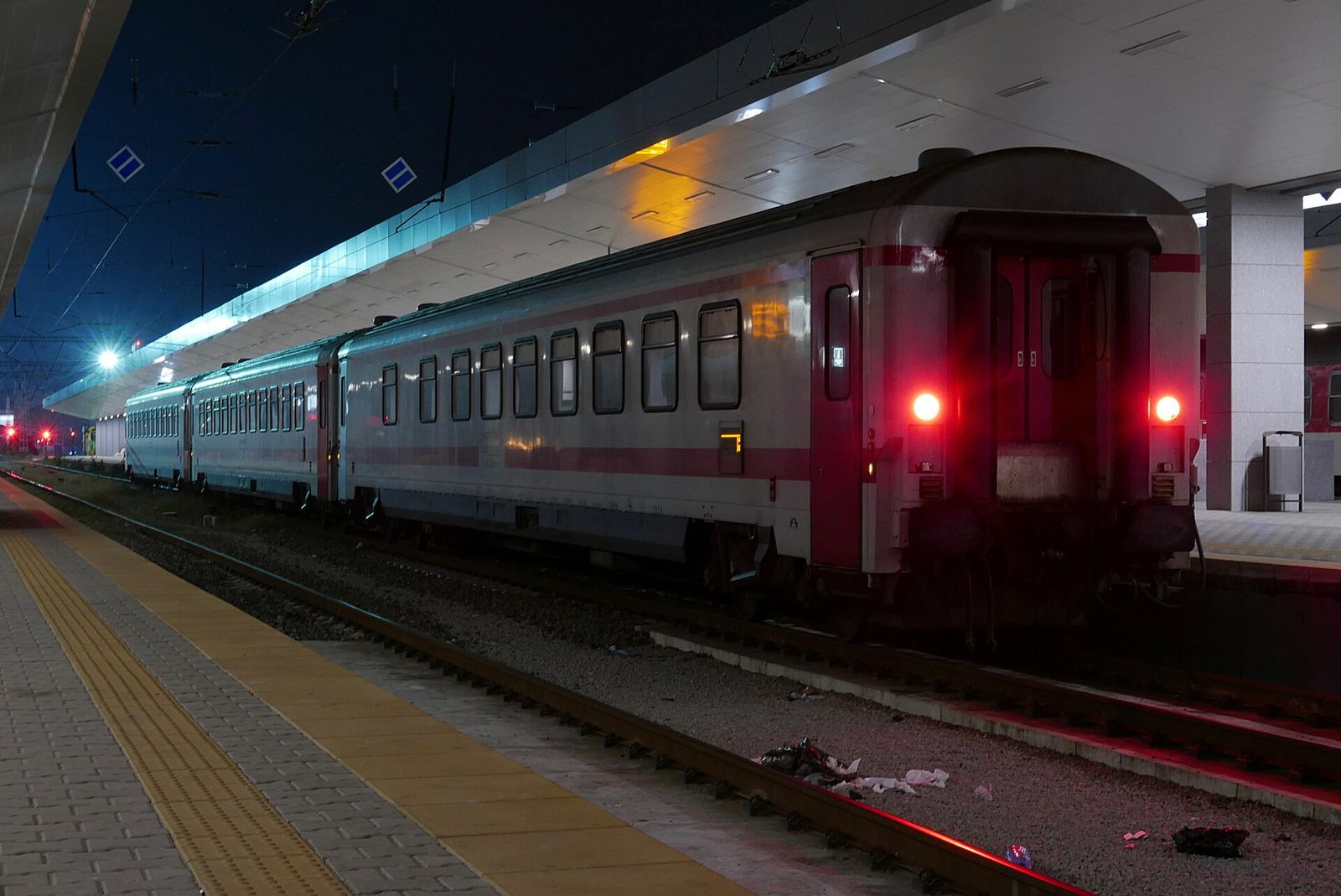
The sleeping cars have compartments with 1, 2 or 3 berths, and a private single to Varna costs about €34. A second-class seat on the same train costs about €15, and the shared berths sit in between.
For the coast itself, the Bulgarian Black Sea coast splits into a north around Varna and a south around Burgas, and the night train you pick decides which half you wake up in.
Sofia Central Station
Sofia Central Station opened in 1974, a big concrete building that replaced the old station of 1888, and a 2016 refurbishment gave it a bright, modern main hall. It sits in the north of the center, about a 20-minute walk from Serdika.
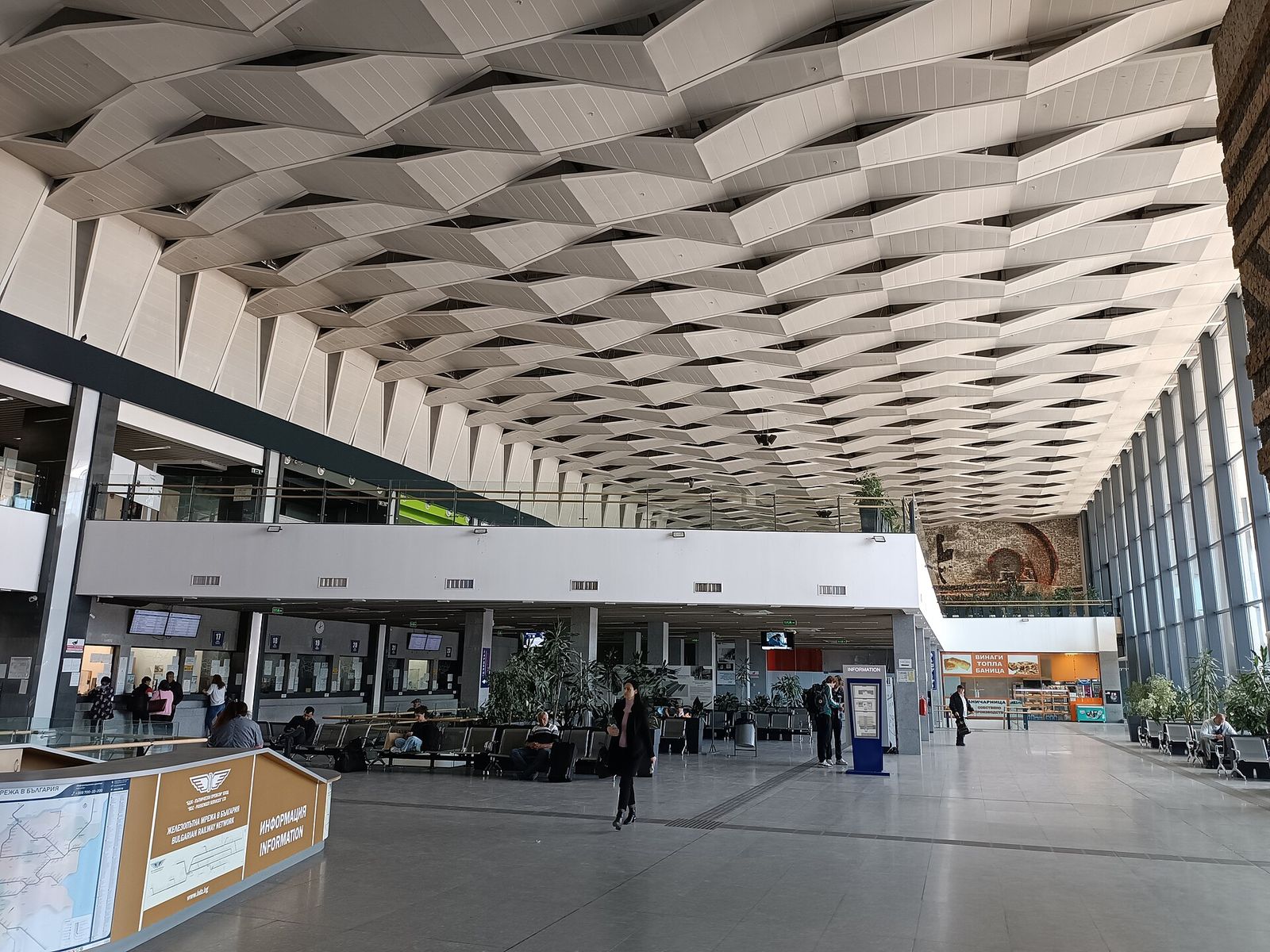
Platform 1 runs alongside the building. Platforms 2 to 11 are reached through the passage under the tracks. Each platform has an east and a west end, and the departure board shows which end your train stands at after the platform number, so check it before you walk the wrong way.
The station has an ATM opposite the ticket windows, a left luggage office in the great hall downstairs, plenty of kiosks and a Billa supermarket in the east end of the building, the best place to stock up before a long ride. Its stop on the blue M2 line of the Sofia metro is two stops from Serdika II, and the Central Bus Station stands next door.
The narrow-gauge railway and other scenic rides
The Septemvri to Dobrinishte line is the last narrow-gauge railway in Bulgaria, and to me the most beautiful train ride in the country. It climbs slowly through gorges and tunnels into the Rhodope and Rila mountains, past villages and mountain towns, Bansko among them.
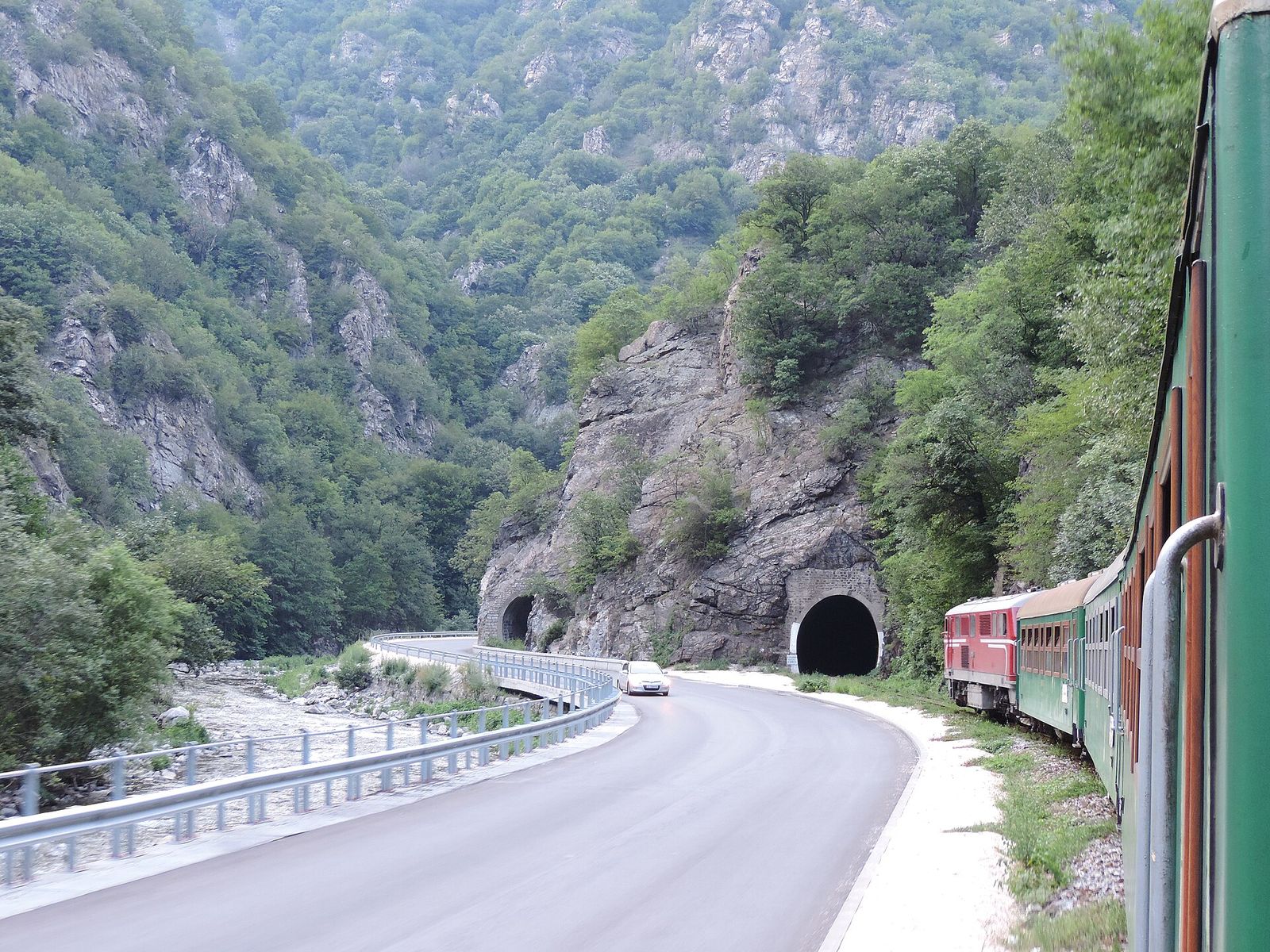
From Sofia you ride a regular train to Septemvri and change, and the trip to Bansko takes about 8 hours against 3 by bus. I'd ride it one way on a day with nothing else planned, and take the bus back.
Closer to Sofia, the railway north through the Iskar gorge runs below the limestone cliffs at Lakatnik, about an hour from the city, and the stations at Lakatnik and Bov are the start of day hikes near Sofia.
BDZ also runs heritage trains on special dates: the Corona Express, with carriages built in Germany in 1938 and 1939 for Tsar Boris III, the Vitosha Express of 1975 used by the communist leader Todor Zhivkov, and restored steam trains.
International trains from Sofia
Two international trains run from Sofia. The Sofia to Istanbul sleeper leaves every evening at 6:50 PM and reaches Istanbul Halkali at 7:21 AM, from €38 in a couchette. The daily train to Bucharest leaves in the morning and arrives about 10 hours later, crossing the Danube on the 2.5 km bridge between Ruse and Giurgiu, for €36. In summer a carriage runs through without a change; the rest of the year you change at Ruse. During track works the Bucharest train has started from Sofia Sever, 2.7 km north of Central Station, so check the departure station on your ticket.
There has been no direct train to Thessaloniki since about 2018, and for Belgrade the trains are unreliable in 2026. For both I'd take the bus.
Tips for riding Bulgarian trains
- Bring food and water. Bistro cars run only on a few summer trains, so buy supplies before you board.
- Pack tissues and a power bank. Toilets on older trains run out of paper, and sockets are rare.
- Download what you want to watch. There is no Wi-Fi on board.
- Travel early or overnight in summer. Old carriages get hot by midday without air conditioning.
- Ride on weekdays. Trains are less crowded than at weekends and on holidays.
- Leave a margin before a flight. Take the train before the last one that would get you to the airport in time.
Key takeaways
- BDZ trains are slow, reliable and cheap: Sofia to Plovdiv takes about 3 hours for about €4 to €8.
- Use the night sleepers to Varna and Burgas, from about €34 for a private single to Varna.
- Buy on bileti.bdz.bg and show the QR code on your phone, or at the station windows for returns and international trips.
- Pick direct ICF trains, and check "More information" for changes, especially during the November 2026 track works.
- For Veliko Tarnovo, Bansko, Rila and Thessaloniki, the bus is faster.
Frequently asked questions
Are trains in Bulgaria good?
Bulgarian trains are reliable and cheap but slow, and many carriages are old, with no air conditioning or Wi-Fi. BDZ has been adding second-hand German coaches to the fleet. Trains are a good choice for night trips to the coast and scenic lines, and a poor one when speed matters.
Is it cheaper to take the train or the bus in Bulgaria?
The train is usually a little cheaper. Sofia to Plovdiv costs about €4 to €8 by train against about €7 to €8 by bus, but the bus is faster and more frequent on most routes.
Can I buy Bulgarian train tickets online?
Yes, on bileti.bdz.bg in English, with an account in your passport name and a bank card. The ticket goes to your phone as a QR code, and online sales close 3 hours before departure. Regional trains, return tickets and international trips are easier to buy at the station.
How long is the train from Sofia to Varna?
The direct night trains take 7 hours 50 minutes to 9 hours. In November 2026 the daytime trains to Varna need at least one change and take 7 hours 42 minutes to 11 hours, so I'd take the sleeper and save the daylight.
Do I need to book Bulgarian trains in advance?
For most day trains, no: buy at the window on the day. Book ahead for sleepers in summer, for ICF trains at summer weekends, and for the Istanbul train, which often sells out.
Does Interrail work in Bulgaria?
Yes, Interrail and Eurail passes are valid on BDZ trains, and ICF trains still need a seat reservation of about €0.50. Fares are so low that a pass only pays off as part of a longer trip.
Is there a train from Sofia to Istanbul?
Yes, a sleeper leaves Sofia Central Station every evening at 6:50 PM and reaches Istanbul Halkali at 7:21 AM. A couchette berth costs from €38 and a single sleeper €78.
Sofia Travel Tips: What I'd Tell You Before a First Trip to Bulgaria
Sofia is easy once you know a few rules. What I'd tell a friend about visas, the euro, taxis and getting around.
Read the guide
Sofia Itinerary: 1 to 5 Days
Sofia fits its best sights into a walkable center. The day-by-day plan I'd follow for 1 to 5 days, with prices.
Read the guide
Best Time to Visit Sofia
Sofia has four real seasons. The months I'd pick for walking, hiking, skiing and saving money, with the weather.
Read the guide