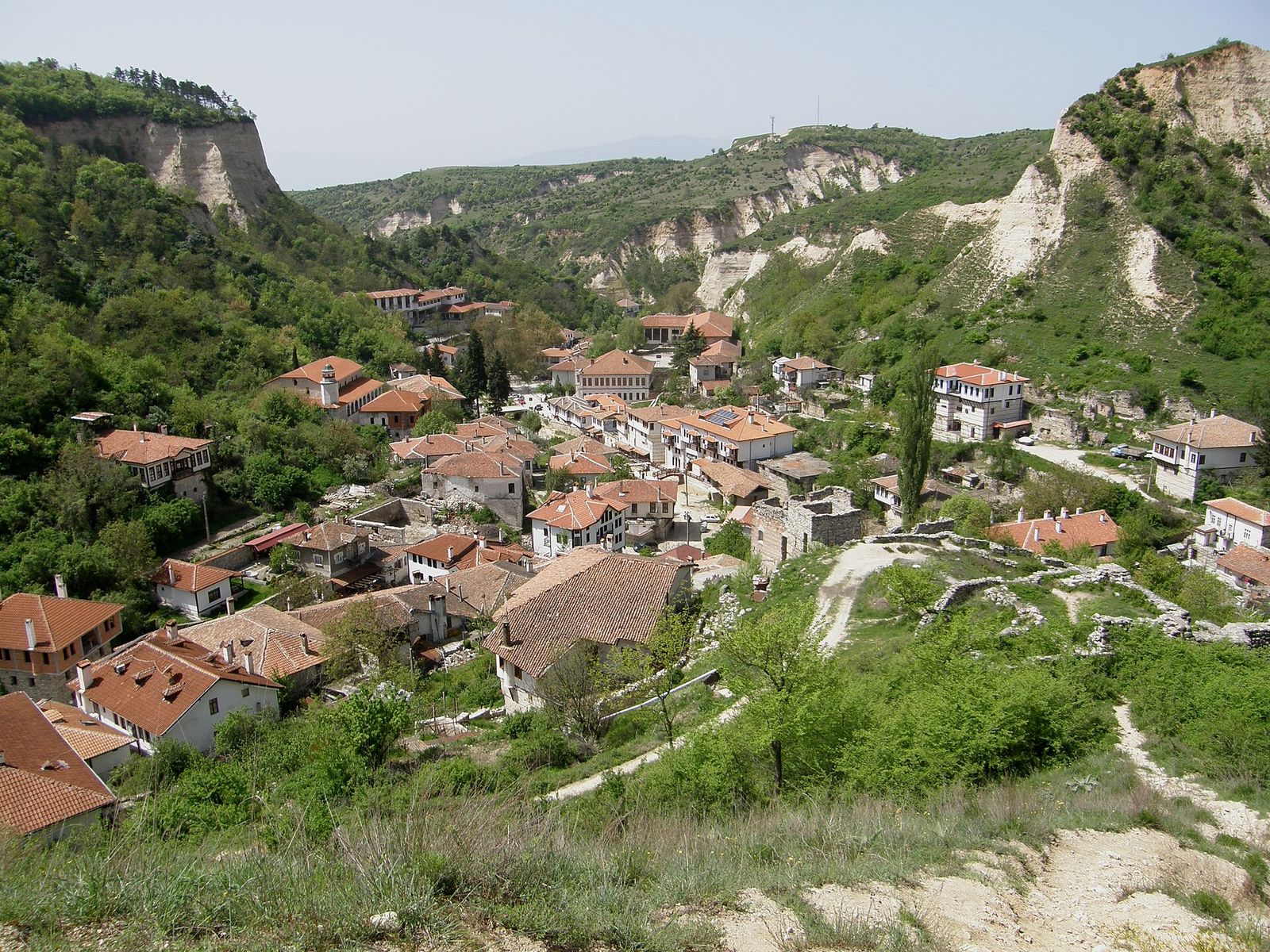
Melnik, Bulgaria: The Wine Town and Rozhen Monastery
Melnik is the smallest town in Bulgaria, with fewer than 400 people, tucked into a valley of pale sand pyramids in the far southwest, about 180 km from Sofia. People have made wine here since the 14th century. Here is how to get there, what to see in town, how to walk over the hill to Rozhen Monastery and where I'd taste the local red.
Melnik at a glance
Melnik lies at the foot of the Pirin Mountains, in the warm Struma Valley, about 30 km from the Greek border. One cobbled main street runs up the valley past white stone houses, and 96 of the town's buildings are listed as cultural monuments.
A short history of Melnik
Melnik was once far bigger than it is now. In the early 13th century it was the seat of Despot Alexius Slav, a local ruler. Winemaking in the town is recorded as far back as 1346.
By the 18th century Melnik was a town of rich wine merchants, many of them Greek, who built the big stone houses that still line the valley. In the early 20th century a fire and the departure of the Greek residents shrank it to the small town you see today.
How to get to Melnik from Sofia
By car
The drive is about 180 km and takes 2.5 to 3 hours. The road runs south from Sofia toward Blagoevgrad on the E79, the route to Greece, and Melnik is a short turn off it near Sandanski. From Bansko the drive takes a little over an hour.
By bus
One direct bus a day runs from Sofia to Melnik. It leaves at 2 PM and takes about 4 hours, and the return runs the next morning, so the bus means a night in town. Buses also run to Melnik from Blagoevgrad, Sandanski and Petrich, which helps if you are already traveling in the south. For the rest of the country, getting around Bulgaria by bus works well between the big towns, but small places like Melnik see few departures.
By train
Melnik has no railway station. The nearest is Damyanitsa, about 12 km away, and from there you need a taxi, so I'd only use the train if you are already on the line to the south.
| Way to Melnik | Time | Good to know |
|---|---|---|
| Car | 2.5 to 3 hours | About 180 km, mostly on the E79 |
| Direct bus | About 4 hours | 1 a day at 2 PM; return next morning |
| Train to Damyanitsa | Only if you are already on the line | Then about 12 km by taxi |
| From Bansko by car | A little over an hour | Easy to combine with a stay in Bansko |
The Melnik Earth Pyramids
The Melnik Earth Pyramids are the pale sandstone cliffs and spires that wrap around the town. Erosion cut them into jagged ridges, towers and blades, some close to 100 m high, and they have been a protected natural landmark since 1960.
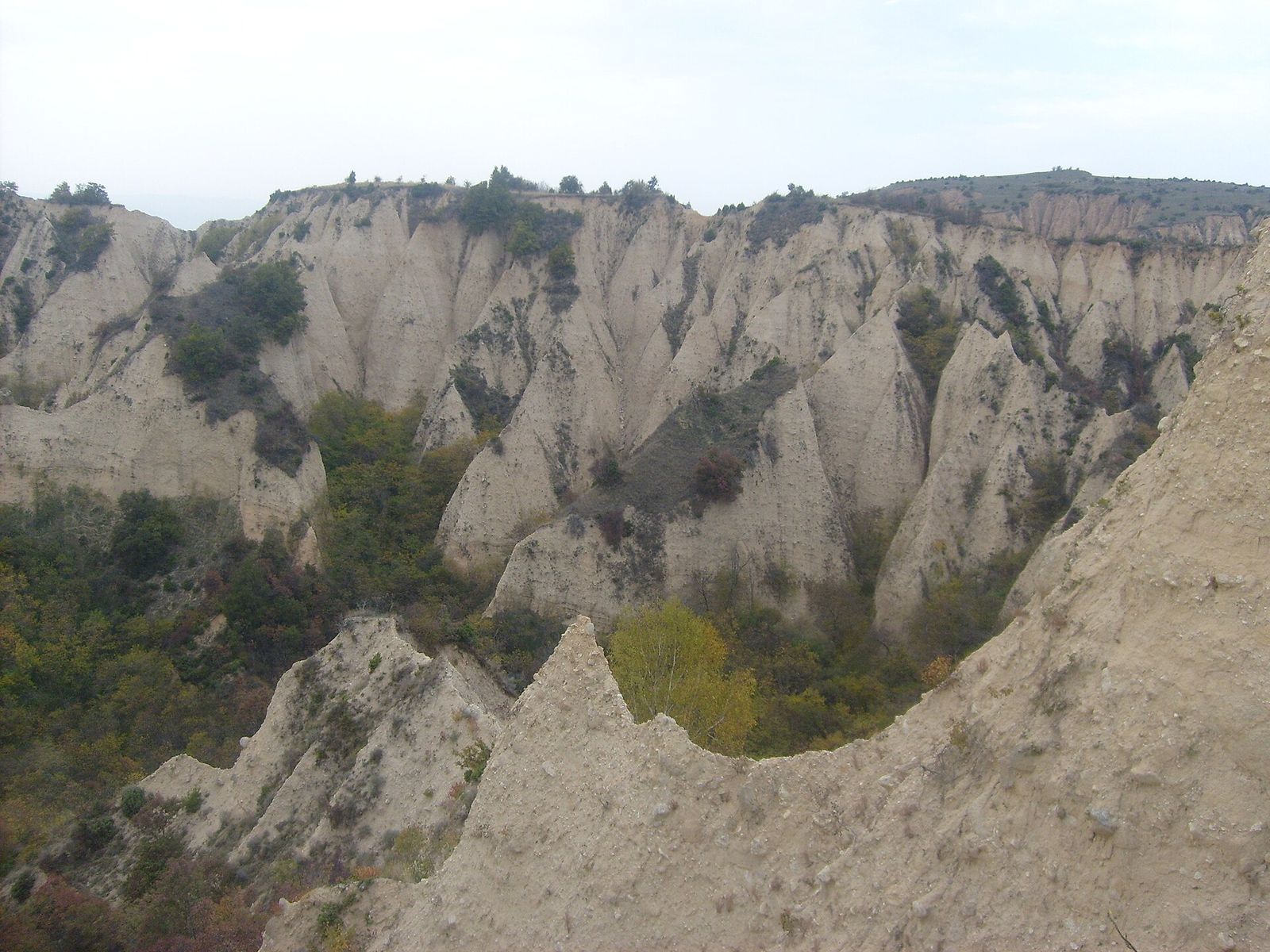
You see them from the town itself, but the best close view is from the ridge near Rozhen Monastery, on the walk between the two.
Rozhen Monastery
Rozhen Monastery stands on a low hill on the southern slope of Pirin, on the edge of the village of Rozhen and 6 km from Melnik. There may have been a church on the site as early as the 9th century, and the monastery was probably founded in the 13th century, in the time of Despot Alexius Slav.
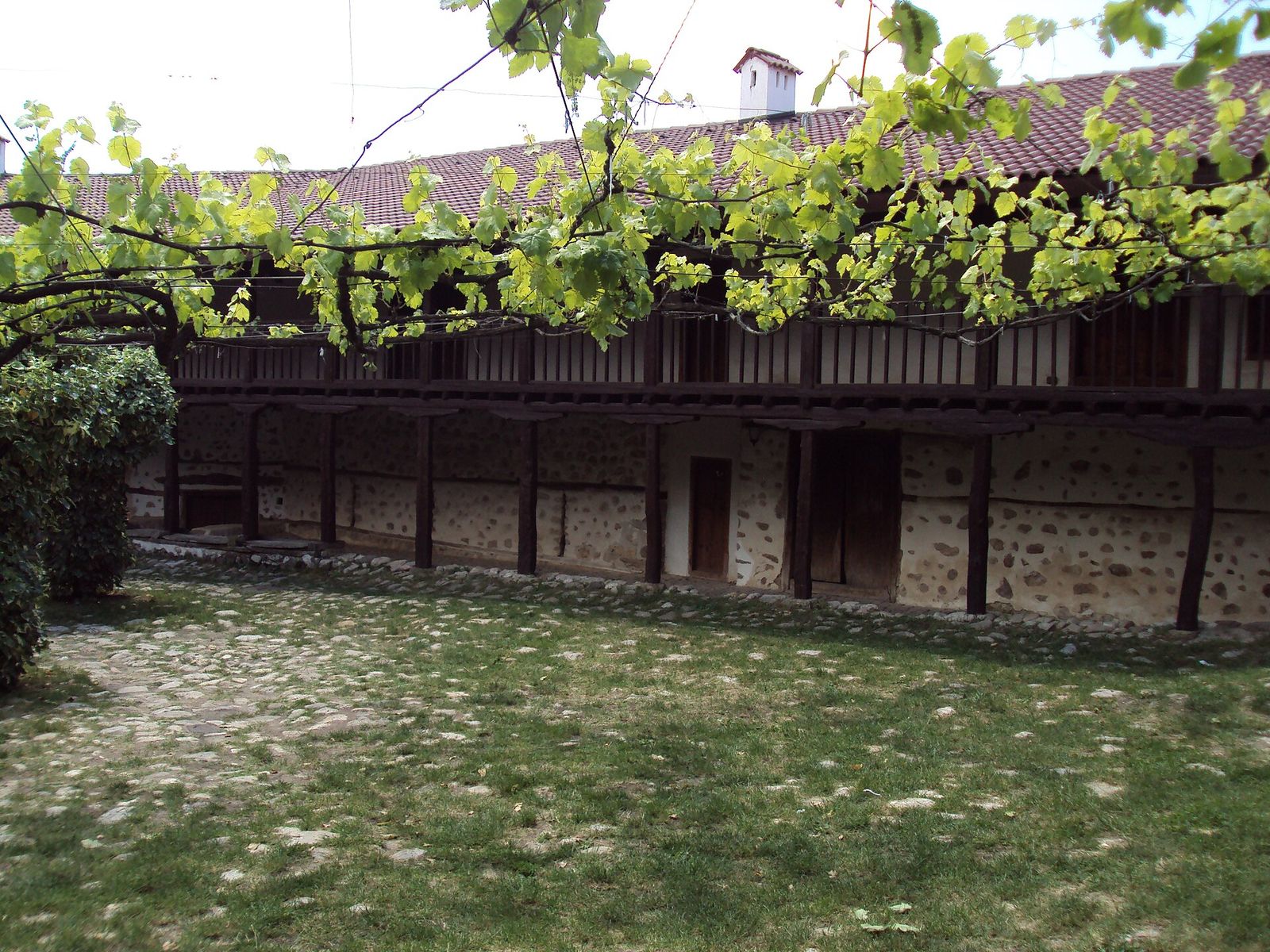
The main church, the refectory and some of the living quarters date from the 16th century. A fire damaged the monastery in the late 17th century, and it was restored in the early 18th century. Inside the church are frescoes, stained glass, wood carving by masters from Debar, and the icon of the Virgin Gatekeeper. The iron gate still carries bullet marks.
Rozhen is an active monastery. The gates open at 8 AM for the morning service, entry is free, and in summer the grounds stay open until about 6 PM. There are rooms for pilgrims and a small museum of icons and folk costumes from southwest Bulgaria.
Yane Sandanski's grave
Close to the monastery, the Church of Saints Cyril and Methodius holds the grave of Yane Sandanski, the Bulgarian rebel leader.
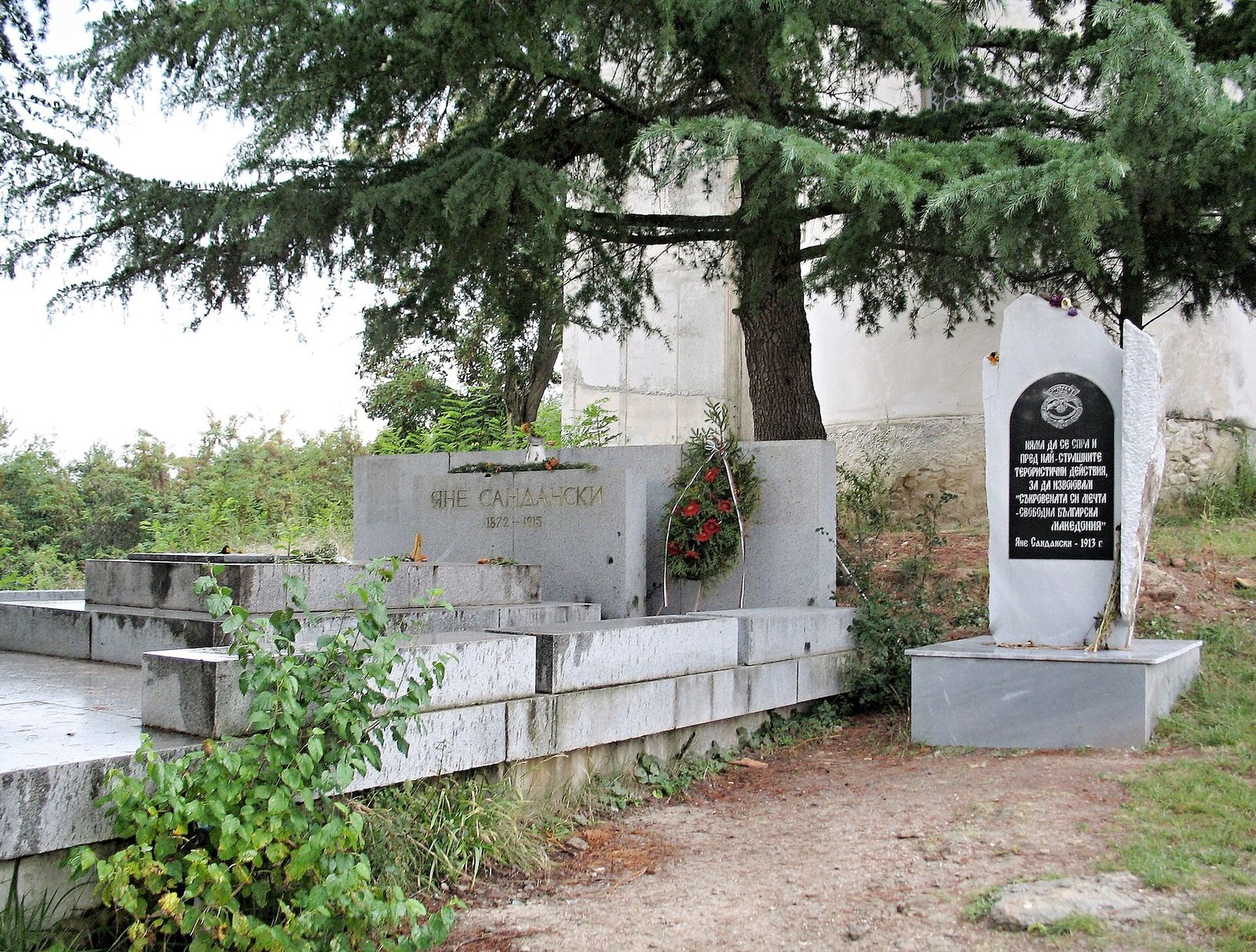
The grave sits under a big tree beside the church wall, a short stop on the way out of the monastery.
Walking from Melnik to Rozhen Monastery
The trail from Melnik to Rozhen is about 3 km and takes about 1.5 hours each way. It climbs out of town through the sand pyramids, follows the bed of the Rozhensko dere, a stream gully, and then enters oak forest, with beech and conifers higher up. In places you walk on the cobbles of the old wine road that once linked Bansko with Melnik.
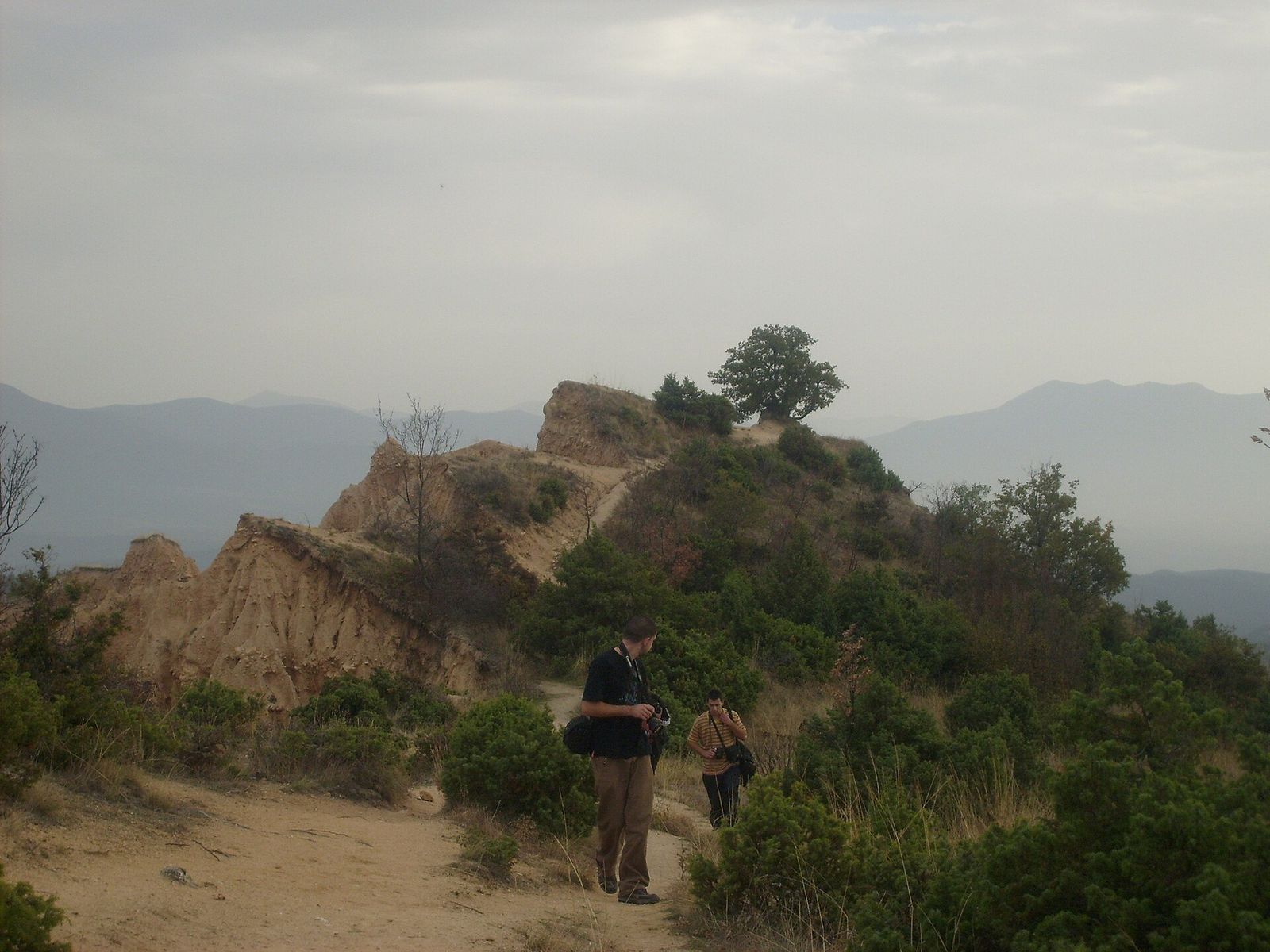
I'd walk it in the cool of the morning, both ways if your legs allow. The road takes the long way round, and the trail is the way to see the pyramids up close.
Things to do in Melnik town
Kordopulov House
The Kordopulov House was built in 1754 for the Kordopulos family, Greek wine merchants and the richest family in town. Its living room alone covers 90 square meters, with stained glass and walls painted in the Venetian style.
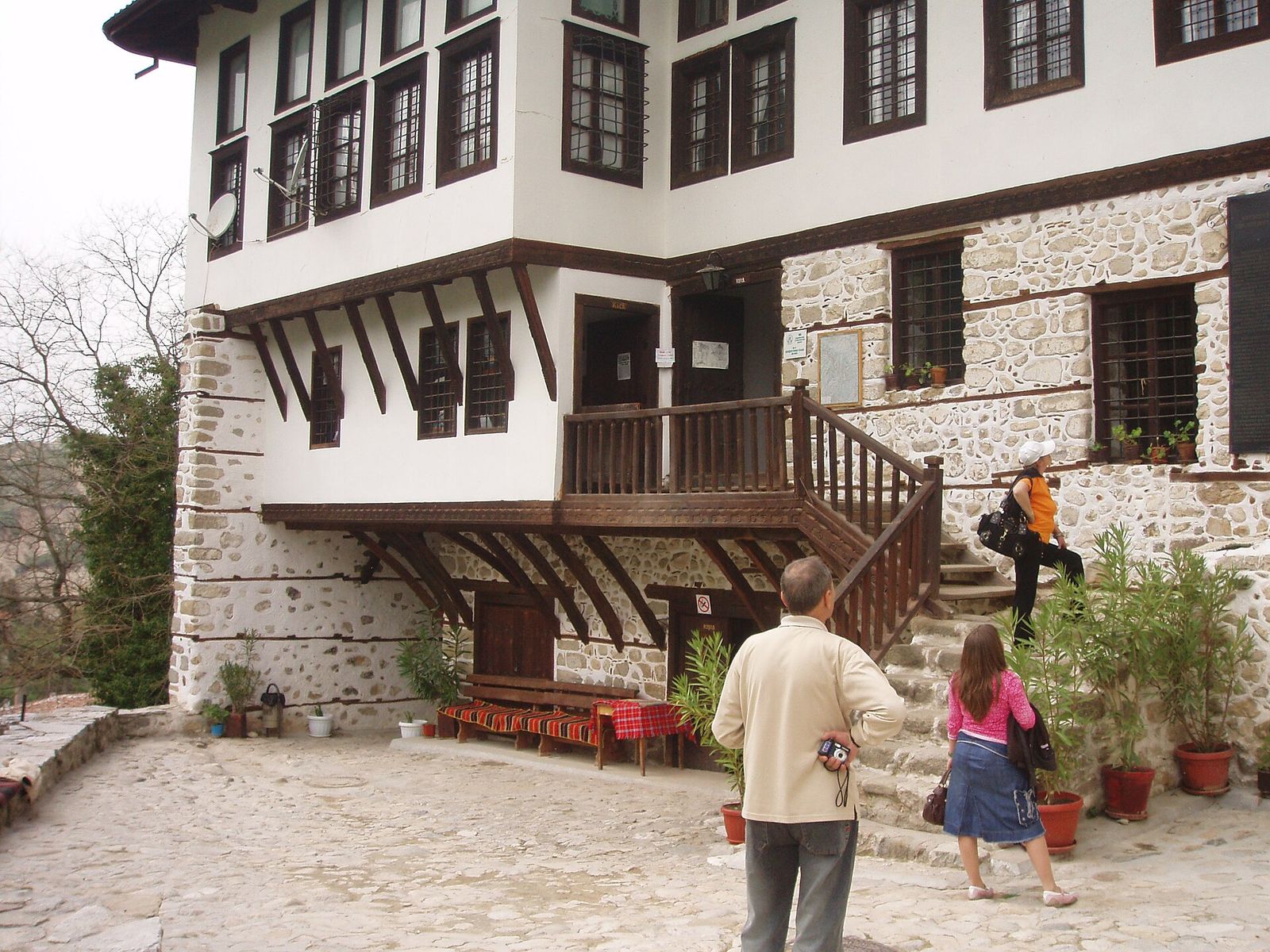
Below the house, a wine cellar is cut deep into the rock, and in front of it stand the ruins of the family's church of St Varvara. Entry costs about €2, and tasting packages cost extra. If you only go inside one house in Melnik, make it this one.
The Wine Museum
The Wine Museum tells the story of Melnik wine in rooms cut into the rock. Its vault holds about 400 wines, which are for show and not for sale. Entry costs about €3 with a tasting.
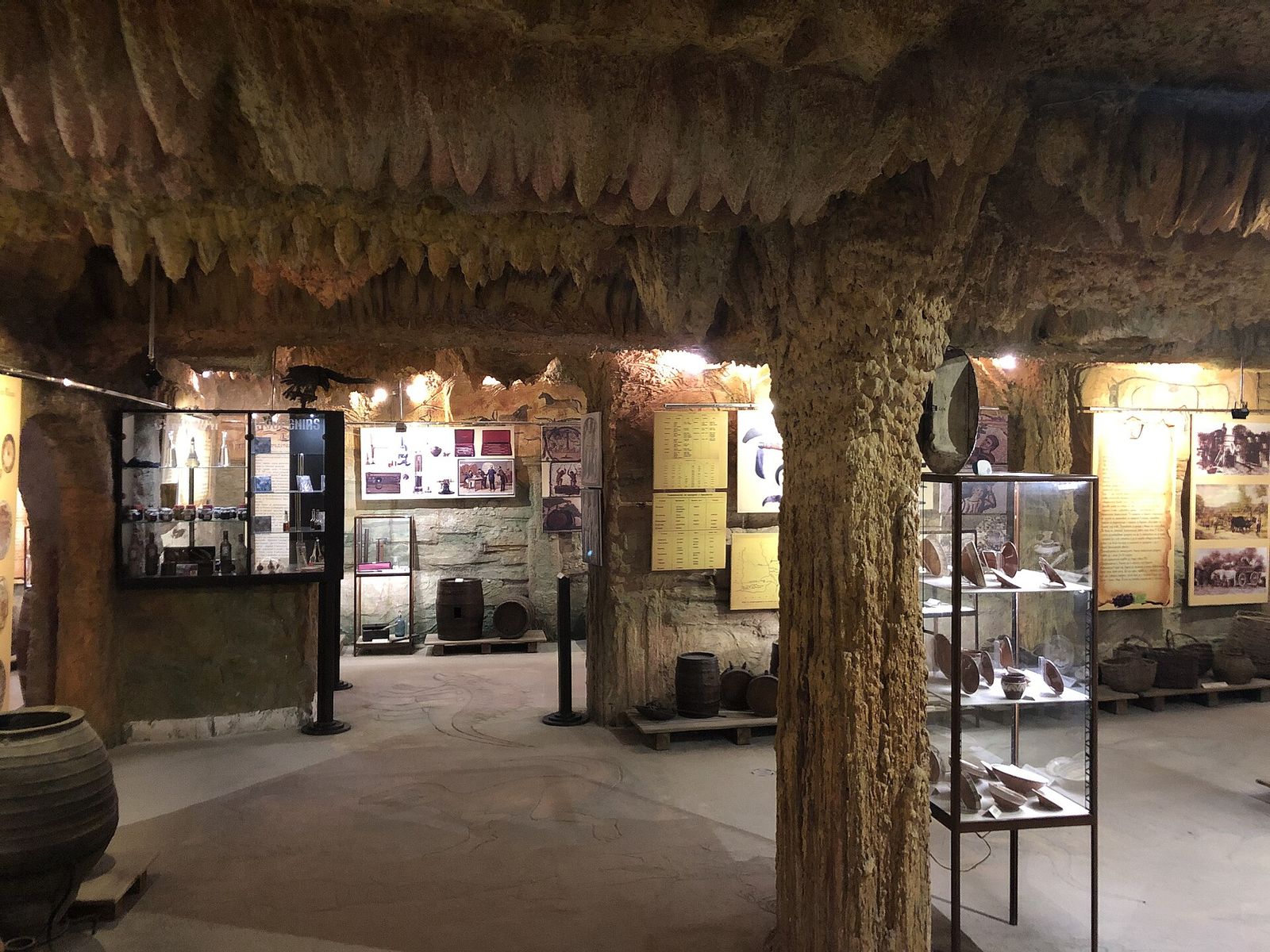
You can also make your own bottle here: fill it, cork it, seal it with wax and put your own label on it, with a date, names or a photo. A bottle with your own label is one of the best Bulgarian souvenirs to carry home.
The main street, old churches and ruins
Melnik is small enough to see on foot in an hour. The main street is cobbled, shaded by old trees and lined with white stone houses, many of them with wine cellars dug into the slope behind.
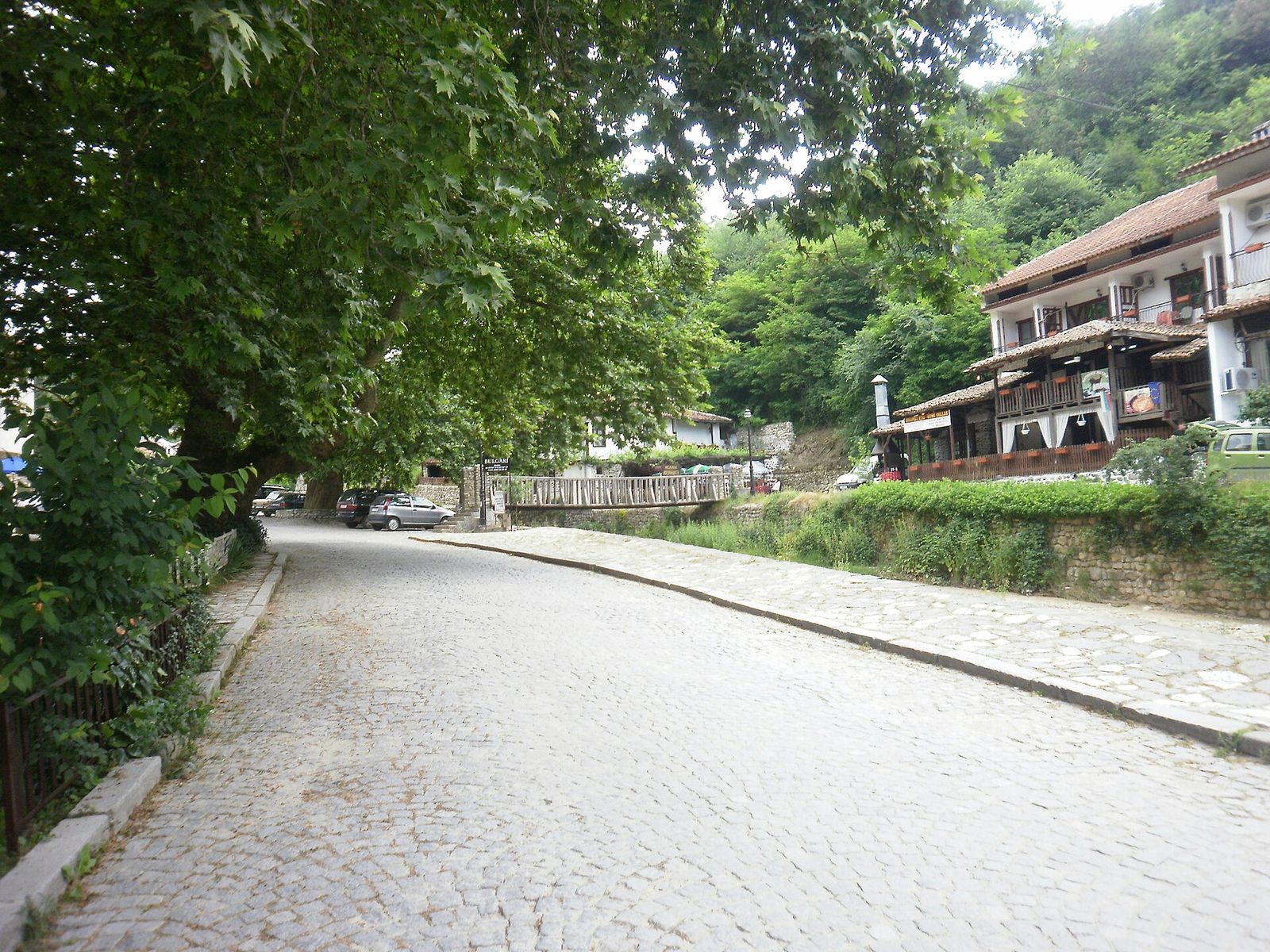
Above the town are the ruins of the Bolyarska House, also called the Byzantine House, the early 13th-century residence of Despot Alexius Slav. The Church of St Nicholas, from the late 12th century, is the largest and oldest church in town, half ruined now. The Church of St Antony has a local legend that a night spent inside it heals the sick.
Keep climbing to the ruins of the old fortress above the town for the best view of the roofs and the valley, and stay for the sunset. The steps up to Sveti Spileotisa, a 10 to 15 minute climb, give you the other good view back over Melnik.
Melnik wine and where to taste it
Melnik's grape is Broad-leaved Melnik, or Shiroka Melnishka Loza, a late-ripening red that grows almost only in this valley. It makes tannic wine that tastes of cherries when young and turns to tar, leather and spice with age, and the local story says it was Winston Churchill's favorite. Melnik 55, an earlier-ripening cross bred from it, is lighter and peppery.
| Wine | Style | What it tastes like |
|---|---|---|
| Broad-leaved Melnik | Red, built to age | Cherry and strawberry young; tar, leather and spice with age |
| Melnik 55 | Red, lighter | Pepper, strawberry and blackberry |
| Sandanski Misket | White | Lemon, lime and grapefruit |
The tasting rooms are in the old houses along the main street. The Kordopulov House and the Wine Museum both pour, and Pri Shestaka is another wine cellar in town. Tastings in town usually cost €5 to €15 per person. Around the valley, the wineries to know are Villa Melnik, Orbelus, Zlaten Rozhen and Rupel, and of the Bulgarian wine regions, the Struma Valley is the small southwestern one with a Mediterranean climate.
Of the two local grapes, Broad-leaved Melnik is the one I'd take home, and it ranks among the best Bulgarian wines for my money. The difference between it and its offspring is the first thing to learn about Bulgarian grape varieties, because both say Melnik on the label.
Where to eat and stay in Melnik
A full meal with local wine costs about €12 to €20 per person, and I'd open it the Bulgarian way, with a small rakia and a shopska salad before the red. Chavkova House and Mencheva Kushta are the two names I'd start with for Bulgarian food.
Most places to stay are small family hotels and guesthouses. Hotel Despot Slav and Hotel Mario are two to look at, and the Bulgari Family Hotel has 18 rooms, its own restaurant and a wine museum. The Zornitza Family Estate, a Relais & Chateaux property, has 6 villas and a restaurant, aEstivum.
Day trips from Melnik
With a car, Rupite and Samuel's Fortress are two more stops close to Melnik, and Sandanski, 23 km away, is the nearest bigger town.
Melnik also works as the last stop before Greece. The drive from Sofia to Thessaloniki runs down the same E79, and a night in Melnik breaks it in half.
Best time to visit Melnik
Late spring and early autumn are the seasons I'd pick, for the warm days and the open cellars. September and October are harvest time, and Melnik 55 comes in from late September. July and August are hot in this sheltered valley, so walk to Rozhen early. Winter is quiet and cool, with the town mostly to yourself.
One day or one night in Melnik
By car, Melnik works as a long day from Sofia, but I'd stay one night. The town is at its best in the evening, when the day visitors leave and the pyramids turn orange, and an overnight lets you do the Rozhen walk in the cool morning.
| Time | What to do |
|---|---|
| Day 1, afternoon | Arrive, walk the main street, visit the Kordopulov House |
| Day 1, evening | Climb to the fortress ruins for sunset, then dinner and a tasting |
| Day 2, 8 AM | Walk the trail to Rozhen Monastery, about 1.5 hours |
| Day 2, late morning | Monastery, museum and Yane Sandanski's grave |
| Day 2, afternoon | Back to Melnik, the Wine Museum, then drive home |
It is on my list of day trips from Sofia as a long day by car; by bus, treat it as a weekend away.
Is Melnik worth visiting?
Yes. Melnik gives you a wine town, the sand pyramids and a medieval monastery within walking distance, and it is on my list of the best places to visit in Bulgaria. One night and a morning walk cover it.
It suits:
- Wine lovers. Melnik is the place to drink Broad-leaved Melnik where it grows, and Bulgarian wine does not get more local than a tasting in a cellar cut into the hill.
- Walkers. The trail to Rozhen takes you through the pyramids up close, with a monastery at the end.
- Anyone who liked Koprivshtitsa. Melnik has the same kind of old merchant houses as Koprivshtitsa, in a hotter, wine-growing valley.
- Road trippers heading to Greece. Melnik is the last town I'd stop in before the border.
- Skiers in Bansko. A little over an hour's drive makes Melnik an easy day off the slopes in Bansko.
Skip it if:
- You have one free day, no car and no wish to stay overnight. The bus timetable will not let you see Melnik and get back the same day.
- You want nightlife. Evenings here mean dinner, a tasting and an early night.
- You come on a winter Sunday. Too much of the town may be shut.
Key takeaways
- Melnik is about 180 km south of Sofia, 2.5 to 3 hours by car or 4 hours on the one daily bus.
- The sand pyramids around the town are up to about 100 m high, and the best view is from the ridge near Rozhen.
- Rozhen Monastery is free, 6 km by road or a 1.5-hour walk on a 3 km trail through the pyramids.
- The Kordopulov House, built in 1754, costs about €2 and has a wine cellar cut into the rock.
- Stay one night: the evenings are the best part, and the walk to Rozhen is best done in the morning.
Frequently asked questions
Is Melnik worth visiting?
Yes. Melnik combines the smallest town in Bulgaria, its own wine grape, the sand pyramids and Rozhen Monastery within walking distance, and one night there is one of the best short trips from Sofia.
How do I get from Sofia to Melnik?
By car it is about 180 km and 2.5 to 3 hours, mostly on the E79 road toward Greece. The one direct bus a day leaves Sofia at 2 PM and takes about 4 hours, and the nearest train station, Damyanitsa, is about 12 km from town.
How far is Rozhen Monastery from Melnik?
Rozhen Monastery is 6 km from Melnik by road, about 10 to 12 minutes by car. On foot the trail through the pyramids is about 3 km and takes about 1.5 hours each way.
Can you walk from Melnik to Rozhen Monastery?
Yes, on a 3 km trail that climbs through the sand pyramids and oak forest in about 1.5 hours. It is poorly marked in places, with narrow sections and no shade, so take water and an offline map.
Is Rozhen Monastery free to visit?
Yes, entry to Rozhen Monastery is free. The gates open at 8 AM for the morning service, and in summer the grounds stay open until about 6 PM.
What is Melnik famous for?
Melnik is famous for its wine, above all the red Broad-leaved Melnik said to be Winston Churchill's favorite, and for the sand pyramids that surround the town. It is also known as the smallest town in Bulgaria.
How many people live in Melnik?
Fewer than 400 people live in Melnik, which makes it the smallest town in Bulgaria. It shrank after a fire and the departure of its Greek residents in the early 20th century.
Can you visit Melnik as a day trip from Sofia?
Yes, by car, if you leave early: it is 2.5 to 3 hours each way. By bus it does not work as a day trip, because the only direct bus leaves Sofia at 2 PM and the return runs the next morning.
12 Best Day Trips from Sofia by Bus, Train and Car
Bulgaria's top monastery, oldest city and highest peak are a day out of Sofia. The 12 trips I'd pick and how to go.
Read the guide
Rila Monastery from Sofia: How to Get There and What to See
Bulgaria's biggest monastery sits two hours from Sofia. How to reach it in 2026, what is free and what to see.
Read the guide
Sofia to Plovdiv: How to Get There and What to See in a Day
Plovdiv is 2 hours from Sofia by bus. Bus, train or car, the last rides home and the day I'd plan there.
Read the guide