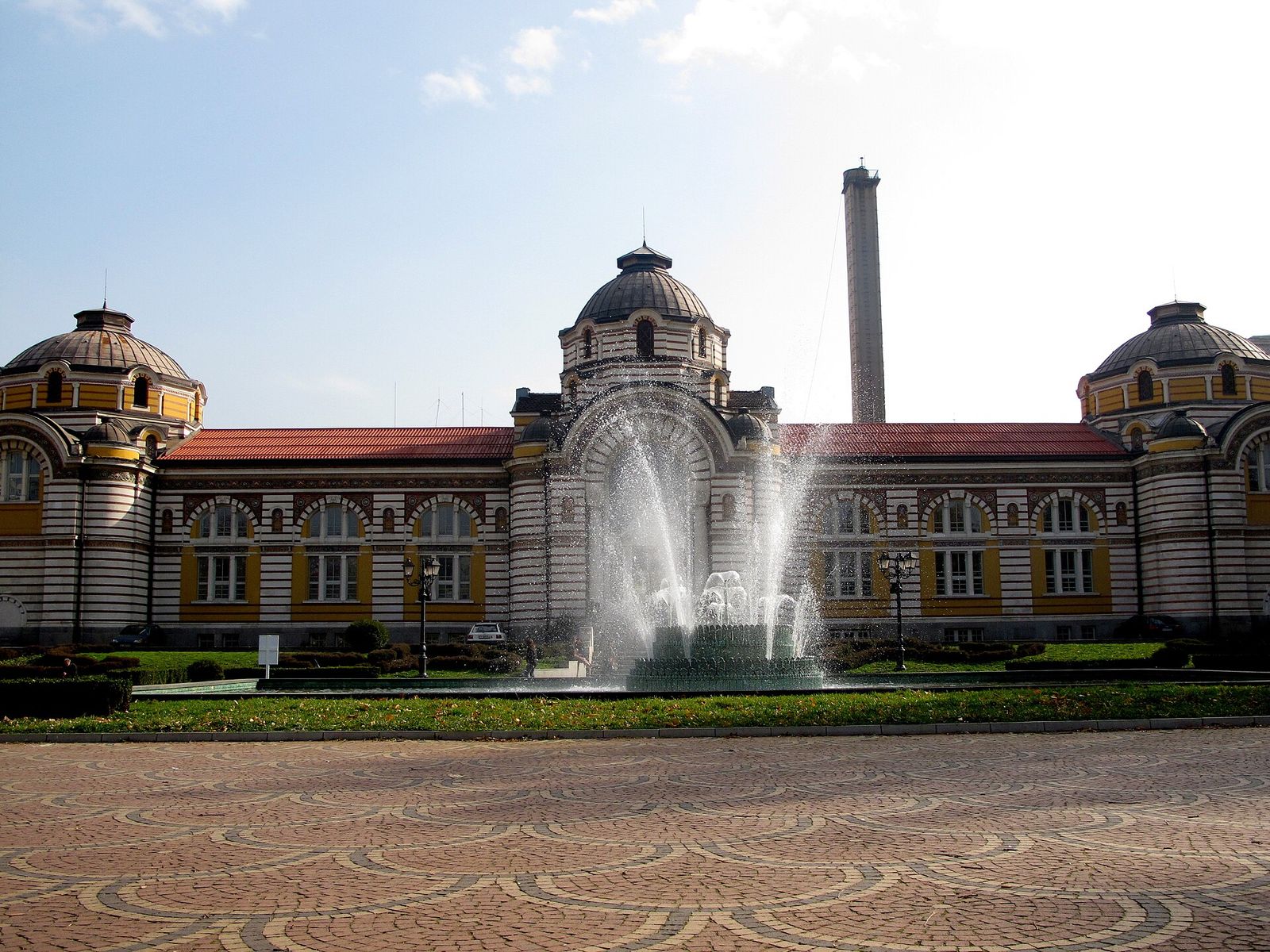
The Central Mineral Baths in Sofia and the City's Hot Springs
Sofia sits on hot springs, and the striped Central Mineral Baths on Banski Square were built over the main one in 1913. Nobody bathes there now: the building holds the Regional History Museum, and the hot water runs from free public taps outside. This guide covers the building's story, the taps, the €5 museum, the sights around it and where in and around Sofia you can still soak in mineral water.
The Central Mineral Baths at a glance
Sofia and its hot springs
Sofia grew up around its mineral springs, and the main one still rises under Banski Square, the square of the baths. An Ottoman bathhouse stood on the site before the present building, and the mosque across the street is called Banya Bashi, which means "many baths". The spring under the square gave the old bath a flow of about 110 liters a second.
The city has more springs than this one. Bankya, Knyazhevo and Gorna Banya, on the edge of the city, have their own sources, and Bulgaria counts more than 200 mineral springs in all. That is why bottled Bulgarian mineral water such as Devin, Hisar and Gorna Banya is one of the cheapest drinks on any shop shelf.
In the center the spring shows up as a 1913 building and a row of free taps, and for a soak you go 15 to 17 km out, to Pancharevo or Bankya.
The Central Mineral Baths building and its history
In March 1880, two years after the Liberation, the city council decided to build a modern public bath. An international competition in 1889 drew seven designs, and the winner was the Viennese architect Emil von Förster, who proposed a bath with a hotel. What finally went up decades later was the work of the Bulgarian architects Petko Momchilov and Yordan Milanov, who kept many elements of his plan.
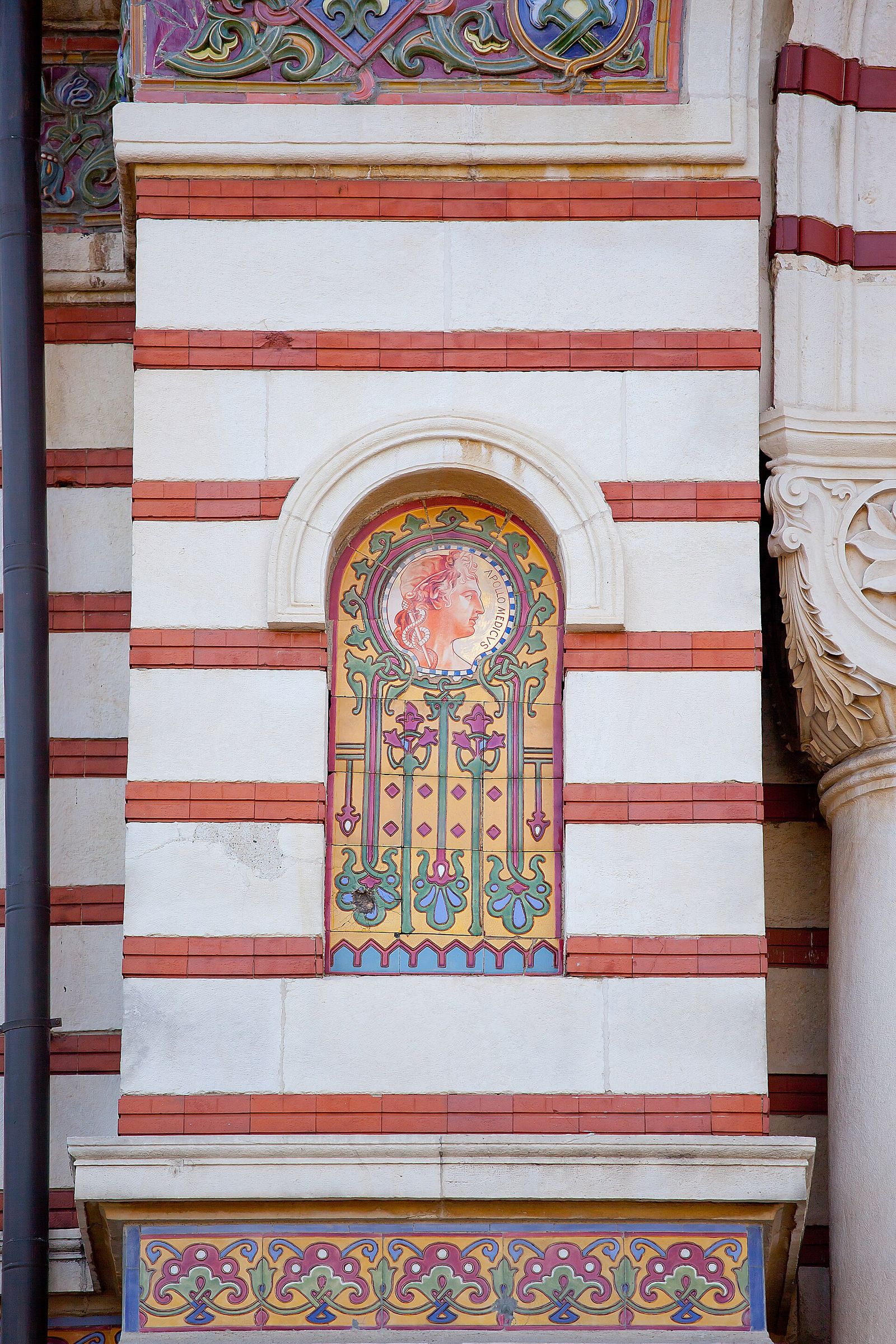
The style is Secession, the Central European take on Art Nouveau, mixed with Bulgarian, Byzantine and Orthodox ornament. The painter Haralampi Tachev designed the decoration: friezes of colored tiles with flowers and geometric shapes, cream and red stripes, and domes over the entrances.
The bath opened on 13 May 1913 and was one of the most modern in Europe. On 10 January 1944 Allied bombing destroyed its south wing and damaged the spring, and the building was restored by 1950. It kept working until 1986, when it closed because of its poor condition, and it stood empty for years before the rebuilding of 2010 to 2015.
How the bath worked in 1913
The old bath was a big operation, with men's and women's sections, medical staff and rooms for water, mud and electric treatments. The mud for those treatments came from Italy.
| Feature | In the bath's working years |
|---|---|
| Floor space | 5,000 square meters on 2 floors |
| Large pools | 2, each 18 by 7 meters, at 23 to 26°C |
| Small warm pools | 37°C and 46°C, used for rheumatism |
| Spring flow | About 110 liters a second |
| Opening hours | 5 AM to 11 PM |
| Bathers a day | 800 to 1,000 |
Prices came in several tiers so that every class of Sofia could afford it, and the bath stayed in use for 73 years.
The free mineral water taps
Beside the building, a row of public taps runs warm mineral water from the same spring. It is free, and it is safe to drink. Locals queue there with plastic bottles and big jugs to take the water home.
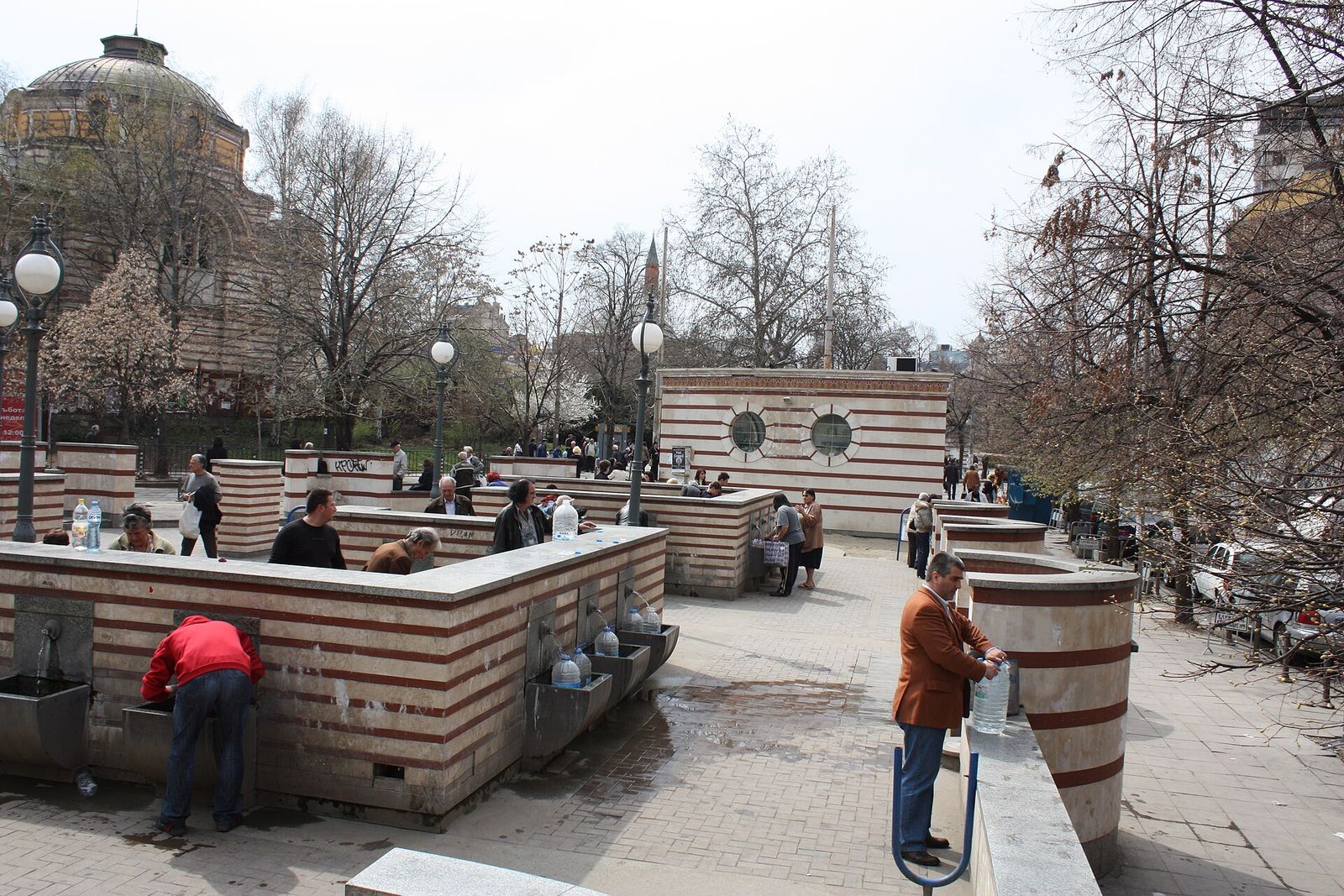
The water comes out warm and smells a little of sulfur. I'd try a few sips straight from the tap before you decide how much of it to carry away.
The taps and Banya Bashi across the street both cost nothing, which makes this corner a good start to a day of Sofia on a budget.
The Regional History Museum inside
The Regional History Museum tells the story of Sofia itself, from the first settlements to the city of 1944. It has more than 120,000 objects, and its oldest pieces are Neolithic finds from Slatina, one of Sofia's own neighborhoods. Its 11 rooms run from archaeological finds to the royal objects of the capital in the early 20th century.
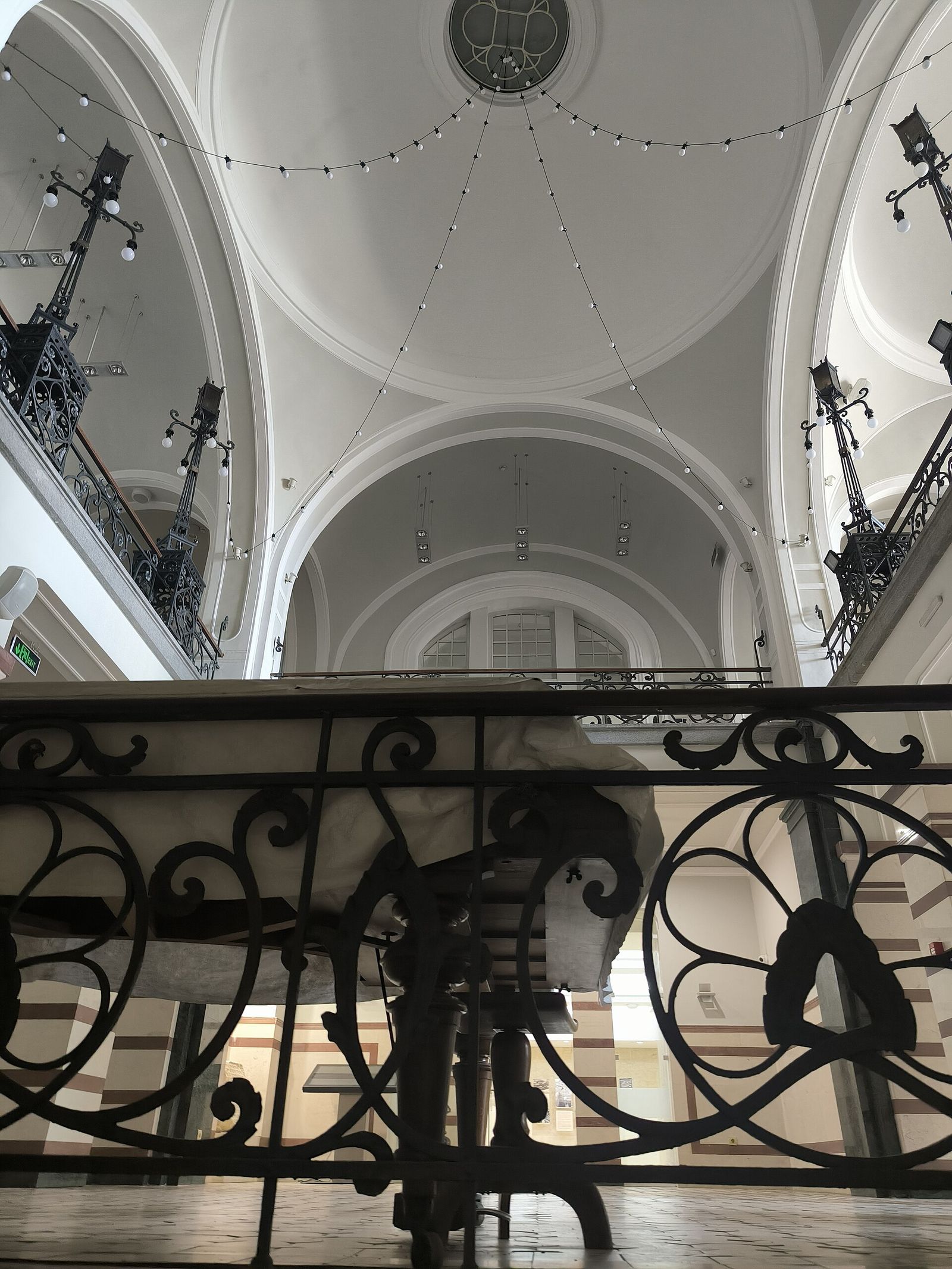
I'd head for the royal objects from Bulgaria's monarchy, including the carriages of the royal family and Tsar Ferdinand's own carriage, and for the inside of the old bath. The interior keeps its white domes and wrought iron railings, and the ground-floor halls repeat the cream and red stripes of the facade.
The idea for a city museum dates from 1928, and its first exhibition opened on 1 December 1941, but for decades the museum had no hall of its own, until the city council gave it the bath building in 1998. It opened here on 17 September 2015 and became a regional history museum in 2016.
| Regional History Museum | Details |
|---|---|
| Ticket | €5 |
| Hours | Tuesday to Sunday, 10 AM to 6 PM; closed Mondays |
| Address | 1 Banski Square |
| Collection | More than 120,000 objects, Neolithic to 1944 |
| Time needed | About 1 hour |
The same museum runs several of Sofia's archaeological sites, including the Ancient Serdica Complex and the archaeological level under St Sofia Church, so a day on the city's history can stay with one institution. It sits in the middle of the best museums in Sofia on price, and I'd put it on any first visit for the building alone.
What to see near the Central Mineral Baths
Banski Square sits in a corner of the center where four faiths meet within a few minutes' walk. Across the street stands Banya Bashi Mosque, the 16th-century Ottoman mosque with its tall minaret, still in use for prayer. Visitors take their shoes off inside, and women cover their hair.
Opposite the baths, the Central Market Hall has been a supermarket since its 2024 reopening, with part of Serdica's Roman wall in its basement, and a block further on is the Sofia Synagogue, built in 1909 and the largest in Southeastern Europe. With St Nedelya Church and the Catholic Cathedral of St Joseph, the four make up what Sofia calls its square of religious tolerance.
South of the square, the Roman streets of ancient Serdica lie open under the Largo by Serdika metro station, free to walk through, with covered halls open daily from 7 AM to 10 PM.
Where to bathe in Sofia's hot springs
Sofia's other springs still fill public pools, at Bankya and Pancharevo on the edge of the city, and further out Sapareva Banya and Kostenets have spa water of their own.
| Place | Distance from the center | What you get |
|---|---|---|
| Bankya | 17 km west, about 25 minutes by train | Mineral water at about 37°C; Aqua Bankya pool complex |
| Pancharevo | About 15 km southeast | Thermal mineral water at Korali, above the lake, and at Infinity Center |
| Sapareva Banya | About 95 km south | A spring at about 103°C feeding outdoor pools of 36 to 40°C at Aqua Nikolis |
| Kostenets | About 70 km on the Plovdiv motorway | A smaller spa town for a stop on the drive |
Bankya is the easy one. Trains from Sofia Central Station take about 25 minutes and cost about €1, and the town lies inside Sofia's own city limits. Pancharevo is closer but needs a bus or taxi. Mineral pools are only one corner of swimming pools in Sofia, which run from the Olympic lap pools at Diana to rooftop pools above the city.
How to fit the baths into a day
The baths take 10 minutes from outside and an hour with the museum. Most walking routes through the center pass them between St Nedelya and the Largo, so there is no need to plan a separate trip.
My Sofia itinerary puts them in the late morning of day 1, after Serdica and the Rotunda and before Banya Bashi and the synagogue. Most of the things to do in Sofia in the old center, from Alexander Nevsky Cathedral to the Rotunda, are free and within walking distance of the baths.
On a Monday the museum is closed, so keep that day for the taps, the mosque and the market hall and see the museum on another.
Key takeaways
- The Central Mineral Baths opened in 1913 over Sofia's main hot spring and closed as a bathhouse in 1986.
- Since 2015 the building has held the Regional History Museum: €5, Tuesday to Sunday from 10 AM to 6 PM.
- The public taps beside it run free, warm mineral water that is safe to drink, so bring a bottle.
- You cannot bathe there today; Bankya, 25 minutes away by train, and Pancharevo have mineral pools.
- Banya Bashi Mosque, the Central Market Hall and the synagogue are all a short walk away.
Frequently asked questions
Can you bathe at the Central Mineral Baths in Sofia?
No. The bath closed in 1986, and since 2015 the building has held the Regional History Museum. For a soak in mineral water, go to the pools at Bankya or Pancharevo on the edge of the city.
Is the mineral water in Sofia safe to drink?
Yes, the water from the public taps beside the Central Mineral Baths is safe to drink. It comes out warm with a light smell of sulfur, and locals fill bottles there every day.
Are there hot springs in Sofia?
Yes, Sofia sits on mineral springs, and the main one rises under Banski Square in the center. Bankya, Knyazhevo and Gorna Banya, on the edge of the city, have their own sources too.
How much is the Regional History Museum in Sofia?
A ticket costs €5 in 2026. The museum opens Tuesday to Sunday from 10 AM to 6 PM, closes on Mondays, and takes about an hour.
When were the Central Mineral Baths built?
The bath opened on 13 May 1913, designed by Petko Momchilov and Yordan Milanov. It was damaged by bombing in 1944, restored by 1950, closed in 1986 and rebuilt between 2010 and 2015.
Where can I find thermal pools near Sofia?
Bankya, 17 km west and 25 minutes by train, and Pancharevo, about 15 km southeast, have pools filled with mineral water. Sapareva Banya, about 95 km south, has the hottest spring, at about 103°C.
What is the Regional History Museum in Sofia about?
It tells the story of Sofia from Neolithic times to 1944, with more than 120,000 objects. The royal carriages and the restored interior of the old bath are the parts I'd look for.
Where are the Central Mineral Baths in Sofia?
They stand at 1 Banski Square in the center, a short walk north of Serdika metro station and the Largo. Banya Bashi Mosque and the Central Market Hall are across the street, and the free mineral water taps are beside the building.
25 Best Things to Do in Sofia in 2026
Sofia packs 2,000 years into a walkable center. The 25 sights, museums, foods and day trips I'd put first, with prices.
Read the guide
Alexander Nevsky Cathedral in Sofia: A Visitor's Guide
Sofia's gold-domed landmark is free to enter. Here is its story, what to see inside, the crypt museum and when to go.
Read the guide
Boyana Church: Visiting Sofia's UNESCO Frescoes
A tiny UNESCO church under Vitosha with frescoes from 1259. Tickets, time slots, the bus out and what to find inside.
Read the guide