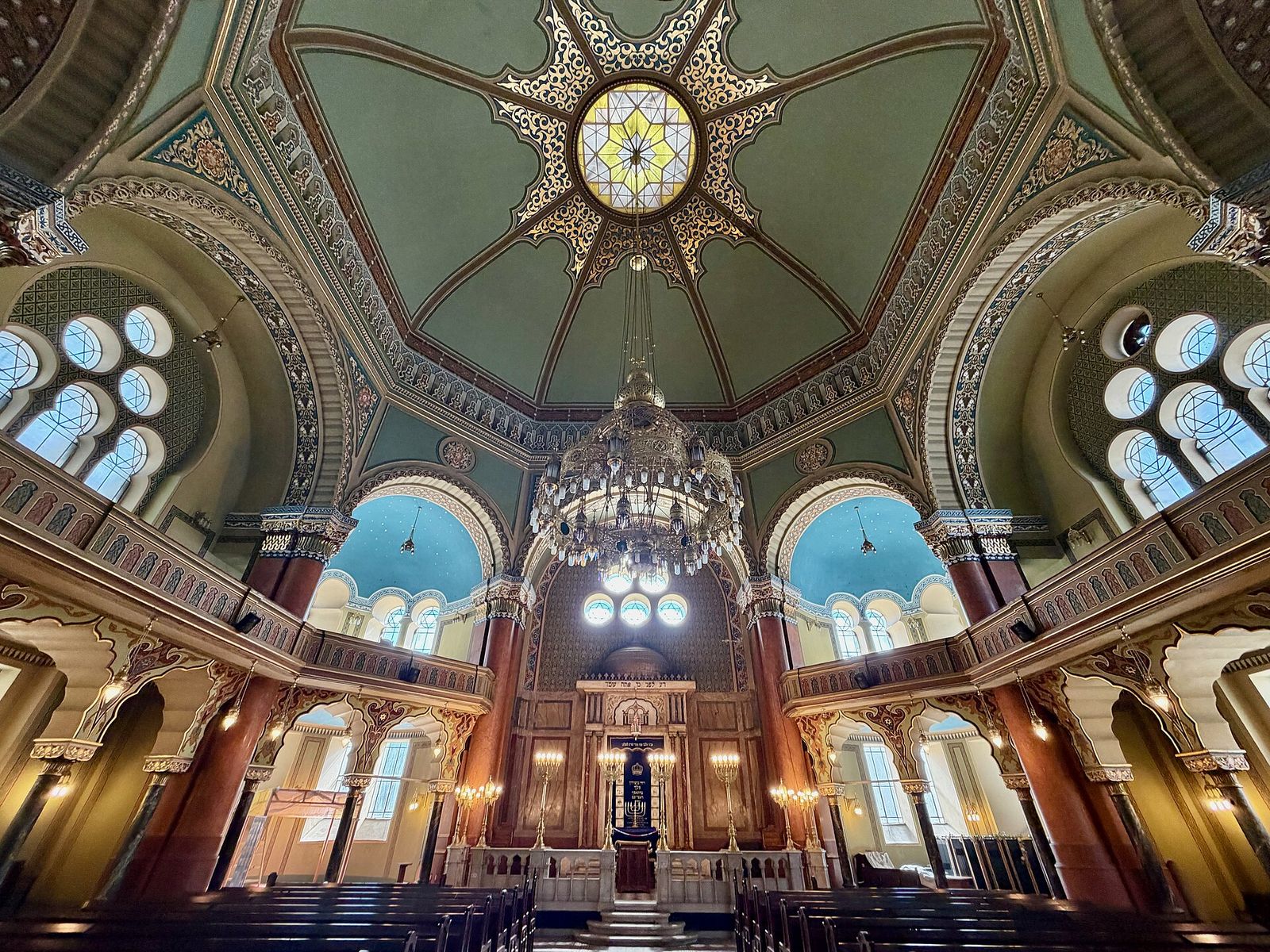
The Sofia Synagogue: Tickets, History and What to See
The Sofia Synagogue is the red and cream striped building with the big dome on Ekzarh Yosif Street, opened in 1909 for the city's Sephardic Jews. It is the largest synagogue in Southeastern Europe, and its prayer hall holds a brass chandelier weighing 1.7 tons. This guide covers tickets and hours, the building's history, how Bulgaria's Jews survived the Second World War, what to see inside and what sits nearby.
The Sofia Synagogue at a glance
The synagogue stands at 16 Ekzarh Yosif Street, right behind the Central Market Hall and a few minutes' walk from Serdika metro station. It is still a working synagogue, one of only two active ones in Bulgaria.
Tickets and opening hours
One ticket covers everything a visitor does inside: the main hall, the museum exhibition called The Niche, an individual interactive audio guide and permission to take photos. You can pay by card.
| Ticket | Price |
|---|---|
| Adult | €10 |
| Students and seniors | €8 |
| Groups of 10, per person | €6 |
Visiting hours run Sunday to Friday from 9 AM to 5 PM. The building closes to visitors on Saturdays, the Jewish Sabbath, and on Jewish holidays and Bulgarian national holidays, so check the calendar if your trip falls around Passover, Rosh Hashanah or a long Bulgarian weekend.
The history of the Sofia Synagogue
Sofia's Jewish community goes back at least to the 15th century. Most of the people the synagogue was built for are Sephardic, descendants of Jews expelled from Spain at that time, who were taken in by the Ottoman Empire and settled across its Balkan towns, Sofia among them.
An older synagogue stood on this plot in the center. In the early 1900s, as part of a reorganization of the community under Chief Rabbi Marcus Ehrenpreis and local leaders Ezra Tadjer and Avram Davidjon Levy, it was replaced with something much bigger. Planning started in 1903, and construction began on 13 November 1905.
The architect was the Austrian Friedrich Grunanger, and his design follows the Moorish-style Leopoldstadter Tempel in Vienna. The synagogue was opened on 9 September 1909 in the presence of Tsar Ferdinand I and the royal family.
The building was damaged in the Second World War and repaired afterward. Since 8 May 1992, three years after the fall of communism in Bulgaria, it has also housed the Jewish Museum of History.
How Bulgaria's Jews survived the Second World War
In the Second World War, Bulgaria joined Germany's side in 1941. Public protest, the Bulgarian Orthodox Church, members of parliament and, in the end, Tsar Boris III blocked the deportation of Bulgaria's own Jews, and all of the roughly 48,000 survived the war.
The Jews of Thrace and Macedonia, territories Bulgaria occupied during the war, were deported, and the museum inside the synagogue tells both parts of the story.
After the war, most of Bulgaria's Jews emigrated to Israel. Services today draw 50 to 60 worshippers, a fraction of the 1,300 people the main hall seats.
The synagogue from outside
From Ekzarh Yosif Street, the synagogue is a tall block of red and cream striped stone and brick, with horseshoe arches, slim turrets and a big octagonal dome. The style is Moorish Revival mixed with Byzantine Revival, with touches of the Vienna Secession and a facade that borrows from Venetian buildings.
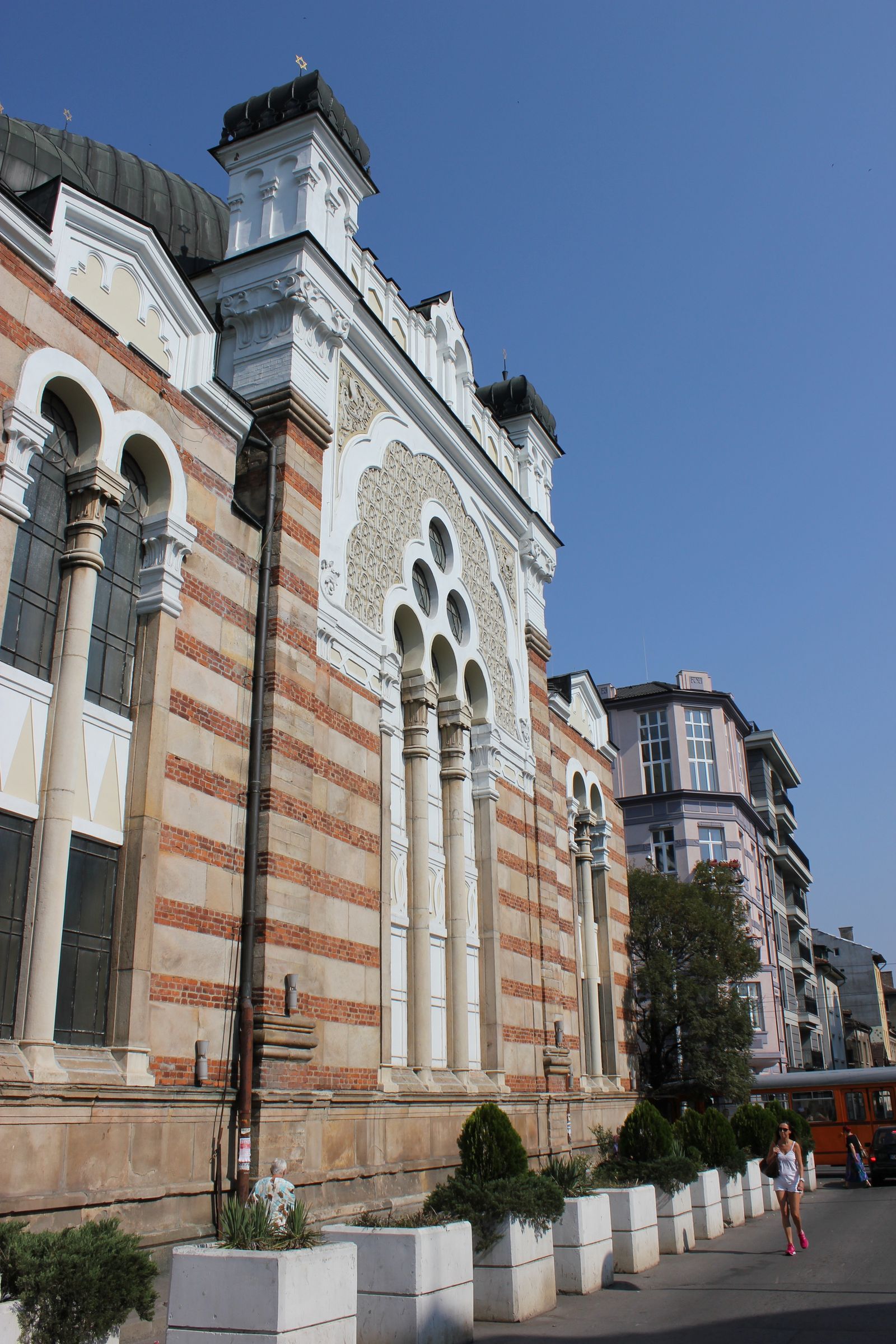
The building covers 659 square meters, and from the narrow street it is easy to underrate how big it is. On the gate pillar, a plaque gives the consecration date and the visiting hours.
Inside the main hall
The main hall is the reason to buy a ticket. It is 20 meters across and rises 31 meters to the octagonal dome, with painted arches, upper galleries and rows of dark wooden pews facing the Torah ark.
Its columns are Carrara marble, and the walls and arches carry multicolored Venetian mosaics and carved wood. Look for the number eight repeated in the decoration, from the eight sides of the dome down to the patterns on the walls.
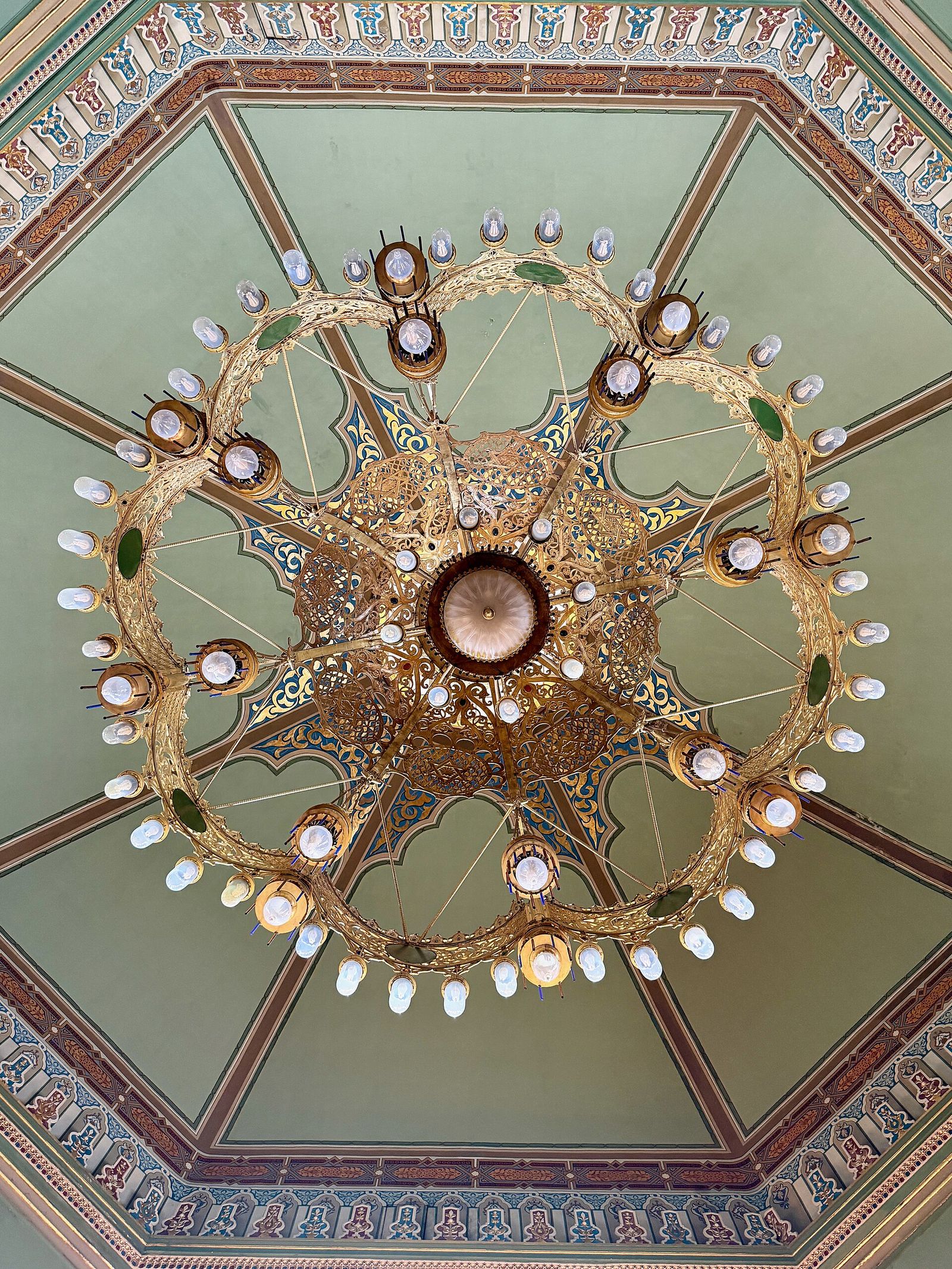
The chandelier hangs from the center of the dome. It is brass, weighs 1.7 tons and is the largest in Bulgaria, and it is said to have been made in Vienna.
The Jewish museum inside the synagogue
The museum's displays cover the Jewish communities of Bulgaria, and two sections deal with the Holocaust and with the rescue of Bulgaria's Jews. A souvenir shop sits in the building too.
I'd give the museum about 15 minutes and read the Holocaust and rescue sections slowly.
If the museum leaves you wanting more of Sofia's past, the Regional History Museum in the old Central Mineral Baths, a few minutes away, tells the city's story up to 1944 for €5.
What to wear and the rules inside
- Men cover their heads. A kippah is provided at the entrance if you have no hat.
- Modest clothes. Cover your shoulders and knees, as you would in any working place of worship.
- Quiet in the main hall. Visitors walk around freely, but it is still a room people pray in.
- Photos are fine. I'd put the camera down if a service or ceremony is under way.
Attending a service at the synagogue
The synagogue holds regular services, and visitors who want to attend are welcome. Anyone planning to come to a service is asked to contact the office at least three days before.
The synagogue's contacts page has the office phone number and email. Services follow the Jewish calendar, so the Sabbath and the holidays, when the building is closed to sightseeing, are exactly the days it is busiest with worshippers.
How to get to the Sofia Synagogue
Walking is the easy option, since the synagogue is in the old center. From St Nedelya Square it is about 10 minutes north on foot, past the Largo and Banya Bashi Mosque, and the north end of Vitosha Boulevard is a few minutes further south.
Serdika is the closest station, where the red, blue and yellow Sofia metro lines meet, which makes it one stop or one change from almost anywhere in the city. Trams run along Maria Luiza Boulevard, close by.
What is near the Sofia Synagogue
The synagogue sits in the area locals call the square of religious tolerance, where a synagogue, a mosque, an Orthodox cathedral and a Catholic cathedral stand within a few minutes of each other.
| Sight | How far | What it is |
|---|---|---|
| Central Market Hall | Next door | The 1911 market hall, a supermarket since its 2024 reopening |
| Banya Bashi Mosque | About 200 m | The only working mosque in Sofia, from the 1560s, free |
| Central Mineral Baths | Across from the mosque | The 1913 bathhouse, now a museum, with free mineral water taps |
| Serdica ruins | A few minutes south | Roman streets and baths around Serdika station, free |
| St Nedelya Cathedral | About 5 minutes south | Orthodox cathedral rebuilt by 1933, free |
| Cathedral of St Joseph | A few minutes away | Catholic cathedral, rebuilt and consecrated in 2006 |
Banya Bashi Mosque is free outside prayer times, with shoes off and hair covered for women. The Central Market Hall next door reopened in 2024 as a supermarket, with Roman remains on show in its basement.
The Roman streets of Serdica, uncovered during metro work between 2010 and 2012, are free to walk through from 7 AM to 10 PM. The Orthodox side of the walk continues east to Alexander Nevsky and St Sofia, and the churches in Sofia worth seeing on the same day are almost all free.
Is the Sofia Synagogue worth visiting?
Yes. To me the main hall is the most striking interior in central Sofia after Alexander Nevsky.
Who it suits best:
- First-time visitors. It is one of the big sights of the old center and part of any morning around Serdika.
- Anyone interested in Jewish history. The building and the museum tell the story of a Sephardic community that has lived in Sofia since the 15th century.
- Architecture fans. The Moorish Revival hall, with its Carrara marble columns and Venetian mosaics, is like no other interior in the city.
- Photographers. The view up into the octagonal dome, with the brass chandelier at its center, is the shot.
Skip it, or plan around it, if:
- You are in Sofia only on a Saturday. It is closed to visitors all day.
- You want a free stop. At €10, it is one of the pricier single sights in the center, where most churches cost nothing.
The synagogue fits easily into day one of a Sofia itinerary, between the Roman ruins in the morning and Alexander Nevsky in the afternoon, and it is one of the things to do in Sofia I'd put near the top for anyone with an interest in history.
Key takeaways
- The Sofia Synagogue opened in 1909 and is the largest synagogue in Southeastern Europe.
- It opens Sunday to Friday from 9 AM to 5 PM and is closed on Saturdays and holidays.
- A €10 ticket covers the main hall, the museum, an audio guide and photos.
- Men wear a kippah, provided at the door, and everyone dresses modestly.
- Bulgaria's roughly 48,000 Jews survived the Second World War, and the museum tells that story.
Frequently asked questions
Is the Sofia Synagogue the largest in Europe?
No, it is the third largest in Europe and the largest in Southeastern Europe. Its main hall seats about 1,300 people and rises 31 meters to the dome.
How much does it cost to visit the Sofia Synagogue?
A ticket costs €10 for adults, €8 for students and seniors and €6 per person for groups of 10. It includes the museum exhibition, an interactive audio guide and permission to take photos.
What are the opening hours of the Sofia Synagogue?
It opens to visitors Sunday to Friday from 9 AM to 5 PM. It is closed on Saturdays, on Jewish holidays and on Bulgarian national holidays.
Can you visit the Sofia Synagogue on Saturday?
No. Saturday is the Jewish Sabbath, and the synagogue is closed to visitors all day. Sunday is the best alternative, with the usual 9 AM opening.
Do men need to cover their heads in the Sofia Synagogue?
Yes. Men wear a kippah inside, and one is provided at the entrance. Everyone should cover their shoulders and knees.
Can you take photos inside the Sofia Synagogue?
Yes. Photo permission is included in the ticket. I'd still keep the camera down during a service or ceremony.
Who designed the Sofia Synagogue?
The Austrian architect Friedrich Grunanger designed it, modeling it on the Moorish-style Leopoldstadter Tempel in Vienna. Construction began in 1905 and it opened in 1909.
Can tourists attend a service at the Sofia Synagogue?
Yes, but contact the synagogue office at least three days before the service. Services follow the Jewish calendar, so the busiest days for worship are the Sabbath and the holidays.
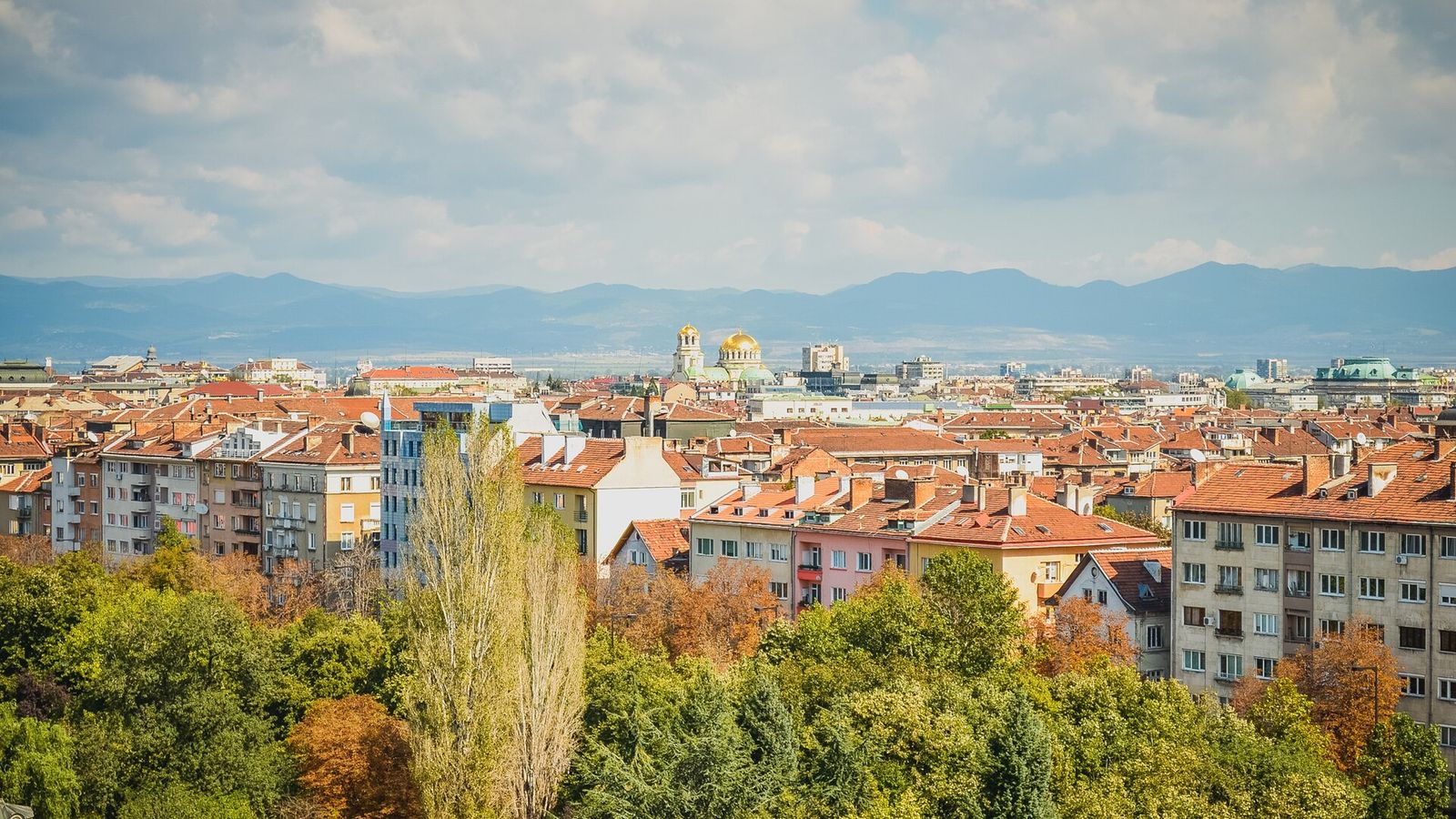
25 Best Things to Do in Sofia in 2026
Sofia packs 2,000 years into a walkable center. The 25 sights, museums, foods and day trips I'd put first, with prices.
Read the guide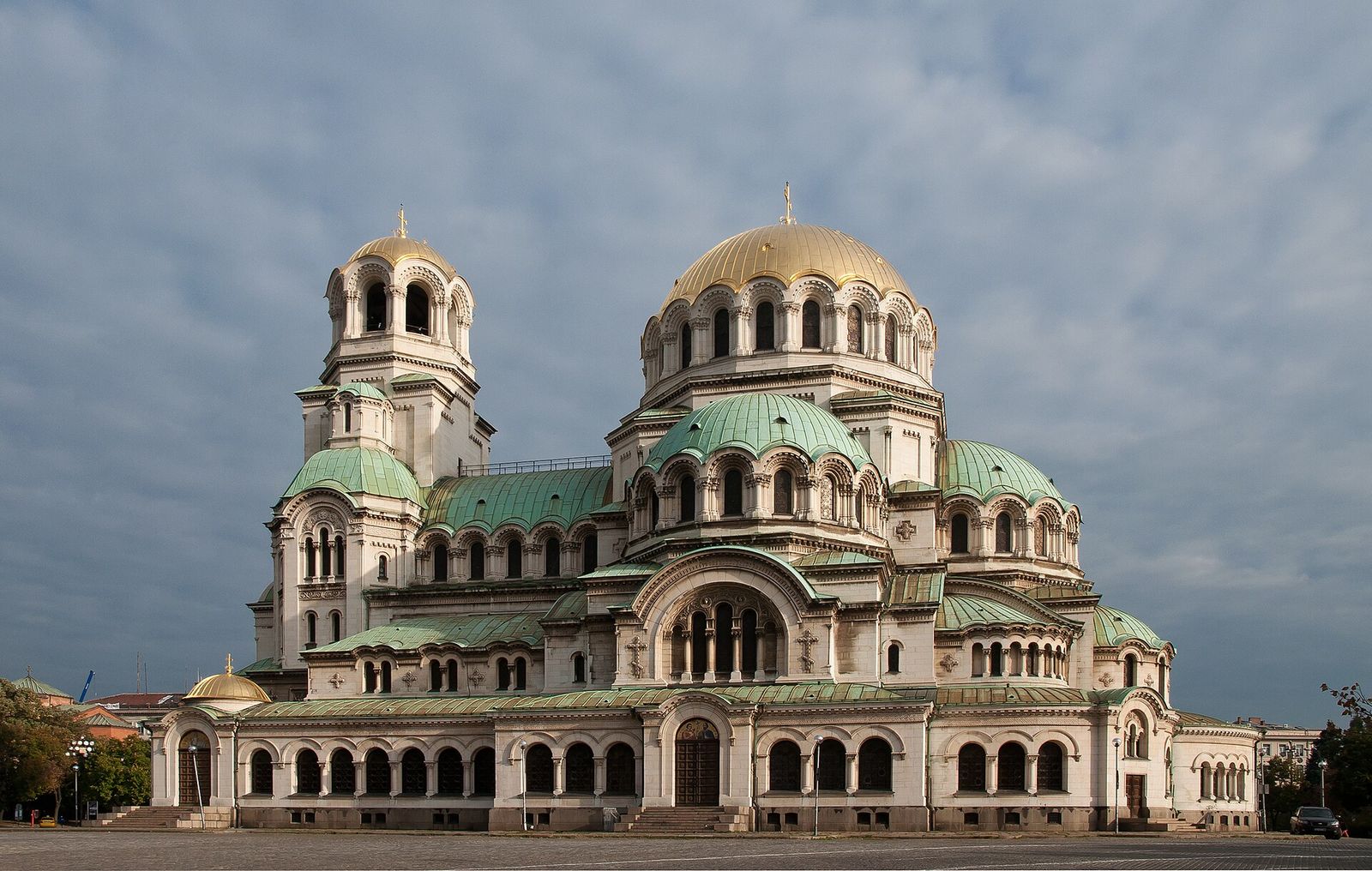
Alexander Nevsky Cathedral in Sofia: A Visitor's Guide
Sofia's gold-domed landmark is free to enter. Here is its story, what to see inside, the crypt museum and when to go.
Read the guide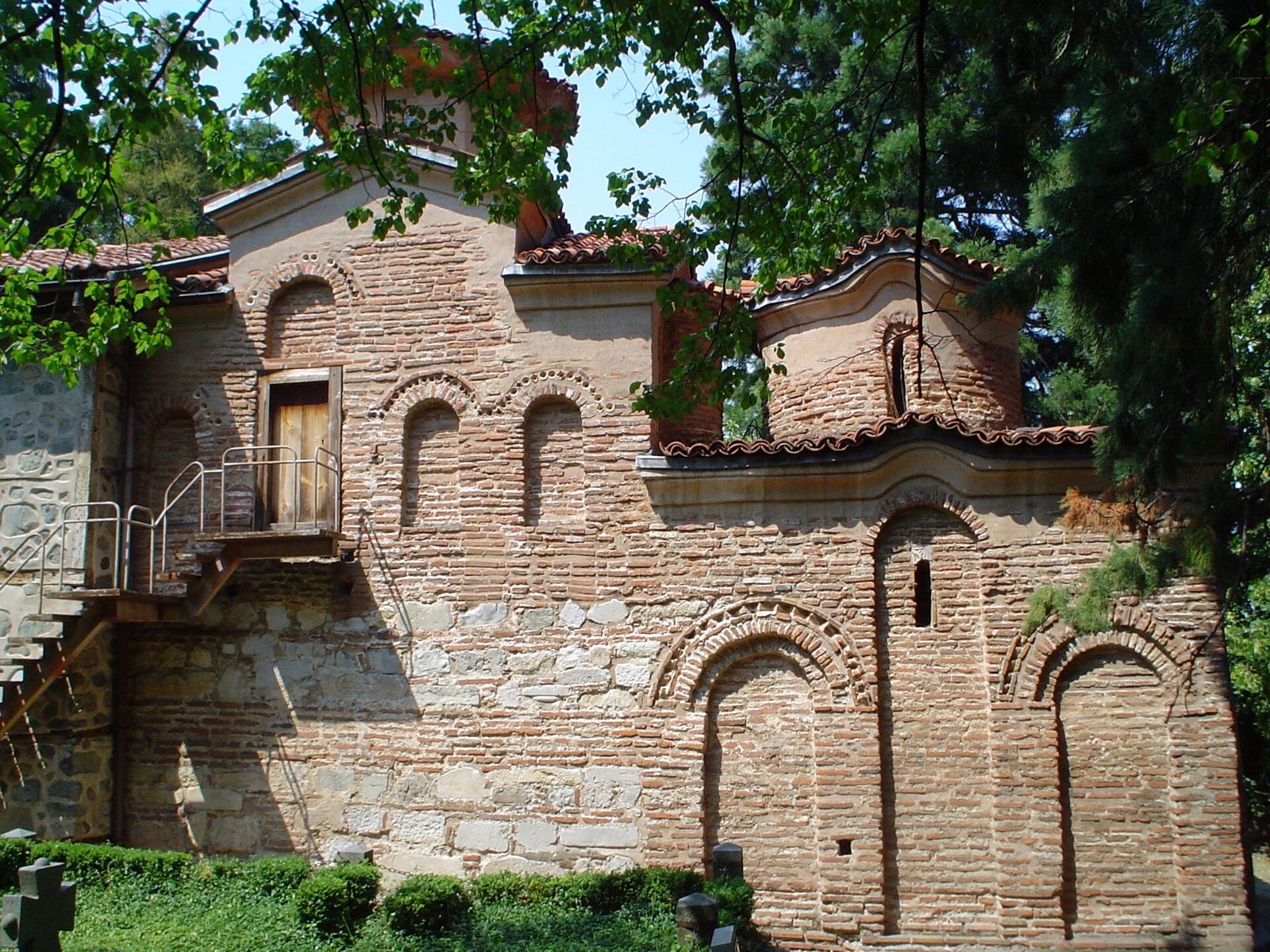
Boyana Church: Visiting Sofia's UNESCO Frescoes
A tiny UNESCO church under Vitosha with frescoes from 1259. Tickets, time slots, the bus out and what to find inside.
Read the guide