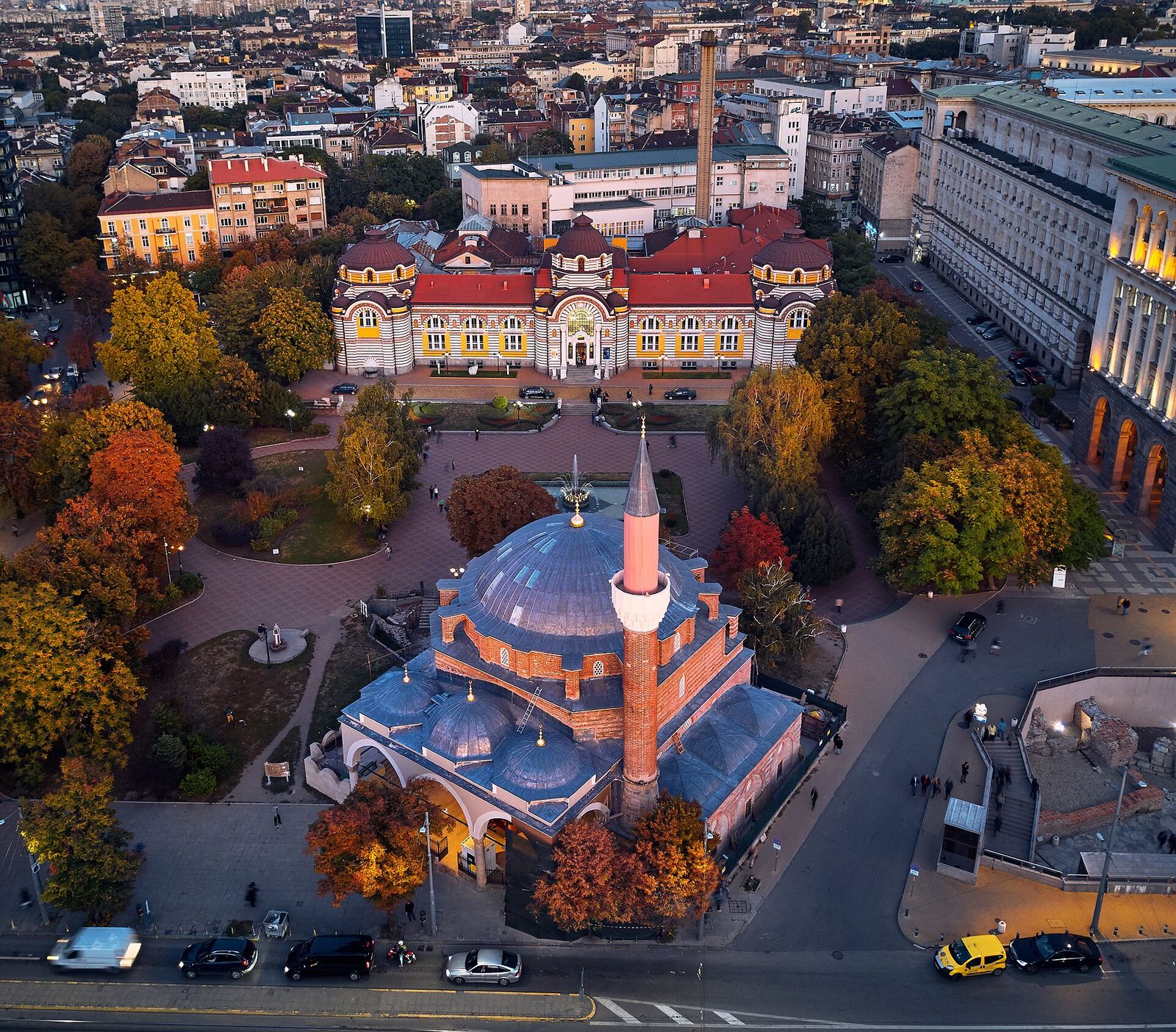
Banya Bashi Mosque in Sofia: History, Visiting Rules and Tips
Banya Bashi Mosque is the brick mosque with the single dome and tall minaret on Maria Luiza Boulevard, and the only one of Sofia's Ottoman mosques still used for prayer. It was finished in the 1560s on top of the hot springs the city grew around. Entry is free. This guide covers its history and name, what you see outside and in, the rules for visitors, the best time to go and what sits around it.
Banya Bashi Mosque at a glance
The mosque stands on Knyaginya Maria Luiza Boulevard, a few minutes' walk north of St Nedelya Square and Serdika metro station, in the oldest part of central Sofia.
The history of Banya Bashi Mosque
Sofia came under Ottoman rule in 1385 and stayed Ottoman until 1878. In those centuries of Bulgaria's history, the city filled with mosques, baths and markets.
The number 974 is carved above the entrance arch. It is the year in the Islamic calendar, which runs from 1566 into 1567. The mosque was paid for by a benefactor, Mullah Efendi Kadi Seyfullah.
Its design is credited to Mimar Sinan, the chief architect of the Ottoman court, who built the Suleymaniye Mosque in Istanbul and the Selimiye Mosque in Edirne. The Ottoman traveler Evliya Celebi wrote that its minaret had no equal in Sofia.
Its last renovation came in 2017. It serves Sofia's Muslim community today, with prayers five times a day and the big congregation on Fridays.
The other Ottoman mosques of Sofia
At the end of Ottoman rule in 1878, Sofia had dozens of mosques. Banya Bashi is the only one still used for prayer, and several of the others still stand under new names.
| Building | What it was | What it is today |
|---|---|---|
| Banya Bashi Mosque | Mosque of 1566 or 1567 | Working mosque |
| Buyuk Djamiya | Mosque of 1494 | National Archaeological Museum, €6 |
| Black Mosque | Mosque of 1547 | Seven Saints Church, since 1903 |
| St Sofia Church | 6th-century church, a mosque under the Ottomans | Church again |
| Rotunda of St George | 4th-century church, a mosque under the Ottomans | Church again |
The Buyuk Djamiya, the Big Mosque, stands next to the Presidency and holds Thracian gold, Roman mosaics and medieval finds. The Black Mosque took its name from its dark granite minaret, and today it is one of the best churches in Sofia for painted walls, with frescoes over every curve of its dome.
The name and the hot springs under the mosque
Banya Bashi is usually translated as "many baths". The Turkish words banyo, bath, and bas, head or main, give a second reading that fits the site better: the mosque at the head of the baths.
It was built right on top of the thermal springs Sofia grew up around, and on a cold day you can see steam drift from vents in the pavement by the mosque walls.
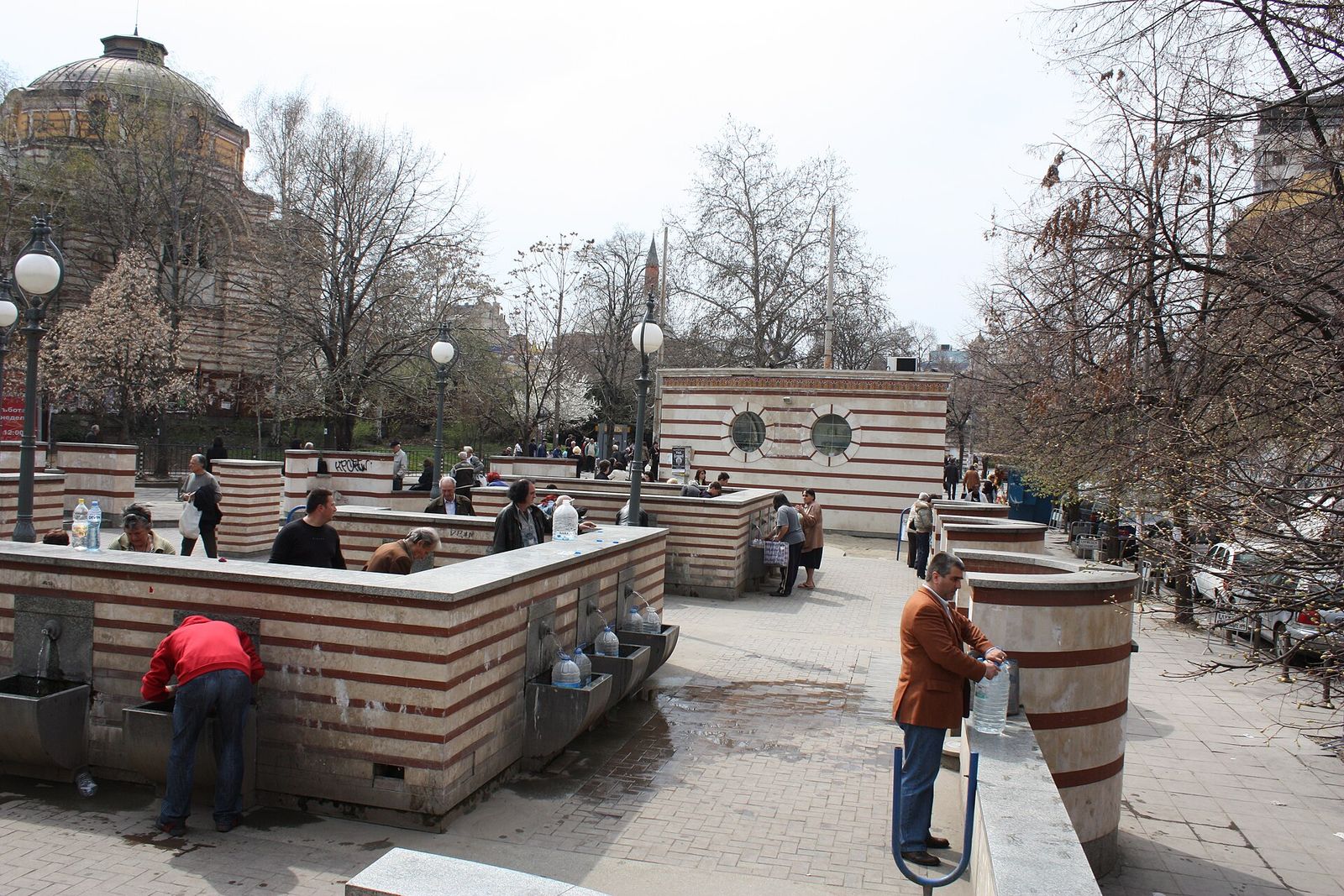
An Ottoman bathhouse once stood next door. In its place, the striped yellow and red Central Mineral Baths building was completed in 1913. The baths have closed, and the building now holds the Regional History Museum, open Tuesday to Sunday from 10 AM to 6 PM, for €5. Beside the Central Mineral Baths, public taps run warm mineral water all day, and locals queue with empty bottles and jugs.
What the mosque looks like from outside
From the street, the mosque is a square block of carved stone and brick under one large dome, covered in lead and about 15 meters across. It sits at an angle to the boulevard, with one corner facing the road, which sets it apart from the straight lines of the buildings around it.
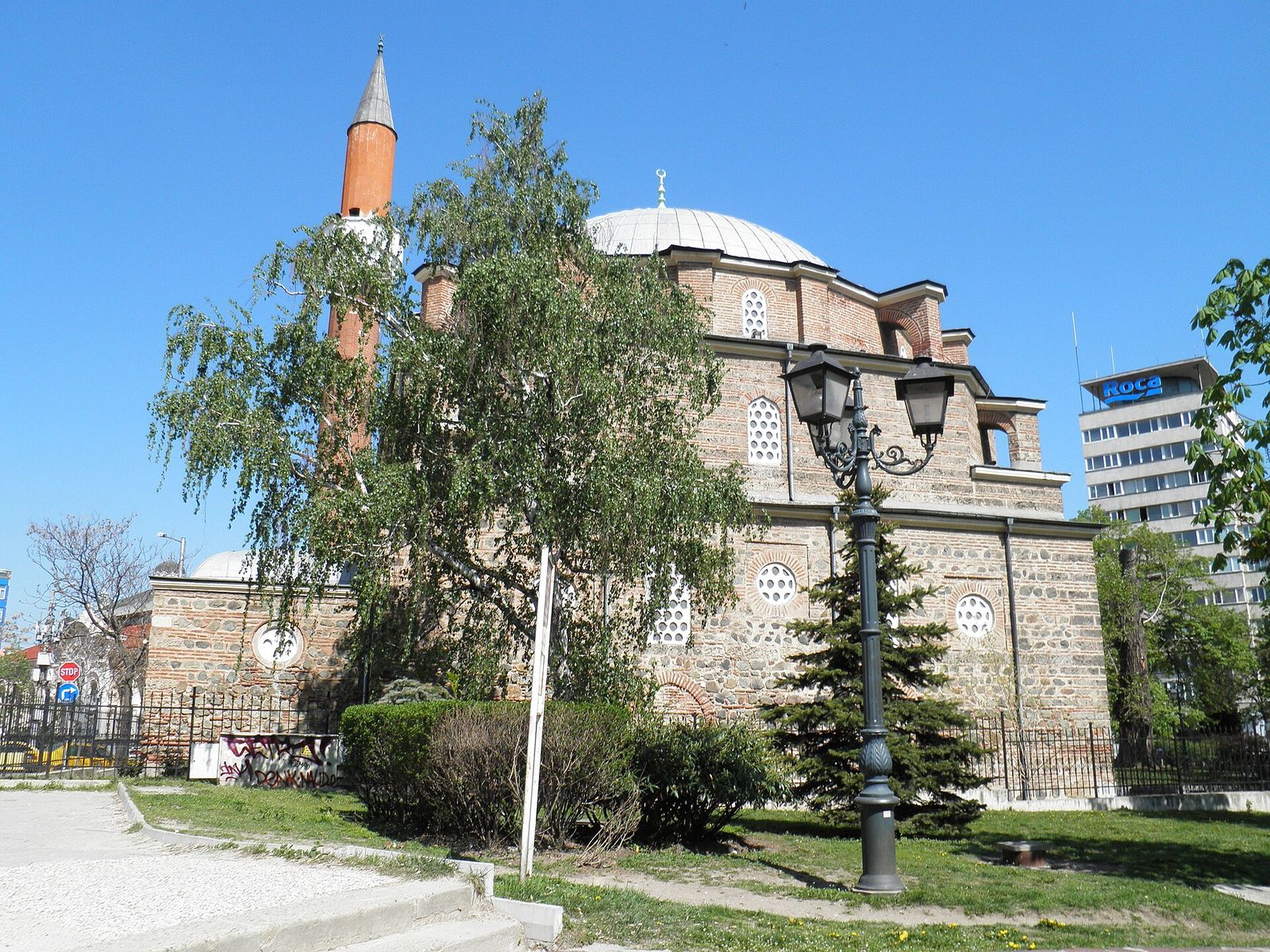
The tall, thin minaret of red brick rises at the western corner, and it is the easiest landmark for finding the mosque from the side streets. In front of the main hall is a covered porch topped with three small domes.
I'd walk around the outside before going in. From the small garden beside it and from each corner, the dome and minaret line up differently against the boulevard.
Inside the prayer hall
The prayer hall is a single square room under the dome, with carpets covering the floor and colored ceramic tiles on the walls.
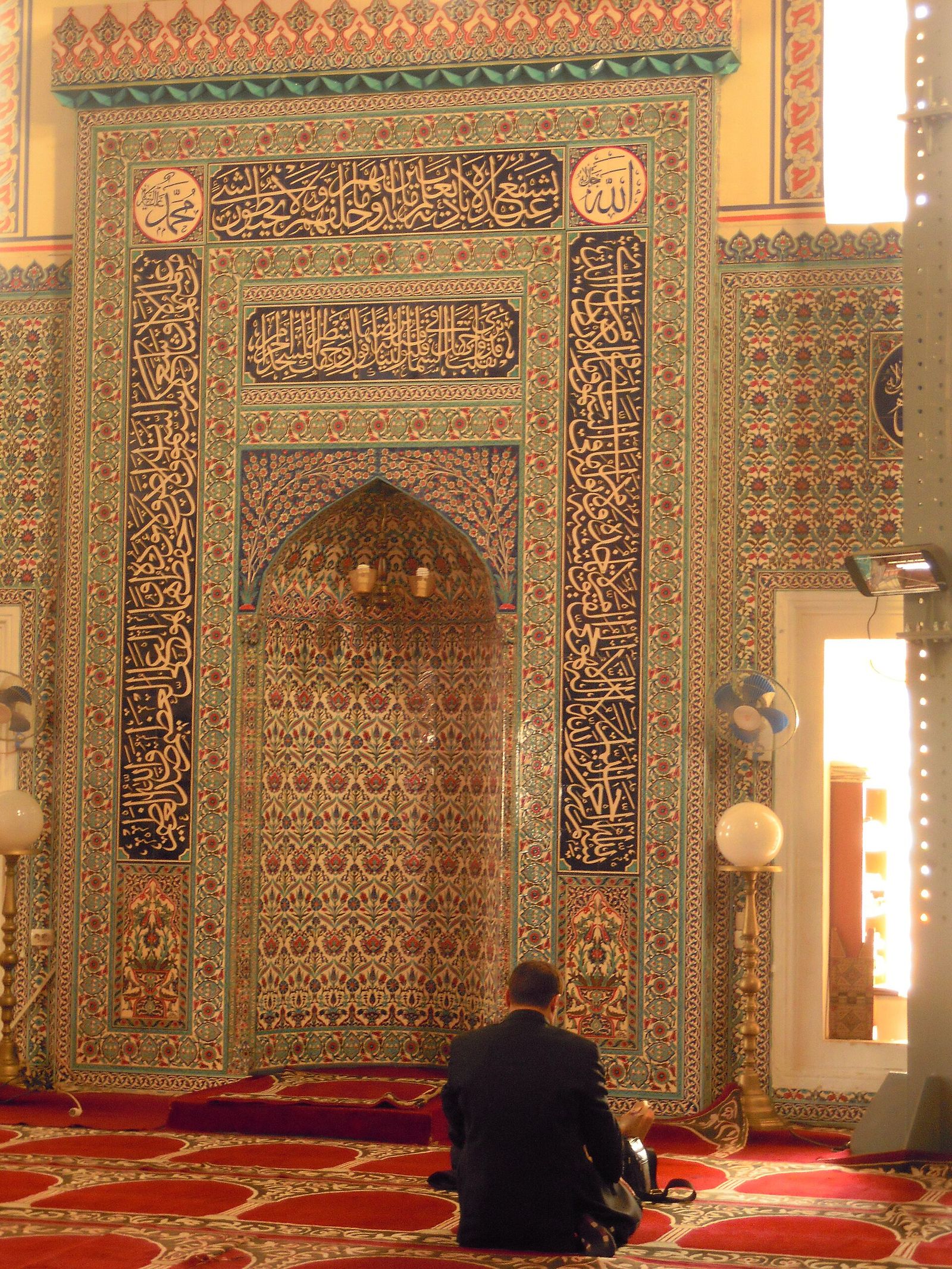
At the focus of the room is the mihrab, the niche in the wall that shows the direction of Mecca. Here it is covered in patterned tiles and framed by bands of black and gold Arabic calligraphy.
It is a calm room, much smaller than the big Ottoman mosques of Istanbul. I'd give it 10 minutes inside, standing or sitting near the back, then 5 or 10 more for the porch and the garden.
Rules for visiting Banya Bashi Mosque
Banya Bashi is a working mosque, and visitors are welcome on the community's terms.
- Shoes off. Take them off before you step onto the carpets of the prayer hall, and carry them or leave them where the signs say.
- Modest clothes. Cover your shoulders and knees. Shorts and sleeveless tops are not welcome inside.
- Hair covered for women. Headscarves are often available at the door, but I'd bring a light scarf of your own.
- Quiet. Speak softly, and never walk in front of someone who is praying.
- Photos. Photograph the building and the courtyard freely, but ask before taking pictures inside the prayer hall, and never photograph people at prayer without asking.
There is no ticket. A small donation helps with the upkeep and is never required.
The best time to visit Banya Bashi Mosque
Banya Bashi has no fixed visiting hours. It is open to visitors outside the five daily prayers, and those move through the year with the sun: dawn, around midday, afternoon, sunset and night. The building itself is open roughly from 5 AM to 8 PM every day.
Mid-morning on a weekday is the easiest time, after the dawn prayer and well before the midday one. Late afternoon gives softer light for photos of the outside. In winter, the cold makes the steam from the springs easier to see.
How to get to Banya Bashi Mosque
Most people come on foot, since the mosque is in the middle of the center. From St Nedelya Square it is about a 5-minute walk north along Maria Luiza Boulevard, and the Largo and the Presidency are just as close.
Serdika is the nearest station, a few minutes' walk away, and it is where the red, blue and yellow Sofia metro lines meet, so it is one stop or one change from most of the city. Trams also run along Maria Luiza Boulevard past the door.
From the airport, metro line M4 runs to Serdika in about 20 minutes, which puts the mosque within half an hour of the arrivals hall. The ride from Sofia Airport to the city center costs a single €0.80 ticket, tapped with a contactless card.
What is near Banya Bashi Mosque
Banya Bashi sits in the most crowded few blocks of old Sofia, the area locals call the square of religious tolerance. Within 5 minutes on foot you have a church, a synagogue, a Catholic cathedral, Roman ruins, a market hall and a museum.
| Sight | How far | What it is |
|---|---|---|
| Central Mineral Baths | Next door | The 1913 bathhouse, now the Regional History Museum, with free mineral water taps |
| Central Market Hall | Across the boulevard | The 1911 market hall, a supermarket since its 2024 reopening |
| Sofia Synagogue | About 200 m | The largest synagogue in Southeastern Europe, from 1909 |
| Serdica ruins | A few minutes south | Roman streets and baths at Serdika metro station, free |
| Rotunda of St George | About 400 m | Sofia's oldest building, a 4th-century church |
| St Nedelya Cathedral | About 5 minutes south | Orthodox cathedral rebuilt by 1933 |
| Pirotska Street | Opposite the mosque | The first pedestrian shopping street in Sofia |
The Central Market Hall across the boulevard dates from 1911 and reopened in 2024 as a supermarket, with Roman remains on show in its basement.
The Sofia Synagogue is the natural next stop, a short walk away on Ekzarh Yosif Street. It costs €10 and opens Sunday to Friday from 9 AM to 5 PM. A few minutes south, the streets of Roman Serdica lie open around the metro station, free to walk through from 7 AM to 10 PM.
Pirotska Street, across from the mosque, runs a few blocks to the stalls of Zhenski Pazar, where banitsa, mekitsi and sandwiches make the easiest lunch nearby. For shopping in Sofia I find Pirotska a nicer, lower-key walk than Vitosha Boulevard.
Islam in Bulgaria and its biggest mosque
Muslims are Bulgaria's second-largest religious group. In the 2021 census, 638,708 people, or 9.8% of the population, said they were Muslim. Most are ethnic Turks or Muslim Bulgarians, known as Pomaks, and the highest share is in Kardzhali Province in the south, where about 80% of those who answered were Muslim.
Bulgaria's biggest mosque still in use is the Tombul Mosque in Shumen, finished in 1744 and covering 1,730 square meters. Its name means "fat", from the wide shape of its dome.
Is Banya Bashi Mosque worth visiting?
Yes. It is free and sits on the route between the Roman ruins, the mineral baths and the synagogue, so it costs you 15 to 20 minutes.
Who it suits best:
- First-time visitors. It is one corner of the square of religious tolerance and a stop on any walk through the old center.
- Architecture fans. It is a design credited to Mimar Sinan, with its 16th-century dome and minaret still in place.
- Photographers. The minaret against the striped baths next door makes the best shot on Maria Luiza Boulevard.
Keep it short, or see it from outside, if:
- You are passing on a Friday around midday, when the main prayer fills the mosque and the courtyard.
- You have seen the big mosques of Istanbul or Edirne and want something on that scale. Banya Bashi is a neighborhood mosque.
Pair it with the baths and the synagogue for a morning. Most of the other things to do in Sofia sit within walking distance of St Nedelya Square, 5 minutes south.
Key takeaways
- Banya Bashi Mosque dates from 1566 or 1567 and is the only working mosque in Sofia.
- Entry is free outside the five daily prayers, and a visit takes 15 to 20 minutes.
- Shoes come off at the door, shoulders and knees stay covered, and women cover their hair.
- Go mid-morning on a weekday, and skip Friday around midday.
- The mineral baths, the market hall and the synagogue are all within a few minutes on foot.
Frequently asked questions
Can non-Muslims visit Banya Bashi Mosque?
Yes. Visitors of any faith are welcome outside the five daily prayers, as long as they dress modestly, take their shoes off and keep quiet inside.
Is Banya Bashi Mosque free to enter?
Yes, there is no ticket, because it is a working place of worship. A donation toward the upkeep is welcome but never required.
What should I wear to Banya Bashi Mosque?
Wear clothes that cover your shoulders and knees, and women should cover their hair inside the prayer hall. Shoes come off before the carpets, so socks you are happy to be seen in help.
When was Banya Bashi Mosque built?
It was finished in 1566 or 1567. The inscription above the entrance arch gives the Islamic year 974, which spans both dates.
Who designed Banya Bashi Mosque?
The design is credited to Mimar Sinan, the chief architect of the Ottoman court, who also built the Suleymaniye Mosque in Istanbul and the Selimiye Mosque in Edirne.
What does Banya Bashi mean?
It is usually translated as "many baths", after the hot springs it stands on. A closer reading of the Turkish is "head of the baths", since banyo means bath and bas means head or main.
Where do most Muslims live in Bulgaria?
The highest share is in Kardzhali Province in the south, where about 80% of those who answered the 2021 census were Muslim. Across the country, 638,708 people said they were Muslim, most of them ethnic Turks or Pomaks.
What is the biggest mosque in Bulgaria?
The Tombul Mosque in Shumen is the biggest still in use, finished in 1744 and named for its wide, round dome. Banya Bashi is smaller, with a single dome about 15 meters across.
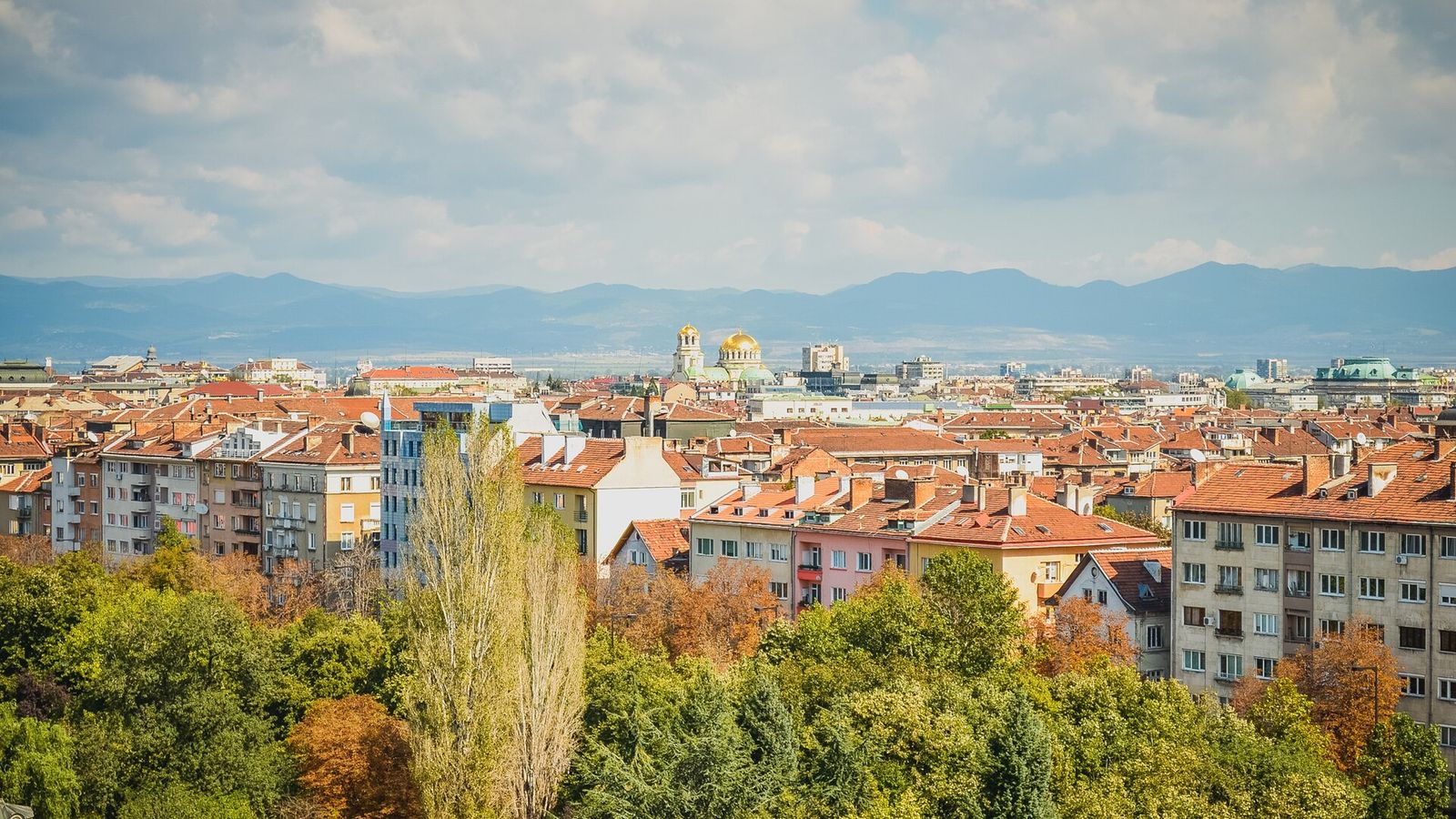
25 Best Things to Do in Sofia in 2026
Sofia packs 2,000 years into a walkable center. The 25 sights, museums, foods and day trips I'd put first, with prices.
Read the guide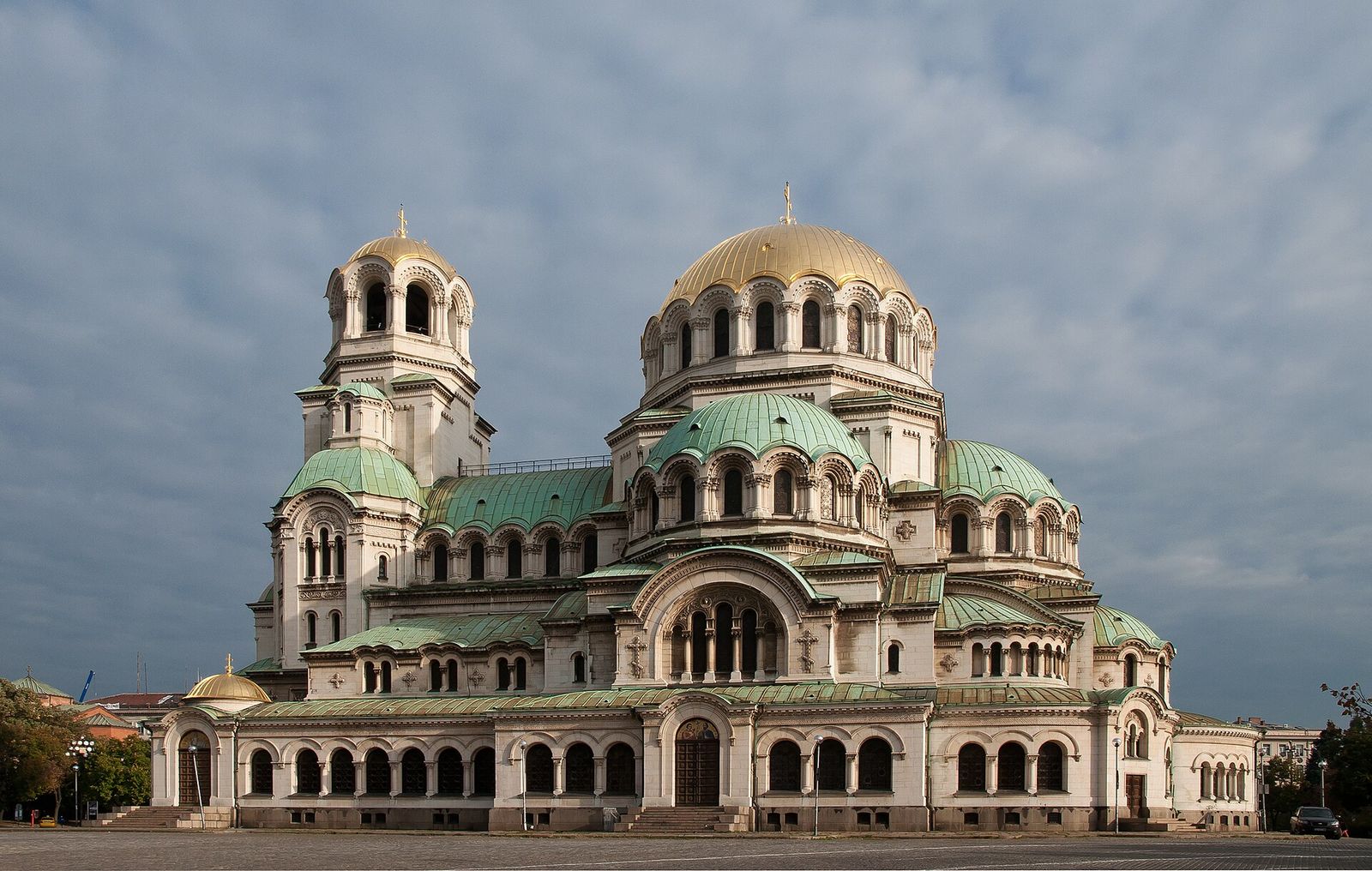
Alexander Nevsky Cathedral in Sofia: A Visitor's Guide
Sofia's gold-domed landmark is free to enter. Here is its story, what to see inside, the crypt museum and when to go.
Read the guide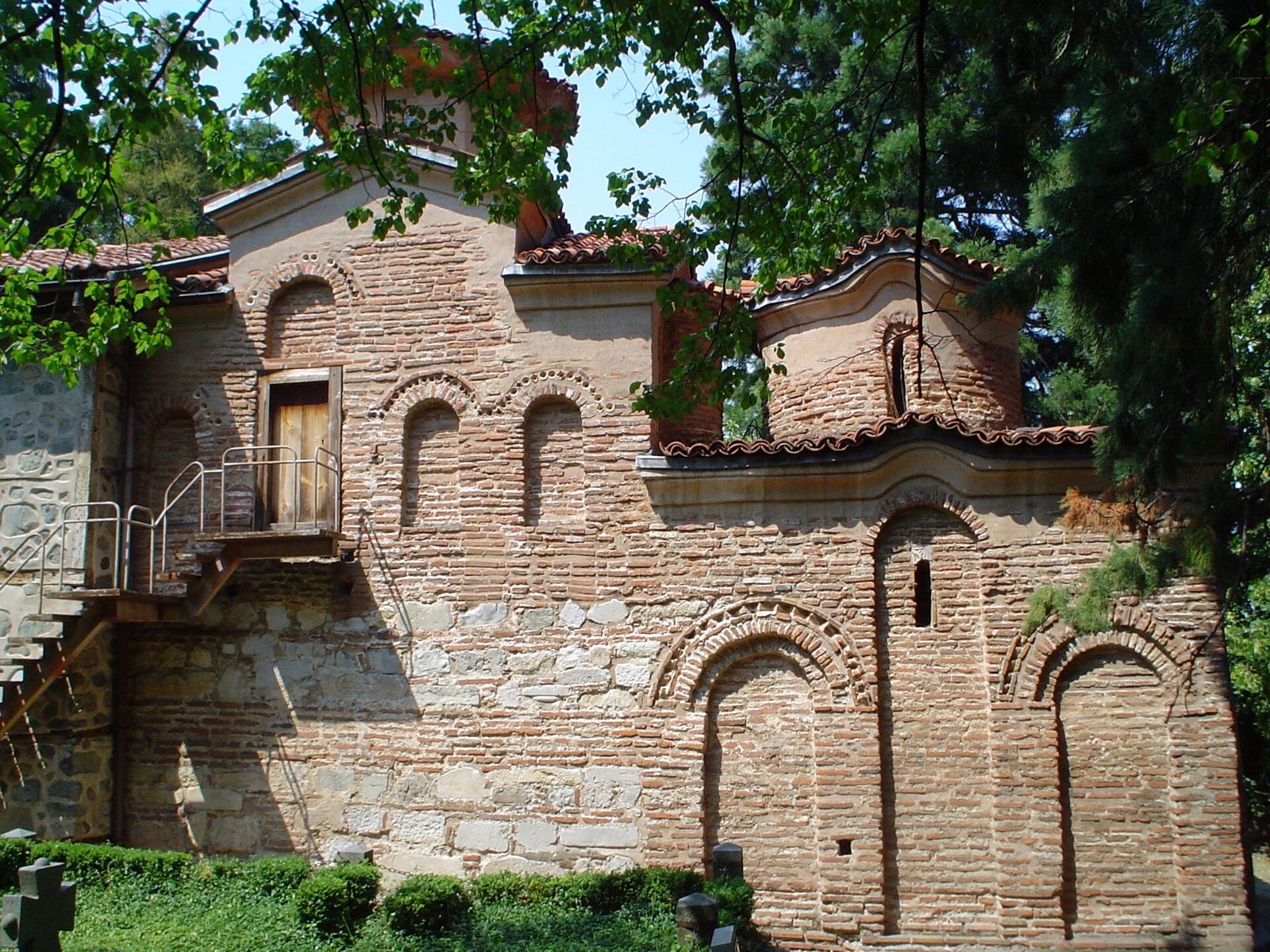
Boyana Church: Visiting Sofia's UNESCO Frescoes
A tiny UNESCO church under Vitosha with frescoes from 1259. Tickets, time slots, the bus out and what to find inside.
Read the guide