Boza and Ayran: Bulgaria's Breakfast Drinks and Where to Try Them in Sofia
Boza is the thick, sweet and slightly sour drink of fermented wheat or millet that Bulgarians pour at breakfast, and ayran is its salty partner, yogurt whisked with water. Both go next to a slice of banitsa, and both cost well under a euro a cup. Here is what each one is, how it tastes, where it comes from and where I'd buy it in Sofia.
What boza is
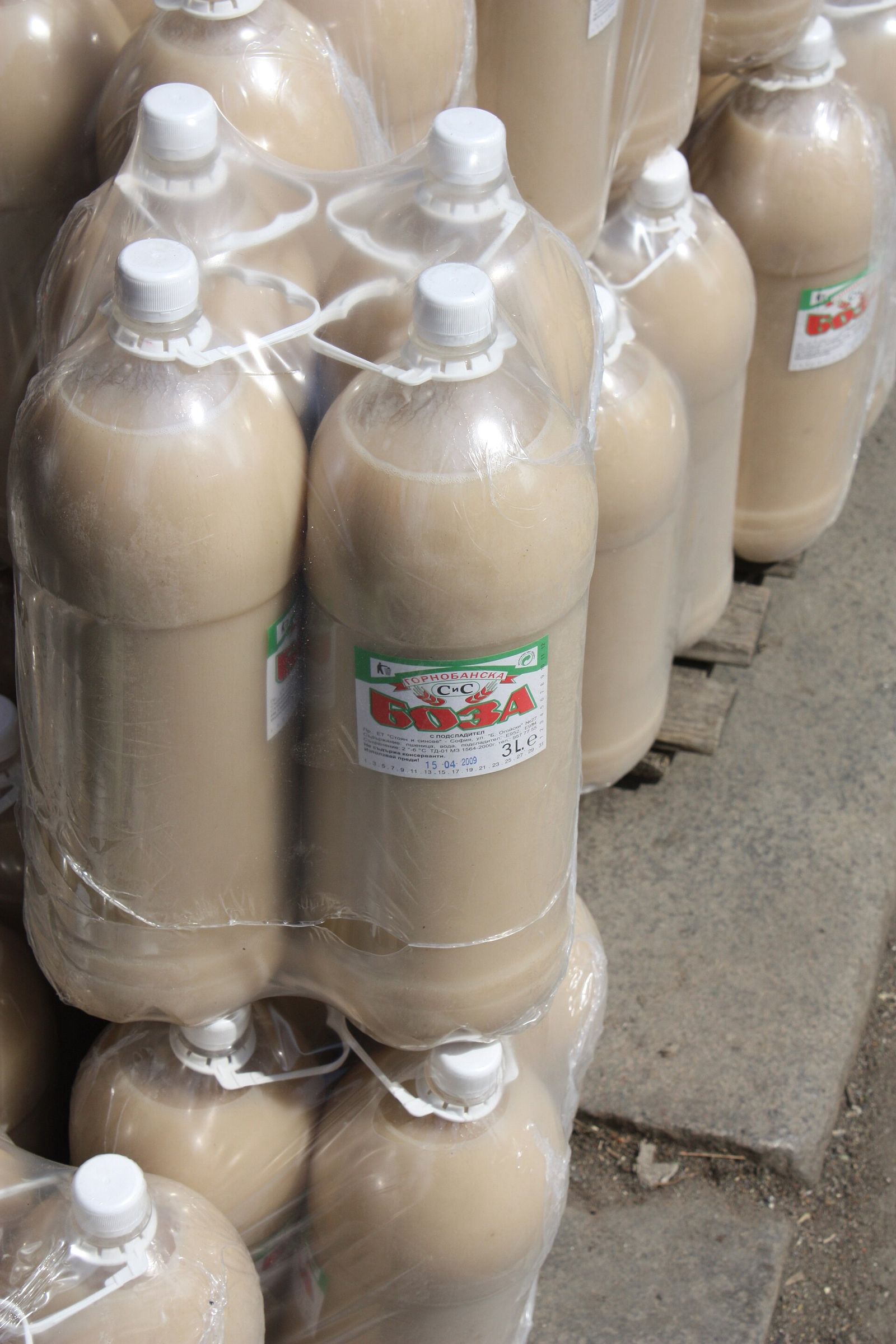
Boza is a fermented grain drink. In Bulgaria it is made from wheat flour or millet, cooked with water and sugar and left to ferment. The result is thick, cloudy and sweet, with a gentle sourness from the fermentation.
Bulgarian boza ranges from pale beige to brown, and it comes in clear plastic bottles that you pour into a glass or drink from. Two kinds of microbes ferment it: lactic acid bacteria make it sour, and yeasts give it the trace of alcohol.
What boza tastes like
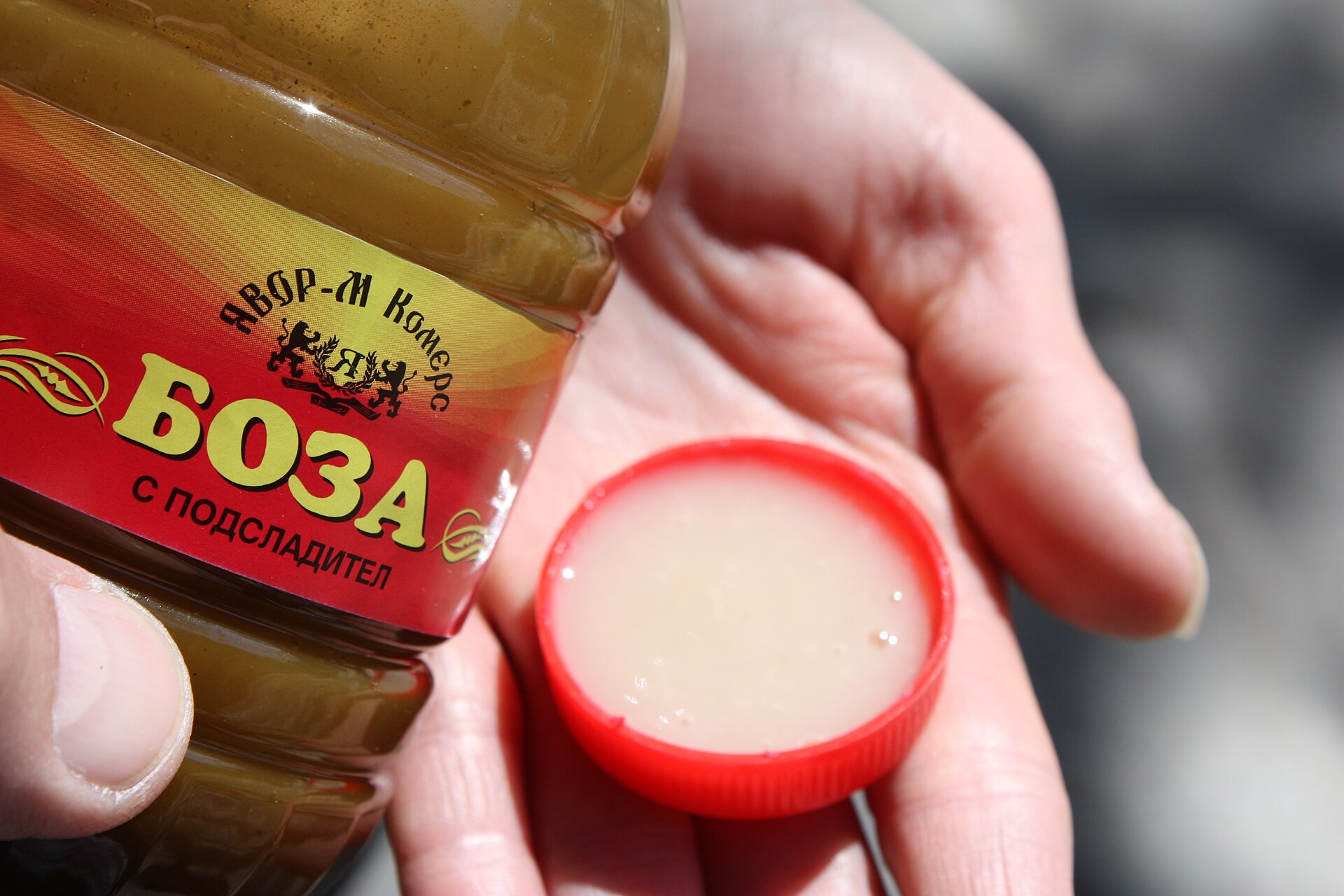
The first sip is sweet, the second is sour, and under both there is a malty, bready taste, a little like sourdough. The texture is the surprise: boza is thick and smooth, somewhere between a milkshake and a thin porridge, and it coats the mouth.
Most visitors do not love boza on the first try. I'd still drink one small cup with a cheese banitsa before writing it off, because the salty pastry and the sweet, sour drink balance each other.
How boza is made
Bulgarian boza starts with flour baked until it turns a salmon pink. It is stirred into a pot of water with sugar, then cooled. A cup of boza from the last batch goes in as the starter, and the pot stands in a warm place for two to three days while it ferments, before it is bottled and chilled.
The grain sets the flavor, so a wheat boza and a millet boza taste different, and many shop bozas are pasteurized before they reach the shelf.
Boza with banitsa: the Bulgarian breakfast
Boza and banitsa is the old-fashioned Bulgarian breakfast. The pastry is filo baked with egg, yogurt and sirene cheese, salty and rich, and the boza is cold, sweet and sour against it. A slice of banitsa costs about €1 to €2 at a bakery, so the pair comes to a couple of euros.
Sofiyska Banitsa on Graf Ignatiev Street takes its name from the small banitsa shops that once stood on Sofia's street corners, and a cheese banitsa with a cup of boza is the order there. Furna on Stefan Stambolov Boulevard sells boza along with its banitsa, yogurt and sourdough. At Sofia's banitsa bakeries, ayran is the usual partner for a slice and boza the old-fashioned one.
Where boza comes from
Boza started in Central Asia among the Turkic peoples and spread to the Caucasus and the Balkans. Its golden age came under the Ottomans, when boza making became a common trade in towns and cities. In the 17th century, Istanbul alone had about 300 boza shops. The Ottoman palace preferred a sweet, non-alcoholic boza, and that style won out over the sour, stronger one in the 19th century.
Bulgaria kept it. Bulgarians make it year-round as a refreshing drink, and Bulgarian immigrants took it to Bialystok in Poland in the 1910s, where Poland's agriculture ministry now lists it as a local traditional drink. At home, the towns of Radomir and Lyubimets are famous for the best boza, and Radomir has a monument to the boza seller.
Bulgarian boza vs Turkish boza
Turkey and Bulgaria both make boza, and so do Albania and North Macedonia.
| Bulgarian boza | Turkish boza | |
|---|---|---|
| Grain | Wheat flour or millet | Millet, wheat or bulgur, and maize |
| Season | Sold bottled all year | Traditionally a winter drink |
| Served with | Banitsa at breakfast | Cinnamon and roasted chickpeas on top |
| Where you buy it | Bakeries, delis, supermarkets | Boza shops and street vendors |
| Alcohol | About 0.5% to 1% | Around 1% |
If you are going on from Sofia to Istanbul, try both. Vefa Bozacısı, an Istanbul boza shop founded in 1876, is the only one from that era still in business, and its boza is thick and tart. The Bulgarian bottle is the everyday version.
Where to buy boza in Sofia
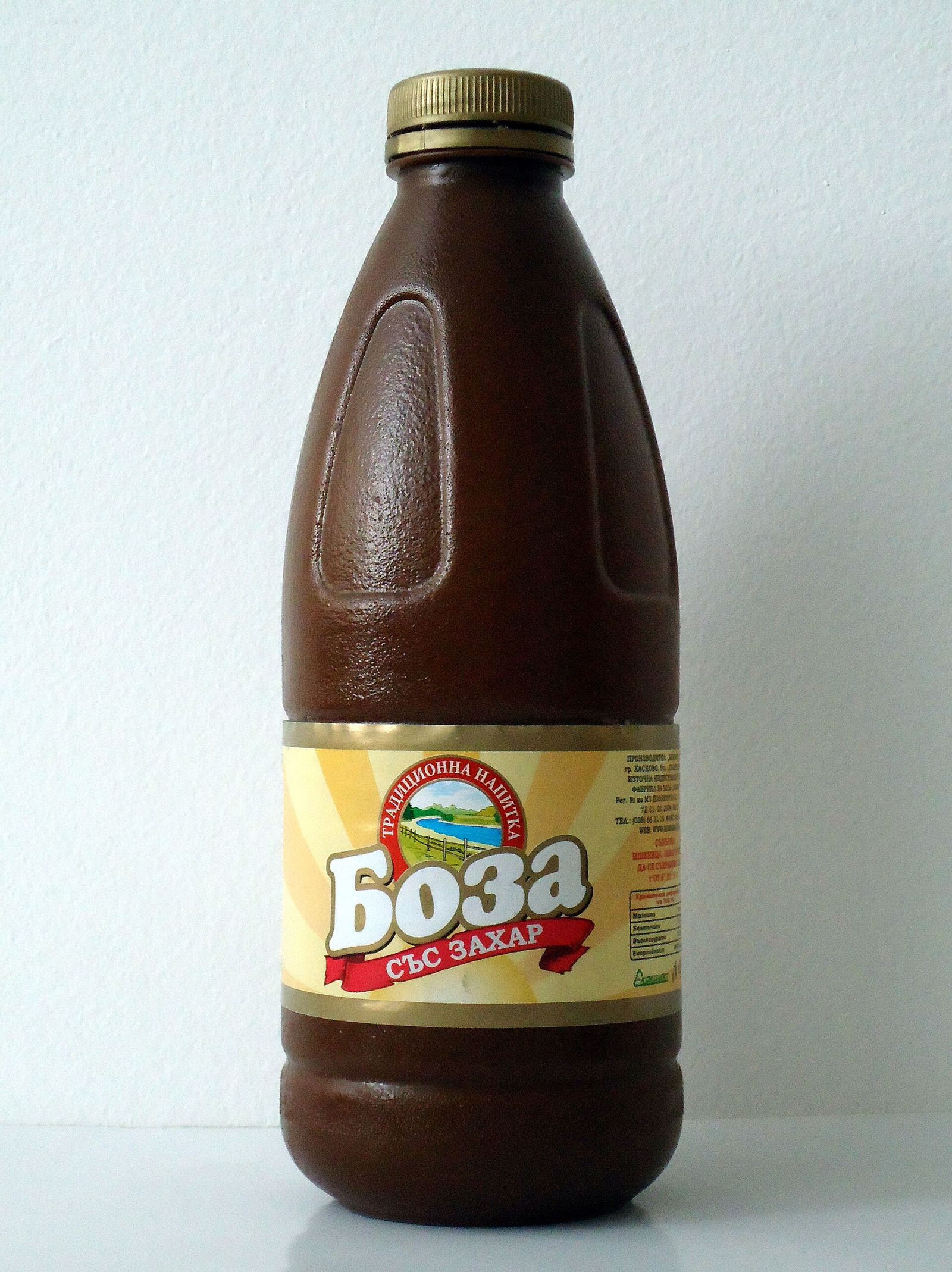
You buy boza where you buy breakfast. Bakeries sell it next to the banitsa, delis and corner shops stock it, and supermarkets carry it in bottles.
For a cup at the counter with a pastry, go to a bakery like Sofiyska Banitsa or Furna. A cup of boza at a Sofia bakery or street counter costs about €0.50. Cosmos, the Bulgarian tasting-menu restaurant on Lavele Street, has served boza as an ice cream, the most unusual way to try it in the city. Sofia's street food runs on the same cheap pairing, and a market stall banitsa with a cup of boza comes to €2 or so.
Is boza healthy?
Boza is a sweet drink first. Samples made from maize, wheat and rice flour averaged 12.3% sugar, about 1% protein and almost no fat, so a big glass carries a fair amount of sugar. Unpasteurized Bulgarian boza carries a wide mix of live lactic acid bacteria and yeasts, which pasteurized boza has lost.
Wheat boza contains gluten, and only a millet boza made with a gluten-free starter is gluten-free.
Ayran, Bulgaria's salty yogurt drink
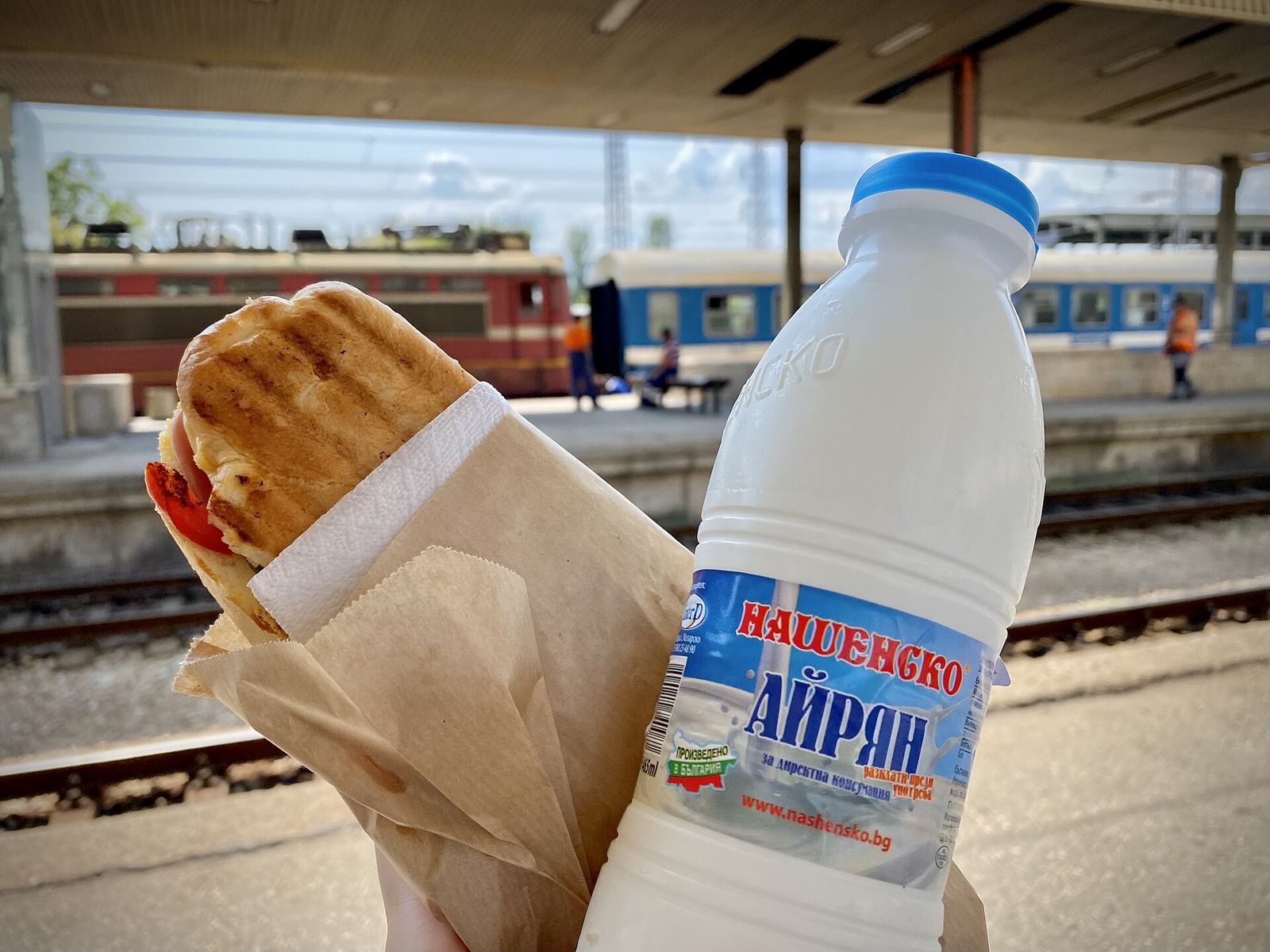
Ayran is yogurt whisked with cold water and a pinch of salt. That is the full recipe, and on a hot day it is the drink I'd reach for first. The word comes from Turkish, and Bulgarians make it with Bulgarian yogurt and its Lactobacillus bulgaricus.
How ayran is made
Recipes run from two parts yogurt to one of water up to one part yogurt to two of water, with salt at about 0.5% to 1% of the total. Full-fat yogurt of 3% to 4.5% is the one to use. It is whisked until smooth and served cold, and some people stir in chopped mint.
Ayran around Bulgaria
Ayran changes with the region: in the south it is thicker, and in the north it is thinner. In the Rhodopes and parts of Strandzha, ayran with mint is the local version.
In the socialist years of the 1960s and 70s, ayran was poured in school and factory canteens, and the standard serving was a 250 ml glass.
When Bulgarians drink ayran
Ayran goes with banitsa at breakfast and with kebapche, kyufte, moussaka and stuffed peppers at lunch, and it cuts through heavy food. Bulgarians also swear by it as a hangover cure. Shops sell it classic, unsalted, with mint or dill, and light, and a cup or small bottle costs about €0.50 to €0.75.
On a day trip to Plovdiv, kiosks near Tsentralen Square sell banitsa and ayran, so breakfast takes five minutes before the climb up the old town hills.
Boza vs ayran
| Boza | Ayran | |
|---|---|---|
| Made from | Fermented wheat flour or millet, water, sugar | Yogurt, water, salt |
| Taste | Sweet, sour, bready | Salty, sour, fresh |
| Texture | Thick and smooth | Thinner, whisked smooth |
| Alcohol | About 0.5% to 1% | None |
| Drink it with | Banitsa at breakfast | Banitsa, grilled meat, moussaka |
| Price in Sofia | About €0.50 a cup | About €0.50 to €0.75 |
If you only try one, make it ayran, because it is easy to like and goes with most Bulgarian food, from banitsa to the grill. Then try boza once, the Bulgarian way, with a cheese banitsa. For the stronger end of the Bulgarian drinks list, rakia is the fruit brandy that opens dinner.
Key takeaways
- Boza is a thick, sweet and sour drink of fermented wheat flour or millet, with about 0.5% to 1% alcohol.
- Bulgarians drink it cold with banitsa at breakfast, and a cup costs about €0.50 at a Sofia bakery.
- Ayran is yogurt, water and salt, the cold drink with banitsa and grilled meat.
- Buy both at bakeries, delis and supermarkets, and keep boza in the fridge once it is open.
Frequently asked questions
Is boza alcoholic?
Boza contains a trace of alcohol, about 0.5% to 1%, because it is fermented. You would have to drink a great deal of it to feel anything, so Bulgarians treat it as a breakfast drink.
What is boza made of?
Bulgarian boza is made of wheat flour or millet, water and sugar, fermented for two to three days with a starter of older boza. Turkish boza is made from millet, wheat or bulgur, and maize. Both end up thick, sweet and slightly sour.
What does boza taste like?
Boza tastes sweet and sour at once, with a malty, bready flavor like sourdough. It is thick and smooth, a little like a drinkable porridge. It goes best with a salty cheese banitsa.
Is boza Bulgarian or Turkish?
Boza is older than both countries: it started among the Turkic peoples of Central Asia and spread through the Ottoman Empire. Bulgaria, Turkey, Albania and North Macedonia all make it today. The Bulgarian version is made from wheat or millet and drunk with banitsa.
Is boza healthy?
It is a sweet drink first, with about 12% sugar, some protein and almost no fat. Unpasteurized boza contains live lactic acid bacteria and yeasts, and much of the bottled boza in shops is pasteurized. Wheat boza contains gluten.
What is the difference between ayran and kefir?
Ayran is yogurt diluted with water and salt, while kefir is milk fermented with kefir grains, a mix of bacteria and yeasts, and drunk without water. Ayran is salty and thin; kefir is tangy and thicker. In Bulgaria, ayran is the everyday drink.
Where can I buy boza in Sofia?
Bakeries, delis and supermarkets all sell boza in plastic bottles. For a cup with breakfast, go to Sofiyska Banitsa on Graf Ignatiev Street or Furna on Stefan Stambolov Boulevard, and expect to pay about €0.50 a cup.
Bulgarian Drinks: What to Drink in Bulgaria and Where to Try It in Sofia
Bulgaria is known for rakia, wine and yogurt drinks: what to order, when locals drink each one and where to try it.
Read the guide
Bulgarian Wine: A Visitor's Guide
Bulgaria has made wine since the Thracians: the grapes to order, how to read a label and where to taste it in Sofia.
Read the guide
Rakia: Bulgaria's Fruit Brandy
Rakia is the drink Bulgarians pour for guests: what it is, the types to try and how to drink it the local way.
Read the guide