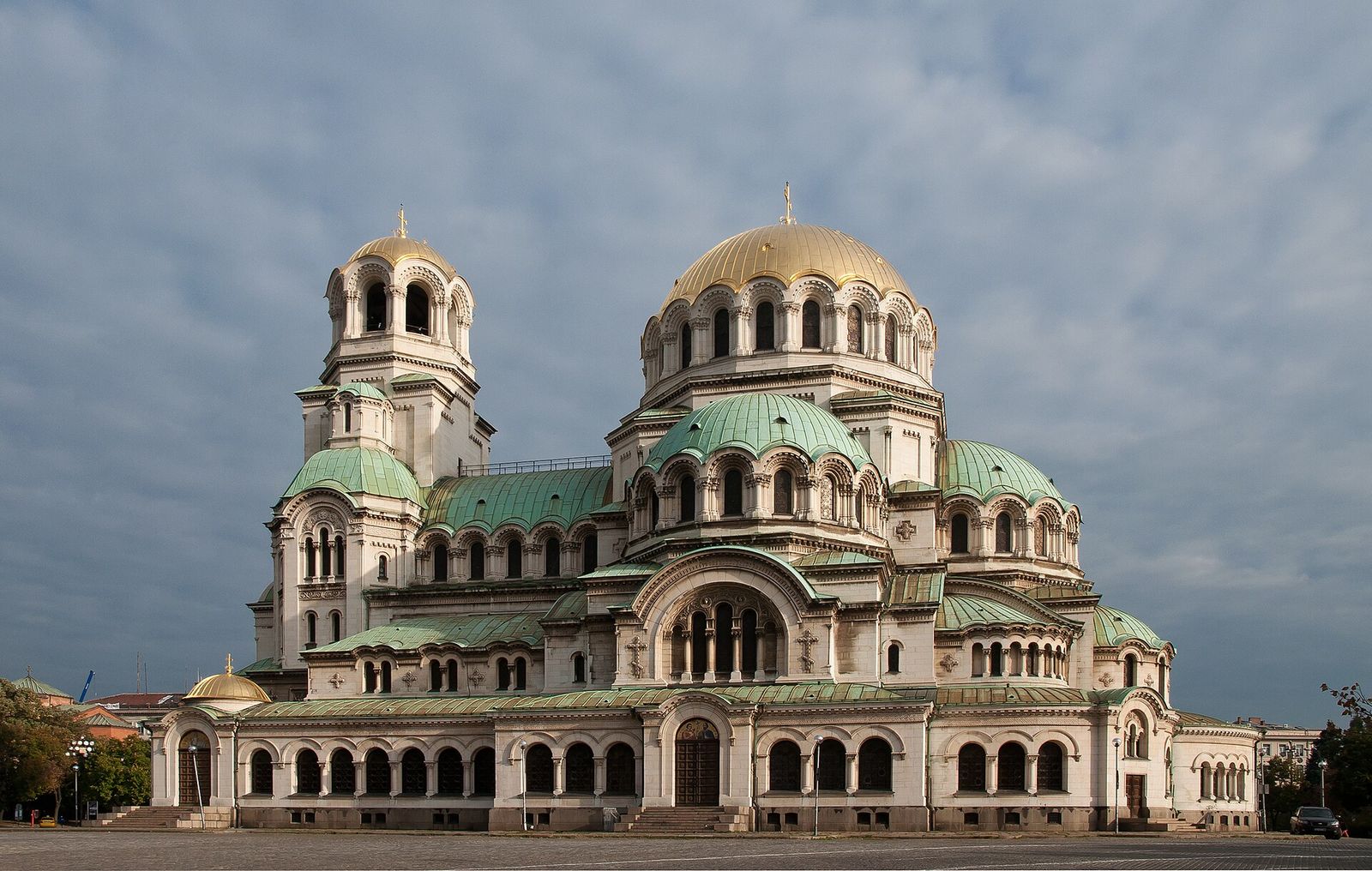
Alexander Nevsky Cathedral in Sofia: A Visitor's Guide
Alexander Nevsky Cathedral is the gold-domed church on every Sofia postcard, a memorial to the soldiers who died freeing Bulgaria in 1877 and 1878. It costs nothing to walk in. This guide covers why it was built, what to look for inside and out, the icon museum in the crypt, what to wear, and the hour I'd pick to go.
Alexander Nevsky Cathedral at a glance
The cathedral stands alone in the middle of its own square, Sveti Aleksandar Nevski Square, in the old center of Sofia. It sits between St Sofia Church and the National Assembly, and you can walk around all four sides of it.
Why the cathedral was built
The cathedral is a war memorial first and a church second. Bulgaria decided to build it in 1879, one year after the Russo-Turkish War of 1877 and 1878 freed the country from Ottoman rule, and it honors the Russian soldiers who died in that war. Two marble plaques beside the main entrance still carry the dedication: brotherly love and deep gratitude to the Russian people for the liberation of Bulgaria in 1878.
Prince Alexander I Battenberg asked Bulgarians to pay for it with donations, and they raised 1,900,000 leva of the time. The foundation stone went in on 3 March 1882, the fourth anniversary of the Treaty of San Stefano. A metal box holding the names of that government's ministers is built into the foundations.
Then the project stalled. Real construction only ran from 1904 to 1912, to a design by the Russian architect Alexander Pomerantsev, at a final cost of 5,500,000 leva. The cathedral was consecrated on 24 August 1924, 45 years after the decision to build it. The Liberation it commemorates, in 1878, is where Bulgaria's modern history starts.
The site was picked for height. At 552 meters above sea level, it was the highest point of old Sofia, and the land had first been set aside for a new palace for the prince.
Politics caught up with the building almost at once. In World War I, Bulgaria and Russia ended up on opposite sides, and after the Russian navy shelled Varna in October 1915, the National Assembly renamed it the Cathedral of Saints Cyril and Methodius in 1916. The original name came back in 1920.
Who Alexander Nevsky was
Alexander Nevsky was a 13th-century Russian prince of Novgorod and Vladimir, made a saint by the Russian Orthodox Church. He is best known for beating the Teutonic Knights at the Battle on the Ice on Lake Peipus. His name "Nevsky" comes from the Neva River, where he won an earlier battle.
He got the cathedral because he was the patron saint of Tsar Alexander II, the Russian emperor who declared the 1877 war on the Ottoman Empire. Bulgarians still call that tsar "the Liberator".
The domes, bells and outside of the cathedral
The outside is what most people photograph, and the domes are the reason. About 700 square meters of them are gilded, using 8 kg of gold. The layer is very thin, so it has to be restored from time to time.
The bell tower rises 53 meters. Inside it hang 12 bells with a combined weight of 23 tons, brought from Moscow. The biggest weighs 12 tons and the smallest just 10 kg.
Architecturally it is a neo-Byzantine, five-nave, cross-domed basilica. I'd walk the full loop of the square before going in, because the domes stack up differently from each side.
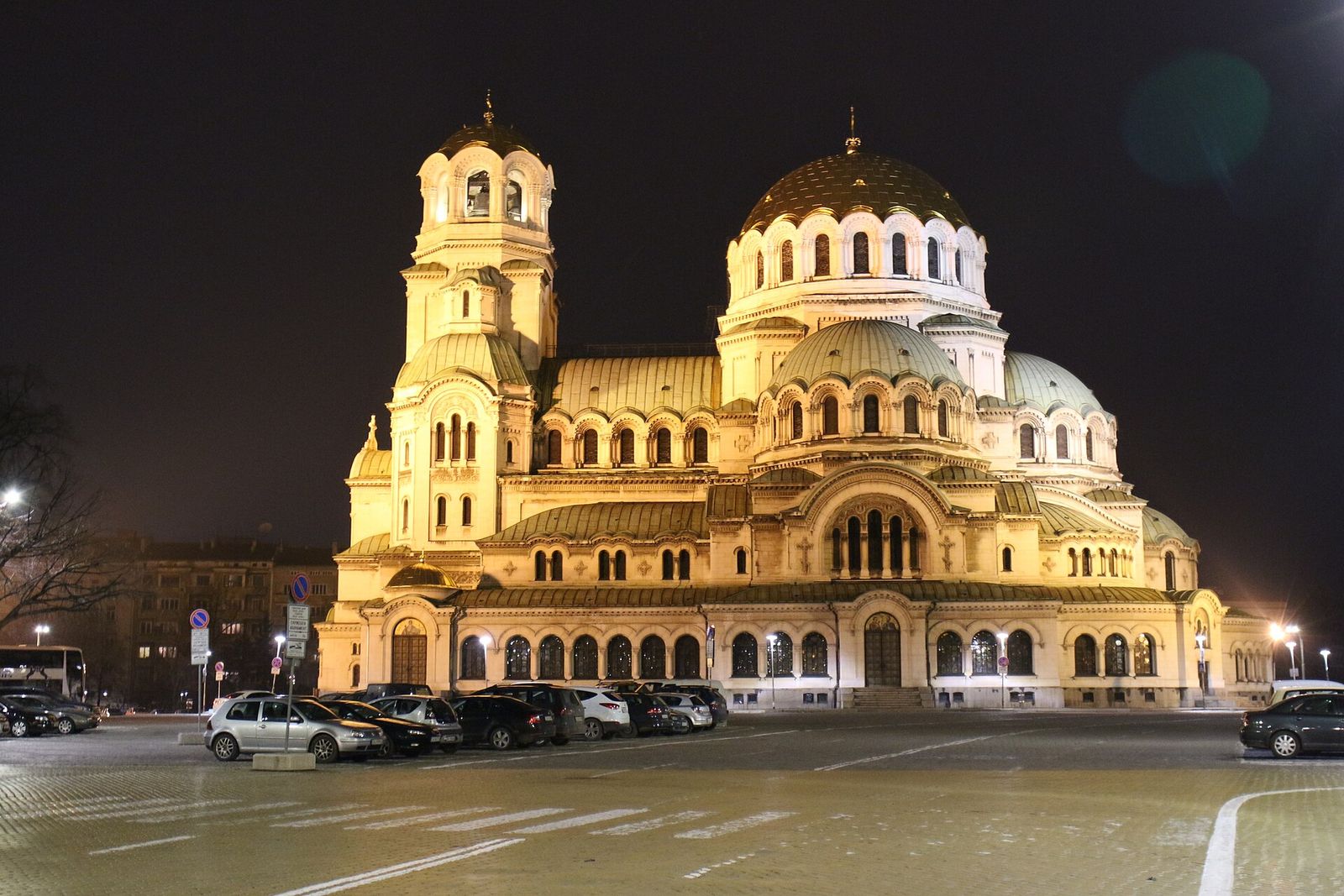
The cathedral is floodlit after dark, and I think it looks its best then. The square empties out, the gold domes stand out against the night sky, and you can take photos without a single tour group in them.
What to see inside the cathedral
Inside, it is dim. Give your eyes a minute and the materials start to show: Italian and Moroccan marble, onyx from Brazil and alabaster from India. The wooden doors came from Austria, and the metal fittings and chandeliers were made in Germany.
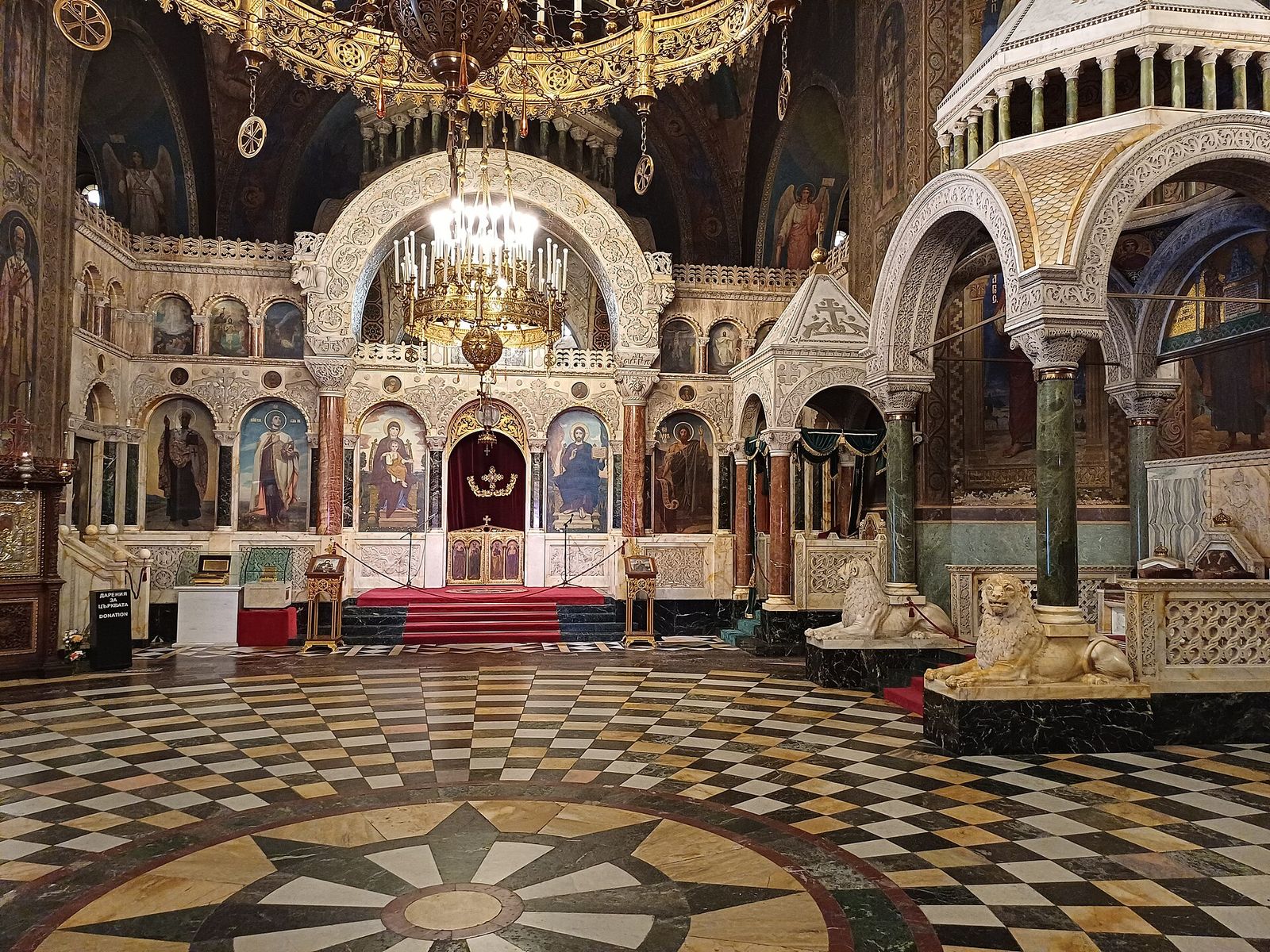
The things I'd look for, in order:
- The iconostasis. The screen of icons in front of the altar, in white marble with gilded icons, faces you as you walk in.
- The central chandelier. It weighs 2,500 kg and hangs 27 meters above the floor.
- The mosaic icons. Bulgarians designed them, and workshops in Venice made them.
- The murals. Russian and Bulgarian painters worked on the walls, among them Viktor Vasnetsov, Vasily Savinsky, Anton Mitov and Ivan Mrkvička.
- The relics. A piece of rib of St Alexander Nevsky and a stone from Golgotha are kept inside.
Underfoot, the marble floor is a checkerboard with big rose patterns under the domes, laid across 3,170 square meters.
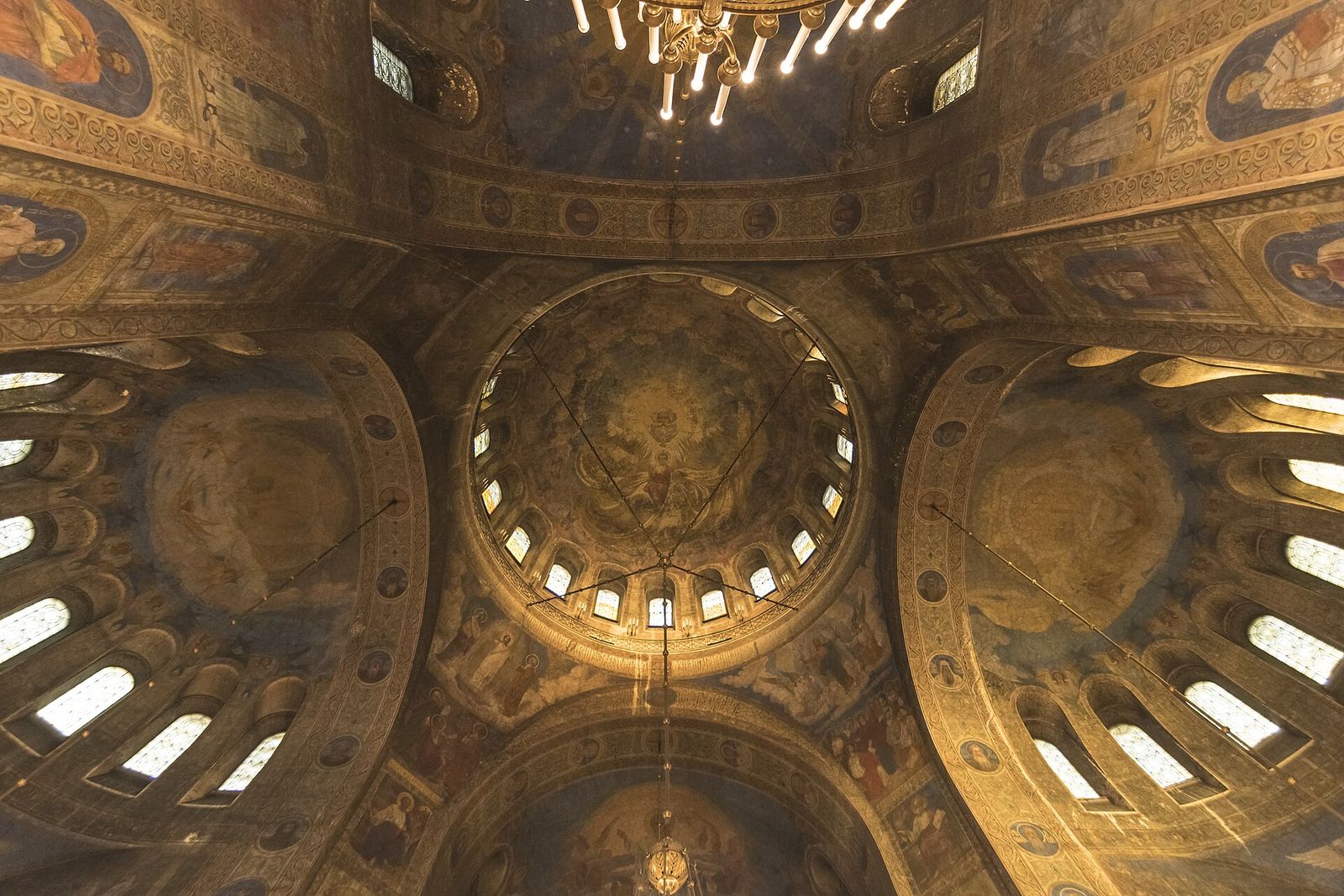
Look up before you leave, because most people forget the ceiling. Each dome is painted, and light comes in through a ring of small windows at the base of each one.
Bulgarians come in every day to light a candle and wish health for their families, and it takes only a few minutes to do the same. I think it is the nicest small thing a visitor can do here.
The crypt icon museum
Below the church is the crypt, designed to hold tombs, though nobody was ever buried there. Since 1965 it has housed the Museum of Christian Art, a branch of the National Gallery. The icons, fresco fragments, manuscripts and church plate run from the 4th century, when Christianity became official under the Roman Empire, to the 18th and 19th centuries.
The pieces come from all over the country: the monasteries of Rila and Bachkovo, and museums in Nesebar, Veliko Tarnovo and Plovdiv among others. If you have only an hour, spend it here rather than in a second church. It is the best single place in Sofia to see how Bulgarian icon painting changed over 1,500 years.
| Ticket | Price |
|---|---|
| Museum of Christian Art, adult | €10 |
| Pensioners, over 65s, students | €4 |
| Any ticket on a Thursday | €2 |
| Crypt plus the National Gallery palace | €15 |
| Crypt plus Kvadrat 500 | €18 |
| Crypt, Kvadrat 500 and the palace | €25 |
| Children and under 18s | Free |
The crypt keeps its own hours: Tuesday to Sunday, 10 AM to 6 PM, with the ticket desk closing at 5:30 PM. It is closed on Mondays and on official holidays, Christmas, New Year's Day and Easter.
The palace is the former royal palace on Battenberg Square, which holds about 50,000 works of Bulgarian art. Add the crypt and Kvadrat 500 and you have the best art day among Sofia's museums, on one €25 ticket or three €2 ones on a Thursday.
Opening hours, services and the best time to visit
The church is open every day from 7 AM to 7 PM, with no closing day, and services are held every day.
My pick is around 10 AM. The tour buses start arriving around 11, the morning light comes through the high windows, and only a few people are inside lighting candles. The second-best slot is the last hour before closing, when the square is quiet and you can stay on for the floodlights.
Dress code and photos
This is a working church, so cover your shoulders and knees, and men take their hats off. Women can wear a headscarf if they want to, though it is not required. I'd keep a light scarf in a day bag in summer, which covers bare shoulders in a second.
Photos without flash are allowed inside. The cathedral has sold a photo pass in the past, around €5 at today's rate, and the rules change from time to time, so look at the sign by the door when you arrive.
How to get to the cathedral
The closest metro station is SU St. Kliment Ohridski, by Sofia University, about 250 meters from the cathedral. Serdika, where the main metro lines cross, is about 850 meters away, a 10 minute walk. One single ride costs €0.80, and the Sofia metro takes contactless cards at the gate.
On foot, most people come from the north end of Vitosha Boulevard, cross the Largo and walk along Tsar Osvoboditel Boulevard past the Russian Church. The center is compact, and most of the main sights are a short walk apart.
I would not drive. The cathedral has no parking of its own, and the streets around the square are lined with government buildings.
What is next to the cathedral
Three more sights sit close to the cathedral doors, and I'd see them on the same visit.
St Sofia Church stands across the street. Its roots go back to the 6th century, which makes it the second-oldest church in the city, and in the 14th century it gave Sofia its name. From outside it looks plain next to the cathedral, but St Sofia Basilica has a paid underground necropolis with tombs about 1,500 years old.
The antiques market runs on the square itself. Stalls sell old prints, Soviet pins, medals, icons and hand-painted souvenirs, and the antiques market at Alexander Nevsky is where I'd look for an old print or a medal to take home.
The Russian Church sits on Tsar Osvoboditel Boulevard, at the corner with Georgi Rakovski Street. It is small and golden, and through its side door you reach a crypt where people write a wish on a slip of paper and drop it in a box. The Russian Church is the one I'd pick if you only have time for one more church after this.
Below the cathedral lies the necropolis of ancient Serdica, the Roman city that Sofia grew from, and the city's streets are uncovered a few blocks away at the Serdica ruins by Serdika metro station.
Is Alexander Nevsky Cathedral worth visiting?
Yes. It is free, it sits in the middle of the old center, and it is the building Sofia is known for. An hour on the square covers the church, the crypt and a walk through the market stalls.
Who it suits best:
- First-time visitors. It is the landmark, and it sits at the start of most routes through the center.
- Anyone into icons and church art. The crypt is Sofia's icon museum, at €10 or €2 on Thursdays.
- Photographers. The square is open on all sides, and the floodlit domes after dark are the best night shot in the center.
- Travelers on a budget. The church costs nothing, and so does the market browsing outside.
Skip it, or keep it short, if:
- You have already seen the big Orthodox cathedrals of Belgrade or Moscow and want something different. Boyana Church is tiny, but its 1259 frescoes are the finest church art around Sofia.
- You are visiting on a Monday and wanted the crypt. The church is open, but the museum is closed.
The cathedral works as the start of almost any day in the center, and the other things to do in Sofia fan out from this square in every direction.
Key takeaways
- Alexander Nevsky Cathedral is free, open daily from 7 AM to 7 PM, and takes 30 to 40 minutes to see.
- It was built from 1904 to 1912 to honor the Russian soldiers who died freeing Bulgaria in 1877 and 1878.
- The crypt museum costs €10, or €2 on Thursdays, and is closed on Mondays.
- Go at 10 AM for a quiet church, or after dark for the floodlit domes.
- Cover shoulders and knees, and never use flash.
Frequently asked questions
Is Alexander Nevsky Cathedral free to enter?
Yes, the church itself is free, every day from 7 AM to 7 PM. Only the crypt museum charges, €10 for adults and €2 on Thursdays.
Is Bulgaria Catholic or Orthodox?
Bulgaria is mainly Eastern Orthodox, and Alexander Nevsky is a Bulgarian Orthodox cathedral. Sofia also has a Catholic cathedral, St Joseph, a few minutes from the Banya Bashi Mosque and the Sofia Synagogue.
What is the main church in Sofia?
Alexander Nevsky Cathedral is the main church and the best known building in Sofia. It is one of the largest Orthodox cathedrals in the Balkans, with 3,170 square meters inside.
Why is the Bulgarian capital called Sofia?
The city takes its name from St Sofia Church, which stands across the street from Alexander Nevsky Cathedral. The church dates back to the 6th century, and the city took its name in the 14th century. In Roman times the city was called Serdica.
What does Nevsky mean?
"Nevsky" means "of the Neva", after the Neva River, where the 13th-century prince Alexander won one of his battles. He became a Russian saint and the patron saint of Tsar Alexander II, which is why the cathedral carries his name.
Can you take photos inside Alexander Nevsky Cathedral?
Yes, without flash, and never during a service. The cathedral has charged a small photo fee in the past, about €5, so look at the sign by the door. Photos are fine everywhere outside.
What should I wear to Alexander Nevsky Cathedral?
Wear clothes that cover your shoulders and knees, and men should remove their hats. A scarf is optional for women. Shorts and beachwear are the things to avoid.
How long do you need at Alexander Nevsky Cathedral?
Plan on 30 to 40 minutes for the church. Add more time for the crypt museum and for a look at the antiques market on the square, which sit within a few steps of the doors.
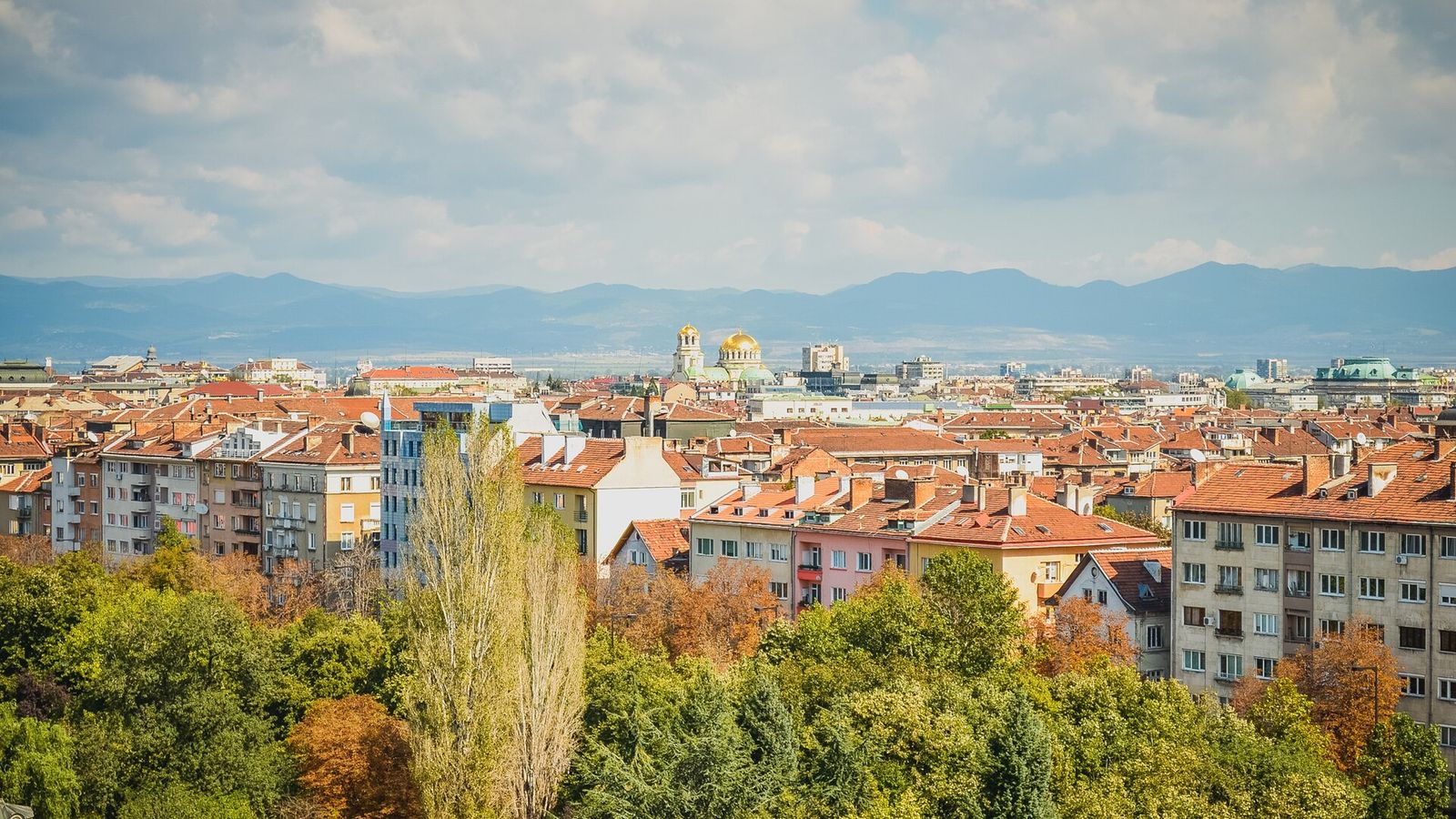
25 Best Things to Do in Sofia in 2026
Sofia packs 2,000 years into a walkable center. The 25 sights, museums, foods and day trips I'd put first, with prices.
Read the guide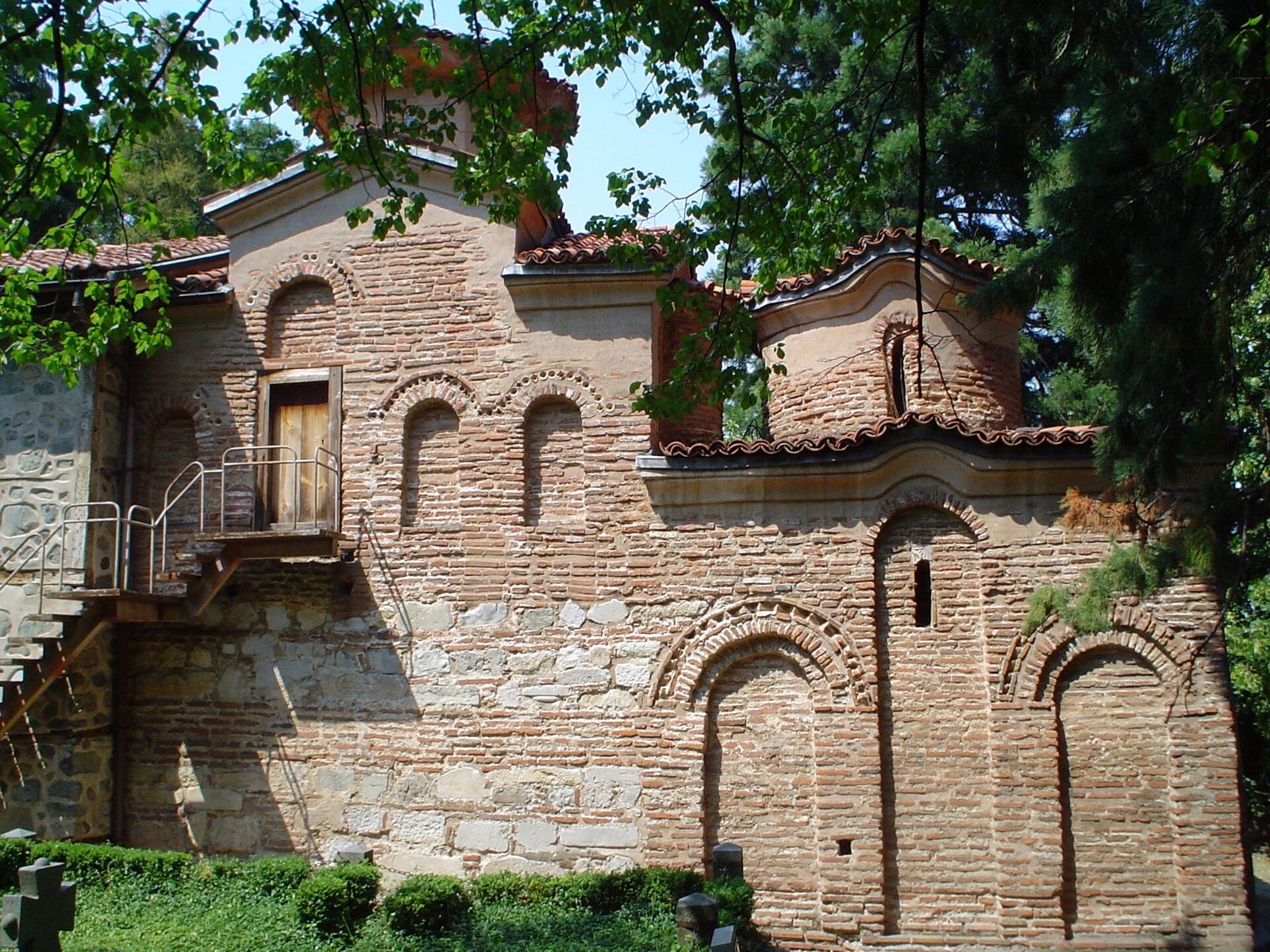
Boyana Church: Visiting Sofia's UNESCO Frescoes
A tiny UNESCO church under Vitosha with frescoes from 1259. Tickets, time slots, the bus out and what to find inside.
Read the guide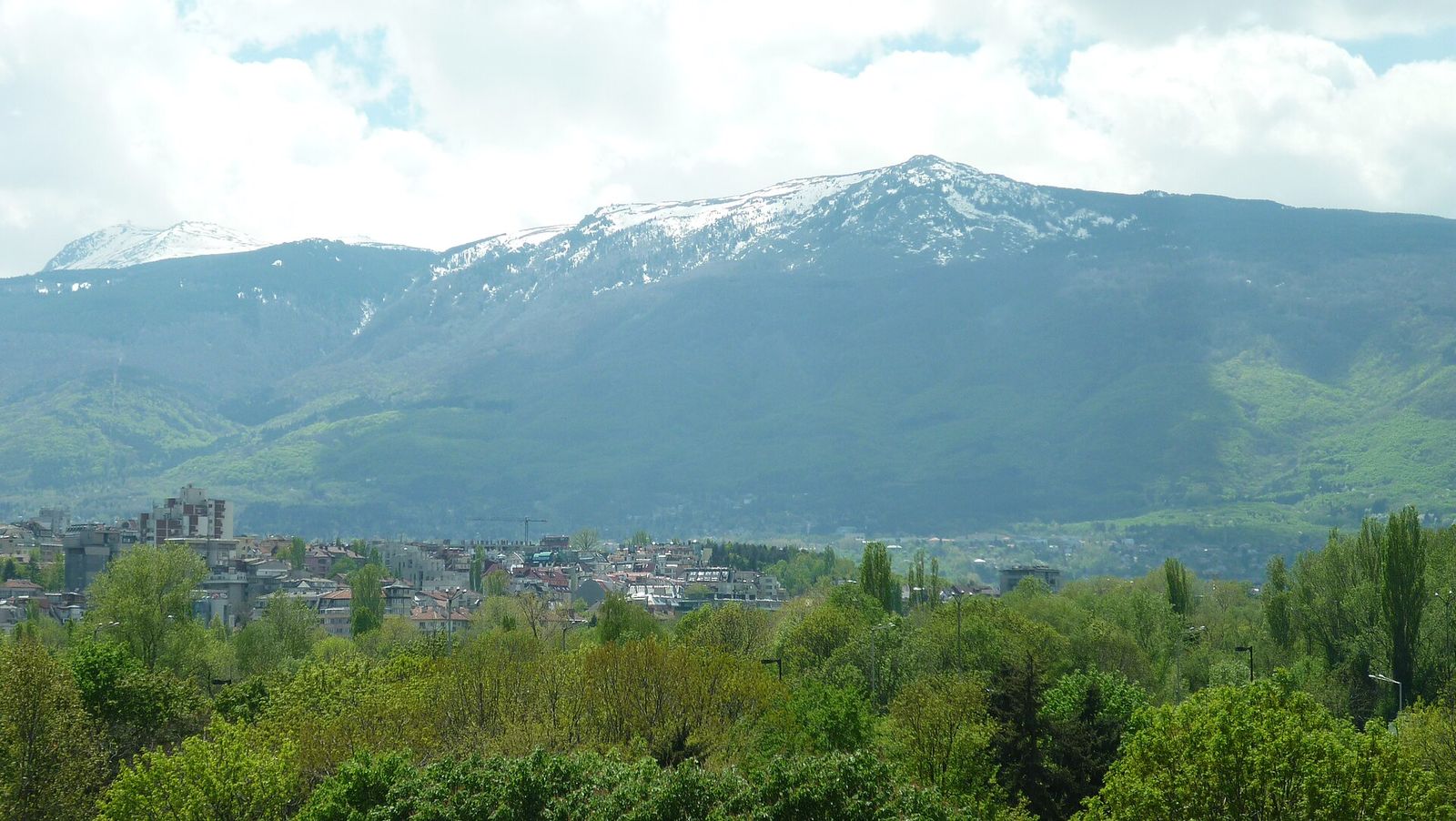
Vitosha Mountain: How to Get There and the Best Hikes
Sofia has a 2,290 m mountain at the end of its tram lines. Here is how to get up it and which walks to pick.
Read the guide