The Russian Church in Sofia: St Nicholas and the Wish Crypt
The Russian Church, officially the Church of St Nicholas the Miracle-Maker, is the small gold-domed church on Tsar Osvoboditel Boulevard, a short walk from Alexander Nevsky Cathedral. It is free, it takes 15 to 30 minutes, and its crypt is where people in Sofia leave written wishes. I go through its history, what to see, how the wish tradition works and how I'd fit it into a day.
The Russian Church at a glance
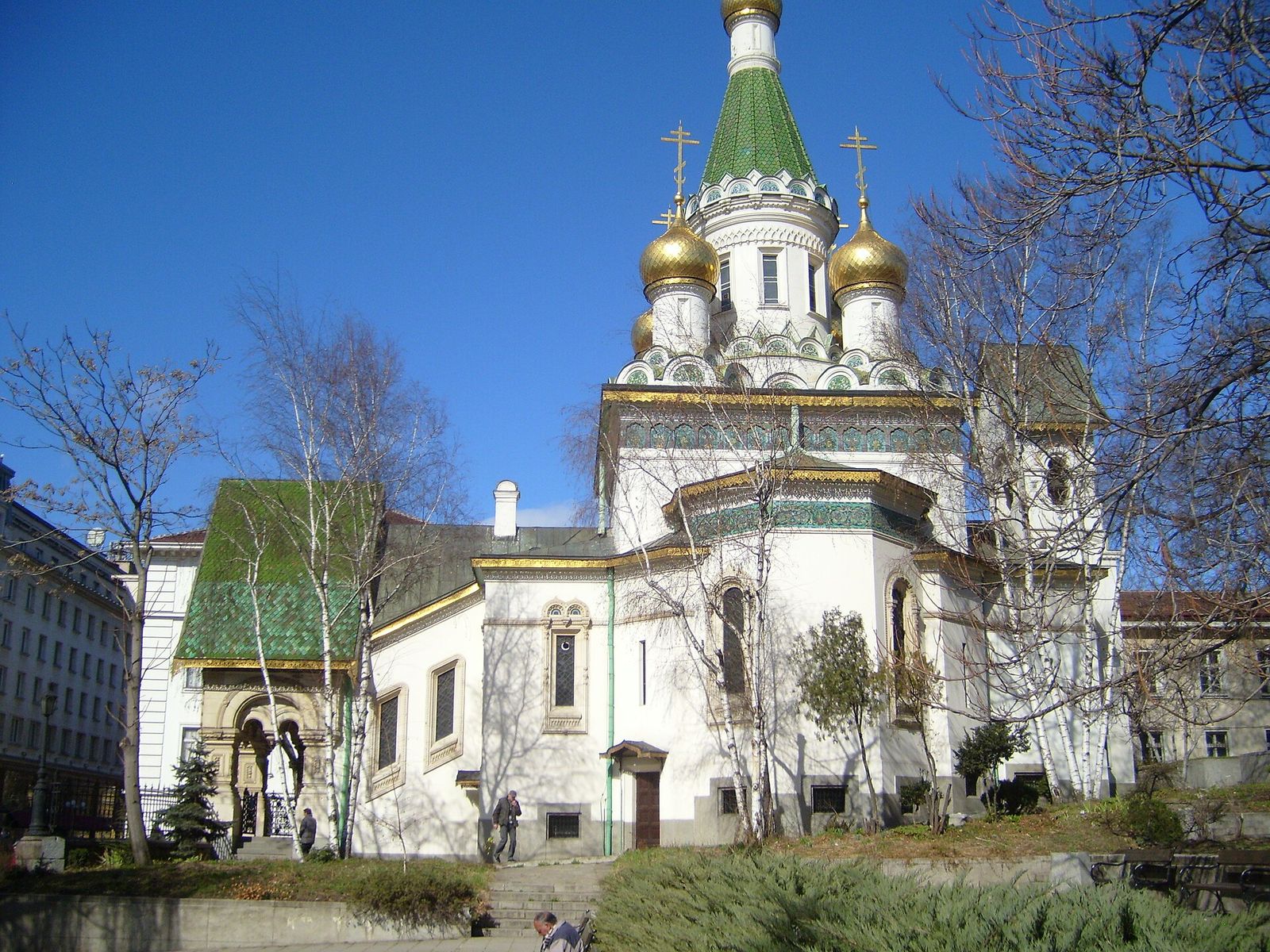
The church stands in a small garden on Tsar Osvoboditel Boulevard, between the Largo and Alexander Nevsky Cathedral. Its gold onion domes and green spire make it easy to spot from the yellow cobbles of the boulevard.
The history of the Russian Church
Before the church, the Saray Mosque stood on this plot. It was pulled down in 1882, four years after the Liberation of 1878 that opens the modern chapter of Bulgarian history, and the land went to the Russian Embassy next door.
The embassy built its own church there and named it after St Nicholas the Miracle-Maker, the patron saint of the emperor at the time, Nicholas II.
The foundations were laid in September 1907, with Grand Duke Vladimir in Sofia for the ceremony. The church was consecrated in 1914.
After the Russian Revolution of 1917, many Russian emigrants settled in Bulgaria, and this became their church in Sofia. It served as the embassy church until 1934 and has belonged to the Moscow Patriarchate since 1953. It stayed open through the communist years, from 1944 to 1989, under the watch of State Security.
| When | What happened |
|---|---|
| 1882 | The Saray Mosque on the site is pulled down |
| September 1907 | Foundations laid, with Grand Duke Vladimir present |
| 1914 | The church is consecrated |
| After 1917 | It becomes the church of the Russian emigrants in Sofia |
| 1934 | It stops serving as the embassy church |
| 1950 | Archbishop Seraphim dies and is buried in the crypt |
| 1953 | It comes under the Moscow Patriarchate |
| 2016 | Seraphim is declared a saint |
The domes, tiles and bells
The Russian architect Mikhail Preobrazhenski designed the church in the Russian Revival style, modeled on the Moscow churches of the 17th century. Construction was run by the architect A. Smirnov, who was building Alexander Nevsky Cathedral down the road at the same time.
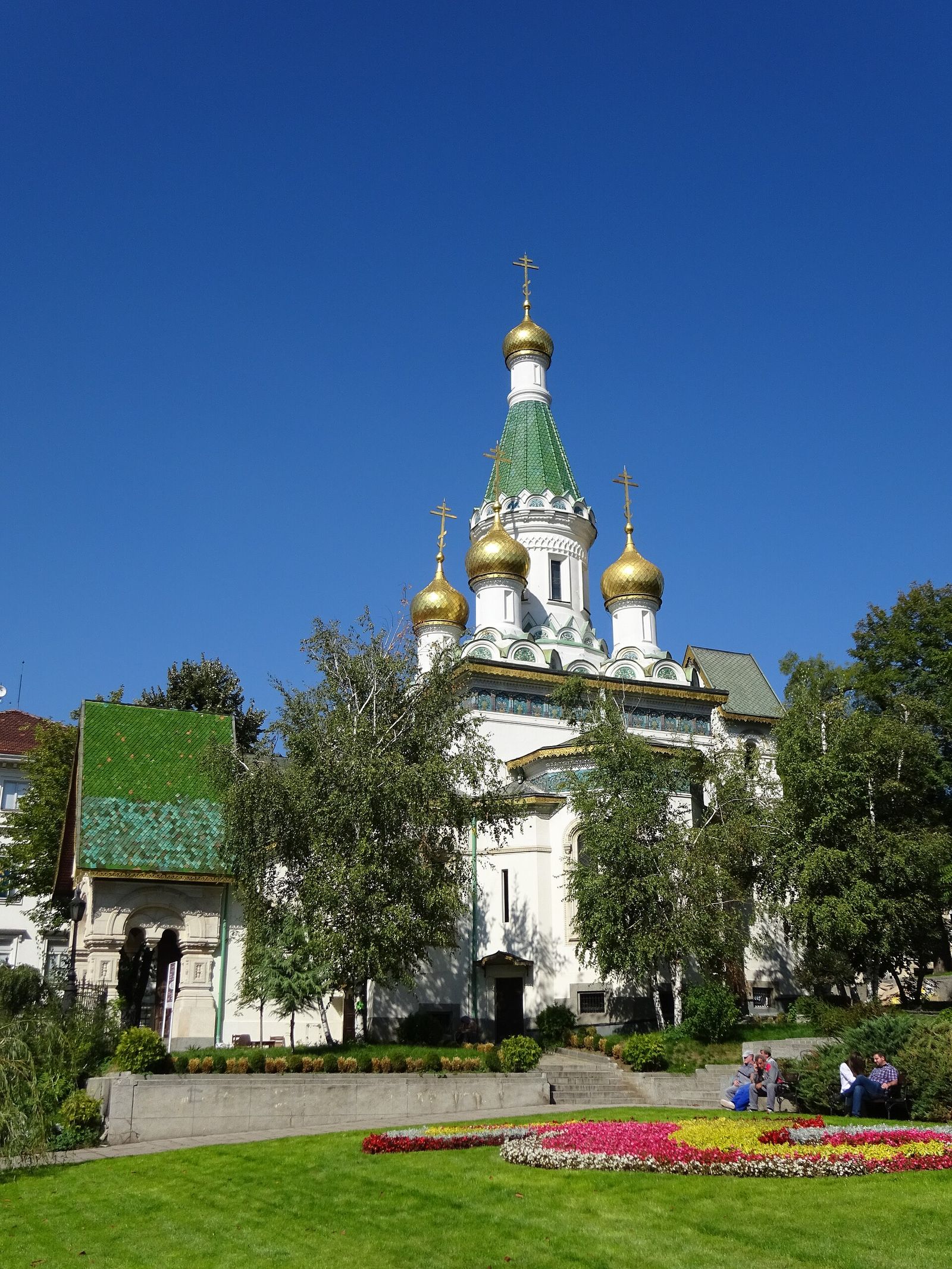
The 5 domes are gilded onion domes, each topped with a Russian eight-ended cross, and the central one rises 19 meters. The walls are faced with multicolored glazed tiles, the work of the ceramicist G. Kislichev.
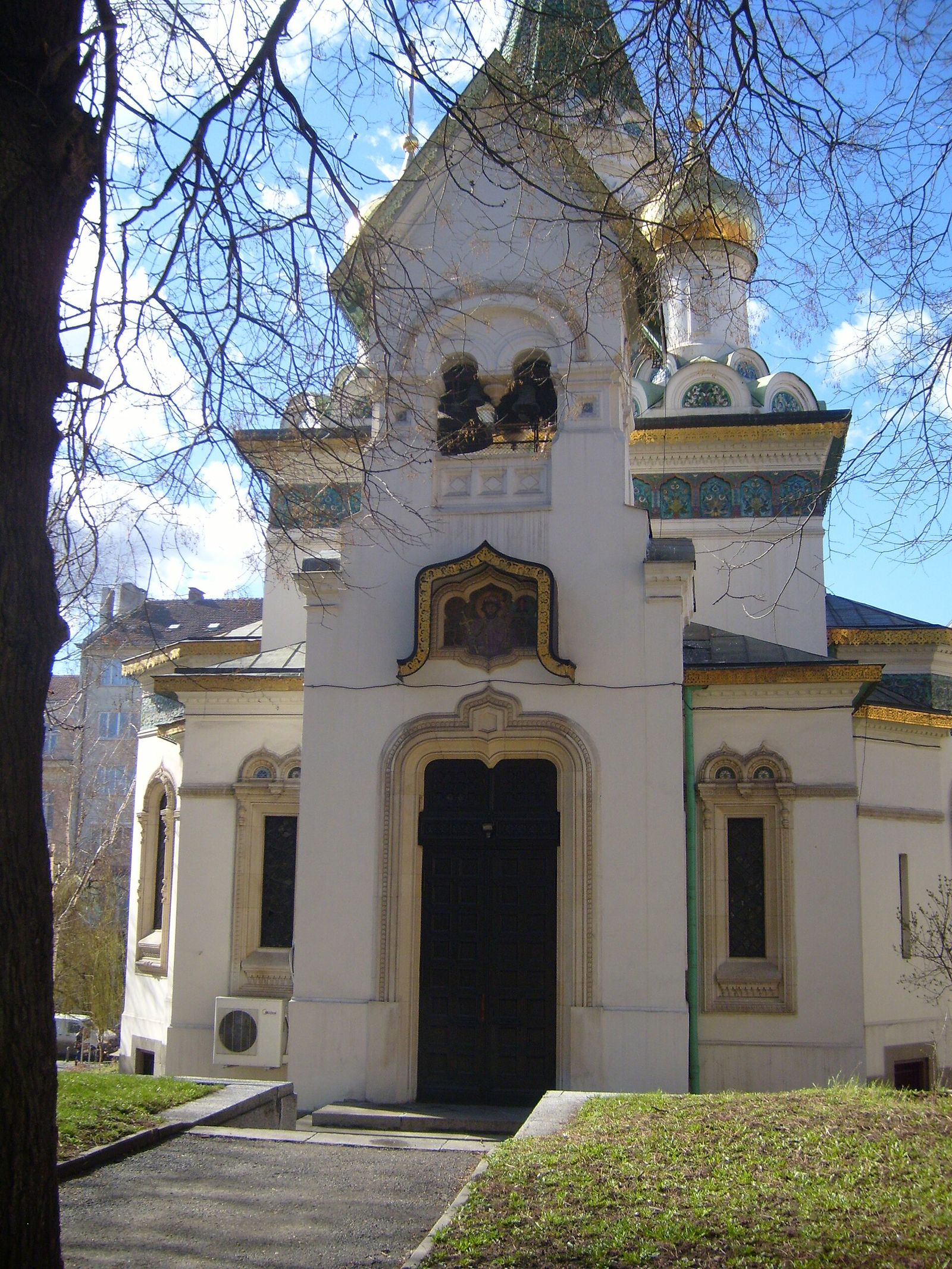
Over the south entrance is a majolica icon of St Alexander Nevsky, the same saint as the cathedral up the street. The bells, 8 of them, were a gift from Emperor Nicholas II himself.
The garden around the church is planted with trees and flower beds, and in spring the tulips come out in front of the white walls. I think it is the prettiest small building in the center.
Inside the church
The interior is small and dim. A team of painters led by Vasily Perminov, who also worked on the murals of Alexander Nevsky Cathedral, covered the walls, and a century of candle smoke has darkened them.
The iconostasis, the screen of icons in front of the altar, is made of ceramic. Its icons are copies of Viktor Vasnetsov's icons in St Vladimir's Cathedral in Kyiv.
Services follow the old Julian calendar of the Russian Orthodox Church, so the Russian Church celebrates Christmas on 7 January. If you are in town for Christmas in Sofia, you can catch the city's own Christmas on 25 December and the Russian one 13 days later.
The crypt of St Seraphim and the wish tradition
The crypt is the reason most people come. You reach it through a side door, and it lies below the main floor of the church.
Down there is the tomb of Archbishop Seraphim Sobolev, who was born in 1881, served the Russian community in Sofia from 1921, and died in 1950. His remains rest in a white marble sarcophagus.
To leave a wish, you write it on a slip of paper, fold it, and drop it into the wooden box beside the sarcophagus. Paper is provided, and anyone can leave one, believer or not.
I'd keep the visit to the crypt quiet and short. People pray here, so treat it like the chapel it is, and step back to let others reach the box.
Opening hours, services and dress code
Entry is free. The church opens every day, usually from about 8 AM to 6:30 PM, and weekday mornings around opening time are the quietest. The Sunday liturgy fills the small nave, so I'd skip Sunday morning if you only want to see the church and the crypt.
Dress as you would for any Orthodox church. Cover your shoulders and knees, men take their hats off, and keep your voice low.
The church is one of Sofia's best churches and one of the smallest, so a visit to the nave and the crypt rarely runs past half an hour.
How to get to the Russian Church
The Russian Church is at 3 Tsar Osvoboditel Boulevard, about a 5-minute walk west of Alexander Nevsky Cathedral. The closest metro stations are SU St. Kliment Ohridski, by Sofia University, and Serdika, where the main lines meet, both a short walk away.
Next door, at No. 1, the National Museum of Natural History fills 16 halls on 4 floors with animals, insects and fossils, and it is the first place I'd take kids in Sofia on a rainy afternoon.
The Russian Church on a walk through the center
Tsar Osvoboditel Boulevard links the Largo with Alexander Nevsky, and the Russian Church sits in the middle of the walk. I'd take them from west to east.
| Stop | What to see | Entry |
|---|---|---|
| Ancient Serdica, by Serdika metro | Roman streets, houses and baths | Free |
| Rotunda of St George | 4th-century church behind the Presidency | Free |
| Russian Church | Gold domes, the wish crypt | Free |
| Alexander Nevsky Cathedral | The gold-domed landmark and its crypt museum | Free, crypt €10 |
| St Sofia Church | 6th-century basilica, Roman tombs below | Free, underground €3 |
| Antiques market | Stalls on Alexander Nevsky Square | Free to browse |
Start with the ruins of Serdica at Serdika metro station, then cross the Largo to the Rotunda of St George in the courtyard behind the Presidency. The Russian Church comes next, a few minutes east along the boulevard.
From there it is 5 minutes to Alexander Nevsky, with St Sofia Church, the basilica that gave the city its name, across the street. The stalls of the antiques market on the square sell Soviet pins, medals and icons, and they are the place to end the walk.
Most of this walk is day 1 of my Sofia itinerary, and with stops it takes a morning or an early afternoon.
Is the Russian Church worth visiting?
Yes. Entry is free, and a wish in the crypt costs you nothing but a slip of paper.
Who it suits best:
- Photographers. The gold domes, the glazed tiles and the tulips in spring all fit in one frame from the garden.
- Anyone curious about traditions. Leaving a wish in the crypt is one of the few rituals in Sofia a visitor can join in a minute.
- Short stays. It sits on Tsar Osvoboditel Boulevard between the Largo and Alexander Nevsky, so it adds 15 minutes to a walk through the center.
- Fans of church architecture. Its domes and tiles follow the Moscow churches of the 17th century, and its builder and its lead painter also worked on Alexander Nevsky.
Skip it, or keep it short, if you came for interiors to photograph, since the camera stays in your bag from the door on.
It is one of the things to do in Sofia I'd never leave off a first visit.
Key takeaways
- The Russian Church, officially St Nicholas the Miracle-Maker, was built from 1907 to 1914 for the Russian Embassy.
- Entry is free, it is open daily, and a visit takes 15 to 30 minutes.
- In the crypt, visitors write a wish on paper and leave it in a box beside the tomb of St Seraphim, who died in 1950.
- No photos inside; the 5 gold domes and the tiled walls are the shots to take from the garden.
Frequently asked questions
Can you go inside the Russian Church in Sofia?
Yes, the church and the crypt are open to visitors every day, and entry is free. Dress modestly, keep quiet during services, and leave your camera in your bag inside.
How do you make a wish at the Russian Church in Sofia?
Go down to the crypt through the side door, write your wish on a slip of paper, fold it and drop it into the wooden box beside the tomb of St Seraphim. Paper is provided, and it takes a couple of minutes.
Who is buried in the crypt of the Russian Church?
Archbishop Seraphim Sobolev, who was born in 1881 and died in 1950, lies in a white marble sarcophagus in the crypt. He served the Russian community in Sofia from 1921, and the Russian Orthodox Church declared him a saint in 2016.
Why is it called the Russian Church?
It was built from 1907 to 1914 as the church of the Russian Embassy next door, by a Russian architect, in the style of 17th-century Moscow churches. Its official name is the Church of St Nicholas the Miracle-Maker, and it belongs to the Moscow Patriarchate.
Is Russian Orthodox the same as Orthodox Christianity?
Yes. The Russian and the Bulgarian Orthodox Churches are both Eastern Orthodox, and the difference a visitor notices is the calendar: the Russian Church keeps Christmas on 7 January, and the Bulgarian Church on 25 December.
Who is St Nicholas in the Orthodox Church?
St Nicholas the Miracle-Maker is the saint this church is named after, and he was the patron saint of Nicholas II, the Russian emperor when it was built. Bulgarians celebrate him on 6 December, Nikulden, the name day of every Nikola and Nikolina.
Can you take photos inside the Russian Church?
No, photos are not allowed inside the church or in the crypt. You can photograph the outside freely, and the domes look best in the morning or late afternoon.
Is the Russian Church in Sofia free?
Yes, it is a working church with no ticket. The wish paper in the crypt is free too.
25 Best Things to Do in Sofia in 2026
Sofia packs 2,000 years into a walkable center. The 25 sights, museums, foods and day trips I'd put first, with prices.
Read the guide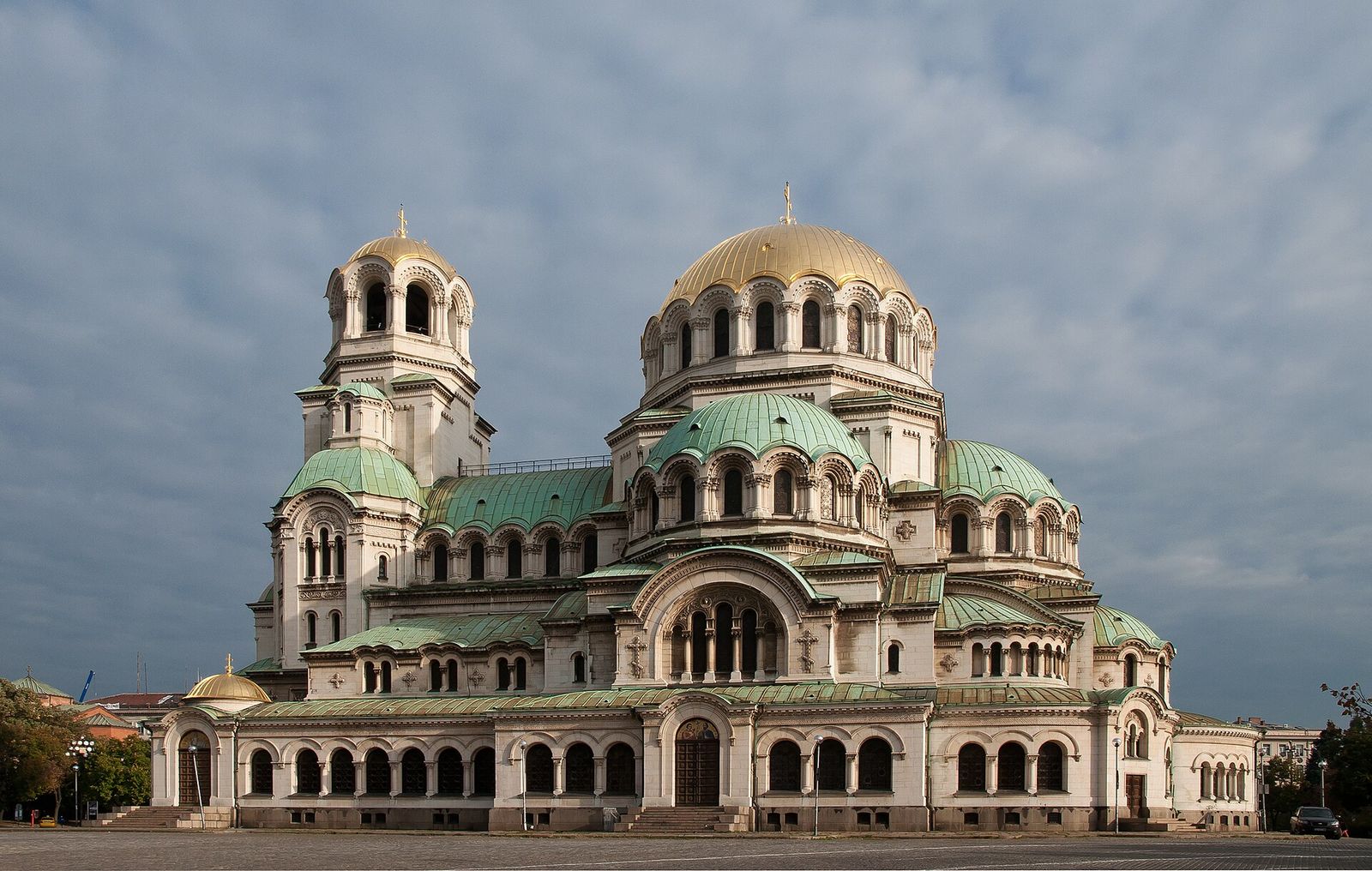
Alexander Nevsky Cathedral in Sofia: A Visitor's Guide
Sofia's gold-domed landmark is free to enter. Here is its story, what to see inside, the crypt museum and when to go.
Read the guide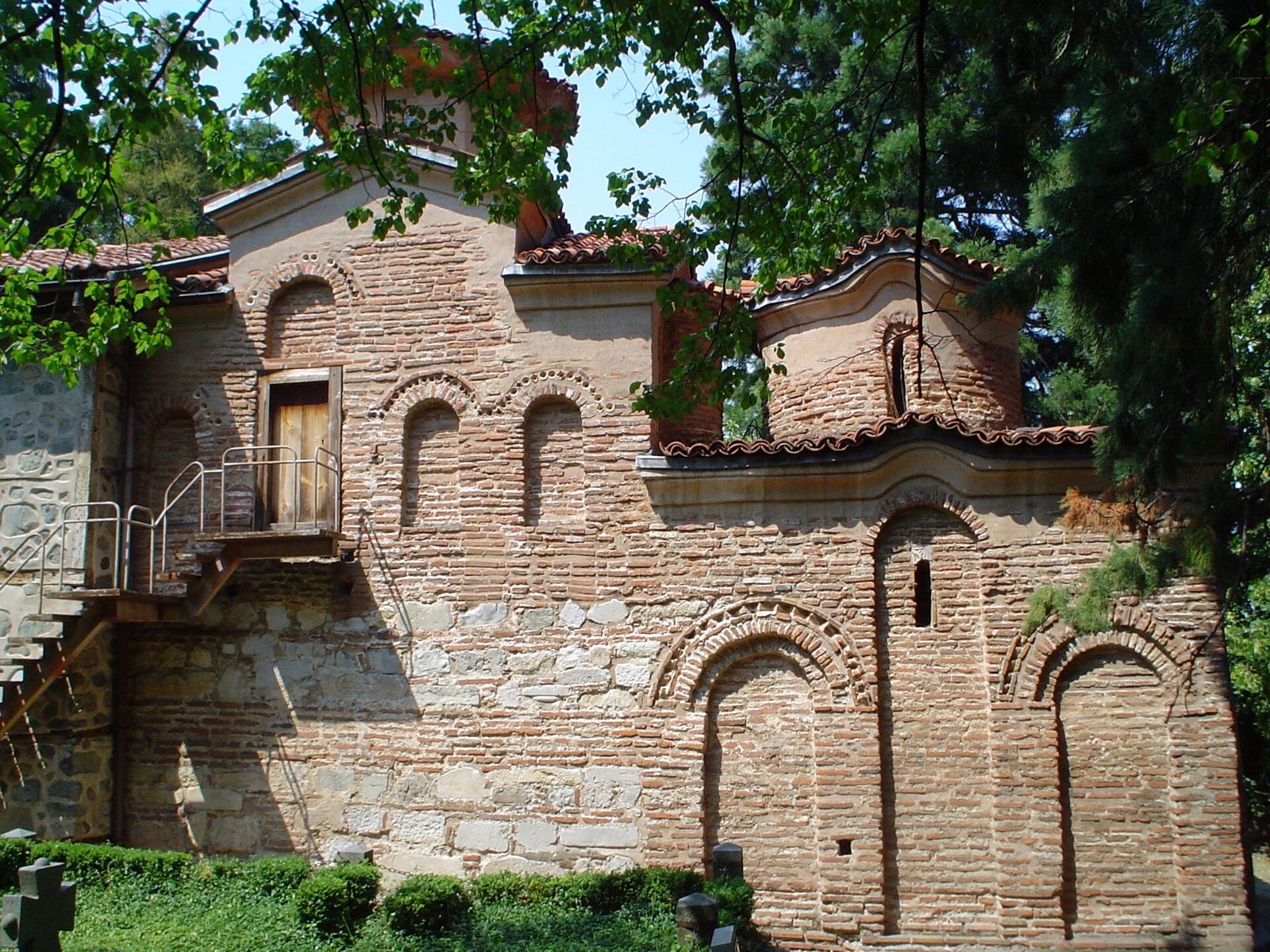
Boyana Church: Visiting Sofia's UNESCO Frescoes
A tiny UNESCO church under Vitosha with frescoes from 1259. Tickets, time slots, the bus out and what to find inside.
Read the guide