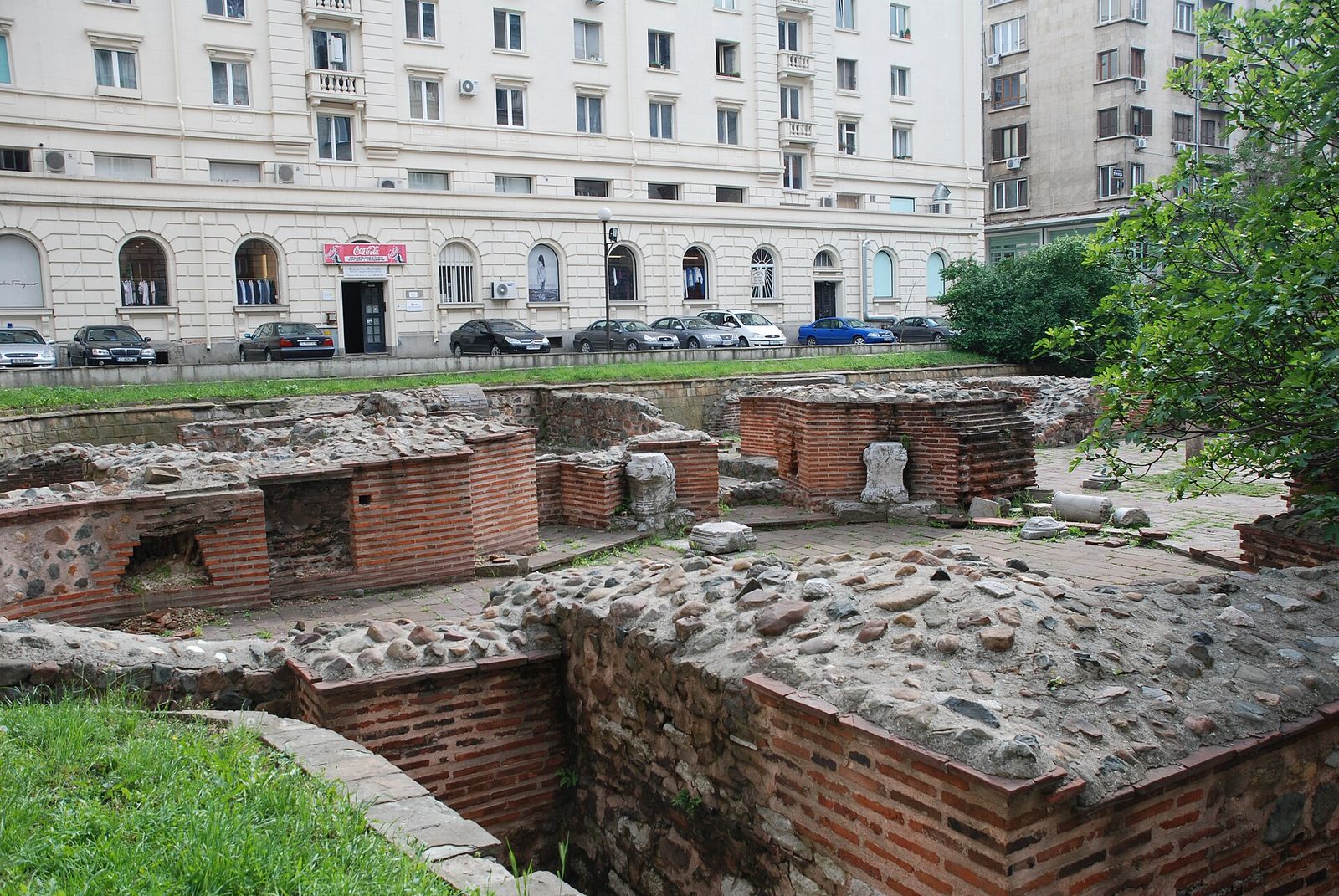
Ancient Serdica: The Roman Ruins Under Sofia's Largo
Sofia is built on top of Serdica, the Roman city that Constantine the Great is said to have called "my Rome". Its streets, baths and houses came back to light during the metro works of 2010 to 2012, and today you walk through them for free at Serdika station. Here I cover what Serdica was, what you can see at the complex and around the center, and the order I'd see it in.
Ancient Serdica at a glance
The complex lies under and around the Largo, the square framed by the Presidency, the Council of Ministers and the former Communist Party House. It runs between Nezavisimost Square and Maria Luiza Boulevard, and the Serdika and Serdika II metro stations open straight into it.
What Serdica was
Serdica takes its name from the Serdi, a tribe that lived on this plain before the Romans arrived. Rome took the town around 29 BC, and under Emperor Trajan, who ruled from 98 to 117, it became a municipium with the name Ulpia Serdica.
A raid burned the town in 170, and its first walls went up between 176 and 180 under Marcus Aurelius. Under Diocletian, Serdica became the capital of the province of Dacia Mediterranea. Two emperors, Aurelian and Galerius, were born here.
Galerius issued the Edict of Serdica in 311, which ended the persecution of Christians two years before the better known Edict of Milan. Constantine the Great weighed making it his capital before he chose Constantinople. Archaeologists have also found 8 large Roman warehouses inside the walls, which points to Serdica as a supply base for the army on the Danube.
| When | What happened in Serdica |
|---|---|
| Around 29 BC | Rome conquers the town of the Serdi |
| 98 to 117 | Trajan makes it a municipium, Ulpia Serdica |
| 176 to 180 | The first city walls go up under Marcus Aurelius |
| 311 | Galerius issues the Edict of Serdica |
| 343 | The Council of Serdica meets in a church where St Sofia stands today |
| 447 | The Huns destroy the city |
| 6th century | Emperor Justinian rebuilds it |
| 14th century | The city takes the name Sofia |
The Bulgarians later called the city Sredets, and in the 14th century it took the name of St Sofia Church. Thracian gold at the Archaeological Museum, Roman streets at the Largo and the 6th-century St Sofia a few blocks east let you follow Bulgarian history in order on foot.
How the Serdica ruins were found
A Roman stone plate showing gladiators turned up in 1919, and in 2004 builders hit the remains of the amphitheater while putting up a hotel.
The metro brought the biggest finds. Between 2010 and 2012, the dig for Serdika II station on the second metro line exposed streets, houses, baths and churches right under the Largo. The station plans were redrawn five times to keep the finds in place.
The Ancient Serdica Complex opened on 20 April 2016, after five years of work and a budget of about €7.7 million. Where old walls had crumbled, some were rebuilt with new stone, and protesters at the opening called the result kitsch. I think the rebuilt parts make the street plan easier to read for anyone who is not an archaeologist.
What you see at the Ancient Serdica Complex
Below street level, stretches of 8 Roman streets run between an early Christian basilica, 6 large buildings and a late medieval church. Signs in Bulgarian and English explain each part as you go.
The open-air ruins on the Largo
The outdoor part runs beside the street toward Maria Luiza Boulevard, and you look down on it from the sidewalk. The decumanus maximus, the main street of the Roman city, ran through here, and it is the part I'd stop to look at first.
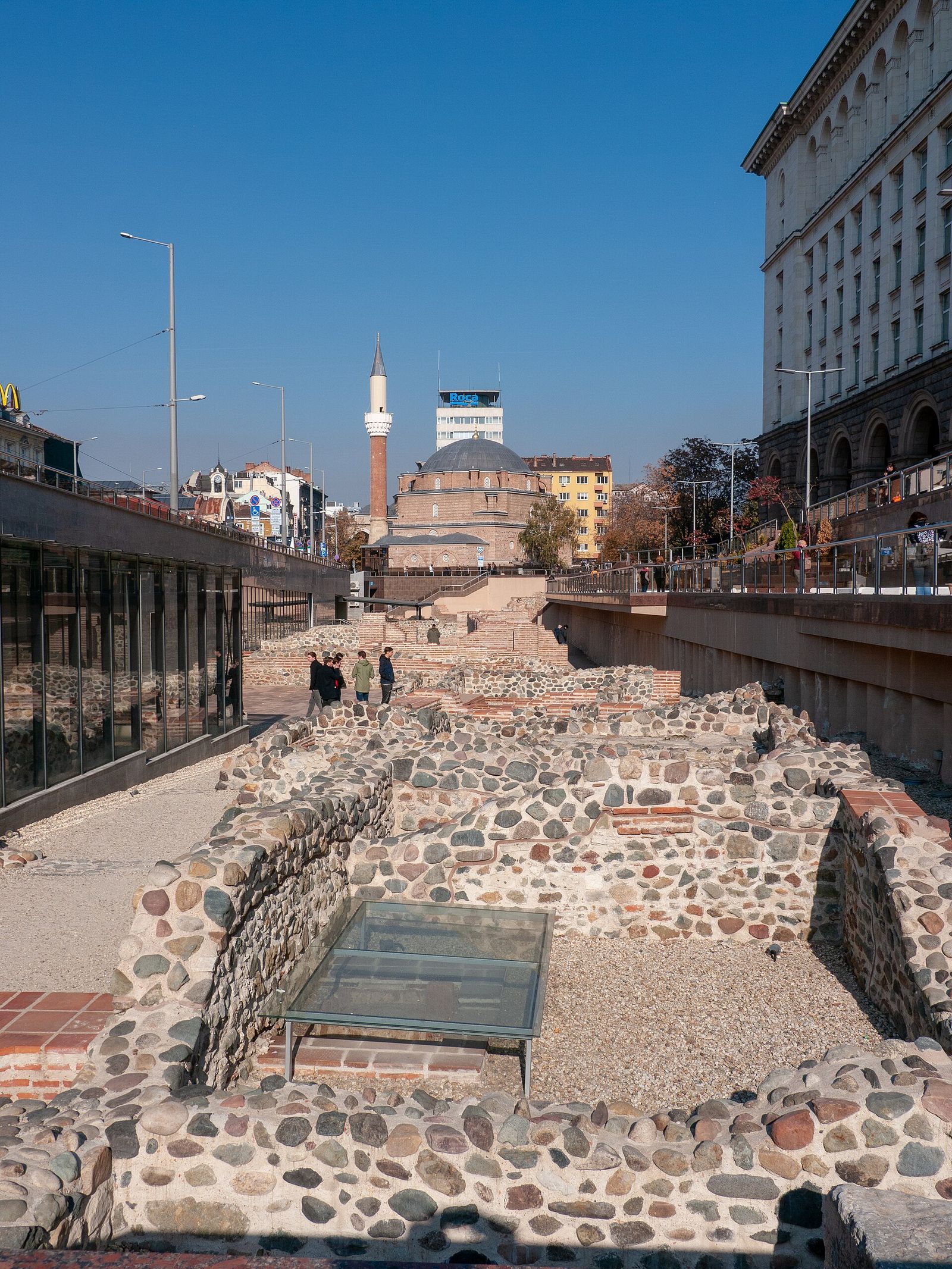
Serdica's early Christian basilica went up between the 4th and the 6th centuries, and it is the largest and earliest church found so far in the Roman city.
The 16th-century Banya Bashi Mosque rises behind the walls, with the Council of Ministers and the Presidency on the other side. Roman walls, an Ottoman minaret and 1950s government buildings all fit in one photo here, and I think it is the best single view of how the city grew in layers.
The covered halls under the square
Under the roof, walkways take you past the best-preserved houses. The Felix House covers 650 square meters of rooms around an inner courtyard, built between the 4th and the 6th centuries. Its name comes from an inscription on its mosaic floor that seems to name the owner, Felix, and the mosaic is on display.
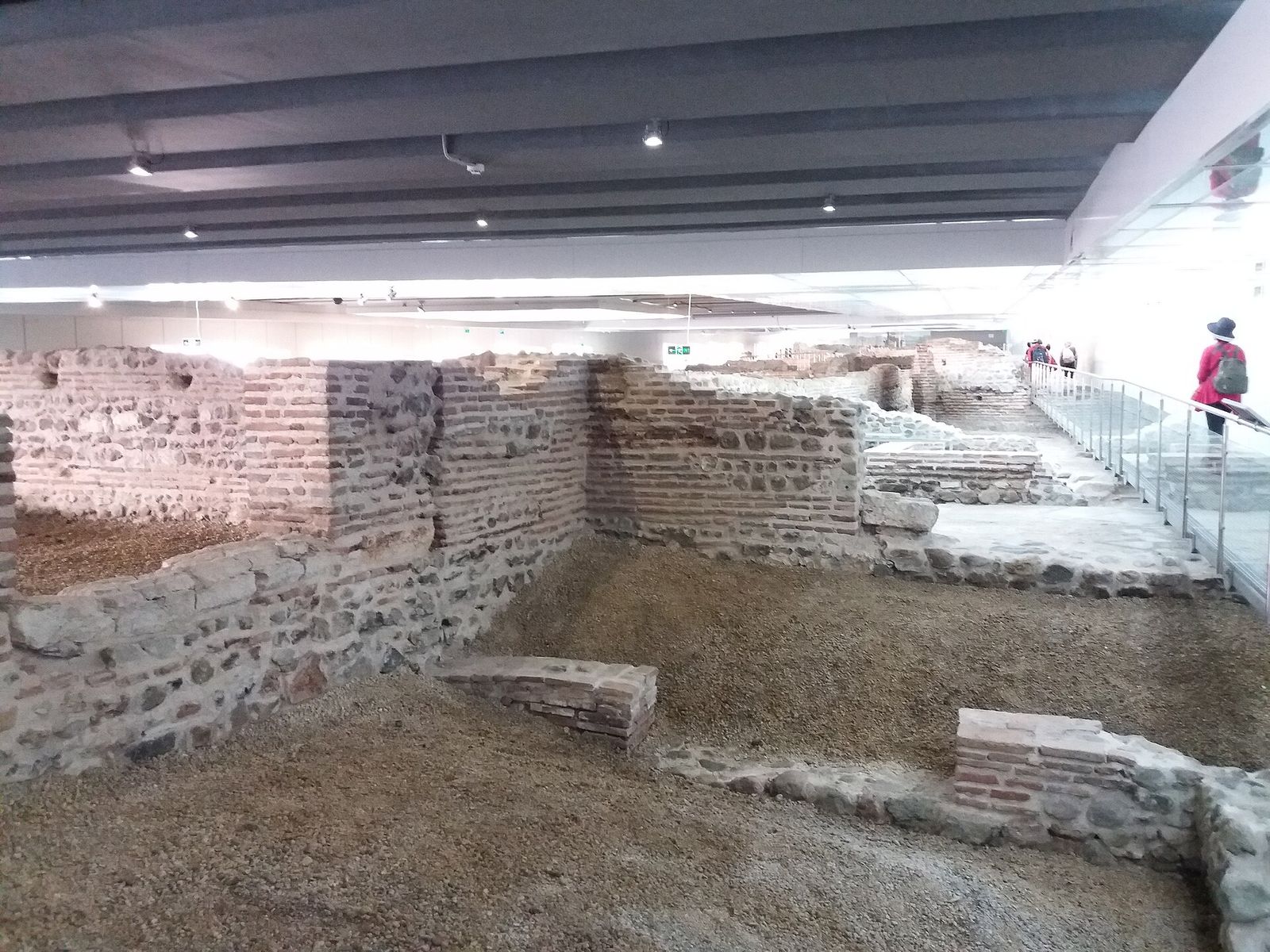
The House of Leontius, 600 square meters, may have belonged to Leontius, archbishop of Serdica in the late 6th century. In the northeast corner are 4th-century baths with a pool.
The glass domes and the stage
The central part of the complex sits under a ring of glass domes. Look up and you see the former Party House, the Council of Ministers and the Presidency through the glass, standing over the Roman walls.
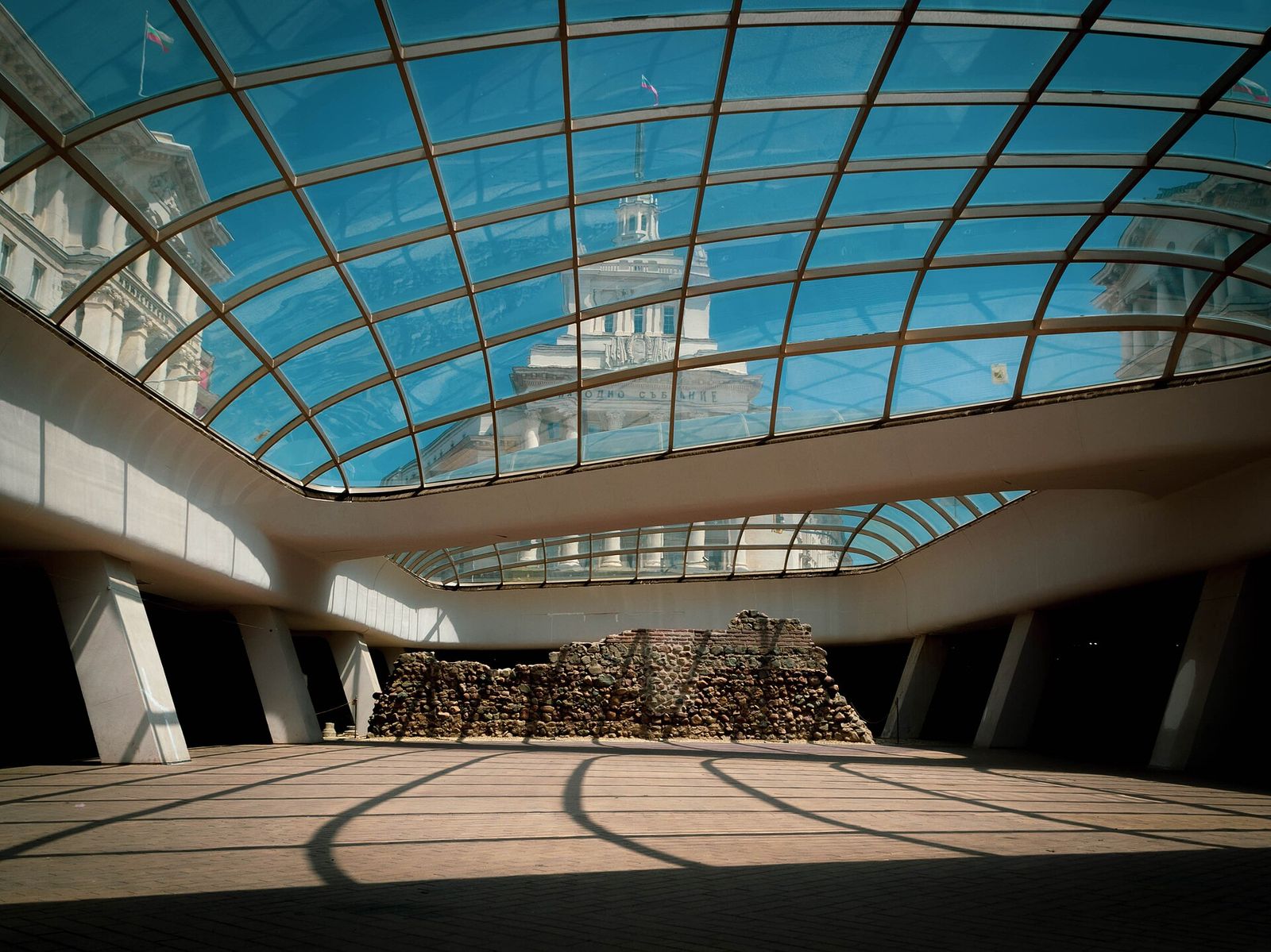
Under the domes is a stage for events, with the ruins as its backdrop.
The Eastern Gate and the finds inside Serdika station
Two of Serdica's city gates can still be seen. The Eastern Gate stands inside the underpass of Serdika metro station, under the road, so commuters walk past Roman masonry on their way to the trains.
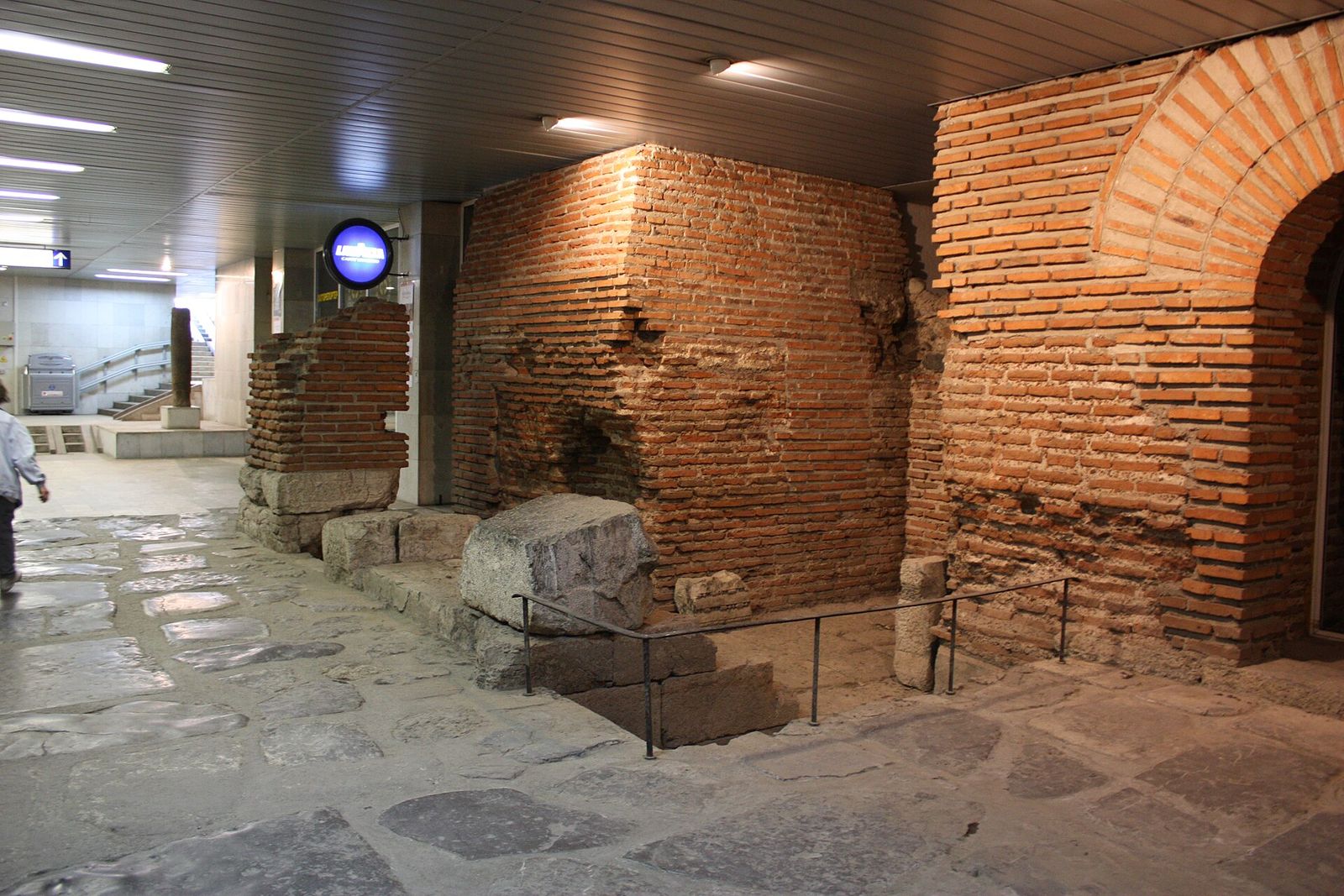
The Western Gate is outdoors with the rest of the complex, and only its lowest courses of stone are left, so it is easy to walk past without noticing.
Down at platform level, Serdika II station has glass cases of finds from the dig, so you see them while you wait for a train. A single ride on the Sofia metro costs €0.80, and you pay by tapping a contactless card at the gate.
Where else to see Roman Serdica in the center
The complex is the biggest piece of Serdica, and the rest is spread around the center within a short walk. These are the places I'd look for.
| Site | Where | Entry | What is there |
|---|---|---|---|
| Ancient Serdica Complex | The Largo, Serdika station | Free | Streets, houses, baths, a basilica |
| Eastern Gate | Serdika station underpass | Free | Gate and wall masonry |
| Western Gate | Outdoor part of the complex | Free | The base of the gate |
| Rotunda of St George | Courtyard behind the Presidency | Free | 4th-century church, Roman street |
| Amphitheater | Arena di Serdica hotel | Free to see | Part of the arena, found in 2004 |
| Tombs under St Sofia | St Sofia Church | €3 | Tombs, mosaics, earlier churches |
| Roman bridge | Near Lions' Bridge | Free | Remains of a Roman bridge |
The Rotunda of St George is the one I'd never skip. It is a red-brick church from the early 4th century, the oldest building in Sofia, sitting a few meters below today's streets with a Roman street and its drains behind the apse.
What survives of the amphitheater of Serdica sits inside the Arena di Serdica hotel, whose lobby wraps around the ruins, and you can walk in and see them for free. Of the hotels built over Serdica, it is the one with an arena inside.
Serdica's eastern cemetery lay outside the walls, and the tombs under St Sofia Church come from it, along with the floors of the earlier churches built among them. The underground level costs €3 and opens daily from 10 AM to 5 PM.
The remains of a Roman bridge lie near Lions' Bridge, north of the center. Little of it is left, so I'd only go out of your way for it if you love Roman engineering.
Between the station and the Largo stands St Petka of the Saddlers, a small medieval church sunk half below street level on the same ground as the Roman town. It is the smallest of the old churches in the center, and 10 minutes covers it.
Opening hours, tickets and time needed
Entry to the complex is free. The covered halls open daily from 7 AM to 10 PM, and the outdoor ruins can be seen at any time, since you look down on them from the street.
Plan on 30 minutes to walk through and read the main signs, or an hour if you want the Felix House, the baths and the platform cases at Serdika II. With the Rotunda, the amphitheater and the tombs under St Sofia, Roman Sofia fills a morning.
Getting to the Serdica ruins
The ruins are part of the metro station, so the metro is the easy way in. Serdika is where the lines cross. The yellow M4 line arrives from the airport, and Serdika II is on the blue M2 line, two stops from Central Railway Station.
If you land in the morning, the metro from the airport drops you at Serdika in about 20 minutes, and you can see the ruins before you check in.
On foot, the complex sits at the north end of Vitosha Boulevard, past St Nedelya Square. Alexander Nevsky Cathedral is about 850 meters east along Tsar Osvoboditel Boulevard, a 10-minute walk.
Fares for getting around Sofia cap at €2 a day after 3 taps, and in the center you will walk between almost everything on this page.
The order I'd see Roman Sofia in
All the Roman sites in the center sit close together, and I'd see them in this order, from west to east.
| Stop | What to see | Time there |
|---|---|---|
| 1. Serdika station underpass | The Eastern Gate | 10 minutes |
| 2. Ancient Serdica Complex | Streets, Felix House, baths, domes | 30 to 60 minutes |
| 3. St Petka of the Saddlers | Medieval church in the metro area | 10 minutes |
| 4. Rotunda of St George | 4th-century church, Roman street | 15 to 30 minutes |
| 5. Arena di Serdica | Amphitheater ruins in the lobby | 10 minutes |
| 6. St Sofia Church | Tombs and mosaics underground | 30 minutes |
Start at Serdika at 9 AM and you finish under St Sofia before lunch. From there, Alexander Nevsky Cathedral is across the street, so the afternoon starts with Sofia's gold domes.
Is Ancient Serdica worth visiting?
Yes. Entry is free and the complex sits at the main metro interchange, so even a weekend in Sofia has room for it.
Who it suits best:
- History lovers. Streets, houses, gates, an arena and a 4th-century church all lie within a short walk of each other.
- Travelers on a budget. Every stop on the route is free except St Sofia's underground level at €3, and it is one of the sights that make Sofia on a budget easy.
- First-time visitors. The complex sits at the north end of Vitosha Boulevard, at the station where the airport metro line stops.
Skip it, or keep it short, if:
- You want standing columns and full arches. Serdica is mostly low walls and foundations. Plovdiv's Roman theater still hosts concerts, and a day trip to Plovdiv takes about 2 hours each way by bus.
- You only have one day and no interest in ruins. Walk past the outdoor part on the way to the Rotunda, and save your time for the churches.
Of the free things to do in Sofia, the ruins are the one I'd put first on any trip.
Key takeaways
- The Ancient Serdica Complex is free, with covered halls open daily from 7 AM to 10 PM and outdoor ruins visible at any time.
- It was uncovered during the metro works of 2010 to 2012 and opened in April 2016, after about €7.7 million of work.
- Look for the decumanus maximus, the Felix House, the 4th-century baths and the glass domes under the Largo.
- The Eastern Gate, the Rotunda, the amphitheater at Arena di Serdica and the tombs under St Sofia complete Roman Sofia in a morning.
Frequently asked questions
Are the Serdica ruins free?
Yes, the Ancient Serdica Complex is free. The covered halls open daily from 7 AM to 10 PM, and you can see the outdoor ruins from the street at any time. The only paid Roman site nearby is the underground level of St Sofia Church, at €3.
What was Sofia called in Roman times?
Sofia was called Serdica, after the Serdi tribe that lived here before the Romans. Under Trajan it took the name Ulpia Serdica, the Bulgarians later called it Sredets, and in the 14th century the city took the name of St Sofia Church.
When were the Serdica ruins discovered?
The big finds came between 2010 and 2012, during the dig for Serdika II metro station. The amphitheater had turned up in 2004 during hotel works, and a Roman plate with gladiators was found in 1919. The complex opened to visitors on 20 April 2016.
How long do you need at Ancient Serdica?
Plan on 30 to 60 minutes for the complex. Add about 2 hours if you also want the Eastern Gate, the Rotunda of St George, the amphitheater and the tombs under St Sofia Church.
What are the most famous Roman ruins in Bulgaria?
The best known are in Plovdiv, where the Roman theater from the time of Trajan still hosts concerts and a 2nd-century stadium lies under the main street. In Sofia, Serdica and the Rotunda of St George are the main Roman sites, both free and in the center.
What is the oldest building in Sofia?
The Rotunda of St George is the oldest building in Sofia. It is a red-brick church from the early 4th century, standing in the courtyard behind the Presidency, a few minutes' walk from the Serdica ruins.
Can you visit the Serdica ruins at night?
Yes. The covered halls stay open until 10 PM every day, and the outdoor part can be seen from the street at any hour. The Eastern Gate, in the Serdika underpass, is there whenever the station is open.
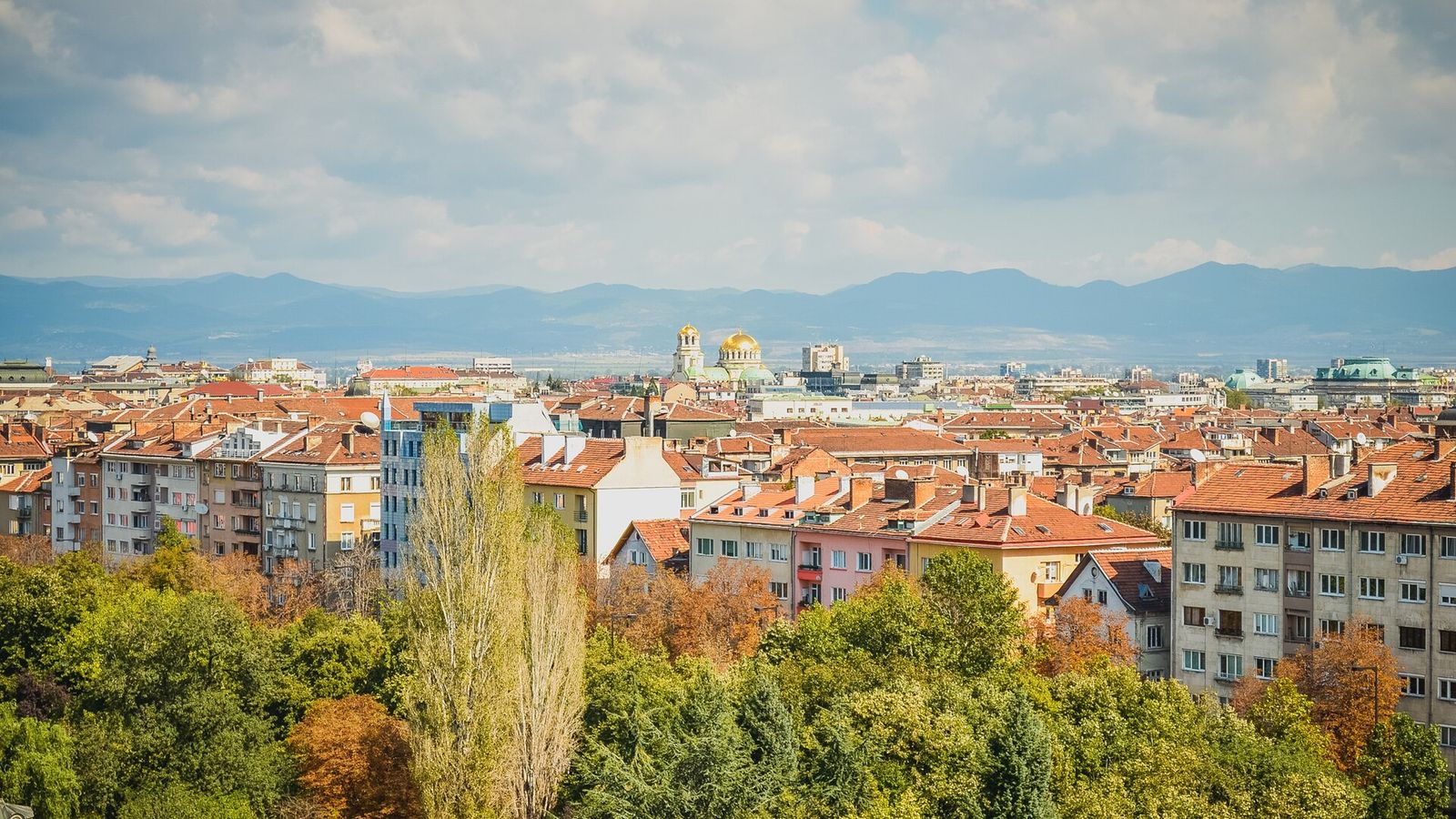
25 Best Things to Do in Sofia in 2026
Sofia packs 2,000 years into a walkable center. The 25 sights, museums, foods and day trips I'd put first, with prices.
Read the guide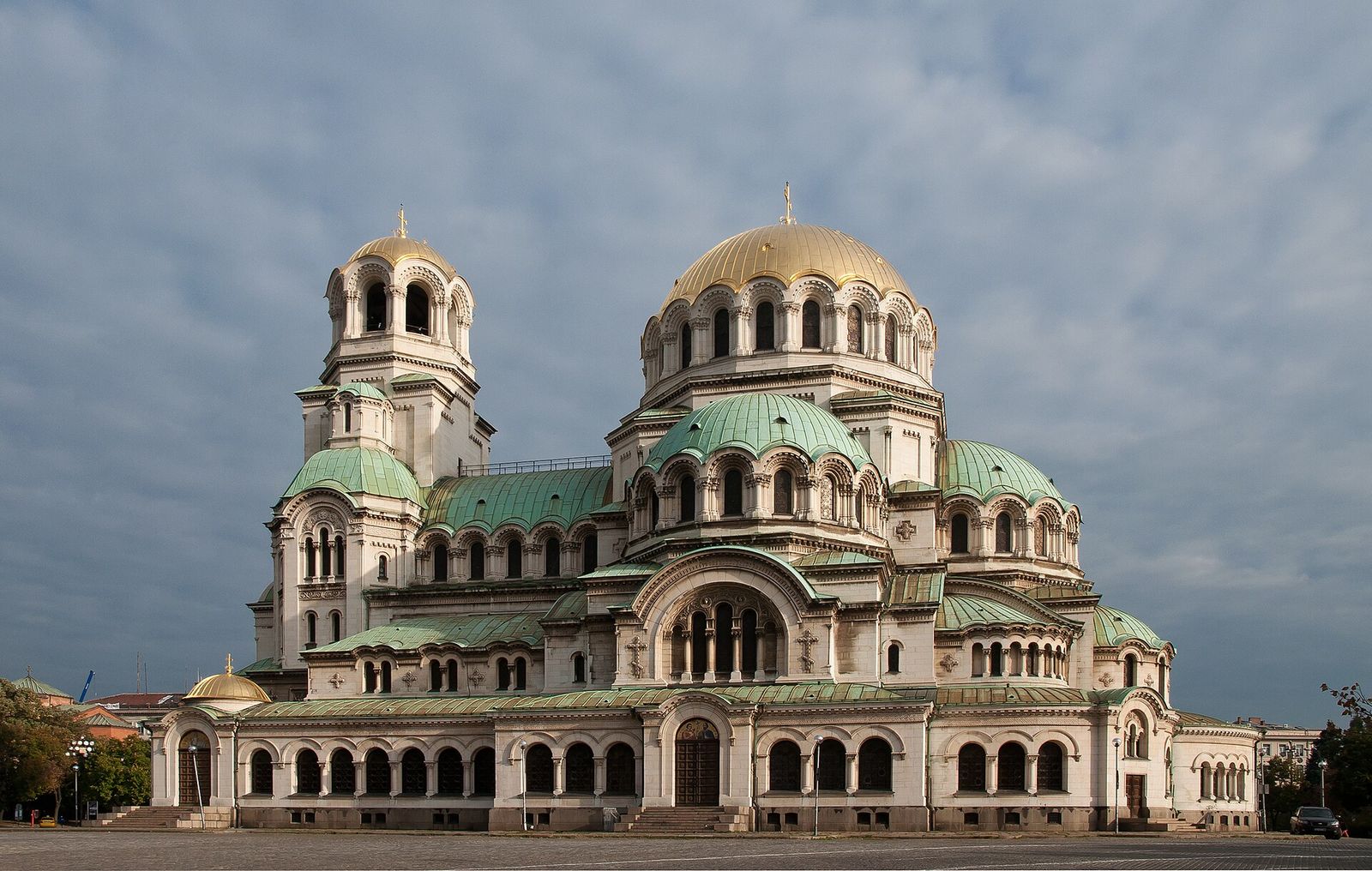
Alexander Nevsky Cathedral in Sofia: A Visitor's Guide
Sofia's gold-domed landmark is free to enter. Here is its story, what to see inside, the crypt museum and when to go.
Read the guide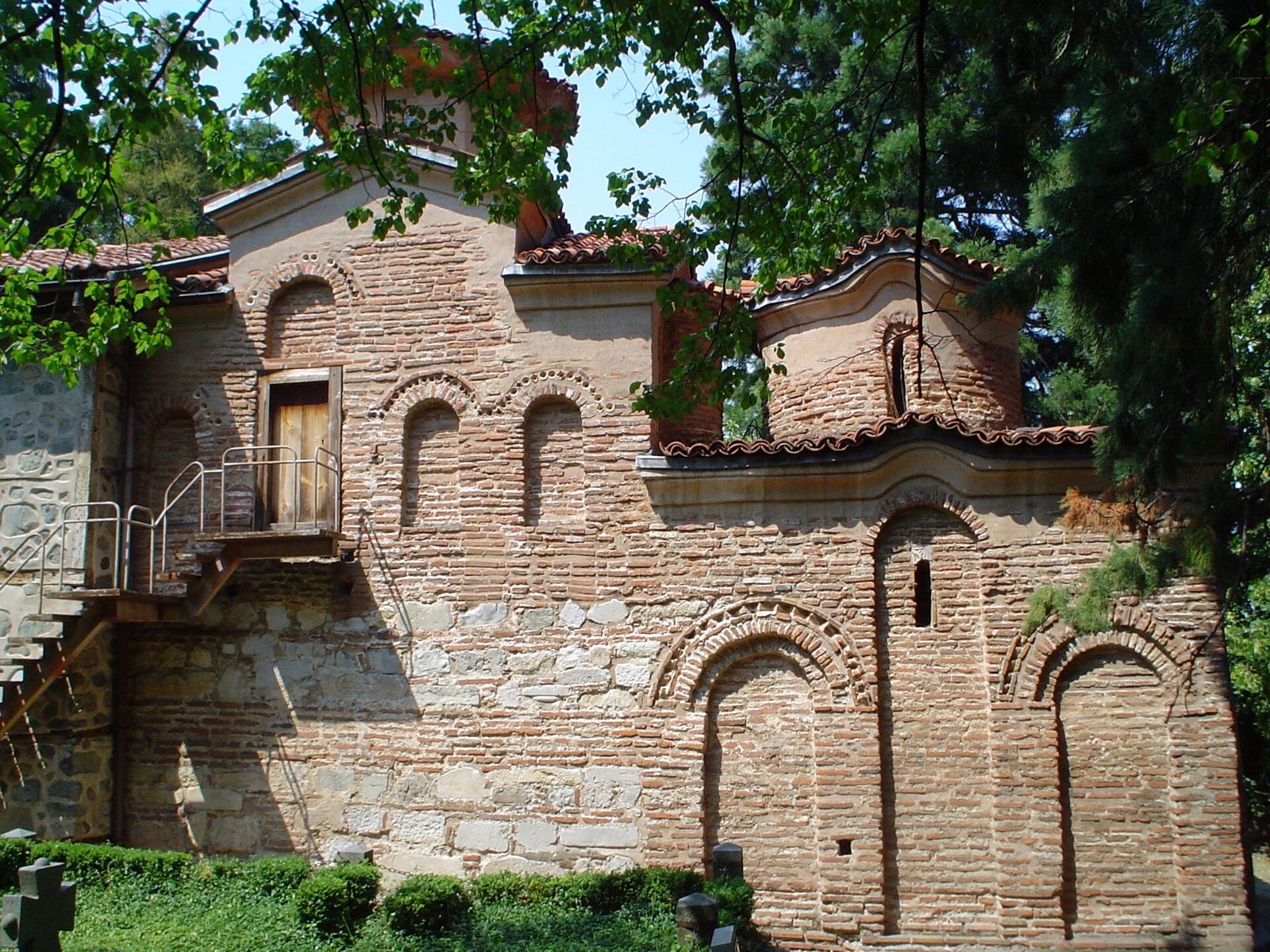
Boyana Church: Visiting Sofia's UNESCO Frescoes
A tiny UNESCO church under Vitosha with frescoes from 1259. Tickets, time slots, the bus out and what to find inside.
Read the guide