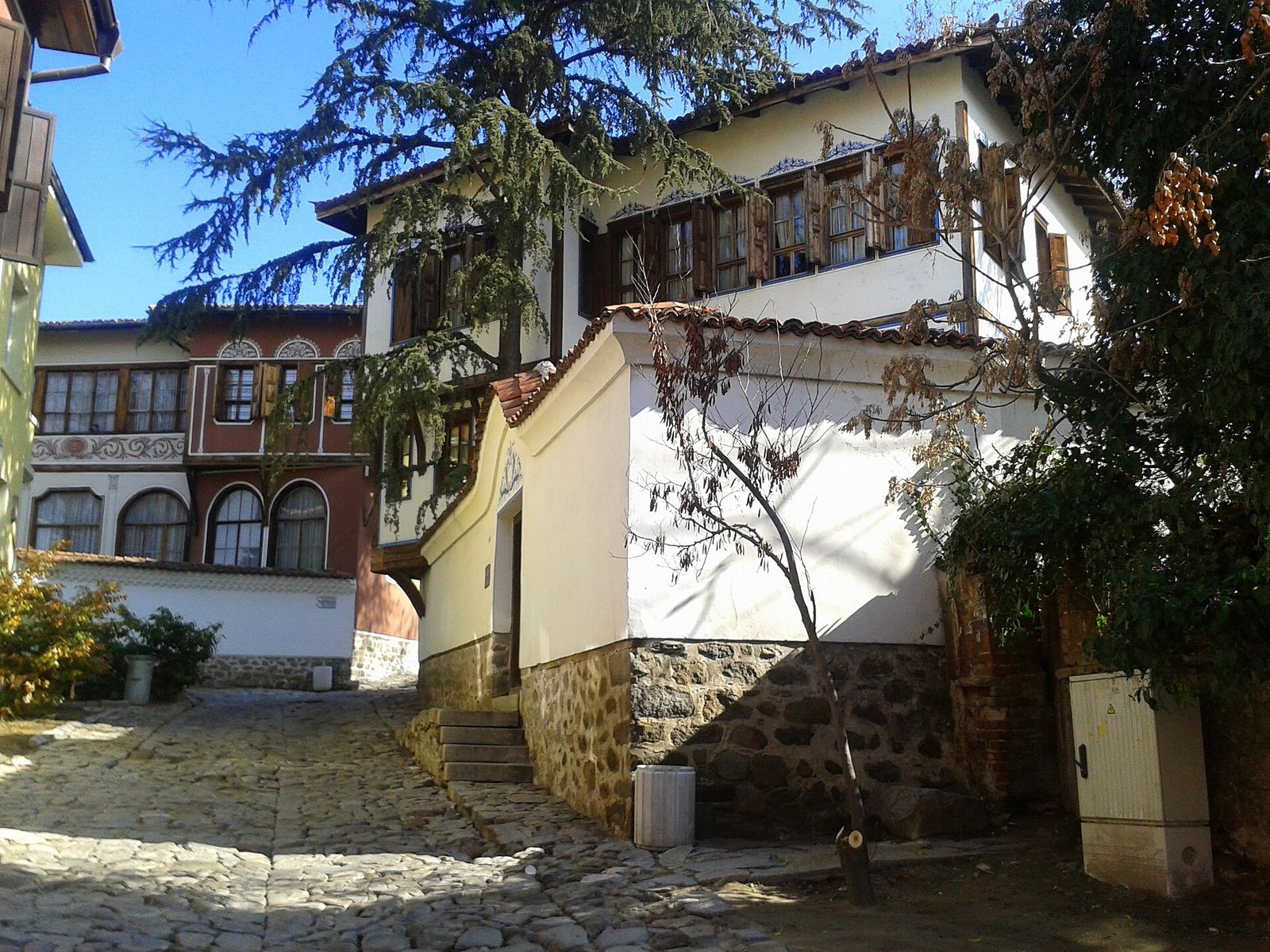
Things to Do in Plovdiv: The Old Town, Roman Ruins and Kapana
Plovdiv is known for its layers: a Roman theater that still stages opera, a stadium under the main shopping street, Ottoman mosques and an Old Town of painted 19th century merchant houses spread over three hills. This guide covers the sights I'd pick in each part of the city, the hills with the best views, what the paid sights cost in euros and how I'd spend two days there.
Plovdiv at a glance
Plovdiv is Bulgaria's second largest city, with about 350,000 people and evidence of settlement going back more than 6,000 years. The Romans called it Philippopolis, the Ottomans Filibe, and both empires left buildings you can still walk into. The city grew up on seven hills above the Maritsa River, and six of them still stand.
The center is small enough to walk. The Old Town sits on Nebet Tepe, Taksim Tepe and Dzhambaz Tepe, the main pedestrian street runs south from its foot, and Kapana fills the blocks in between. From the capital it is about 2 hours by bus, and a Sofia to Plovdiv day trip works if you only have one day, as long as you buy the return ticket when you arrive.
The Roman sights in Plovdiv
Roman Philippopolis was the biggest trading city in the province of Thrace, and Plovdiv has more unearthed Roman mosaics than any other city in Bulgaria.
Roman Theatre
The Ancient Theatre of Philippopolis, one of the best preserved Roman theaters in the world, is the sight Plovdiv is famous for. It was built under Emperor Trajan in the late 1st or early 2nd century, sits in the saddle between Taksim Tepe and Dzhambaz Tepe, and held about 7,000 people on its marble rows. Behind the stage, freestanding columns have been rebuilt from the original fragments.
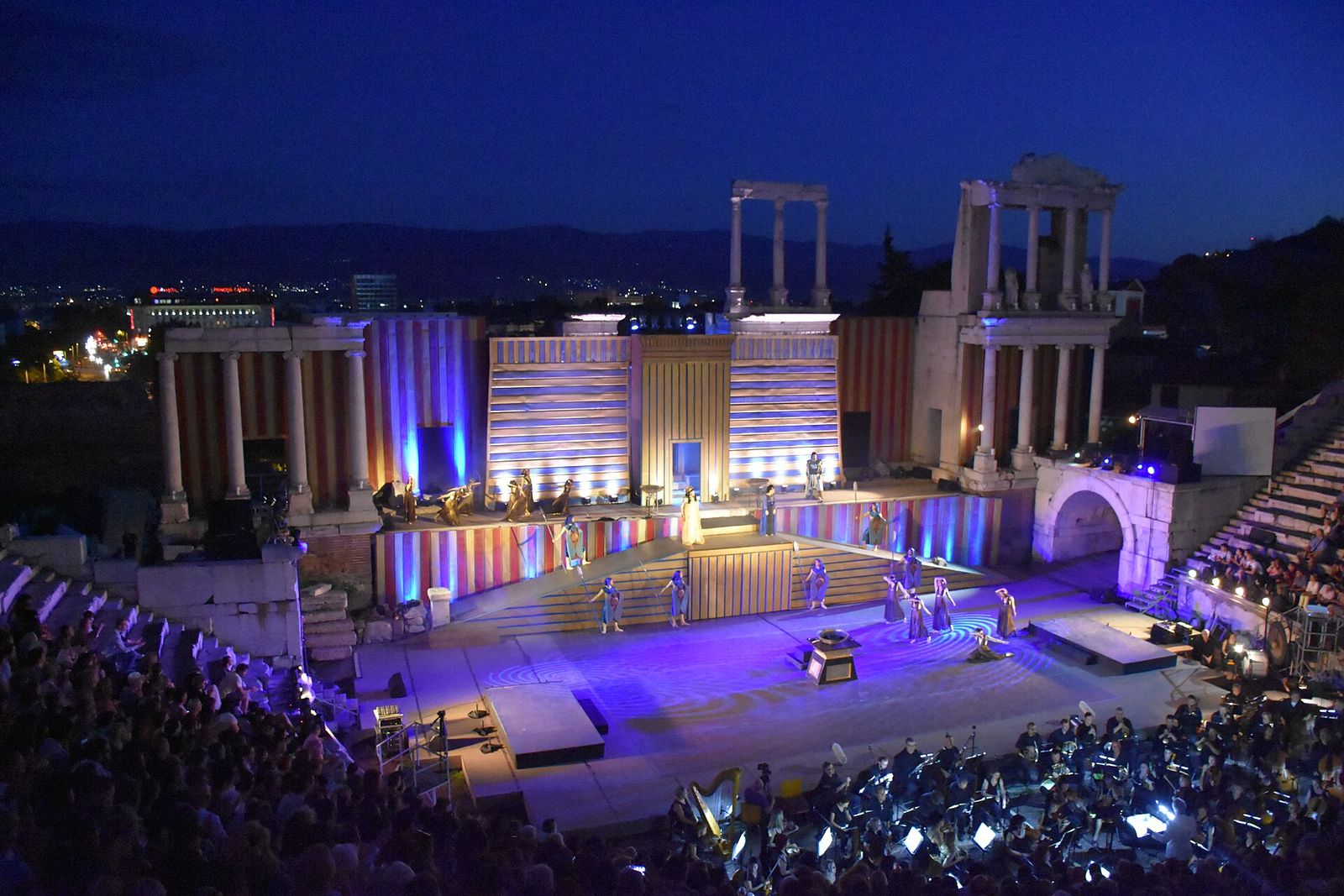
It opens from 9 AM to 6 PM from April to October and to 5 PM from November to March. In summer the Opera Open festival, the International Folklore Festival and rock nights fill the seats, and I'd plan an evening around one if the dates line up.
Roman Stadium
The Roman Stadium of Philippopolis was built in the early 2nd century under Hadrian. It ran about 240 m long and 50 m wide and seated about 30,000 people for games and music and poetry contests.
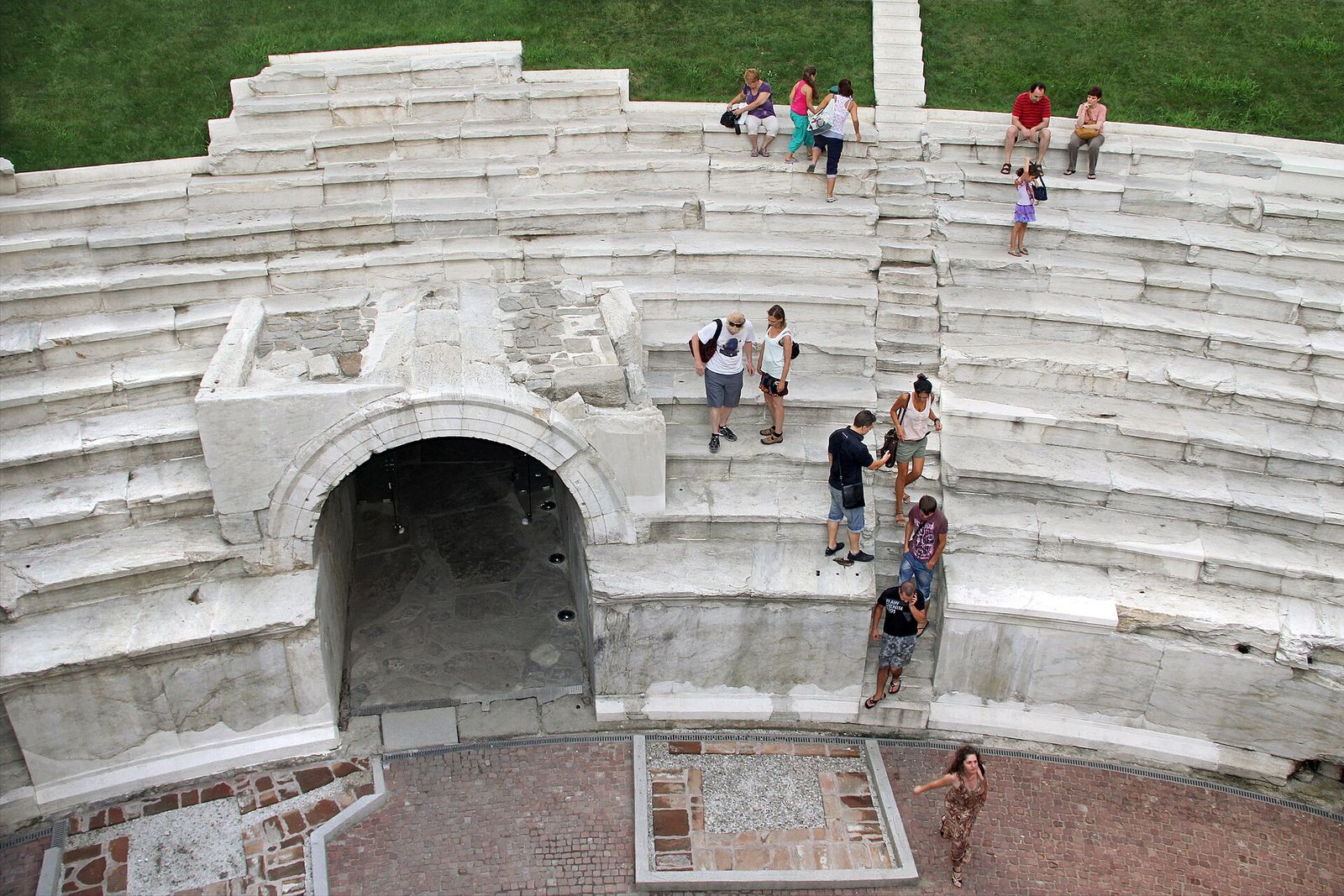
Most of it lies under the main street, and you can see a section through the floor inside the H&M store. The northern curve is open below Dzhumaya Square and free to look at. A short 3D film about the stadium runs several times a day next to it, and it is a good stop with kids.
Bishop's Basilica
The Bishop's Basilica of Philippopolis is the newest big sight in town. It opened to visitors in 2021 and holds about 2,000 square meters of 4th century floor mosaics.
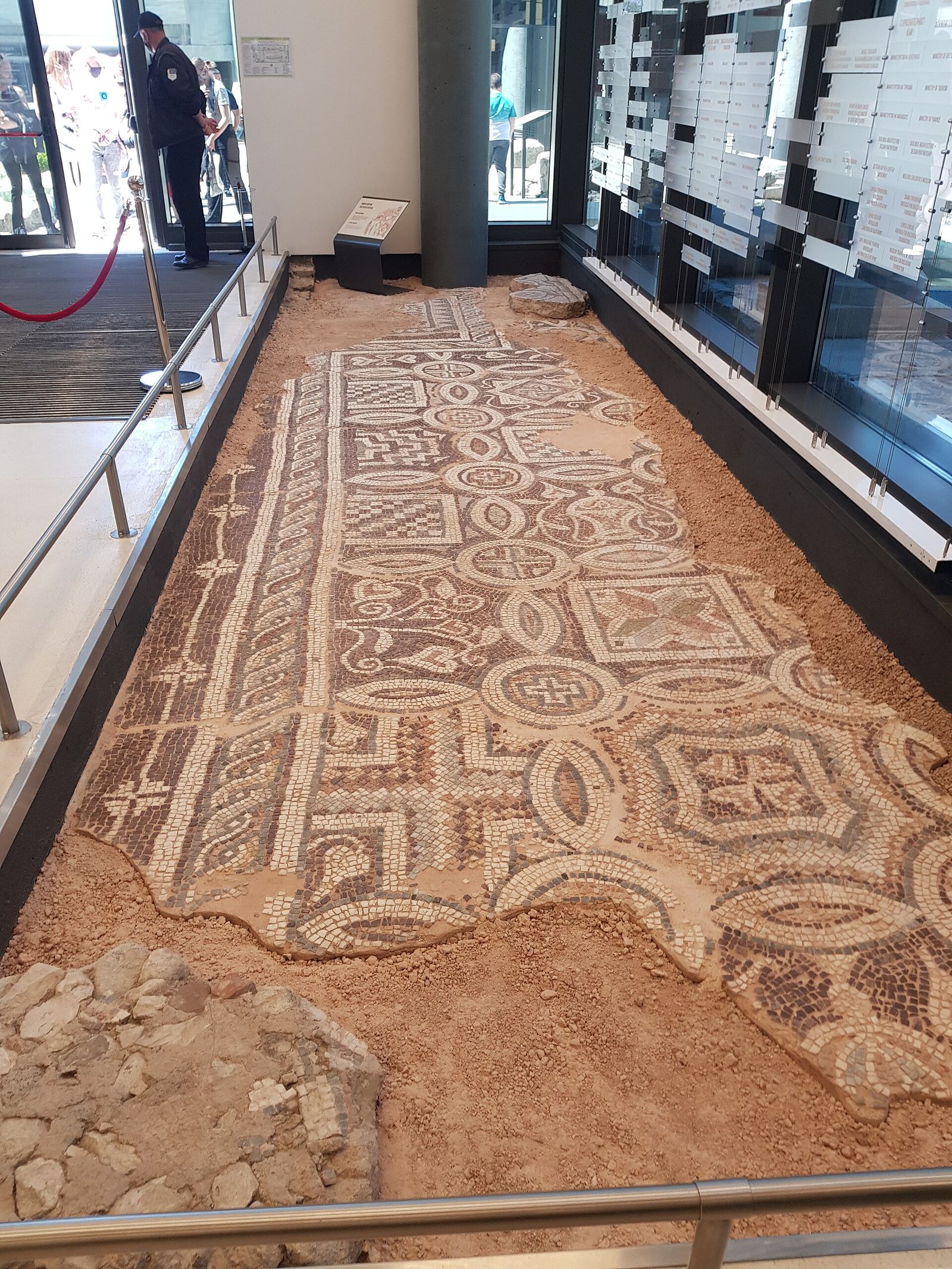
The bird mosaic is the one to find. Entry costs about €5 on timed slots, so I'd book the day before. If you like the mosaics, the Small Basilica nearby is a 5th to 6th century church found by builders in 1988, with more floors and a short film in English. Trakart, in the Archeological underpass in the center, shows 2nd and 3rd century mosaics and Roman glass. The ruins of the Ancient Forum and the Eastern Gate, which stood on the Roman road to Byzantium, are free to look at from the street.
The Old Town: Revival houses on three hills
Plovdiv's Old Town is where the city's 19th century merchants built houses the size of small palaces: upper floors that hang out over cobbled lanes, painted fronts, carved wooden ceilings and walled gardens. Many are museums now, and the lanes between them are free to wander.
Hisar Kapia
Hisar Kapia is the stone gate you walk through on the way up into the Old Town. The arch dates from the 11th century and stands on the foundations of a Roman gate, one of three entrances to the ancient city.
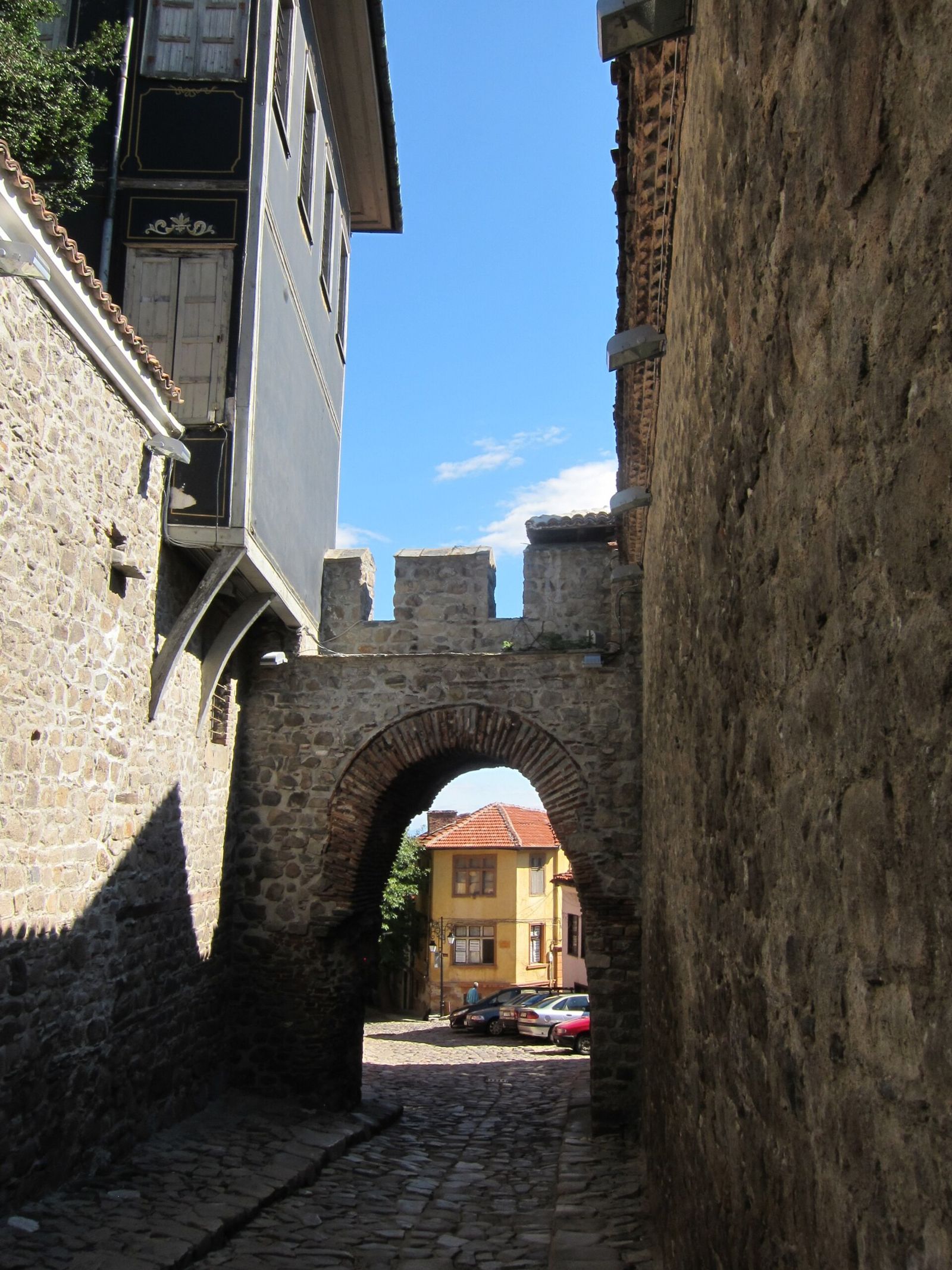
Under Ottoman rule, wealthy merchants built their houses straight onto the fortress walls on both sides, and the ground floors still sit on the medieval stones. Stand on either side of the arch for the photo; both work.
Regional Ethnographic Museum
Right next to Hisar Kapia, the Kuyumdzhioglu House holds the Regional Ethnographic Museum. Its dark blue front, with a curved gable and gold swirls, is decorated in Baroque style.
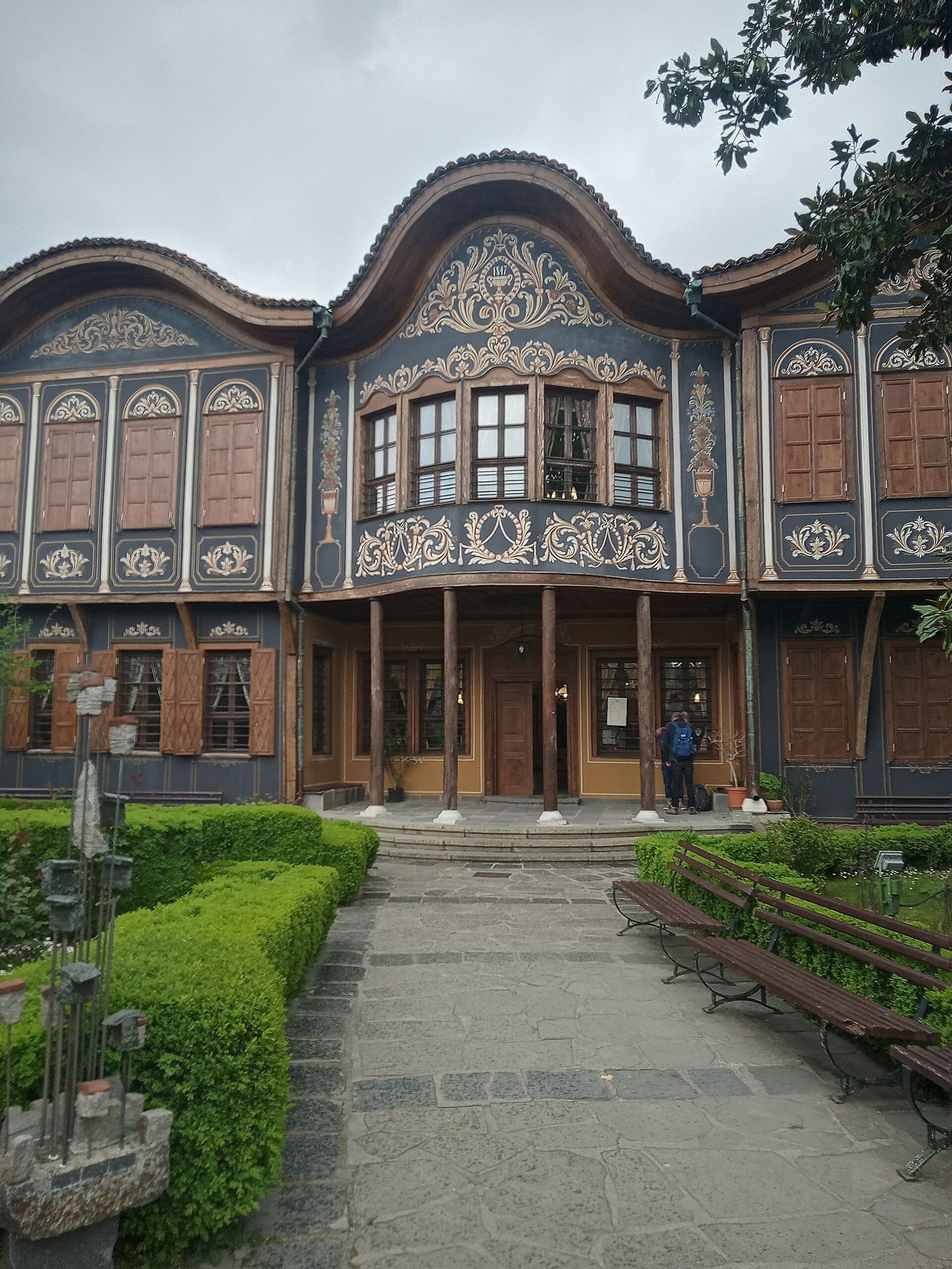
Inside are regional costumes, crafts, musical instruments and rooms laid out the way a rich Plovdiv family lived. It opens Tuesday to Sunday, from 9 AM to 6 PM in summer and to 5 PM in winter, and the garden in front is worth a slow look even if you skip the rooms.
Hindliyan House and the other house museums
Hindliyan House was built for Stepan Hindliyan, an Armenian merchant, and it is my pick if you only see one house. The walls carry paintings of European cities, and a fountain inside runs with rose water.
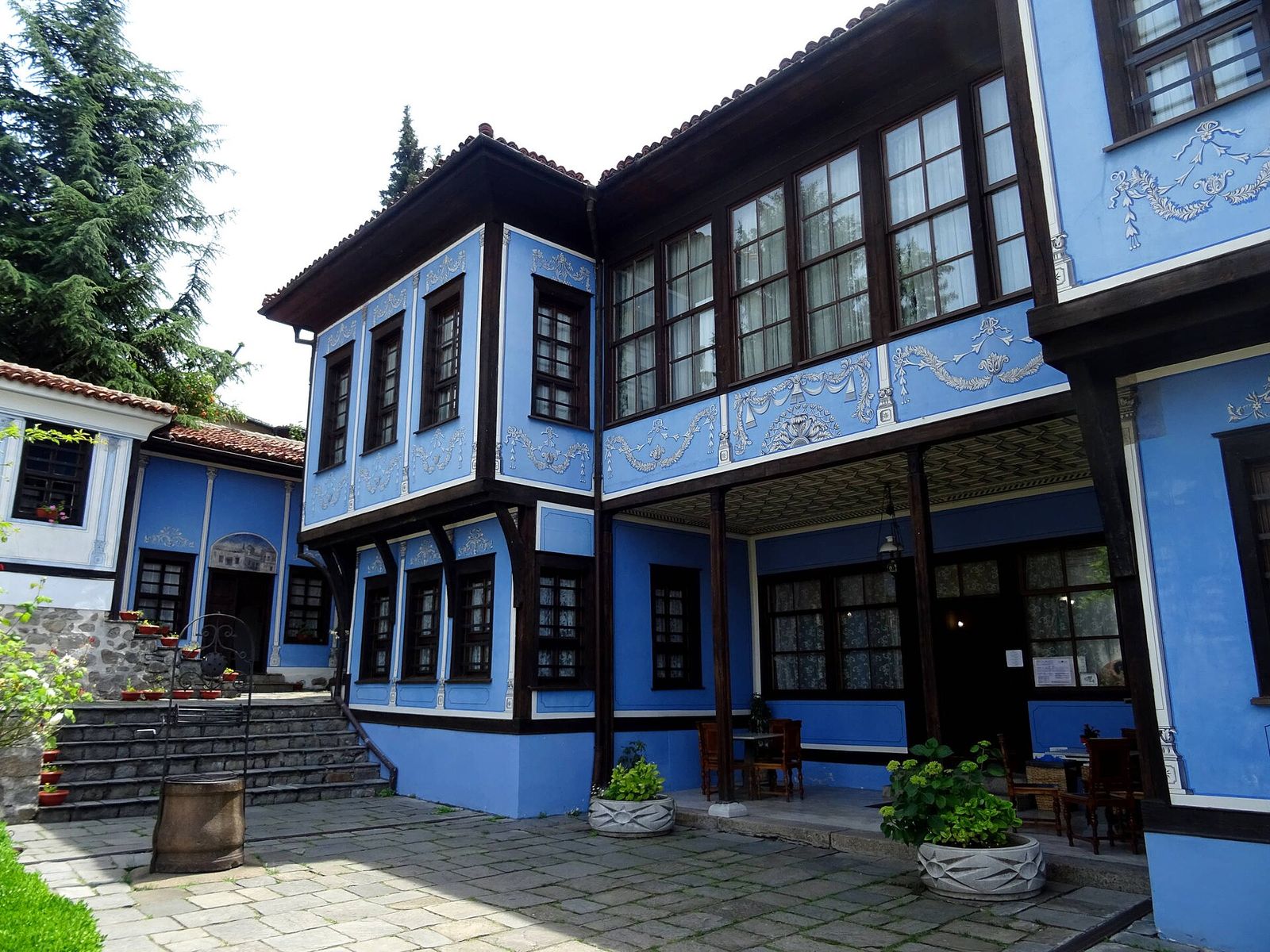
Balabanov House hosts exhibitions and concerts, Klianti House mixes Revival style with Art Nouveau, and Nedkovich House shows another merchant home. The small Hippocrates Pharmacy Museum, with its old medicine jars, needs only a short stop. Most of these open from 9 AM to 5:30 PM and charge about €2.50 to €3.50.
Nebet Tepe
Nebet Tepe is the northernmost of the three Old Town hills and the oldest part of Plovdiv. People lived here from about 4,000 BC, the Thracians fortified it, and Philip II of Macedon built the first city walls in 342 BC.
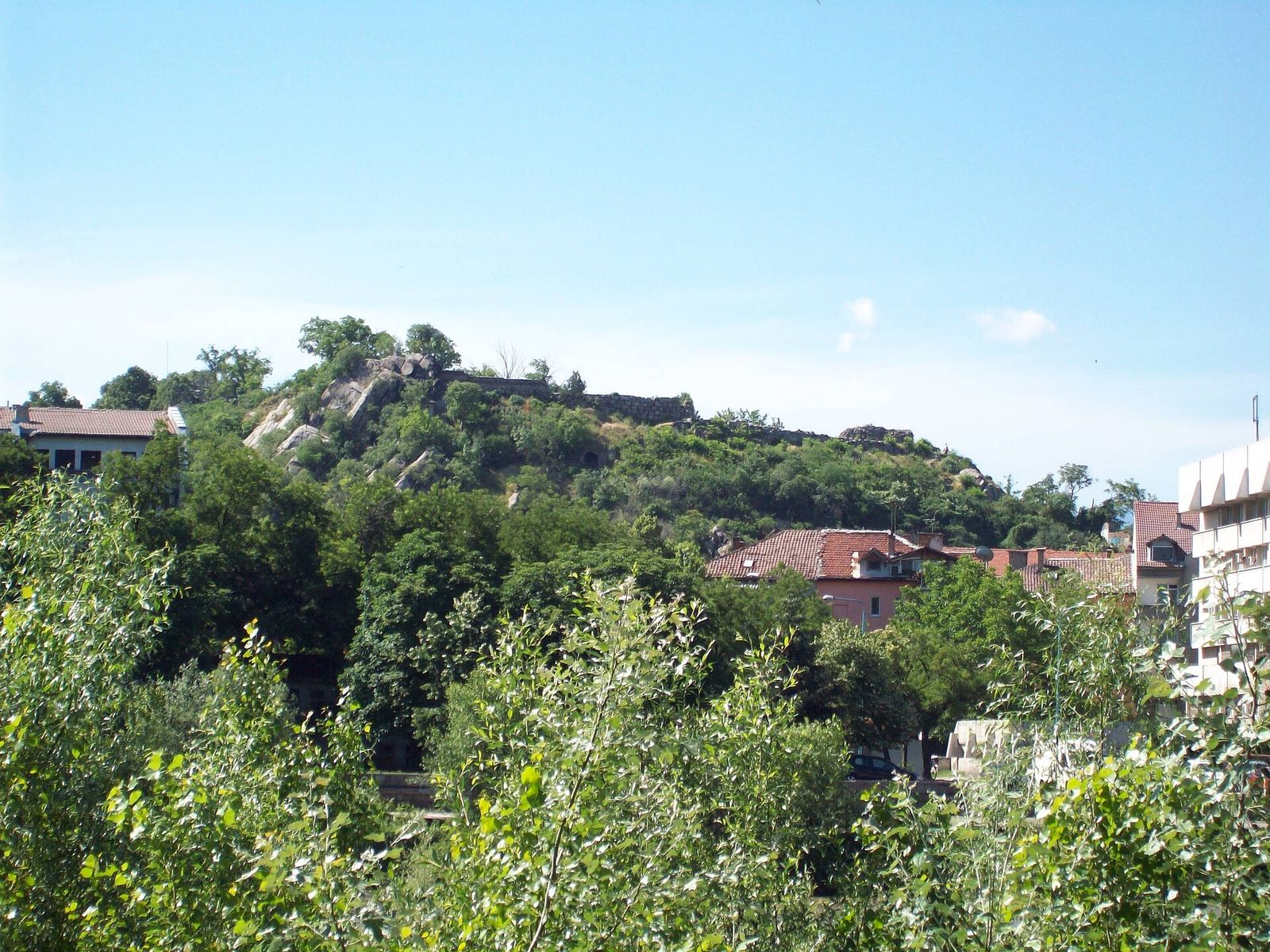
Today it is a free hilltop of boulders, wall stumps and tower ruins with a view over the city and the hills around it. It is a short climb from Hisar Kapia, and the Old Town churches of Sts Constantine and Helena and the Holy Mother of God are close by.
Kapana and the city center
Below the Old Town, the city center holds Plovdiv's busiest streets, its main mosque and its central park. Everything here is free.
Kapana
Kapana, "the trap", is named for its tangle of narrow lanes in the old craftsmen's quarter. Each street is still named after the trade once practiced on it, and the old workshops now hold galleries, coffee bars, craft beer places and small restaurants.
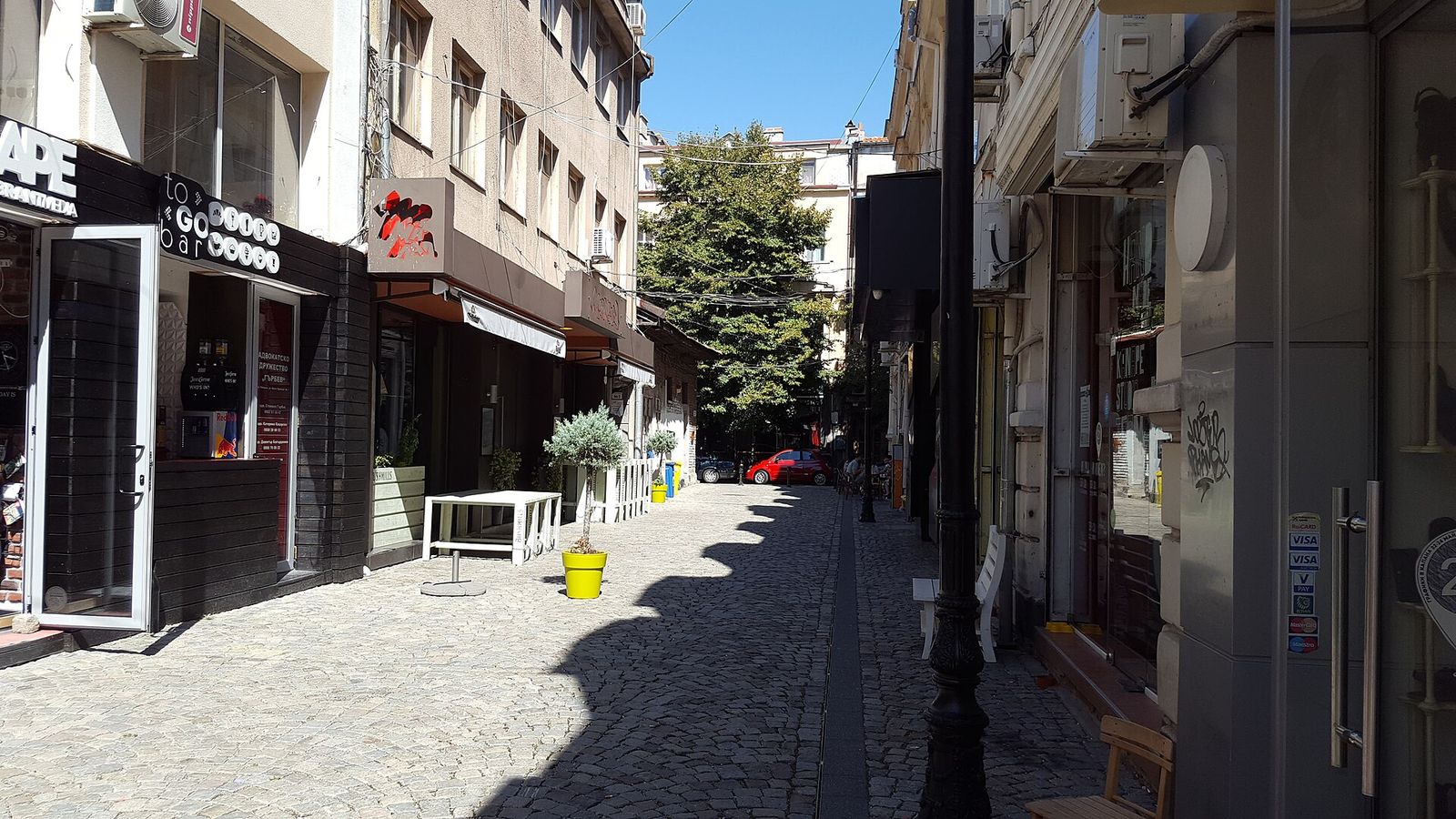
Plovdiv renovated the quarter for its 2019 year as European Capital of Culture, and murals now cover many of its walls. It is only about four blocks by four, with strings of little flags hung over several streets. Come in the evening, when people drink outside on the street and the quarter is at its liveliest.
The Main Street
Knyaz Alexander I Street, which locals simply call Glavnata, the main one, is the pedestrian spine of the center. It runs about 1.75 km from Tsentralen Square north to Dzhumaya Square, past shops, cafes and old pastel facades.
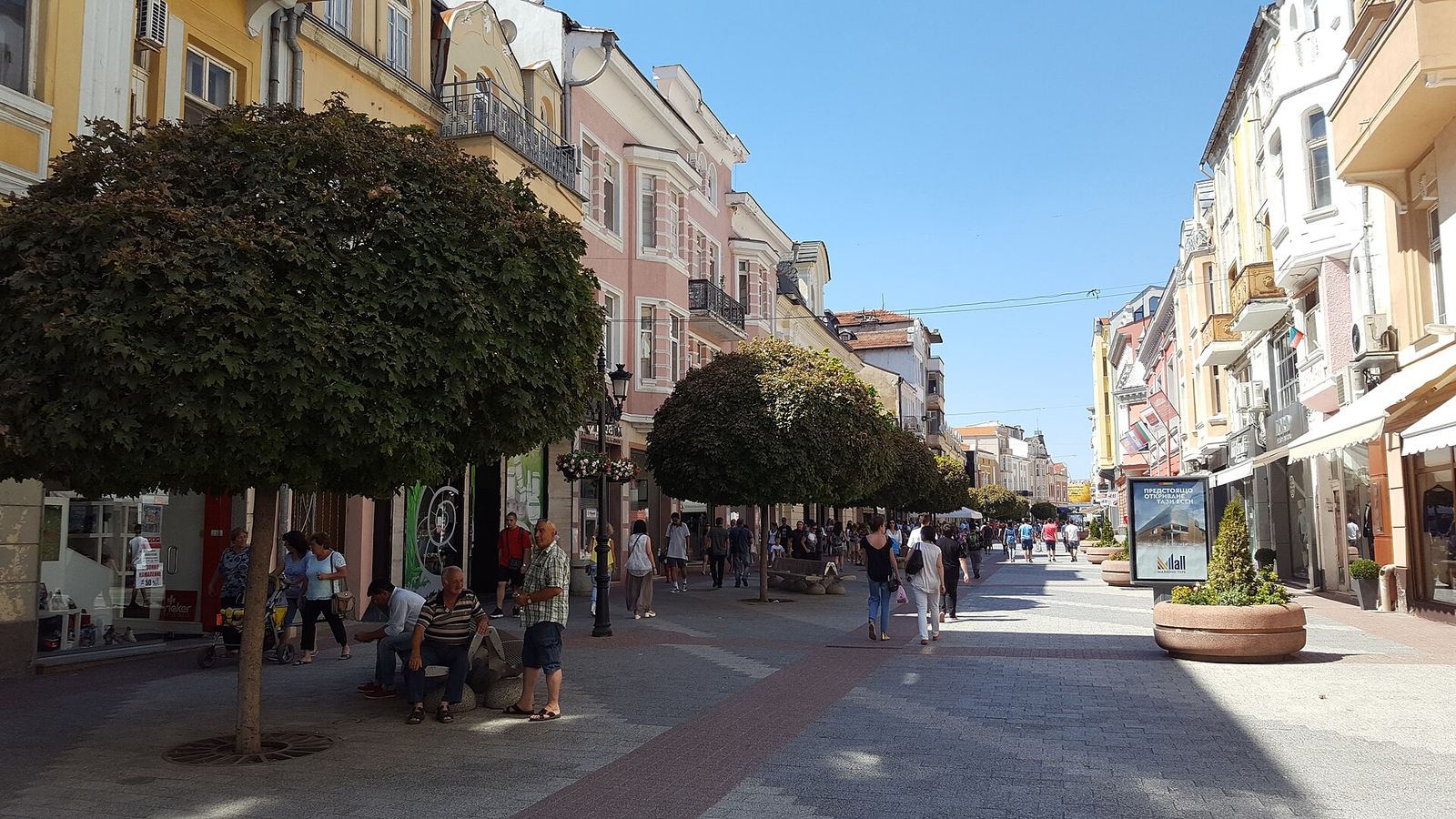
Fashion and brand shops line most of it, and I'd use it to walk from the train station end of town up to the Old Town.
Dzhumaya Mosque
The Dzhumaya Mosque, the Friday Mosque, stands above the stadium at the end of the main street. It dates from the 15th century and is one of the oldest Ottoman buildings in Bulgaria, with brick and stone walls, lead domes and a patterned minaret.
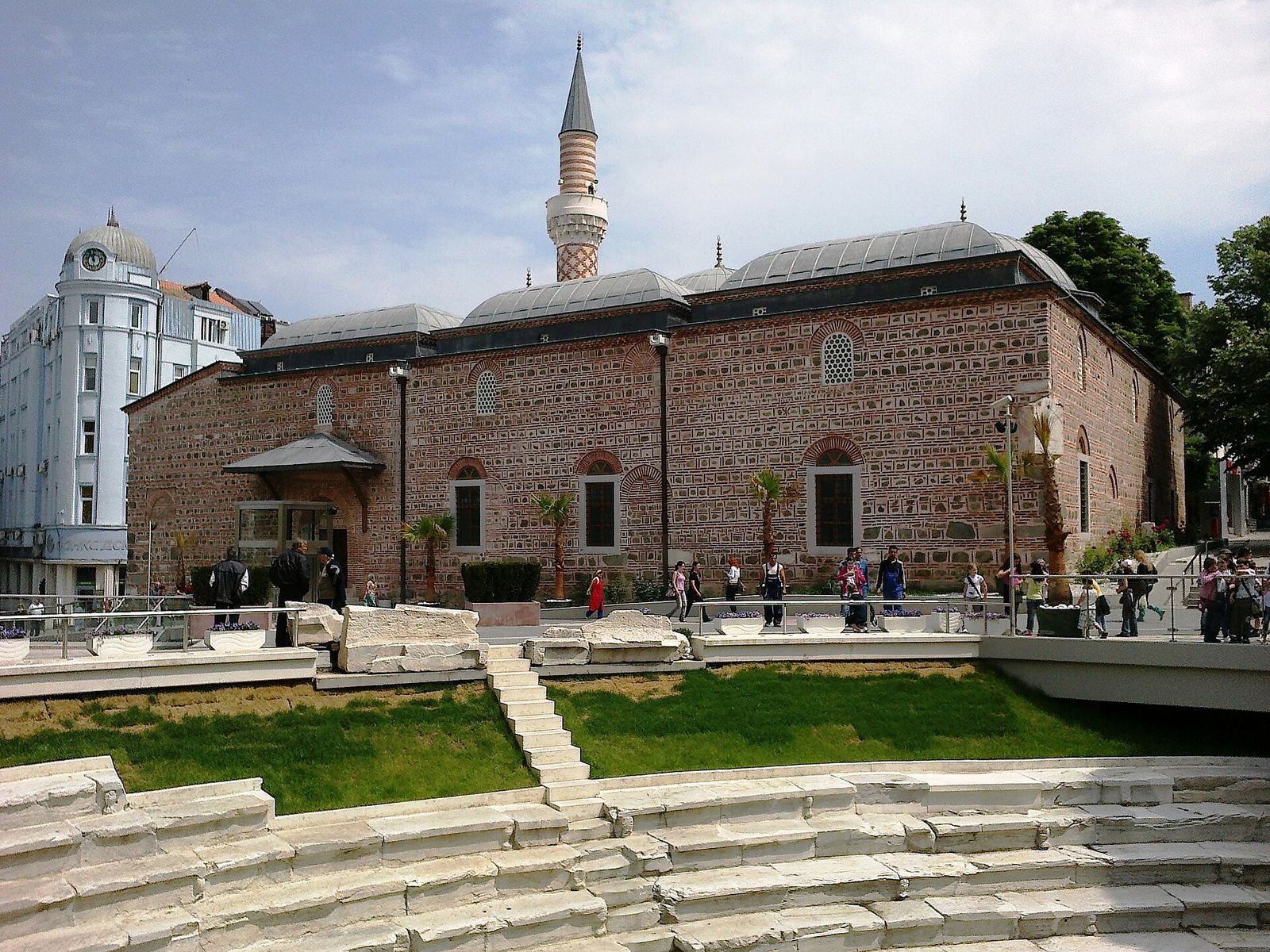
It is still a working mosque, open to visitors outside prayer times with shoes off and shoulders covered. It is older and plainer than Sofia's Banya Bashi Mosque, and I like it more.
Tsar Simeon Garden and the Singing Fountains
Tsar Simeon Garden is Plovdiv's central park, laid out in 1881 for the city's first trade fair by the Swiss gardener Lucien Chevalas. Its old trees and lawns sit a few minutes west of the main street.
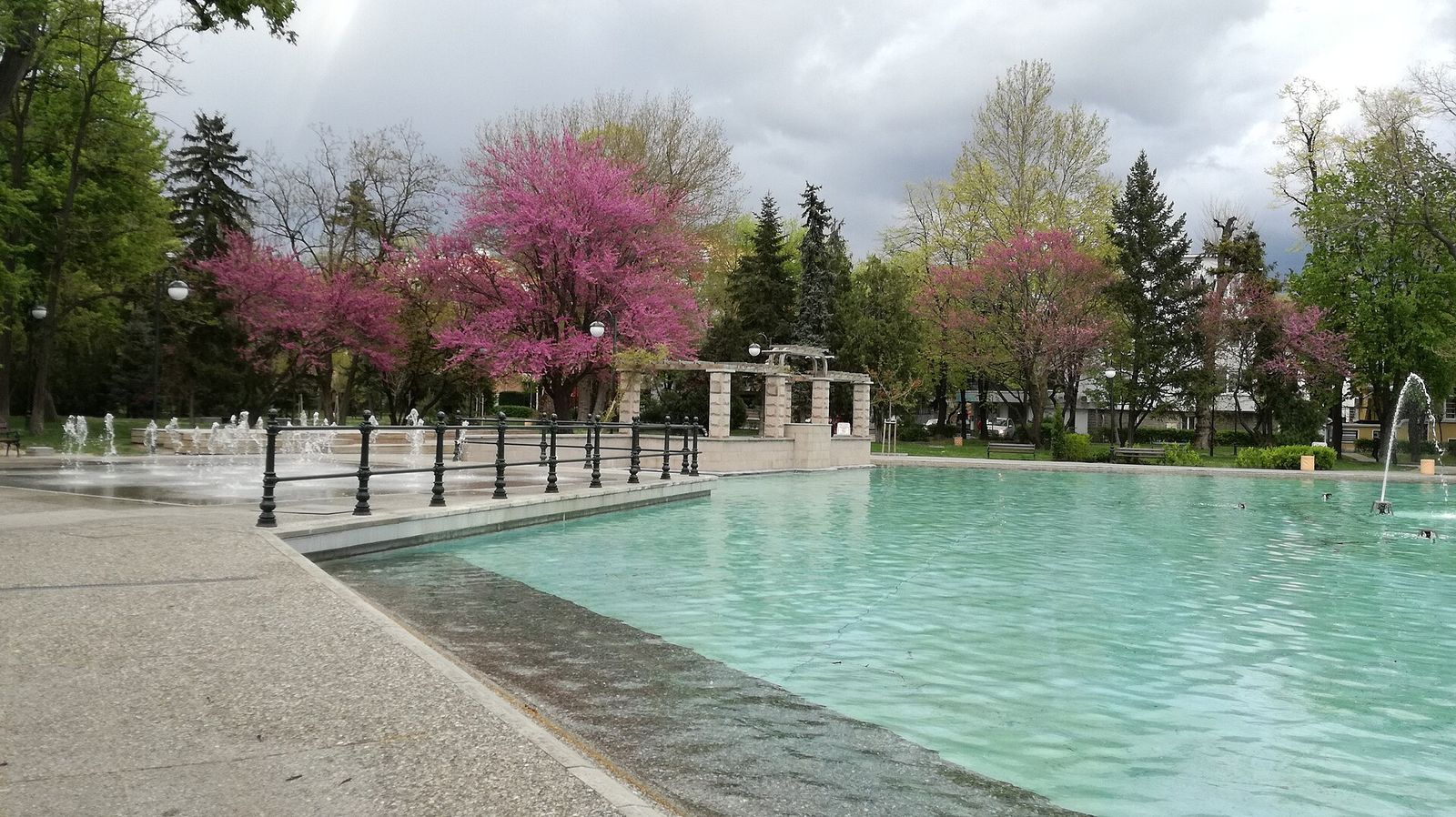
The Singing Fountains in its pond put on free evening shows of water, light and music, and I'd end the second day here.
Plovdiv's hills and viewpoints
The hills are Plovdiv's free viewpoints, and each one shows the city from a different side. The table covers the five you can reach on foot from the center.
| Hill | What is on top | Getting up | Best for |
|---|---|---|---|
| Nebet Tepe | Thracian and Roman fortress ruins | Short climb from Hisar Kapia | Sunset over the Old Town |
| Taksim Tepe and Dzhambaz Tepe | Old Town houses, with the Roman Theatre between them | You walk over them all day | Lanes and house museums |
| Sahat Tepe | Ottoman clock tower | About 5 minutes from the Roman Stadium | A quick view over the center |
| Bunardzhik | Alyosha Monument | 30 to 40 minutes uphill | The big panorama |
Dzhendem Tepe, the sixth hill, also has good sunset views.
Sahat Tepe
Sahat Tepe means the hill of the clock, after the tower on its top. A clock tower has stood here since at least 1623, and the clock in it today was made in Vienna and installed in 1883.
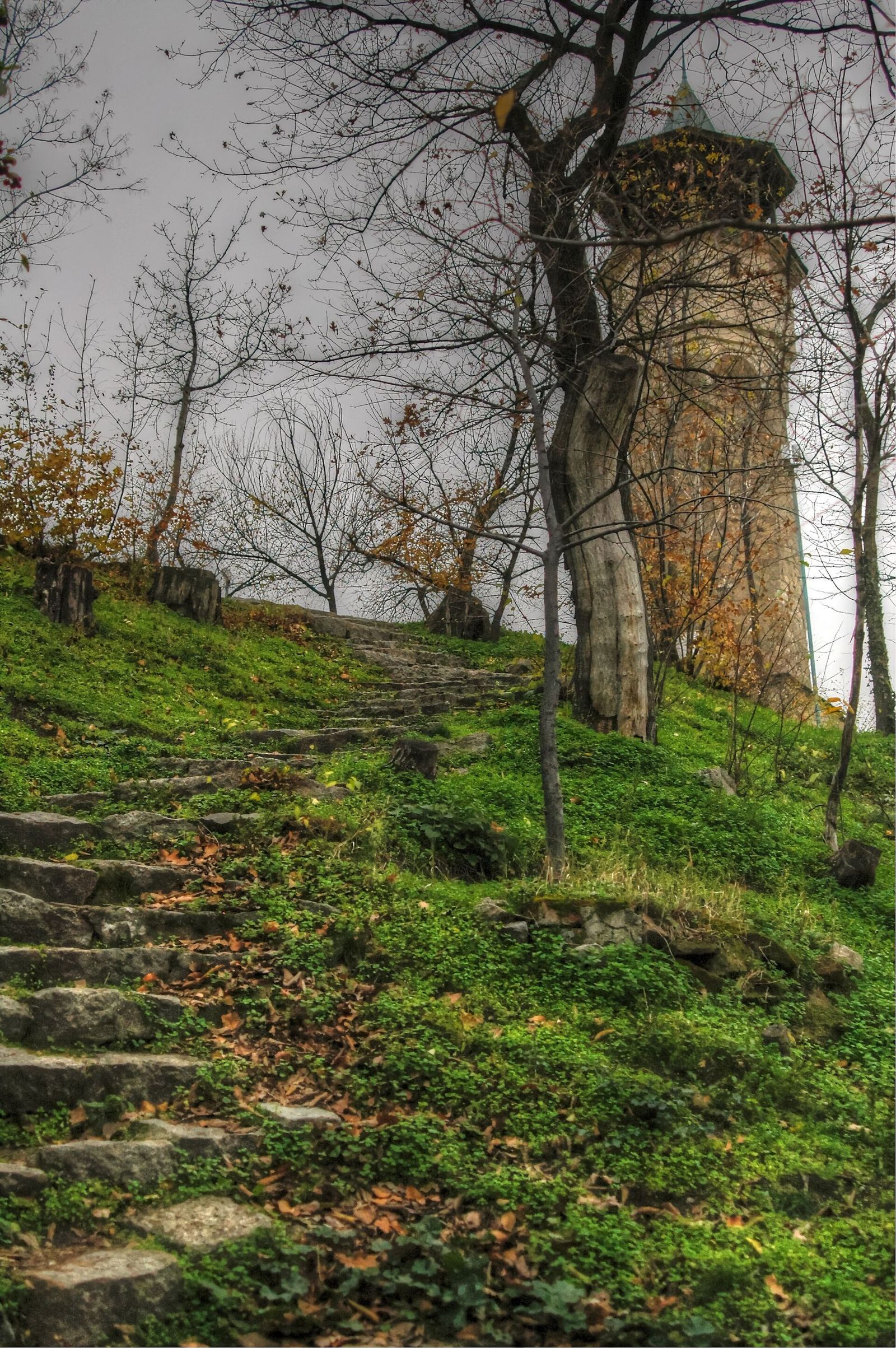
It is the quickest climb in the center, and young Plovdivians use it as a meeting spot. I'd do it between the main street and Kapana.
Bunardzhik and the Alyosha Monument
Bunardzhik is the hill with the giant soldier on top. The Alyosha Monument honors the Soviet army, and locals still argue about it; the city has tried to remove it more than once.
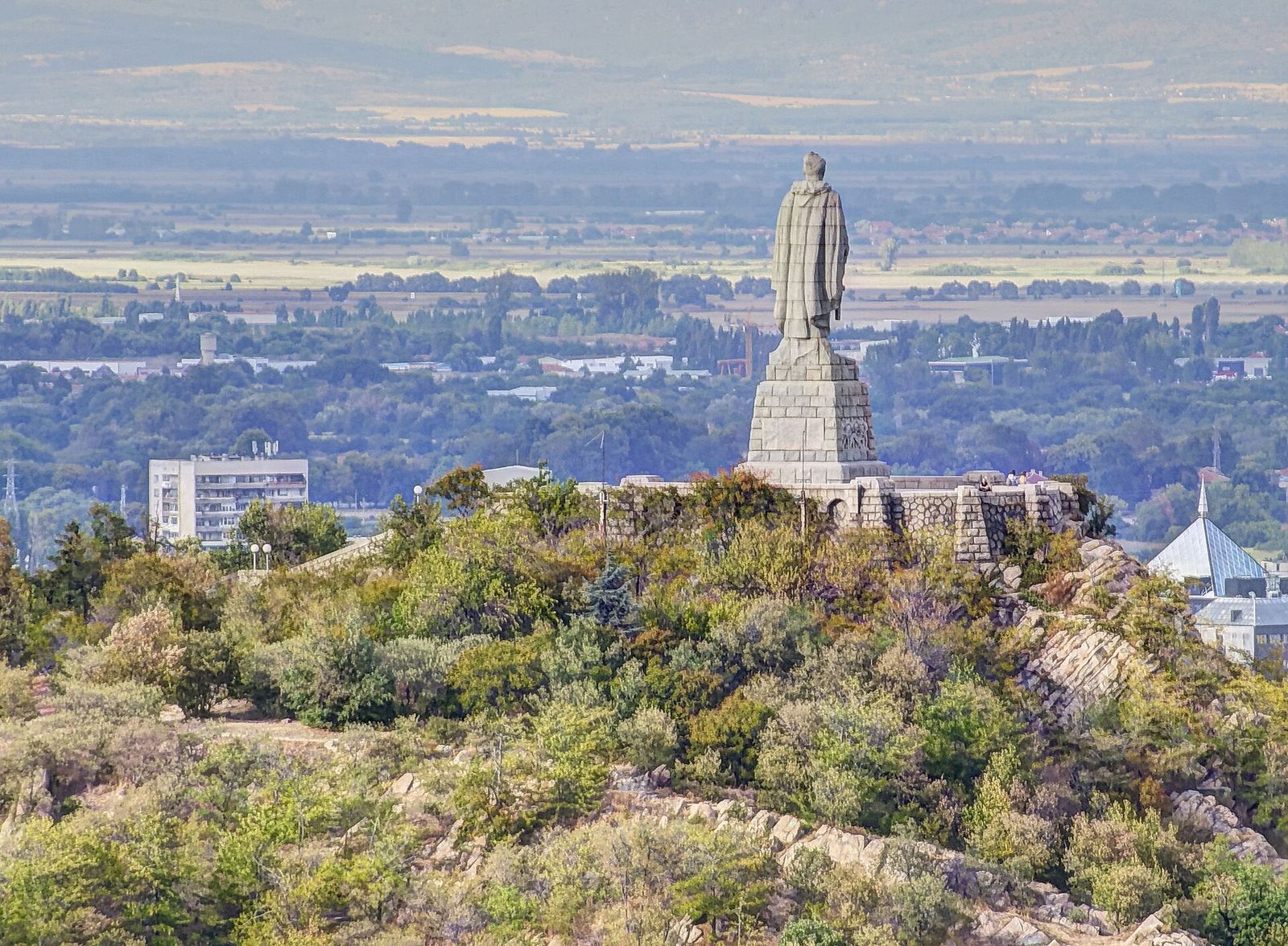
The climb takes 30 to 40 minutes, and the view from the top is the one I'd make the effort for. If Soviet monuments interest you, Sofia gathered many of its communist-era statues into the Museum of Socialist Art, along with the red star from the old Party House.
Plovdiv prices: what is free and what costs money
Plovdiv costs little to see well, and the paid sights charge a few euros each.
| Sight | Price | Hours and notes |
|---|---|---|
| Roman Stadium | Free | Northern curve below Dzhumaya Square |
| Old Town lanes, Hisar Kapia | Free | Open all the time |
| Kapana and the Main Street | Free | Liveliest in the evening |
| Nebet Tepe, Sahat Tepe, Bunardzhik | Free | Best late in the day |
| Dzhumaya Mosque | Free | Outside prayer times |
| House museums (Hindliyan, Balabanov, Ethnographic) | About €2.50 to €3.50 each | Most 9 AM to 5:30 PM; Ethnographic closed Mondays |
| Roman Theatre | Ticket | 9 AM to 6 PM in summer, to 5 PM in winter |
| Bishop's Basilica | About €5 | Timed slots, book ahead |
Three house museums and the basilica come to about €15 for two days of sightseeing, plus the theater ticket.
Two days in Plovdiv
This is the plan I'd use. Day one does the Roman city and the Old Town museums while they are open, and day two is slower: Kapana, the hills and the park.
| Time | Day 1 | Day 2 |
|---|---|---|
| Morning | Roman Stadium, Dzhumaya Mosque, the climb to Hisar Kapia | Bishop's Basilica (timed slot), Small Basilica |
| Late morning | Ethnographic Museum, Hindliyan House | Trakart, then Sahat Tepe |
| Lunch | Old Town | Kapana |
| Afternoon | Roman Theatre, Balabanov House | Bunardzhik and the Alyosha Monument |
| Evening | Nebet Tepe for sunset, dinner in Kapana | Tsar Simeon Garden and the Singing Fountains |
With one day only, day one on its own covers the highlights and still ends in Kapana. With a third day, take the car south to Bachkovo Monastery and Asen's Fortress.
Eating and drinking in Plovdiv
I'd keep lunch long and slow on an Old Town terrace and save the bigger meal for Kapana in the evening.
For Bulgarian dishes at dinner, I'd try Aylyakria in Kapana and Pavaj first. In the Old Town, Puldin sits in the rooms of a former monastery of whirling dervishes. Start with a shopska salad and a clay pot of kavarma, the two Bulgarian food classics I'd order on a first night.
Plovdiv sits in the Thracian Valley, the red wine country among the Bulgarian wine regions and the home of Mavrud, a dark, firm native grape. It is the glass I'd order with dinner here.
Day trips from Plovdiv
Plovdiv is the base for the Rhodope Mountains to the south, and both trips below are easiest by car.
Bachkovo Monastery
Bachkovo is the second largest monastery in Bulgaria, in a forested valley south of Plovdiv. Its courtyard holds red-roofed churches and galleries, and it is still a working monastery.
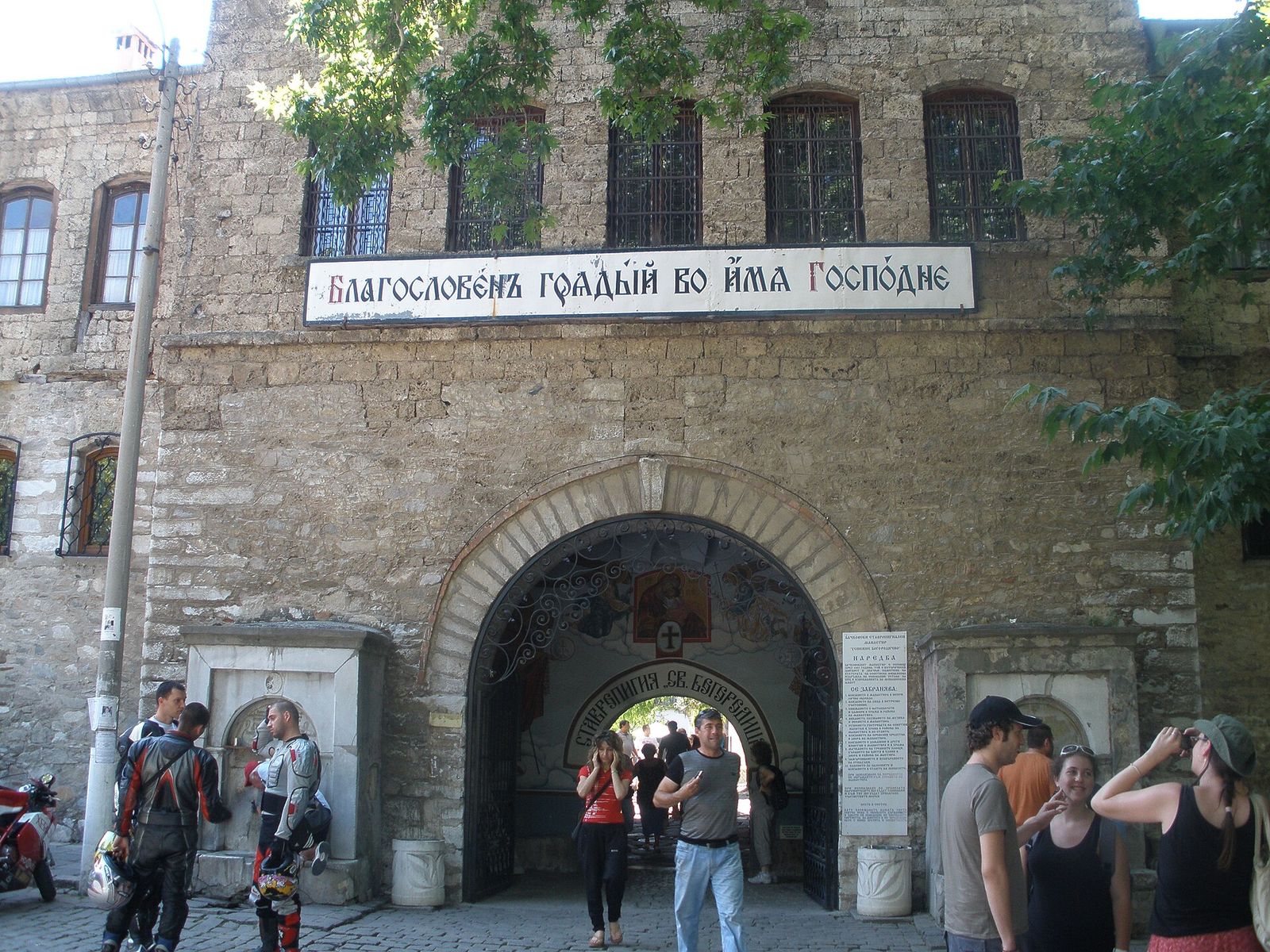
If you only have room for one monastery on your trip, Rila Monastery is the bigger one, but Bachkovo is far easier to reach from here.
Asen's Fortress
Asen's Fortress stands on a rock above the road south, near Asenovgrad, on the way to Bachkovo. Its medieval church still sits on the cliff edge, with the ruined walls below it.
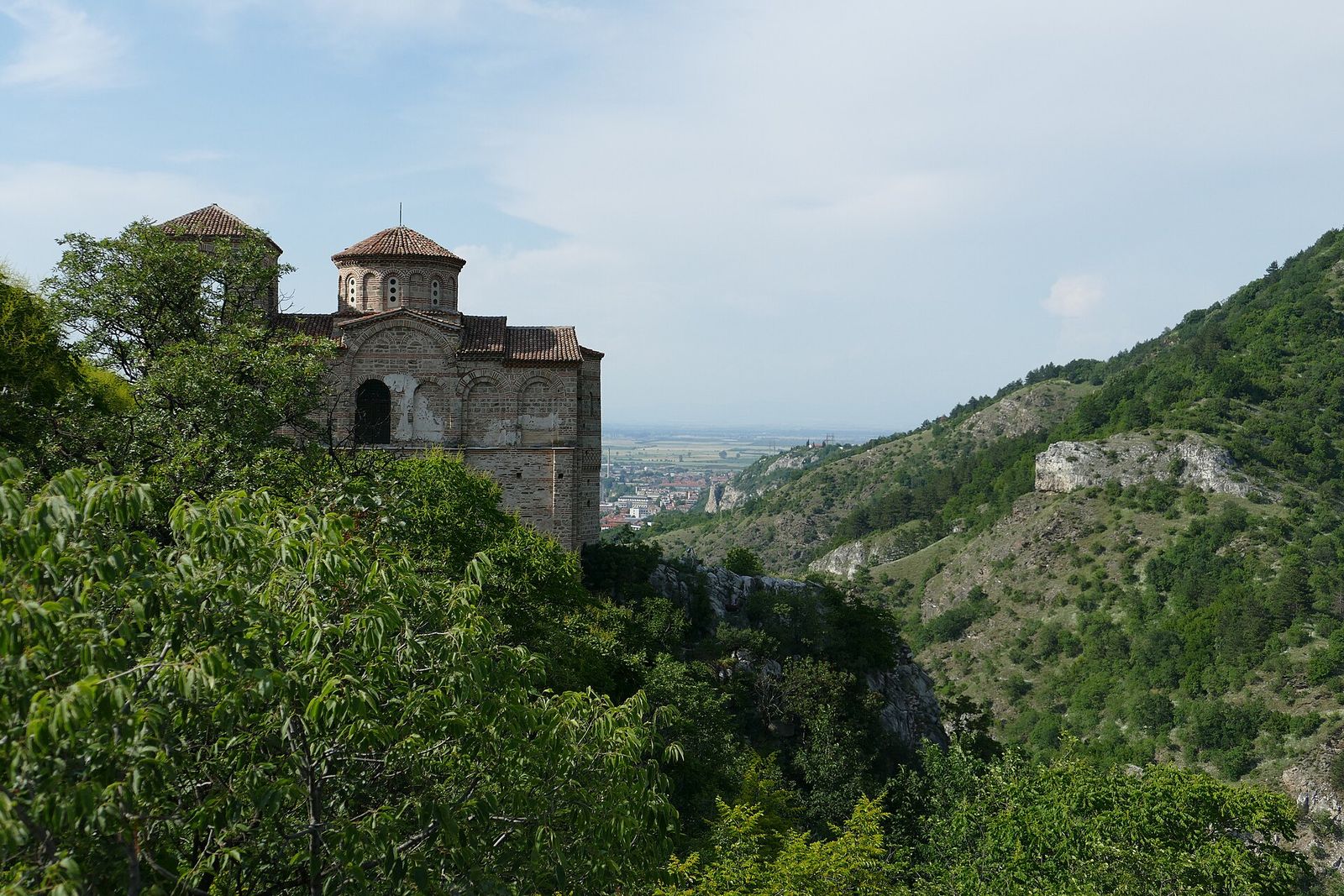
I'd pair the two in one half-day afternoon: the fortress first for the view, then Bachkovo. With more days, the Rhodope Mountains farther south make a trip of their own.
Where to stay in Plovdiv
The Old Town is where I'd stay. You sleep among the house museums, and Kapana is a few minutes downhill. The catch is cobbles and steep lanes with a suitcase.
The center around the main street and Kapana suits you if you want bars and restaurants outside the door. The train station is about a 10 minute walk south of the pedestrian zone, so staying near it saves little.
Best time to visit Plovdiv
Spring and autumn are the best months. April to June and September to October bring warm days for the hills without the summer heat.
Summer is the festival season, with opera and concerts in the Roman Theatre, but Plovdiv runs 3 to 5 degrees Celsius warmer than Sofia, so I'd climb the hills in the morning or at sunset. The Autumn Arts Salon fills the galleries in autumn, and the International Folklore Festival is one of the big summer festivals in Bulgaria for dance and costume. Winter is quiet and cold, and the theater closes at 5 PM.
Plovdiv on a longer trip
Plovdiv fits naturally into a loop of central Bulgaria. Koprivshtitsa is 90 km to the north, with painted Revival houses that are smaller and quieter than Plovdiv's; I'd pick Koprivshtitsa for a village and Plovdiv for a city. The bus from Plovdiv to Veliko Tarnovo, the medieval capital, takes about 2.5 hours.
If Roman Plovdiv is what you came for, Sofia has its own Roman city under the streets: the ruins of Serdica sit right in the metro station at the center. Plovdiv and Rila are the two trips I'd put first among the day trips from Sofia, and on a one-week Bulgaria itinerary I'd give Plovdiv two nights.
Key takeaways
- Put the Roman Theatre, the stadium and the Old Town houses on day one, and the Bishop's Basilica, Kapana and the hills on day two.
- Paid sights cost little: about €15 covers three house museums and the basilica, before the theater.
- The Regional Ethnographic Museum closes on Mondays, so a Monday works best for the free sights.
- Sleep at least one night in the Old Town to see Kapana in the evening.
Frequently asked questions
How many days do you need in Plovdiv?
Two days. The first fits the Roman Theatre, the stadium and the Old Town houses, and the second leaves time for the basilica, Kapana and a climb or two. With a car, a third day adds Bachkovo Monastery and Asen's Fortress.
Is Plovdiv worth visiting?
Yes. One walkable center holds a Roman theater that still hosts opera, a stadium that seated 30,000, a 15th century mosque and the painted merchant houses of the Old Town.
What is Plovdiv famous for?
Plovdiv is famous for its Roman Theatre, its Old Town of 19th century merchant houses and its claim to be the oldest continuously inhabited city in Europe. It was also European Capital of Culture in 2019.
Is Plovdiv the oldest city in Europe?
Plovdiv is one of the oldest, with evidence of people living here for more than 6,000 years, and it claims to be the oldest city in Europe that has been lived in without a break. Nebet Tepe, one of the first hills to be settled, is free to climb.
Is Plovdiv Old Town free to visit?
Yes, the Old Town lanes, Hisar Kapia and Nebet Tepe are free. You pay only for the house museums, at about €2.50 to €3.50 each, and for the Roman Theatre.
What is the most beautiful town in Bulgaria?
My three picks are Plovdiv's Old Town, Veliko Tarnovo and Koprivshtitsa. Plovdiv wins for its mix of Roman ruins and Revival houses in one walkable center.
Can you go inside the Roman Theatre in Plovdiv?
Yes. It opens from 9 AM to 6 PM from April to October and to 5 PM in winter, with a ticket. In summer it hosts the Opera Open festival and concerts, so you can also see it in use in the evening.
How do you get from Sofia to Plovdiv?
The bus from Sofia Central Bus Station is the easiest option, at about 2 hours and €7 to €8 one way. The train takes about 3 hours and the drive on the A1 motorway about 1.5 hours.
12 Best Places to Visit in Bulgaria in 2026
Bulgaria packs Roman cities, mountain monasteries and Black Sea old towns into a small map. These are the 12 I'd pick.
Read the guide
Veliko Tarnovo: Tsarevets, the Old Town and What to See
Veliko Tarnovo is known for Tsarevets and its houses above the Yantra. What to see, the hours and how long to stay.
Read the guide
Sofia to Veliko Tarnovo: Bus, Train or Car in 2026
Veliko Tarnovo is about 3 hours from Sofia by bus. The 2026 departures, the train change and the drive, compared.
Read the guide