Central Market Hall Sofia (Halite): What to See in 2026
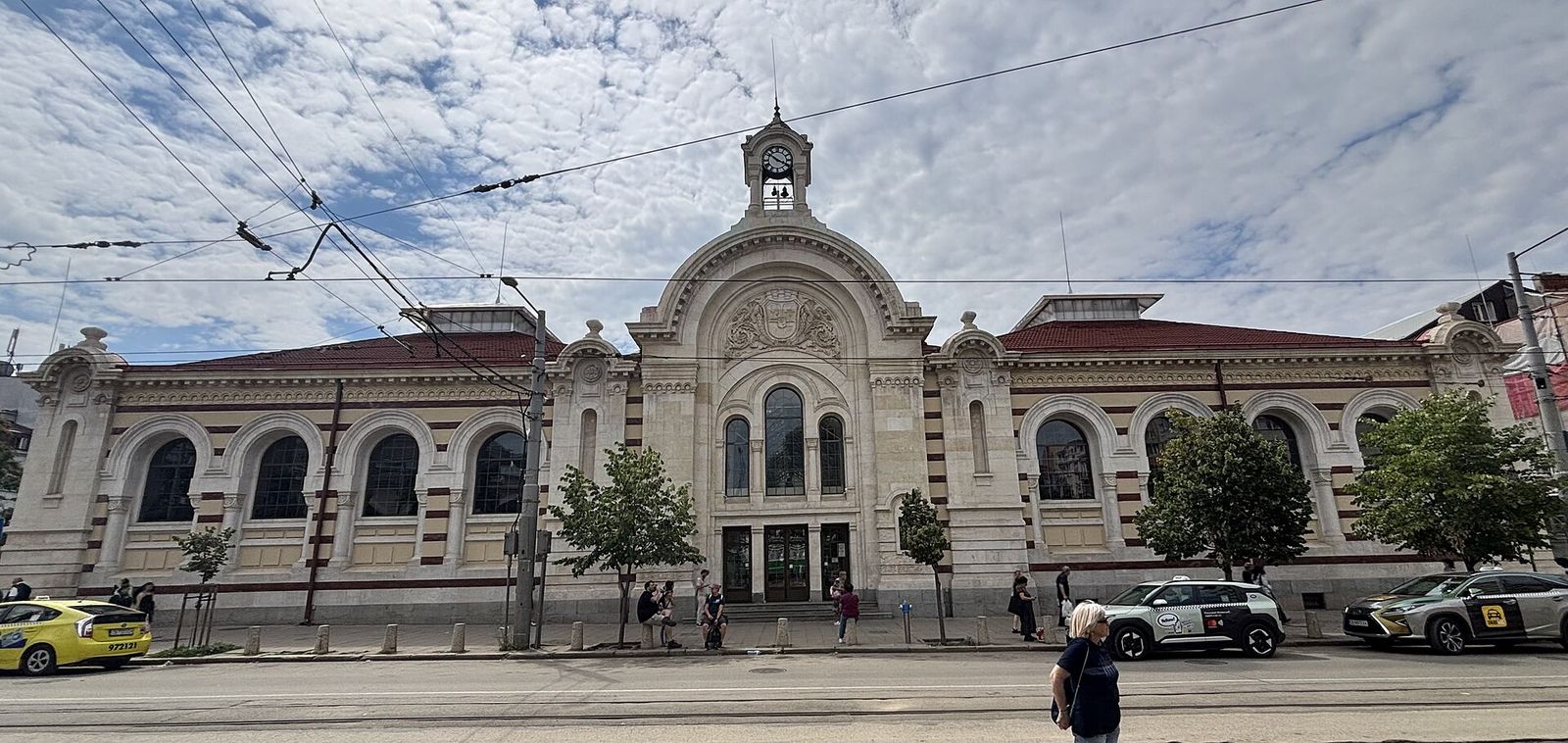
Sofia's Central Market Hall, Halite to locals, has stood on Maria Luiza Boulevard since 1911, with its striped stone front and little clock tower across the street from Banya Bashi Mosque. Below is what the hall holds today after its 2024 reopening, the Roman remains in its basement, the building's story, how it compares with Zhenski Pazar and how to fit it into a morning in the old center.
The Central Market Hall at a glance
Halite is short for Tsentralni Sofiyski Hali, the Central Sofia Market Halls. The building covers about 3,200 square meters over three floors, at the corner where Maria Luiza Boulevard meets Pirotska Street.
What is inside the Central Market Hall today
Kaufland Bulgaria, the supermarket chain, presented its plan for the hall in 2021, 110 years after it first opened, and bought the building. The interior was stripped out, the original architecture was restored, and the hall reopened on 23 May 2024 after a year-long overhaul. The investment came to more than €25 million.
Inside, the hall is now a Kaufland supermarket set out in the style of a market hall. A history and culture zone, set up with specialists from the Regional History Museum in Sofia, tells the story of the site, and the hall runs a stage, Stsena Tsentralni Hali, with its own program of cultural events.
I'd come for the building and the basement, and treat the shopping as a bonus. It is a good place to buy cheese, a jar of lyutenitsa or a bottle of rakia to take home at supermarket prices, and for gifts beyond food, the Bulgarian souvenirs I'd pack come from the small shops of Tsar Shishman Street.
The Roman remains in the basement
Ancient Serdica, the Roman town under modern Sofia, runs under this corner of the city. In 2000, a stretch of the town's defensive wall and a Roman bath were uncovered under the hall, and since the 2024 reopening both are on show on the basement level, with the history zone around them.
Serdica's first walls went up between 176 and 180 under Marcus Aurelius, after a raid burned the town in 170. The bigger part of the Roman town is a few minutes away at the Largo, where the metro works of 2010 to 2012 exposed streets, houses and baths. The Serdica ruins there are free to walk through from 7 AM to 10 PM, and seeing the wall in the hall's basement first gives you the town's edge before you walk its streets.
The building: facade, clock tower and coat of arms
Naum Torbov's design was chosen in 1907. The style is Neo-Renaissance with Neo-Byzantine and Neo-Baroque elements: striped bands of pale stone and red brick, tall arched windows and a big arched entrance on Maria Luiza Boulevard. The building had four entrances when it opened.
The clock tower
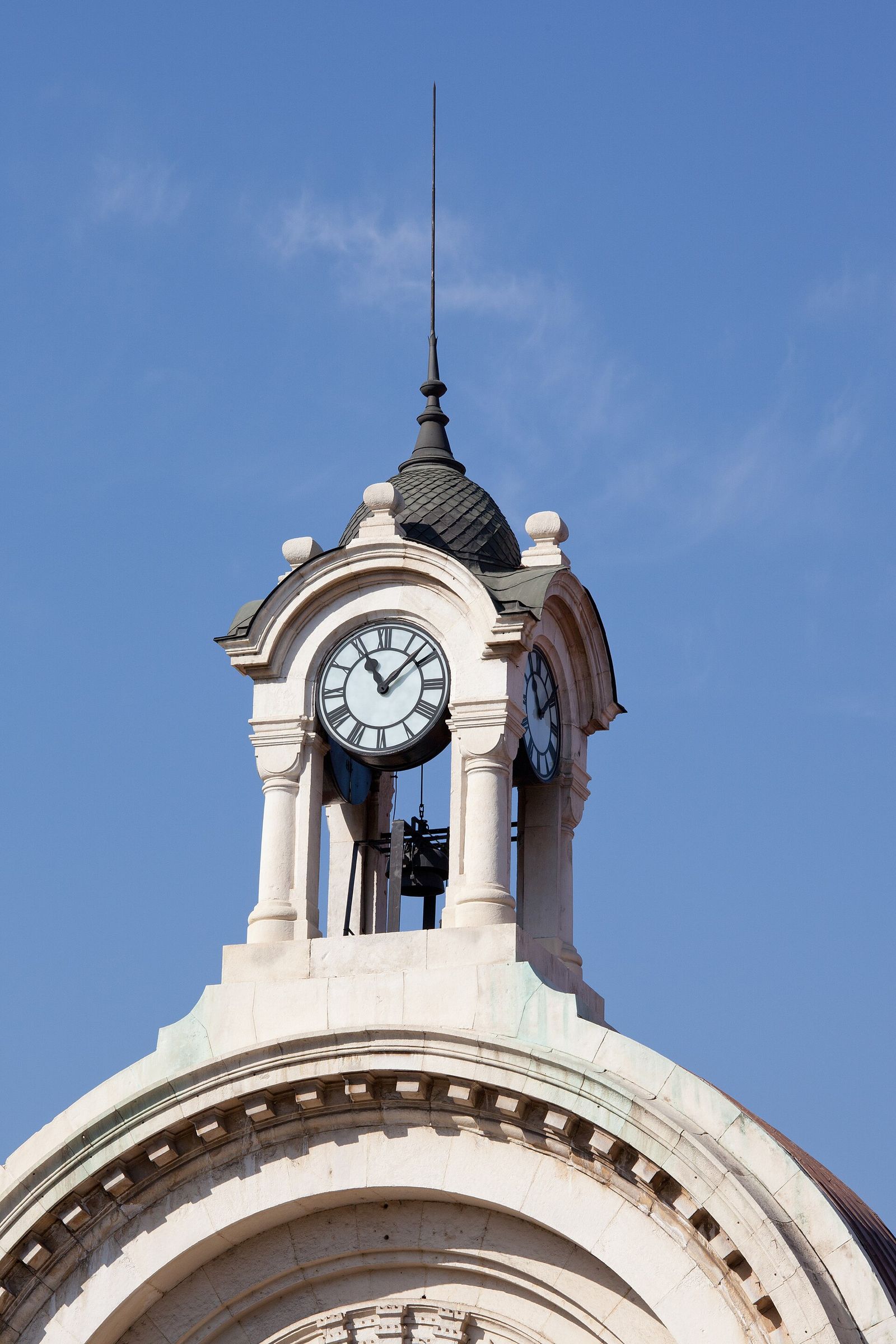
The little clock tower on the roof is the hall's trademark. It has three clock faces and a small dome with a spire, and it sits right over the main entrance. I'd photograph it from the far side of Maria Luiza Boulevard, by the mosque, where the front fits in one frame.
The coat of arms over the entrance
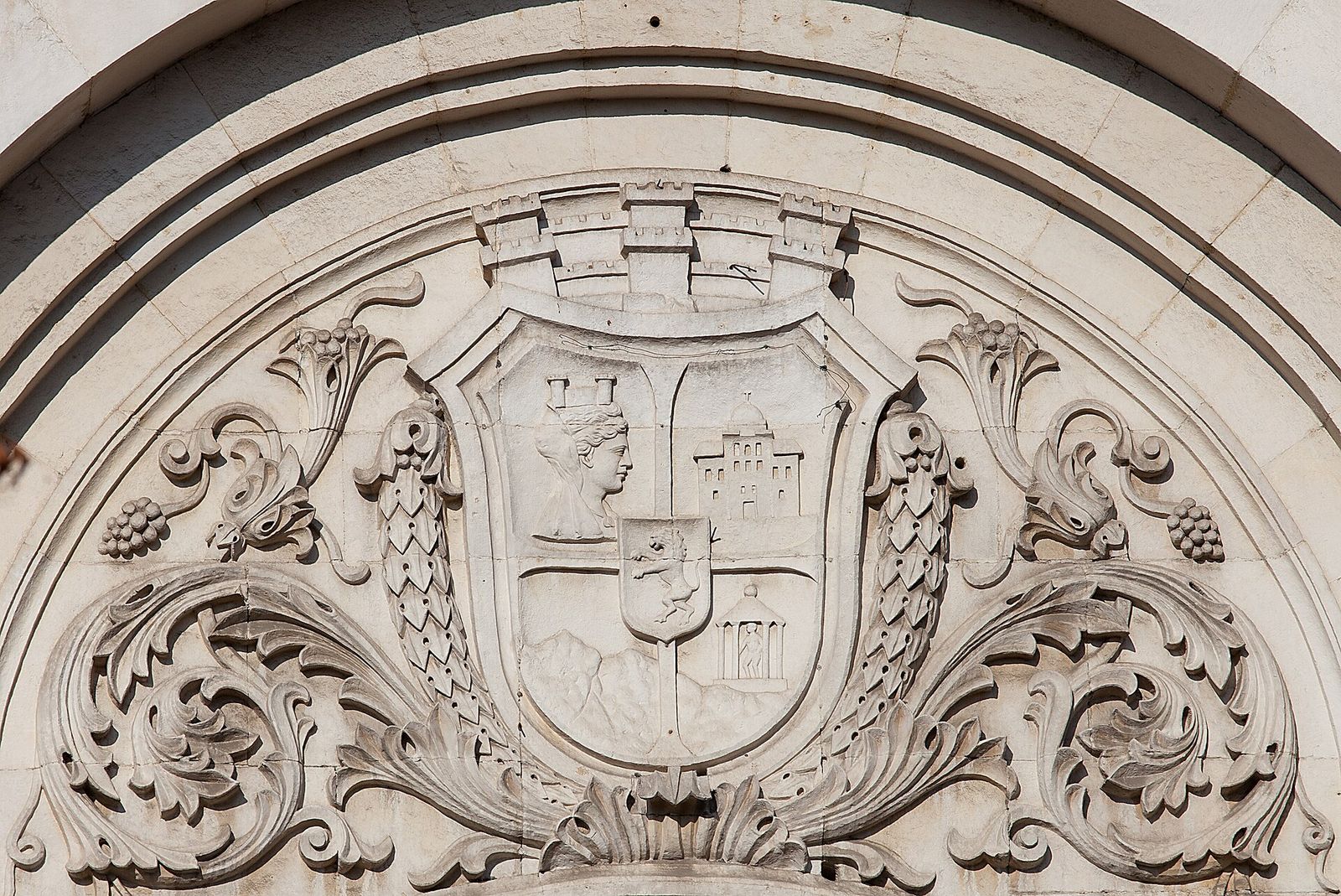
Above the main entrance, a stone relief of Sofia's coat of arms fills the arch. The artist Haralampi Tachev carved it, and the shield, framed by scrolls and ears of wheat, is the detail most people walk under without seeing. Stand on the pavement opposite the door and look up.
History of the Central Market Hall
Construction began in 1909 and took two years, and the hall opened in 1911 as the city's main covered market. Until the late 1940s, the Sofia municipality rented out about 170 shops and stalls inside, and it kept rents and the quality of the produce under strict control.
After the 1950s the interior was altered heavily, and in 1988 the hall closed for reconstruction. It stayed shut for 12 years. It reopened for Easter 2000, after the company Ashtrom bought 75% of it, and the reconstruction by the architects Konstantin Antonov and Hristo Ganchev won a European architecture award and the Sofia award. That is the hall most visitors remember: food stalls downstairs, small shops above, and the green iron galleries of the upper floors.
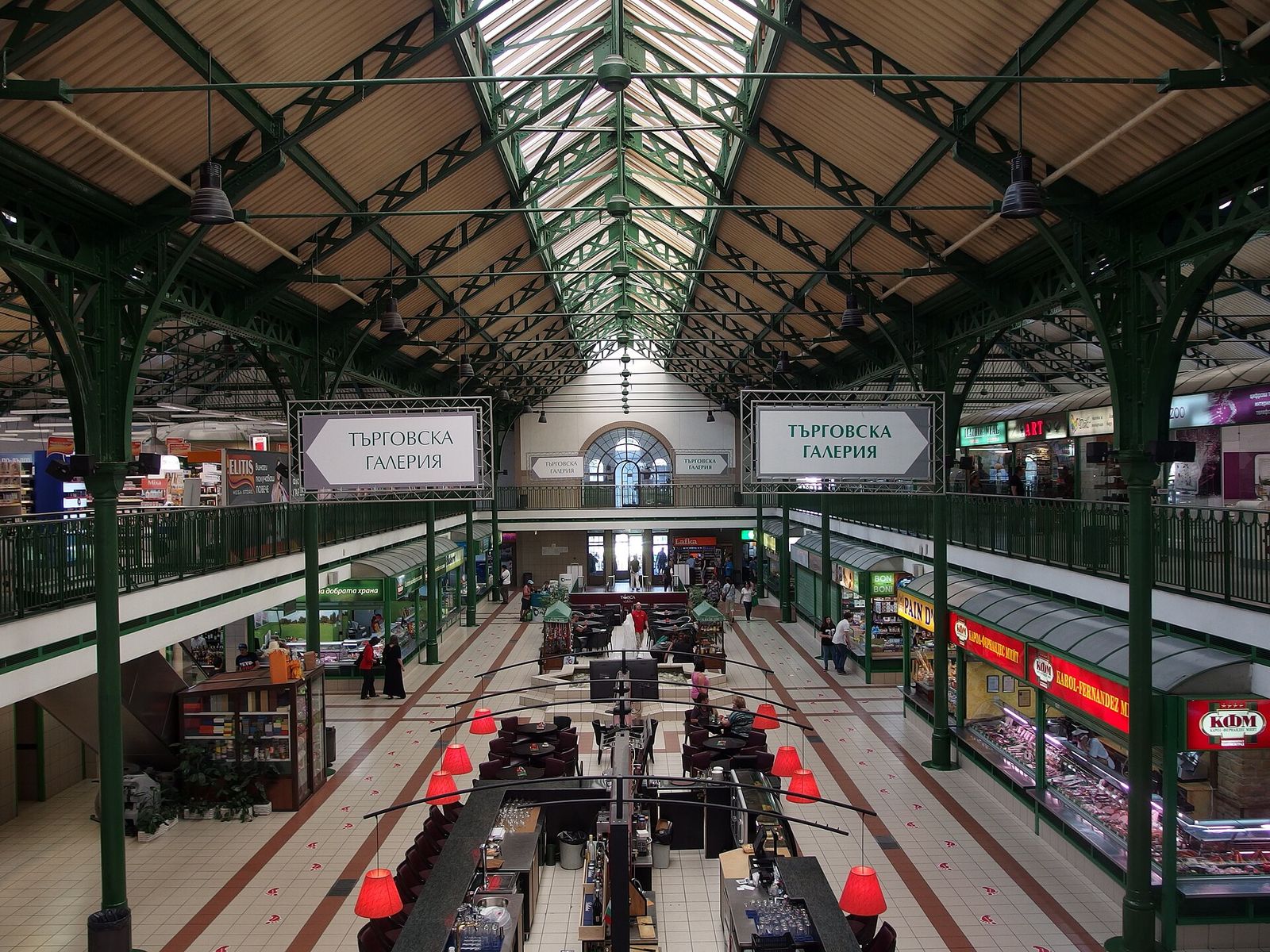
By July 2022, more than 1,000 people worked in the hall across three floors, at food stalls, fast food counters and shops selling clothes, accessories and jewelry. Those stalls closed that summer, and the 2024 hall keeps Torbov's shell and the Roman basement and trades as one supermarket. On this one corner, Bulgarian history in Sofia runs from a Roman wall to a 1566 mosque, a 1909 synagogue and a 1911 market hall.
Halite or Zhenski Pazar?
Since 2024, Halite and Zhenski Pazar are two very different places to buy food, a few minutes apart in the old center.
| Central Market Hall (Halite) | Zhenski Pazar | |
|---|---|---|
| Type | Covered 1911 hall, now a supermarket | Open-air street market |
| Where | Maria Luiza Boulevard at Pirotska Street | A few blocks north of Pirotska Street |
| What you buy | Groceries, cheese, jars, wine and rakia | Fresh produce, cheese, spices, banitsa, lyutenitsa by weight |
| Food to eat there | What the supermarket stocks | Banitsa, mekitsi and sandwiches from stalls |
| Prices | Fixed, supermarket prices | Stall prices, ask before you buy |
| Best for | The building and the Roman basement | Market food and the way Sofia shops |
| Best time | Any time | Before 10 AM, quieter on Sunday |
I'd see both on the same morning, the hall first for the building and the Roman wall, then a walk up Pirotska to Zhenski Pazar, where the bakery stalls sell hot banitsa and mekitsi, two classics of street food in Sofia. The other markets in Sofia worth a visit are the antiques stalls by Alexander Nevsky Cathedral and the book stalls on Slaveykov Square.
What to see near the Central Market Hall
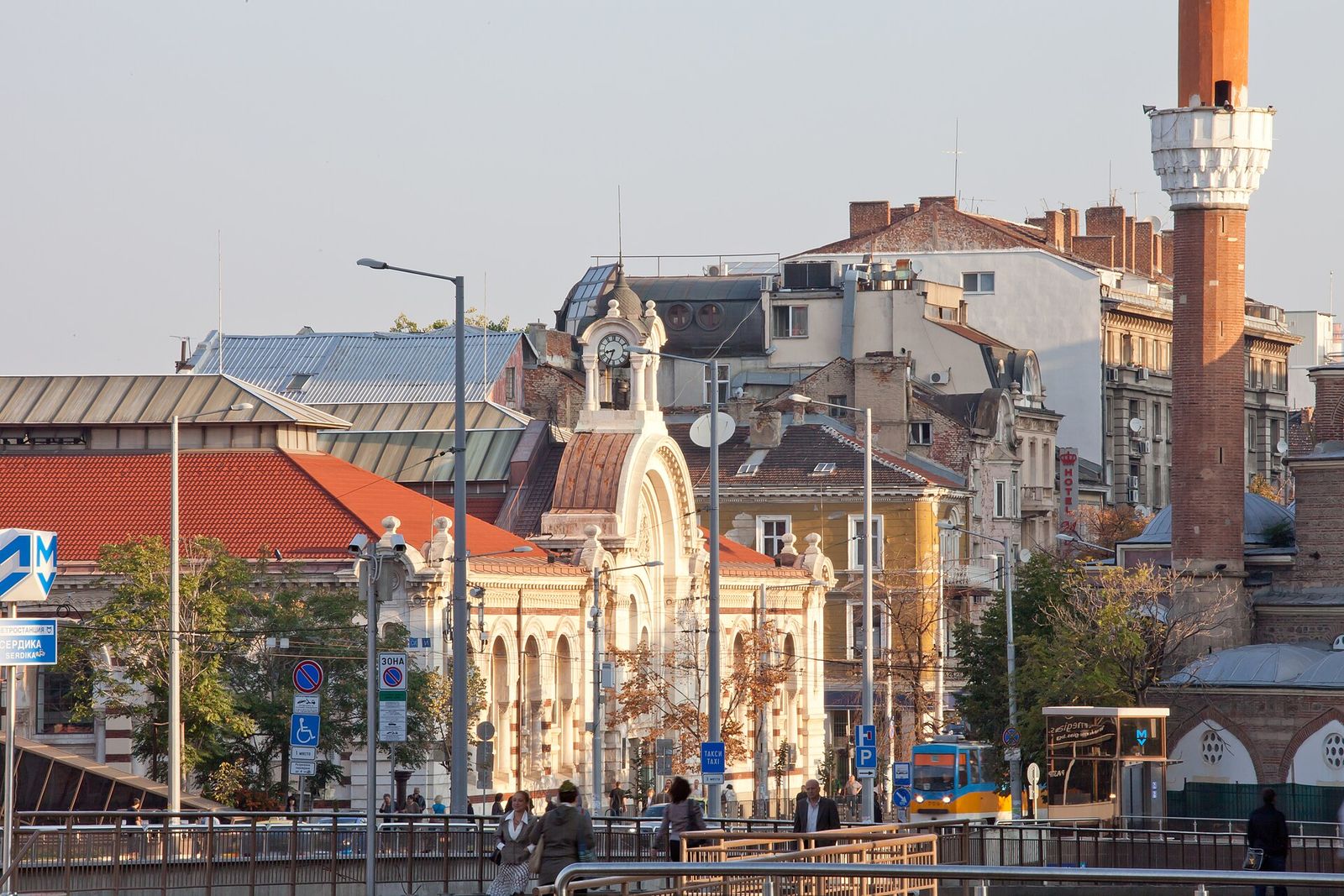
The hall stands in the oldest part of the center, with four sights and a pedestrian shopping street within a few minutes on foot.
| Sight | Distance from the hall | What it is |
|---|---|---|
| Banya Bashi Mosque | Across the boulevard | A 1566 Ottoman mosque, the only working mosque in Sofia |
| Central Mineral Baths | Next to the mosque | The 1913 bathhouse, now the Regional History Museum, with free mineral water taps outside |
| Sofia Synagogue | Next door | The 1909 synagogue, the largest in Southeastern Europe |
| Serdica ruins | A few minutes south, at Serdika metro | Roman streets, baths and houses, free to walk through |
| Pirotska Street | Starts at the hall | A pedestrian street of small shops |
Banya Bashi Mosque is the one to see first, since it faces the hall's front door. Behind it, the striped Central Mineral Baths building holds the city museum, and the taps beside it run warm mineral water for free, so bring an empty bottle. The Sofia Synagogue is a short walk away. Pirotska, which starts at the hall, was the first pedestrian street for shopping in Sofia.
How to get to the Central Market Hall
The hall is a few minutes on foot from Serdika and Serdika II, the main metro interchange. From the airport, the yellow M4 line reaches Serdika in about 20 minutes. Trams run along Maria Luiza Boulevard past the front of the hall, and from Alexander Nevsky Cathedral it is about a 15-minute walk.
Most of the old center is easier on foot than by transport, and getting around Sofia by metro costs €0.80 a ride, with contactless taps capped at €2 a day. From Vitosha Boulevard, walk north past St Nedelya Church and the Largo, then a few minutes up Maria Luiza Boulevard.
Tips for visiting the Central Market Hall
Go in the morning. The stalls at Zhenski Pazar run low by mid-afternoon.
Mind prayer times at the mosque. If you arrive during a prayer, visitors are let in again once it is over, so see the hall first and cross the boulevard after. Keep the mosque out of the hour around midday on a Friday, when the main prayer of the week takes place.
Plan it into a day of the old center. The Sofia itinerary I'd follow puts the hall next to the mosque and the baths, all a few minutes from Serdika metro.
Key takeaways
- The Central Market Hall opened in 1911 and reopened on 23 May 2024 as a Kaufland supermarket inside the restored building.
- See the Roman wall of Serdica and the Roman bath in the basement, then the clock tower and the coat of arms over the door.
- Walk on to Zhenski Pazar along Pirotska Street for market stalls and banitsa.
- Pair the hall with Banya Bashi Mosque, the Central Mineral Baths and the Sofia Synagogue, all a few minutes apart.
Frequently asked questions
What is the Central Market Hall in Sofia?
The Central Market Hall, or Halite, is a covered market building on Maria Luiza Boulevard that opened in 1911, designed by the architect Naum Torbov. Since May 2024 it has housed a Kaufland supermarket, a history zone and a stage, with Roman remains in the basement.
Is the Central Market Hall in Sofia still a market?
It is a supermarket in the style of a market hall. Kaufland bought the building, removed the old stalls and shops, and reopened it on 23 May 2024. For a traditional market with stalls, go to Zhenski Pazar.
What is in the basement of the Central Market Hall?
The basement shows part of the defensive wall of Roman Serdica and a Roman bath, uncovered in 2000. A history and culture zone, made with specialists from the Regional History Museum in Sofia, sits around them.
Is it free to visit the Central Market Hall?
Yes, entry to the Central Market Hall is free. The Serdica ruins at Serdika metro nearby are free as well.
When was the Central Market Hall in Sofia built?
The Central Market Hall was built from 1909 to 1911, after Naum Torbov's design won in 1907, and it opened in 1911. It closed for reconstruction in 1988, reopened at Easter 2000, and reopened again after a year-long overhaul on 23 May 2024.
What does Halite mean?
Halite is what people in Sofia call the Central Market Hall, short for its full name, Tsentralni Sofiyski Hali. It has been the city's best-known market building since 1911.
How do I get to the Central Market Hall in Sofia?
Take the metro to Serdika or Serdika II, the main interchange, and walk a few minutes north along Maria Luiza Boulevard. Trams also run along Maria Luiza Boulevard past the hall.
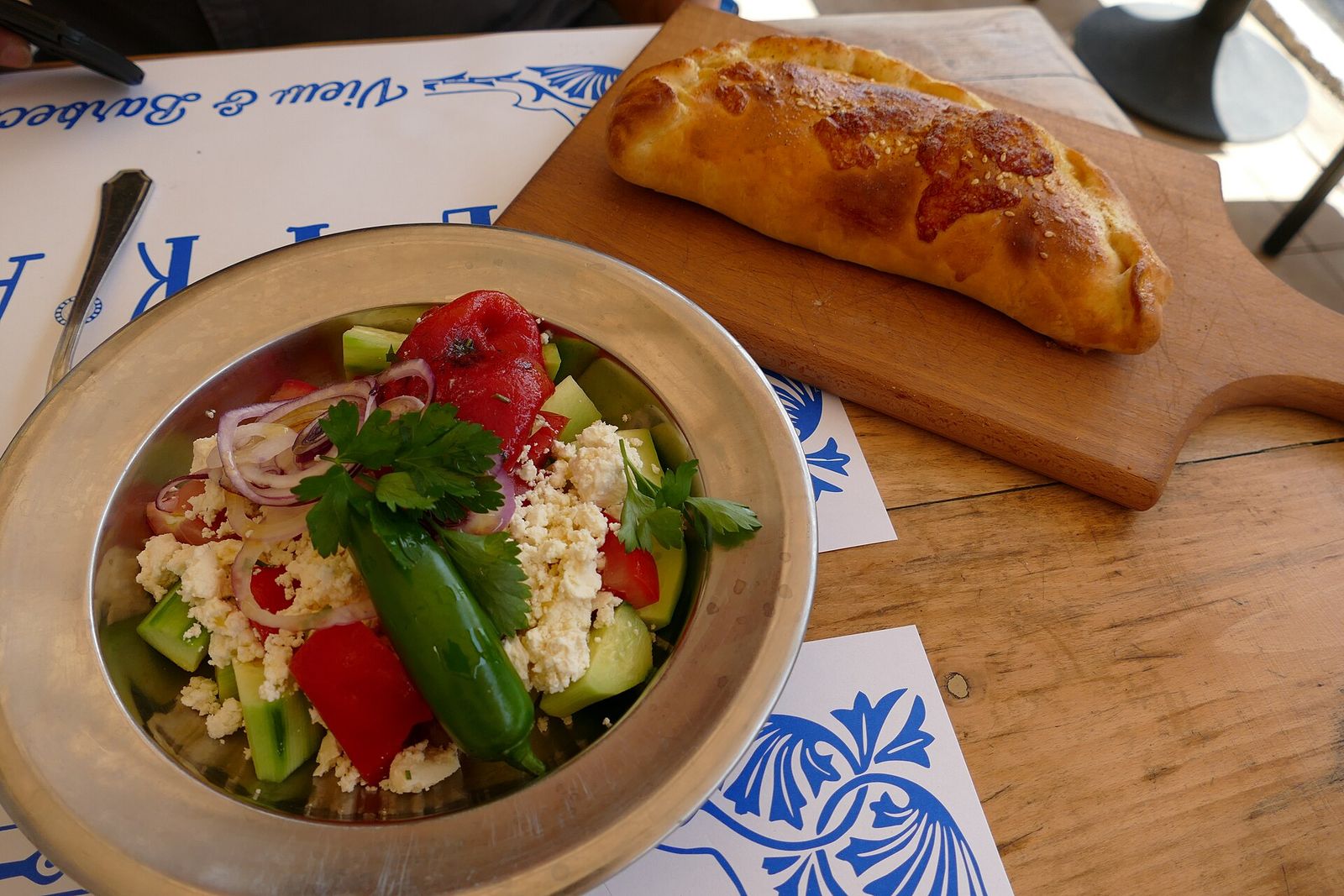
Sofia Food Guide: What to Eat and Where to Eat It
Sofia eats banitsa at breakfast and grills at night. Here is what to eat in the city, where to eat it and what it costs.
Read the guide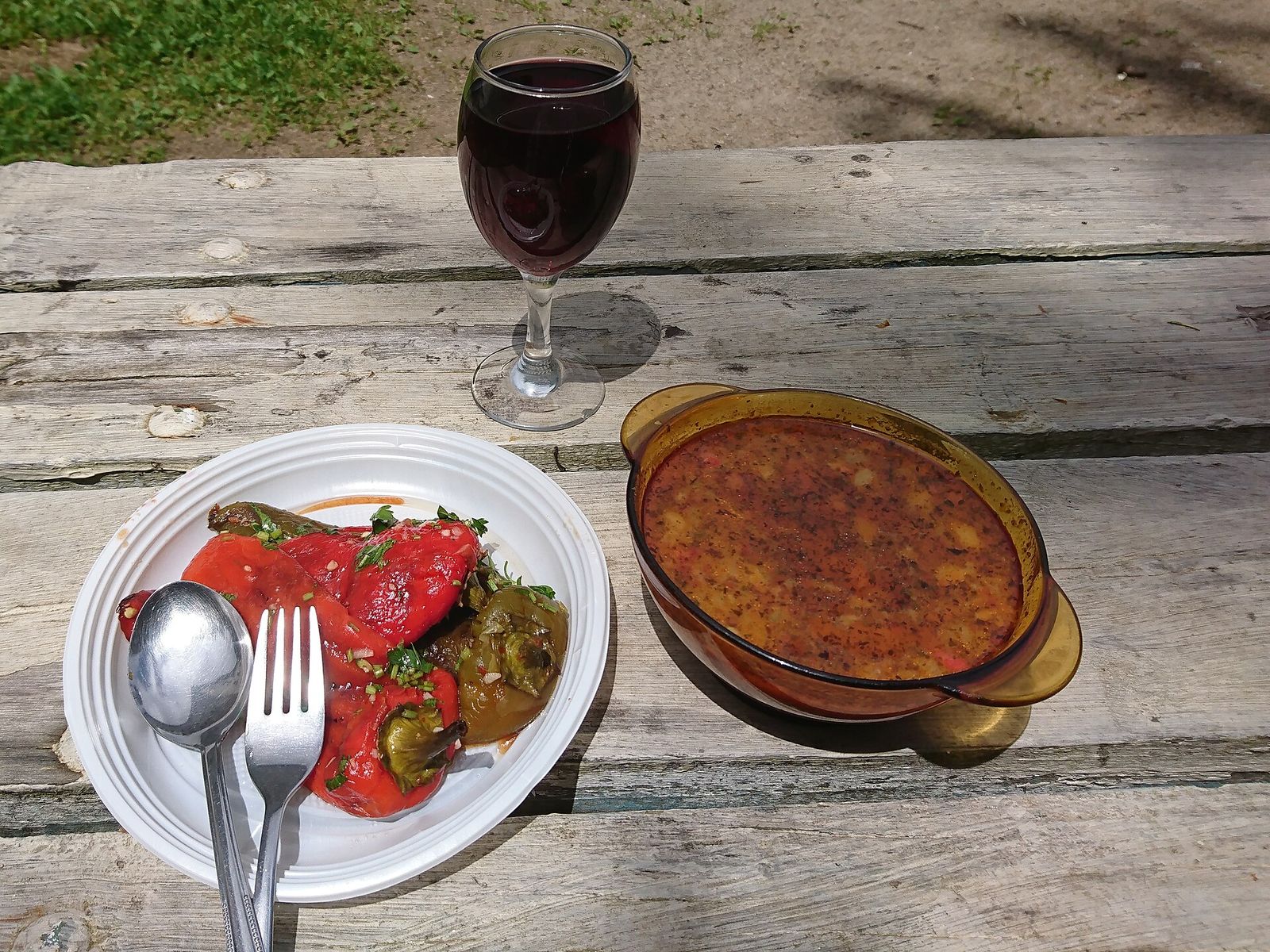
Bulgarian Food: 14 Traditional Dishes to Try in Sofia
Bulgarian food runs on white cheese, yogurt and the grill. Here are 14 dishes to order and where to eat them in Sofia.
Read the guide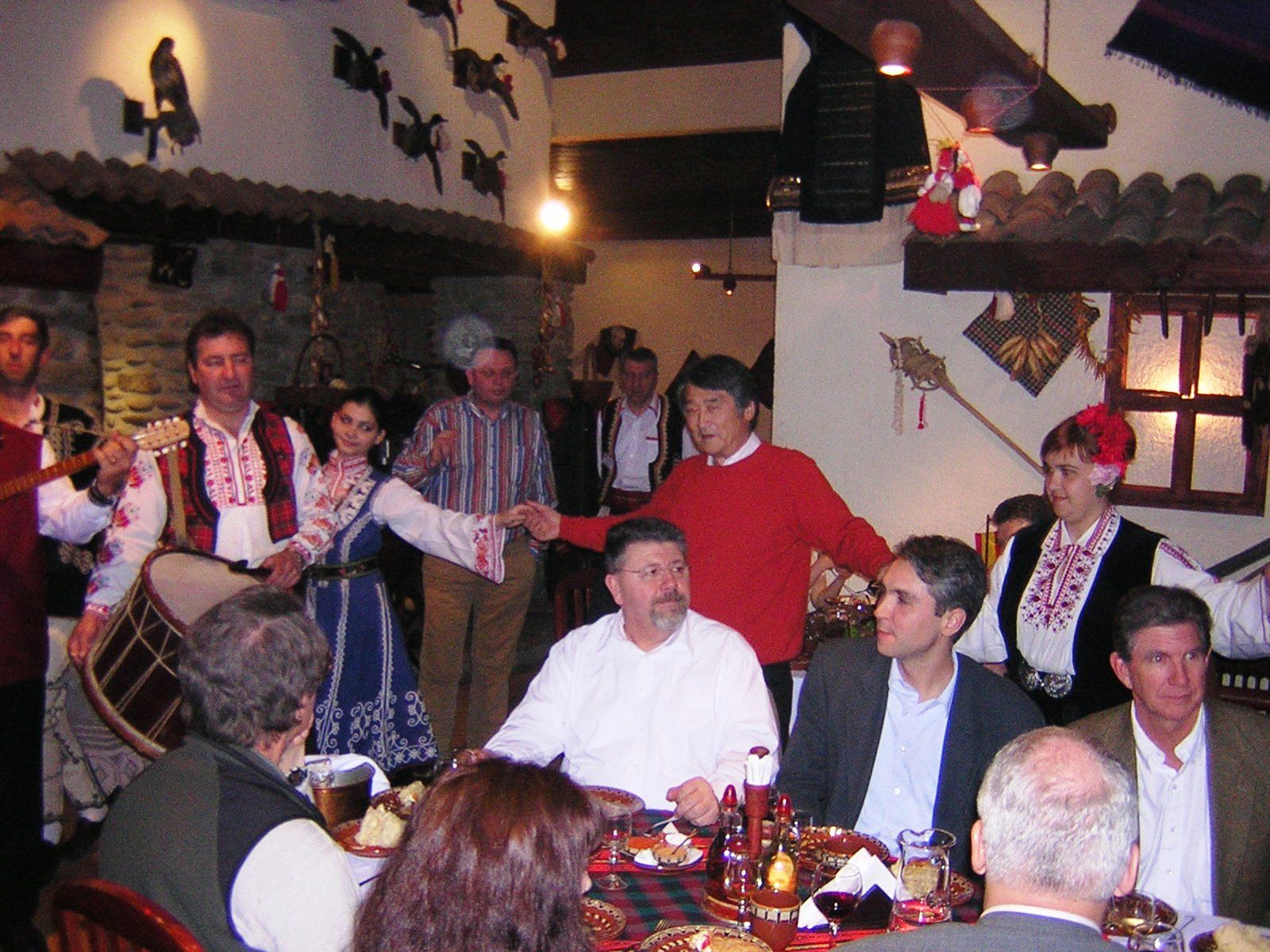
The Best Restaurants in Sofia: 20 Places I'd Book
Sofia eats out in mehanas, garden bistros and one bold tasting menu. These are the 20 restaurants I'd book.
Read the guide