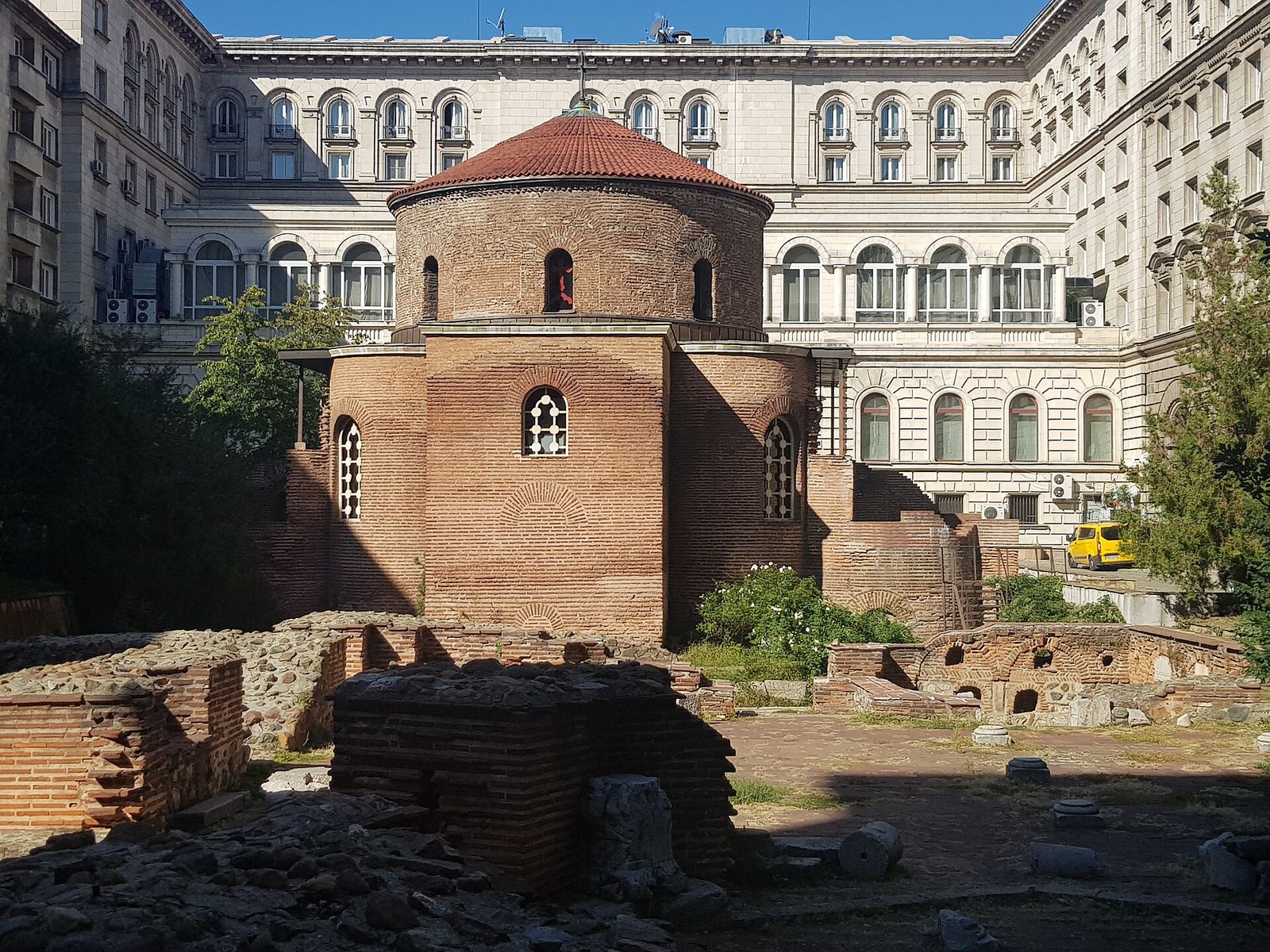
Rotunda of St George in Sofia: The City's Oldest Building
The Rotunda of St George is the oldest building in Sofia, a round red-brick church from the early 4th century tucked into a courtyard behind the Presidency. It is free, it takes 15 to 30 minutes, and it still holds services. This guide covers its history, the layers of frescoes inside, the Roman street around it, how to find the way in and what I'd pair it with.
The Rotunda of St George at a glance
The rotunda sits a few meters below today's streets, in a courtyard closed in on all sides by the Presidency and the Sofia Balkan Palace hotel. It is easy to walk past on the Largo without knowing it is there.
The history of the rotunda
The rotunda went up in the early 4th century, in the time of Constantine the Great, who is said to have called Serdica "my Rome".
Nobody knows for sure what it was built for. One view is that it was part of a Roman bath, another that it was an early Christian baptistery. It became a church at the latest in the 6th century, under Emperor Justinian, when its walls were first painted.
In the Middle Ages the rotunda held the relics of St John of Rila, the hermit who lived from 876 to 946, whose remains have rested at Rila Monastery since 1469. For a time the rotunda also kept the remains of the Serbian king Stefan Milutin, later moved to St Nedelya Cathedral.
Under Ottoman rule it became a mosque in the 16th century, and the frescoes disappeared under plaster. The building became a church again in the 19th century, and restorers uncovered and cleaned the paintings in the 20th century.
| When | What happened |
|---|---|
| Early 4th century | Built in Serdica, in the time of Constantine the Great |
| By the 6th century | A church, painted for the first time under Justinian |
| 10th century | The earliest fresco layer that survives, with the angel |
| 1183 | Hungarian troops take St John of Rila's relics from here |
| 12th to 14th centuries | The later fresco layers |
| 16th century | The Ottomans turn it into a mosque and plaster the walls |
| 19th century | It becomes a church again |
| 20th century | The frescoes are uncovered and restored |
The building itself
The rotunda is a cylinder of red brick with a dome, standing on a square base. It is small: about 10 meters across, with the dome about 14 meters above the floor. You can walk around the outside in under a minute.
Its closest relative is the Rotunda of Galerius in Thessaloniki, a round Roman building from the same era.
The frescoes inside
Step in and look up. The paintings cover the inside of the dome and the walls, in layers from different centuries.
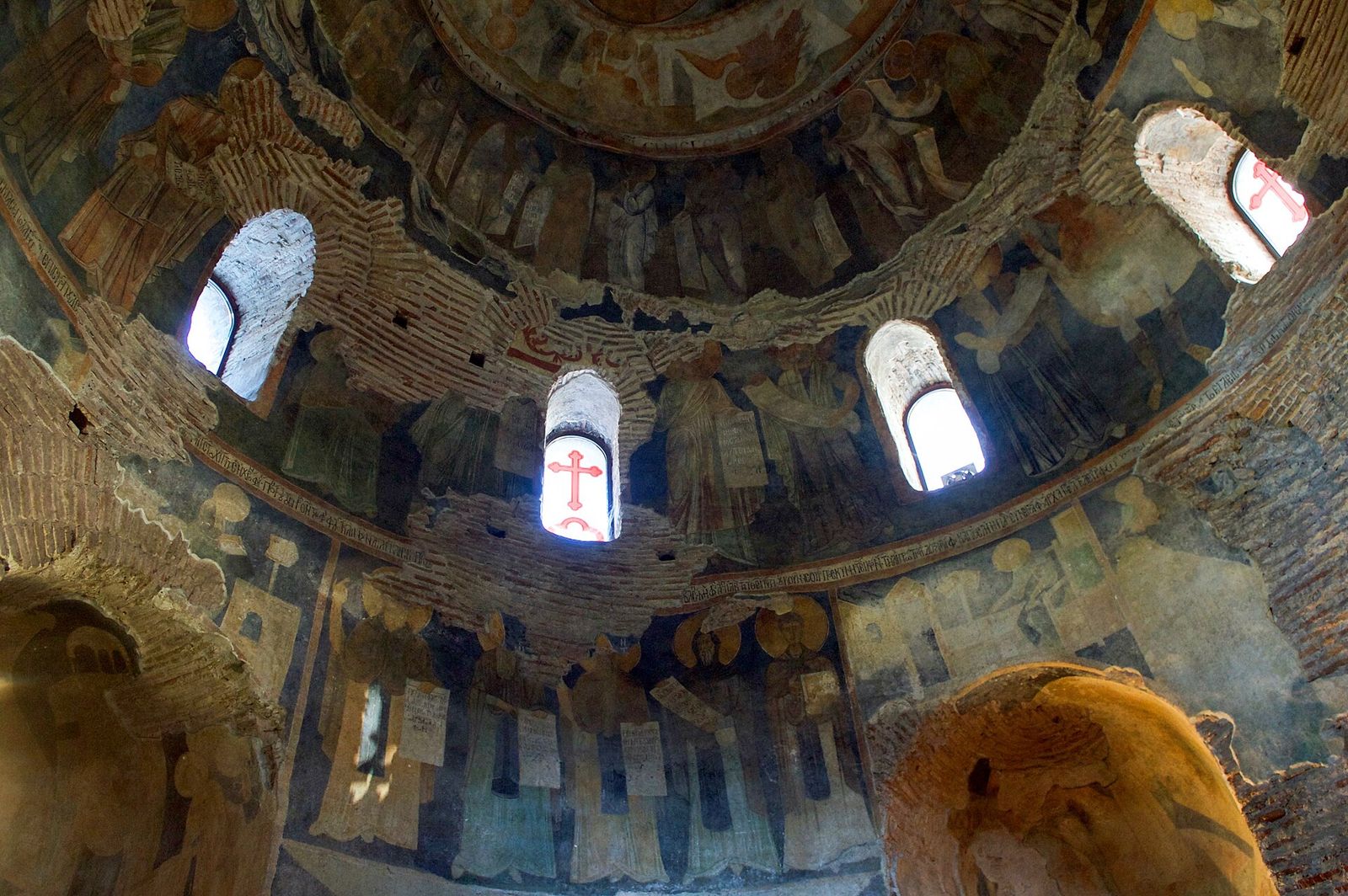
Three layers have been found. The earliest is from the 10th century, the time of the First Bulgarian Empire, and its best-known piece is the face of an angel. The later layers date from the 12th to the 14th centuries.
The 22 prophets in the dome are the part I'd spend the most time on. Each figure is more than 2 meters tall, and together they circle the dome, looking down at you from every side.
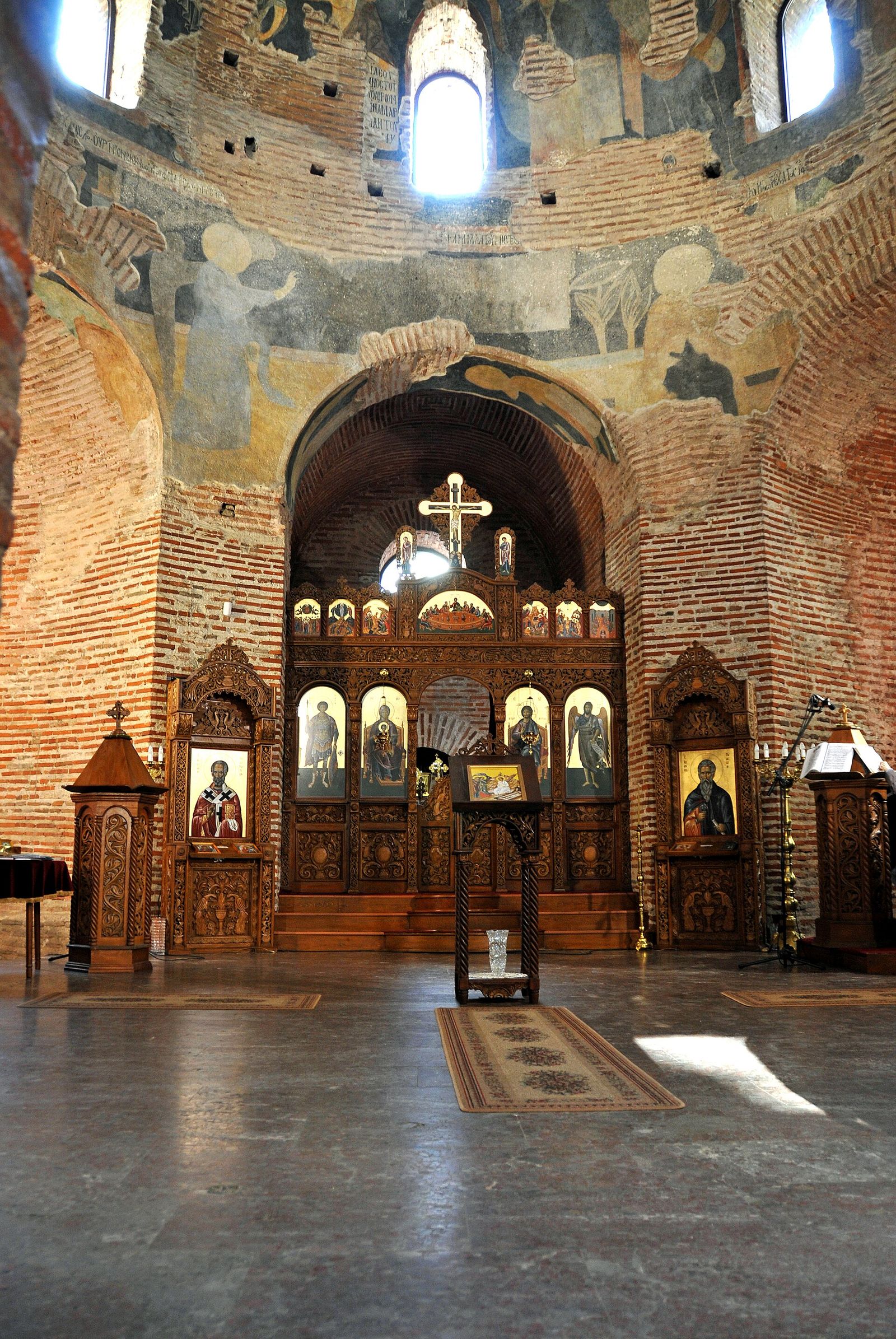
The rest of the interior is simple. A carved wooden iconostasis with icons closes off the apse.
The Roman ruins around the rotunda
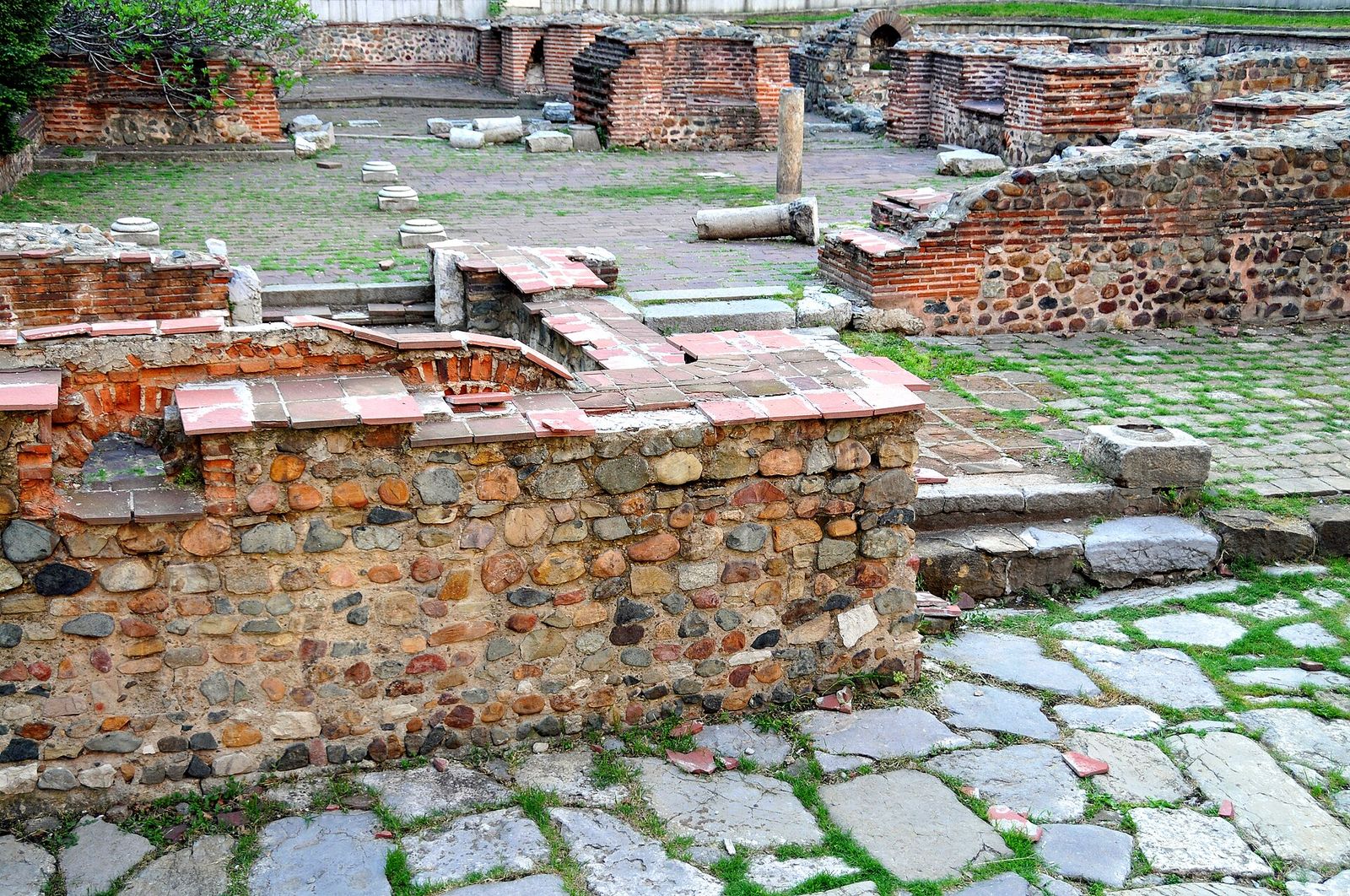
The rotunda stands in the middle of an excavated corner of Roman Serdica, and the courtyard is part of the visit. Behind the apse runs a stretch of Roman street with its drains still in place.
Around it lie the foundations of a large basilica and of a building with a hypocaust, the Roman underfloor heating. Most of what you see dates from the 2nd and 3rd centuries, before the rotunda itself.
The streets, houses and baths of ancient Serdica continue a short walk away under the Largo, free to walk through, so the rotunda and the complex make one Roman morning.
How to find the rotunda
The rotunda's address is 2 Knyaz Aleksandar Dondukov Boulevard, the courtyard of the Presidency. You reach it through a vaulted passage in the Presidency building, which frames the church at the far end.
From Serdika metro station it is a few minutes on foot. Come up on the Largo, walk past the front of the Presidency and its guards, and look for the passage into the courtyard.
Once through the passage, you see the rotunda below you, surrounded by Roman walls and the backs of the government buildings.
Visiting: hours, services, dress and photos
Entry is free. The church is open every day, usually from about 8 AM to 6 PM. Mornings and late afternoons are the quietest.
It is an active parish church, with services on Sundays and feast days. Its own feast is Gergiovden, St George's Day, on 6 May, a public holiday and one of the big dates in Bulgarian culture.
Dress as you would for any Orthodox church: shoulders and knees covered, and hats off for men. Photos are fine without flash, and never during a service.
The rotunda also hosts concerts from time to time, and I'd go if one is on during your stay.
What is around the rotunda
The guards in front of the Presidency change every hour, so time your walk past for the top of the hour. On the first Wednesday of the month the noon change is a bigger ceremony.
Next to the Presidency, the National Archaeological Museum fills an Ottoman mosque from 1494 with Thracian gold and Roman finds. At €6 it is the one I'd pick if you only see one of Sofia's museums.
The Sofia Balkan Palace, the grand hotel on the other side of the courtyard, is one of the two hotels built over the ruins of Serdica.
St Nedelya Cathedral, where King Milutin's remains rest today, stands a few minutes south on its own square. Heading east along Tsar Osvoboditel Boulevard you pass the Russian Church and reach St Sofia Church and Alexander Nevsky Cathedral in about 10 minutes.
Is the Rotunda of St George worth visiting?
Yes. For a quarter of an hour and no ticket, you get the oldest building in the city.
Who it suits best:
- History lovers. A 4th-century church on a Roman street, with 10th-century paintings inside, all in a courtyard you can cross in two minutes.
- Fans of church art. The frescoes run from the 10th to the 14th century inside a building 10 meters across.
- Travelers on a budget. It is free, like most of the Roman sites around it, and it is one of the reasons Sofia on a budget works so well.
- Short stays. It is a few minutes on foot from Serdika station, where the airport metro line stops.
Skip it, or keep it short, if you want size and gold. The rotunda is small and plain outside, and Alexander Nevsky Cathedral is the place for scale.
The rotunda is also one of Sofia's best churches, and with St Sofia, the Russian Church and Alexander Nevsky it gives you 1,600 years of church building on foot in half a day.
Key takeaways
- The Rotunda of St George is from the early 4th century and is the oldest building in Sofia.
- It is free, open daily, and takes 15 to 30 minutes; services run on Sundays and feast days.
- The frescoes come in three layers from the 10th to the 14th centuries, with 22 prophets in the dome.
- A Roman street with drains and a hypocaust building surround it in the courtyard behind the Presidency.
Frequently asked questions
What is the oldest building in Sofia?
The Rotunda of St George is the oldest building in Sofia. It is a round red-brick church from the early 4th century, in the courtyard behind the Presidency, and it is still used as a church.
Is the Rotunda of St George free?
Yes, entry is free, since it is a working church with no ticket. It opens every day, usually from about 8 AM to 6 PM.
How old is the Rotunda of St George?
It is about 1,700 years old, built in the early 4th century in Roman Serdica. Its earliest surviving frescoes are more than 1,000 years old, from the 10th century.
Was the Rotunda of St George a mosque?
Yes, the Ottomans turned it into a mosque in the 16th century and plastered over the frescoes. It became a church again in the 19th century, and the paintings were uncovered in the 20th century.
Do Orthodox Christians celebrate St George's Day?
Yes. In Bulgaria, Gergiovden falls on 6 May, and the day doubles as Armed Forces Day and the name day of everyone called Georgi or Gergana.
Is Bulgaria Catholic or Orthodox?
Bulgaria is mostly Eastern Orthodox, and the Rotunda belongs to the Bulgarian Orthodox Church. Sofia also has a Catholic cathedral, a mosque and a synagogue a short walk from the rotunda.
Where is the Rotunda of St George in Sofia?
It is in the courtyard of the Presidency, at 2 Knyaz Aleksandar Dondukov Boulevard, between the Presidency and the Sofia Balkan Palace hotel. Serdika metro station is a few minutes away, and you reach the courtyard through a vaulted passage in the Presidency building.
Can you take photos inside the Rotunda of St George?
Yes, without flash and outside service times. If a service starts while you are inside, put the camera away and wait by the door.
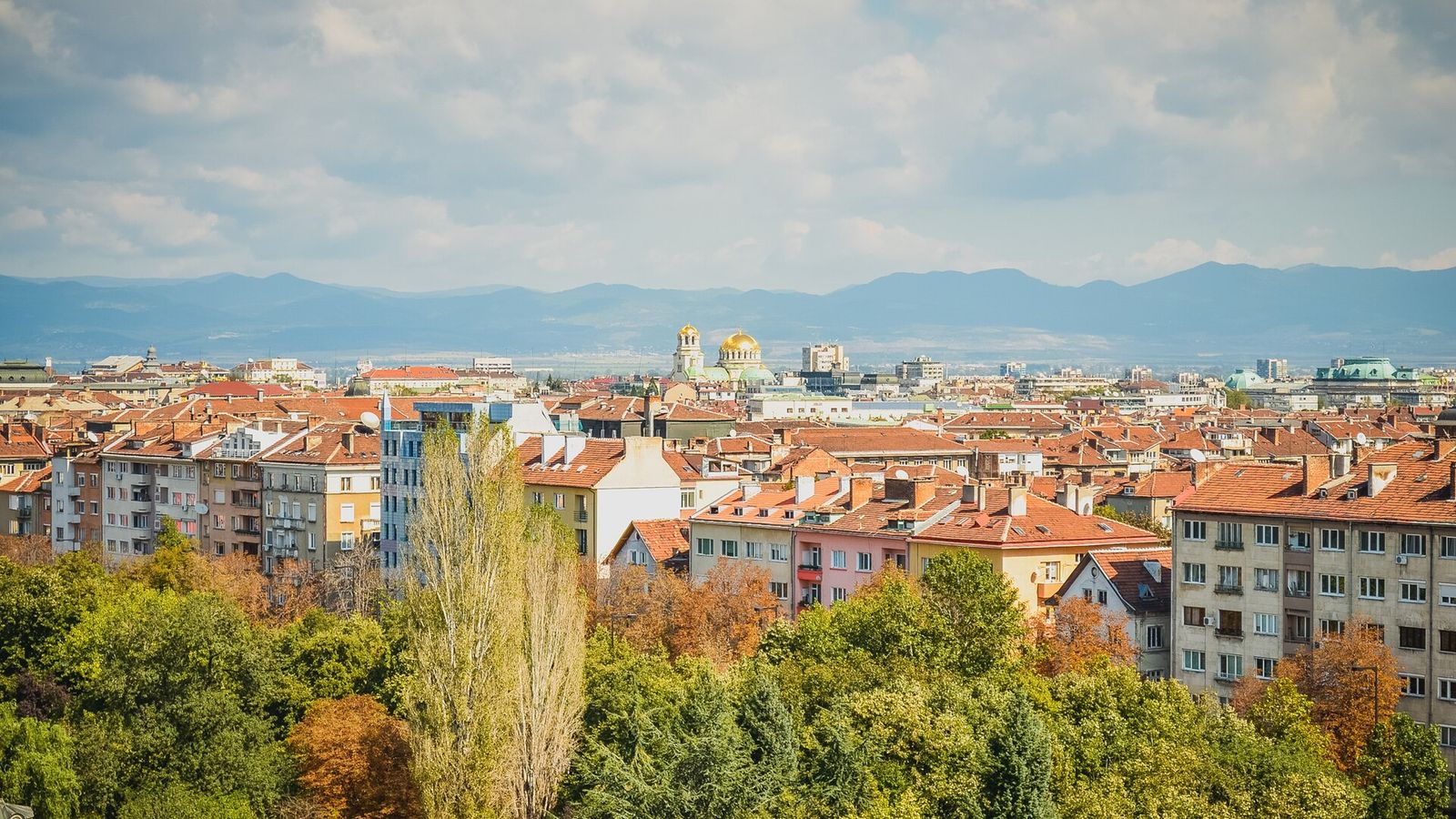
25 Best Things to Do in Sofia in 2026
Sofia packs 2,000 years into a walkable center. The 25 sights, museums, foods and day trips I'd put first, with prices.
Read the guide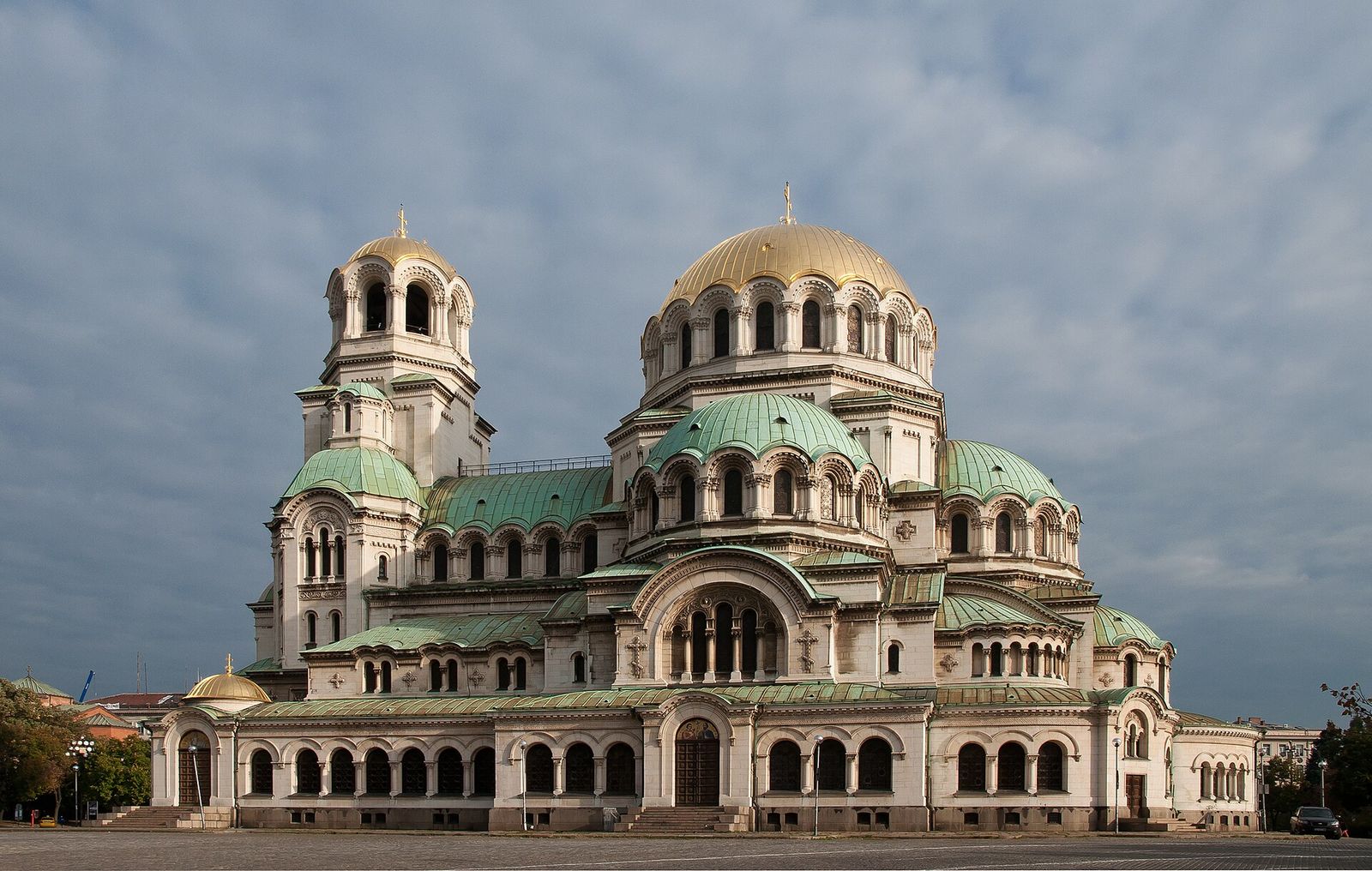
Alexander Nevsky Cathedral in Sofia: A Visitor's Guide
Sofia's gold-domed landmark is free to enter. Here is its story, what to see inside, the crypt museum and when to go.
Read the guide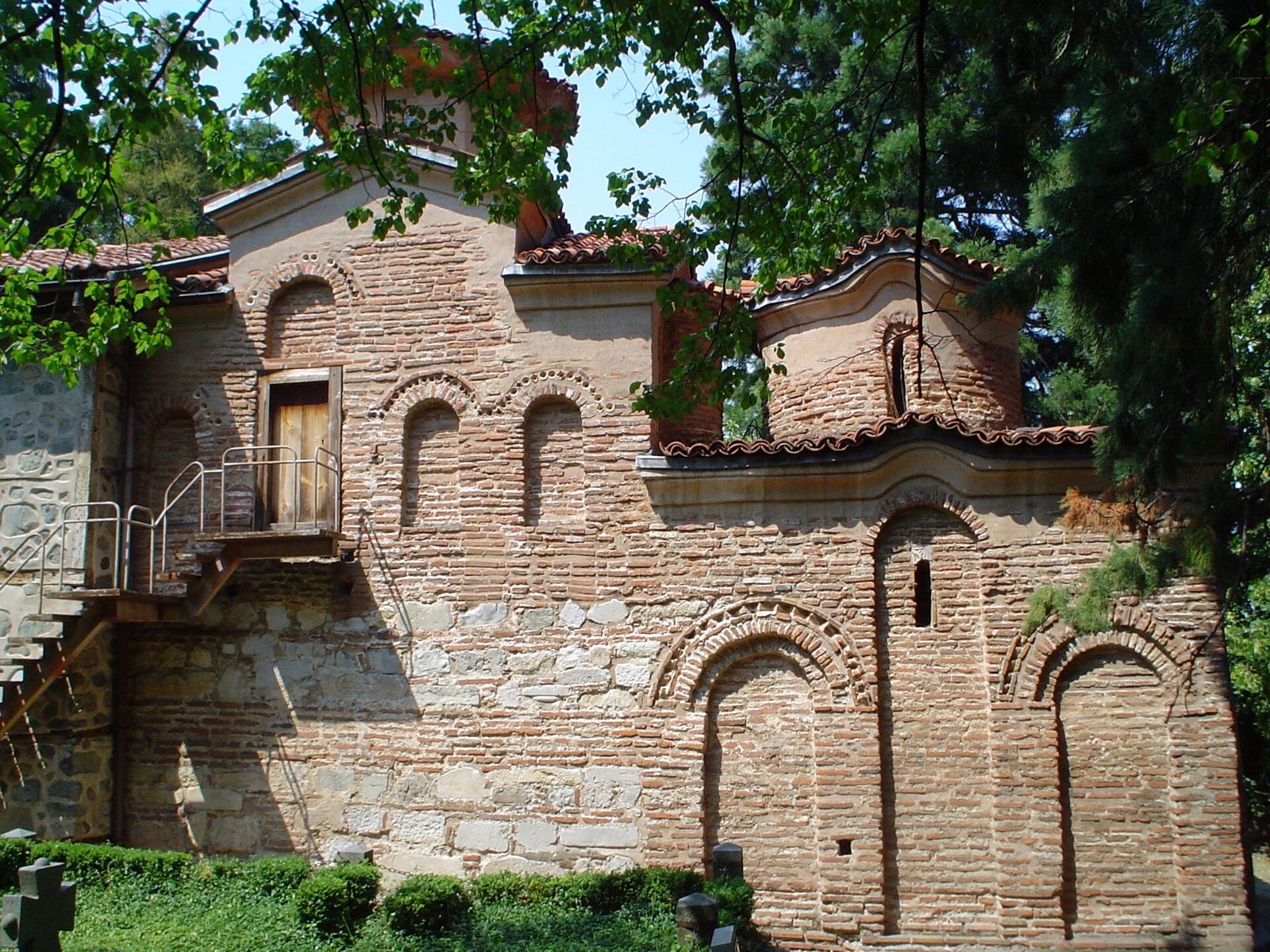
Boyana Church: Visiting Sofia's UNESCO Frescoes
A tiny UNESCO church under Vitosha with frescoes from 1259. Tickets, time slots, the bus out and what to find inside.
Read the guide