Kukeri and the Surva Festival
Kukeri are Bulgaria's winter monsters: dancers in animal hides, carved masks and belts of heavy bells who leap through the villages to chase evil out. They come out between New Year and the start of Lent, and the biggest gathering is Surva in Pernik, about 30 km west of Sofia. Here is what the costumes mean, when to see them and how to get to Surva on your own.
What are kukeri?
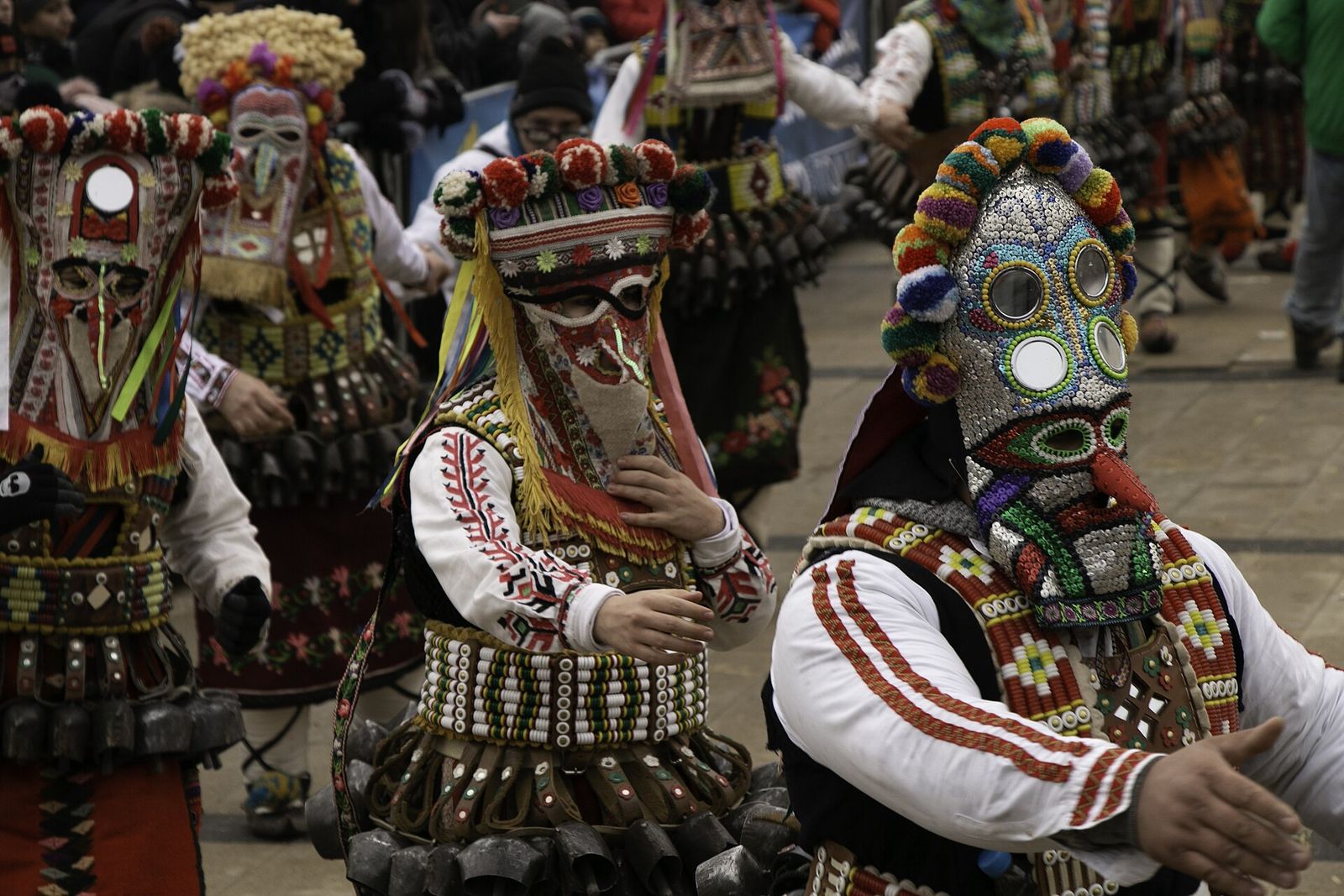
Kukeri (one is a kuker) are costumed dancers who walk, jump and stamp through Bulgarian villages in winter to scare away evil spirits. The costume covers most of the body: a carved mask, often with horns, a suit of animal hide and a belt of big bells. When a group moves, the bells make a wall of noise, meant to drive out the old year and its bad luck and to bring health, fertility and a good harvest.
The kukeri used to be men and boys. Today women and children join the groups too, and at Surva children as young as four or five march in full costume next to the adults. Of all Bulgaria's traditions, this is the loudest, and it is the one I'd build a winter trip around.
The kukeri costume: masks, hides and bells
Every costume is made by hand, and many pass down through families. New ones take their makers months of work before the season starts. Each region has its own look, from the giant shaggy masks of the Pernik villages to the bear-like figures of the Rhodope Mountains.
The mask
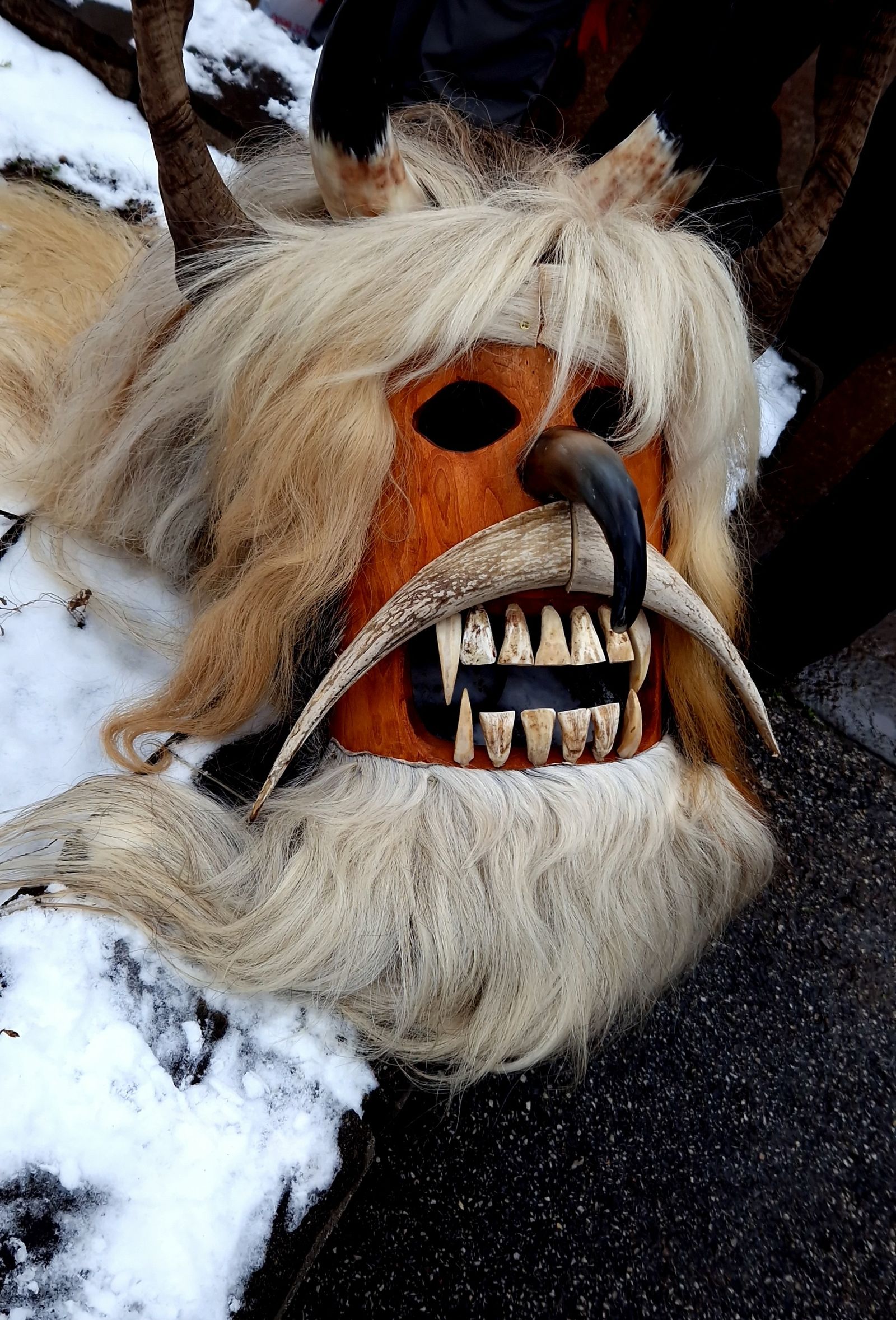
Masks are carved from wood and built up with horns, feathers, beads, wool, embroidery and small mirrors that catch the light. Most show animals or monsters with beaks, tails and large teeth, and some have two faces. At Surva the tallest costumes reach 5 meters or more, so the dancer underneath carries a small tower.
The hides
The body of the costume is made of goat or sheep skins worn shaggy side out, which turns the wearer into an animal from the neck down.
The bells
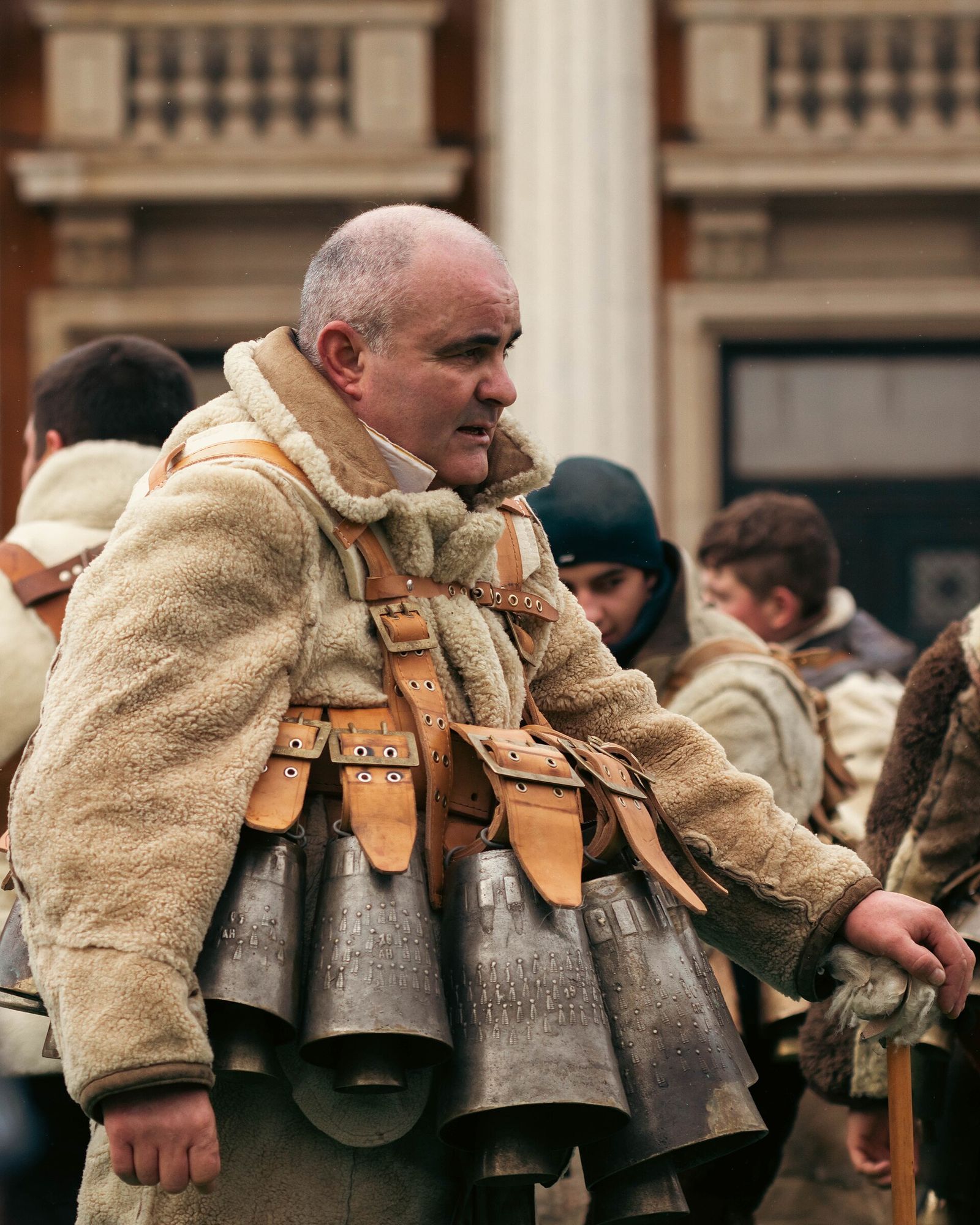
Rows of copper or bronze bells hang from a belt at the waist, and some of them weigh many kilos. A kuker leaps and stamps to make them clang, and a group in step sets up a sound you hear long before you see the dancers.
| Part | What it is made of | What it is for |
|---|---|---|
| Mask | Carved wood, horns, feathers, beads, wool, mirrors | Frightens evil spirits and dazzles the crowd |
| Hide | Goat or sheep skin, fur side out | Turns the dancer into a beast |
| Bells | Copper or bronze bells on a belt | Noise that drives out evil and the old year |
Kukeri or survakari: what the names mean
In western Bulgaria, around Pernik, the masked dancers are called survakari. They belong to the old New Year, which Bulgaria counted by the Julian calendar until 1916, so the village groups come out around 13 and 14 January. Elsewhere in the country they are kukeri, and they come out around New Year and in the days before Lent. In Razlog they are also called chaushi, and some regions say babushari.
The Balkans have close cousins. Greek Thrace has the kalogeros, North Macedonia the babari or mechkari (the bear-men), and Romania pairs its masked figures with a goat. The festival in Pernik uses both Bulgarian names: it is a contest for kukeri and survakari groups.
What happens at a kukeri ritual
In a village, the group goes from house to house, traditionally at night, so that sunrise never finds them on the road. At each door they dance, clang and bless the household. Then they gather on the square to dance wildly in front of everyone, and the day can include mock plowing and sowing, a pretend wedding and characters such as an emperor and his court.
The festival performances tell a short version of the same story. A bride and groom come out with a priest, a bear threatens them, and the kukeri jump and clang until the bear is tied up and led away. Some groups recreate old weddings in detail, and some add jokes about politics and daily life.
Where the kukeri tradition comes from
Nobody knows for sure. In the 19th century, scholars saw the kukeri as a leftover of the Thracian cult of Dionysus, and Bulgarian folklorists liked the idea, because it tied village customs to the classical world. Most researchers now place the kukeri in a wider Balkan mumming tradition that took shape in the early modern period, with Slavic, Greek, Albanian and Turkish influences mixed in.
The name is just as open. One theory takes it from a Proto-Slavic word for an evil spirit, which would make a kuker "a chaser of evil spirits". Another links it to an old god called Kuk.
When the kukeri come out
The season runs from New Year to the start of Orthodox Lent, and each village keeps its own day.
| When | What | Where |
|---|---|---|
| 1 January | New Year kukeri | Razlog |
| Around 13 and 14 January | Survakari for the old New Year | Villages of the Pernik region |
| Late January, usually the last weekend | Surva, the International Festival of Masquerade Games | Pernik |
| The Sunday before Orthodox Lent (Sirni Zagovezni) | Kukeri before Lent | Villages around the country |
| Varies by village | Rhodope mummers and southeastern kukeri | Shiroka Laka, the Yambol area |
Sirni Zagovezni moves with Easter. In 2027 Orthodox Easter is on 2 May, which puts the Sunday before Lent on 14 March.
The Surva festival in Pernik
Surva is the biggest masquerade festival in Bulgaria and on the Balkan Peninsula. The first one was held on 14 to 16 January 1966, started by the choreographer Yordan Nikolov as "Pernik Winter", and the Municipality of Pernik has run it since. It went international in 1985, Pernik joined the Federation of European Carnival Cities in 1995, and in 2009 the town was named the European capital of survakari and kukeri traditions.
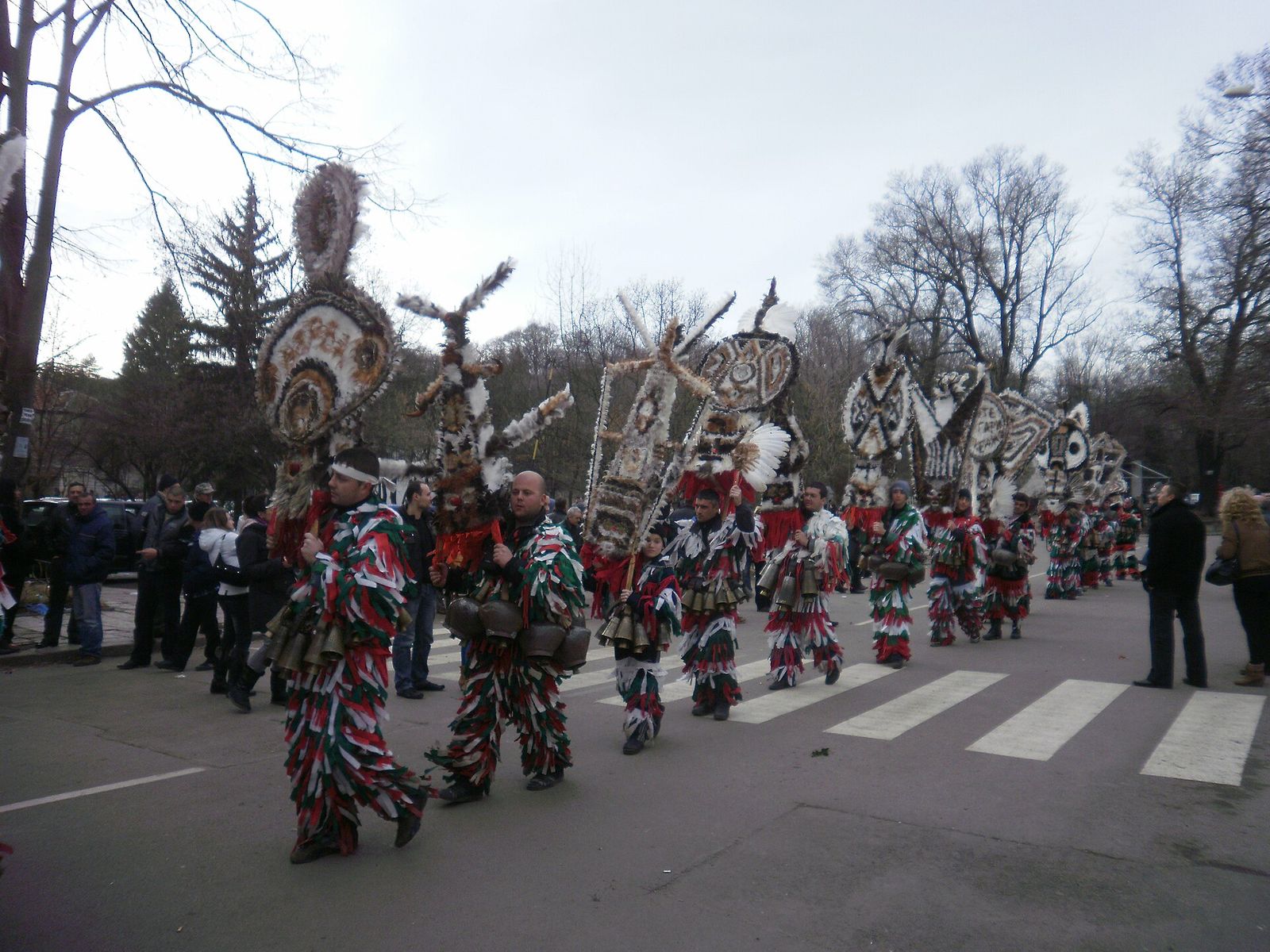
UNESCO added the Surova folk feast of the Pernik region to its list of intangible heritage in 2015. Most villages of the region have their own masquerade group, and the festival usually draws around 10,000 performers, with groups from about 20 countries. In 2024 and 2025 there were over 12,000.
It usually runs from the last Friday to the last Sunday of January. In 2026 it ran from 16 to 25 January, over a week and two weekends. Entry is free, and everything happens in the center of Pernik.
What you see at Surva
The action happens in two places. A stage in front of the Palace of Culture hosts the visiting groups from abroad, who perform their own dances. The main event is the parade of Bulgarian kukeri and survakari, which moves along a long route lined with spectators and ends on a big square, where each group performs for about five minutes in front of the judges.
The groups wait along the parade route for their turn, warming up and ringing their bells, so that is where you get closest to the costumes. If I had one day, I'd spend the morning on the route and the afternoon by the square for the performances.
Food stalls sell mixed grill, kebapche and kyufte, the grilled meat staples of Bulgarian food, and craft stalls sell kukeri dolls and small masks.
Getting to Pernik from Sofia
Pernik is close enough to make Surva one of the easiest day trips from Sofia in winter. You do not need a hotel in Pernik; sleep in Sofia and go back and forth.
| How | Time | Cost | Good to know |
|---|---|---|---|
| Train from Sofia Central Station | About 1 hour | A few euros | About one train an hour; standing room only on Surva Saturdays |
| Bus | About 1.5 hours | About €2 to €3 one way | Cheap, slower than the train |
| Car | 30 to 40 minutes | Fuel and parking | Streets close for the parade, so arrive in the morning to park |
| Taxi | 30 to 40 minutes | Metered fare | Few taxis in Pernik for the ride back |
The train is the one I'd take. Trains in Bulgaria are slow and cheap, and this line is short, but on Surva weekends people get left on the platform when a train is full. Get to the station early to find the right platform and a seat.
Kukeri beyond Pernik
Surva is the easy one to reach, and the kukeri come out in towns and villages across Bulgaria.
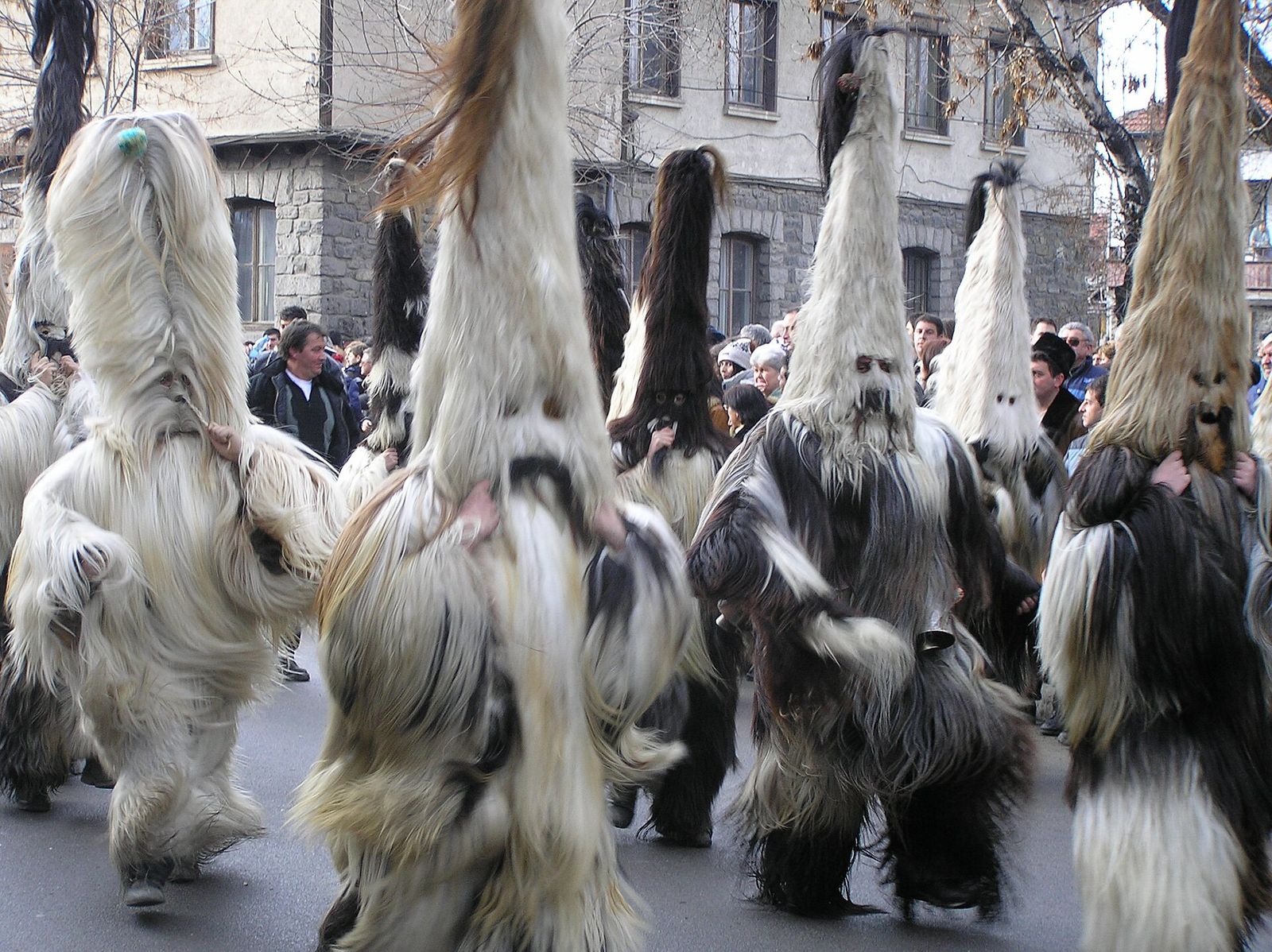
Razlog, in the southwest, sends its kukeri out on New Year's Day, 1 January, in tall costumes of long goat hair. Razlog is the town next to Bansko, so a New Year in the ski resort puts you a short drive from the parade. Shiroka Laka in the Rhodopes has its own mummers, and the Yambol area in the southeast keeps kukeri traditions too.
Tips for watching the kukeri
- Dress for January. Pernik in late January can be close to freezing, and standing still for hours feels colder. Wear layers, a hat and gloves.
- Wear shoes you do not care about. The ground is often wet and muddy, and in a crowd that size someone will step on your feet.
- Bring cash. Many of the food and craft stalls take cash only, so carry small notes.
- Give the dancers space. The hides and bells are heavy, so let a dancer catch his breath before you ask for a photo.
- Think about small children. The masks are made to frighten, and they do frighten some toddlers.
Surva fits well into Sofia in winter, with ski days on Vitosha and the kukeri a train ride away.
Seeing kukeri traditions in Sofia
For kukeri in costume and bells, you go to Pernik or the villages. In the city, the ethnography hall of the National Historical Museum has ornate folk costumes and a section on the calendar holidays, the yearly cycle of rituals the kukeri belong to.
The next big tradition after the kukeri is the martenitsa on 1 March, when Bulgarians tie red and white threads on each other's wrists to welcome spring. The kukeri come from the same village world as the horo and the gaida of Bulgarian folk music, and Surva sits at the start of the Bulgarian festival year, which runs on to the rose harvest and fire-dancing in June. A small kuker doll from a Surva craft stall makes one of the better Bulgarian souvenirs to bring home.
Key takeaways
- Kukeri are masked dancers in hides and bells who drive off evil and the old year in winter.
- They come out from New Year to the Sunday before Orthodox Lent, and every village keeps its own day.
- Surva in Pernik, about 30 km from Sofia, is the biggest kukeri festival in the Balkans and free to watch.
- Surva usually falls on the last weekend of January; the train from Sofia takes about an hour.
- Go on Friday for space, wear warm shoes you do not mind ruining and carry cash.
Frequently asked questions
What is the kukeri festival in Bulgaria?
The big kukeri festival is Surva, the International Festival of Masquerade Games in Pernik, held every year since 1966. Thousands of kukeri and survakari from Bulgaria and abroad parade and compete in the town center, usually over the last weekend of January, and entry is free.
When is the kukeri festival in 2027?
Surva usually runs from the last Friday to the last Sunday of January, which in 2027 is 29 to 31 January. In 2026 it stretched over a week and two weekends, from 16 to 25 January, so check the year's program before you book.
Where did the kukeri tradition originate?
The kukeri come from the winter rituals of Bulgarian villages, where masked men went from house to house to drive out evil and bless the coming year. Similar mumming customs exist across the Balkans, from Greek Thrace to North Macedonia and Romania.
Is kukeri Thracian?
Possibly in part, but nobody can prove it. 19th-century scholars linked the kukeri to the Thracian cult of Dionysus, while most researchers today see them as part of a Balkan mumming tradition from the early modern period.
What is the difference between kukeri and survakari?
They are two names for very similar masked dancers. Survakari is the name in western Bulgaria around Pernik, where they come out for the old New Year in mid-January, and kukeri is the name in most other regions, where they come out around New Year and before Lent.
How do I get from Sofia to Pernik for Surva?
The train from Sofia Central Station takes about an hour and runs about once an hour, though it gets packed on festival Saturdays. A bus costs about €2 to €3 one way and takes about 1.5 hours, and a car takes 30 to 40 minutes, with hard parking near the center.
Can women be kukeri?
Yes. The ritual was once for men and boys, and today women and children take part at Surva and in the village groups too.
Is Surva good for children?
Yes for older children, who usually love the noise and the costumes. Some toddlers find the masks frightening, so keep a little distance from the parade route with very young kids.
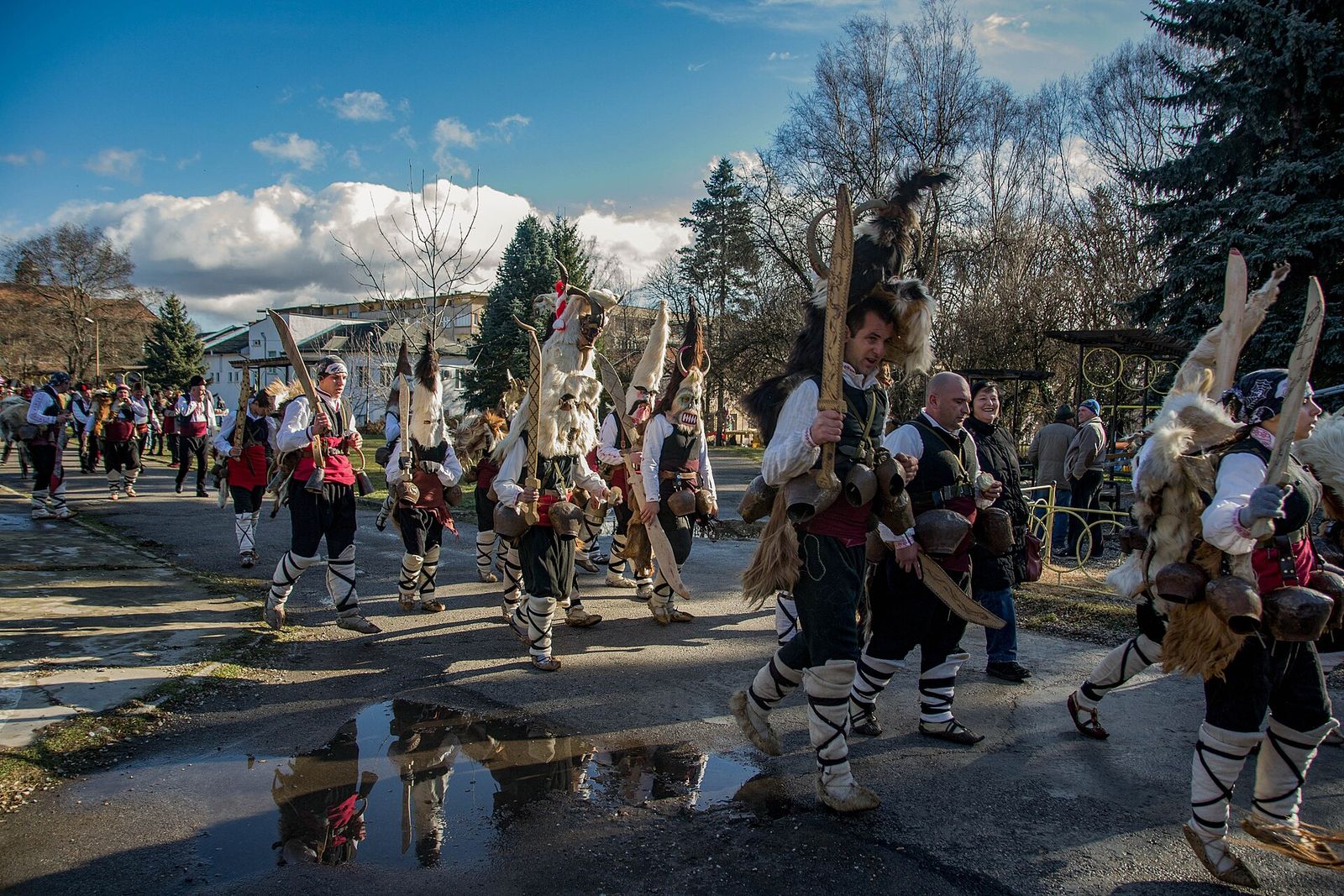
Bulgarian Culture and Traditions: A Visitor's Guide
Bulgaria gave the world Cyrillic, and has kukeri, fire-dancers and a nod that means no. Here is what to know.
Read the guide
Bulgarian Phrases for Travelers: The Words I'd Learn First
Bulgarian is written in Cyrillic and read the way it looks. Here are the phrases I would learn before a trip to Sofia.
Read the guide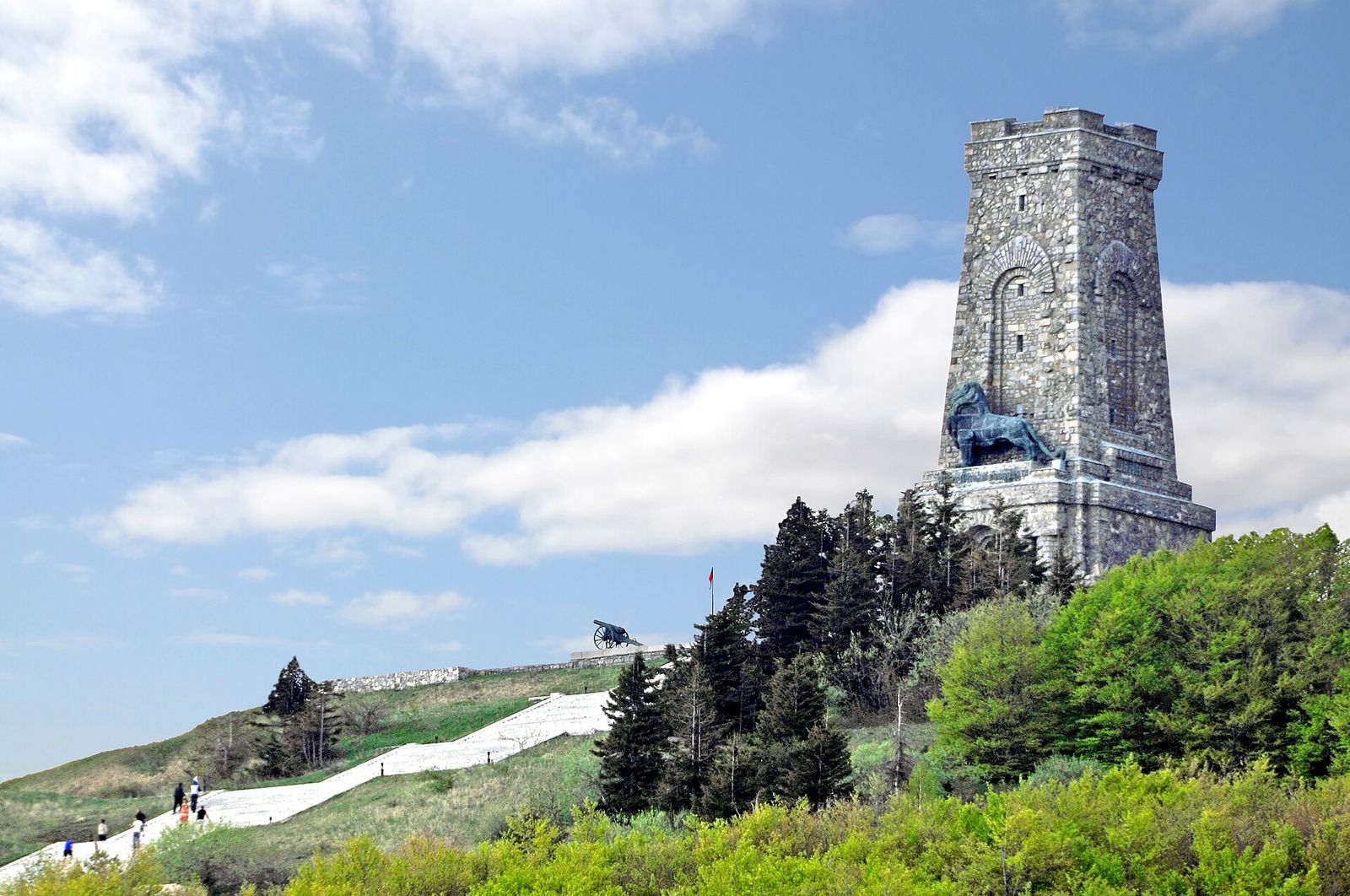
A Short History of Bulgaria
Bulgaria has kept its name since 681. Here is its history era by era, and where each chapter still stands in Sofia.
Read the guide