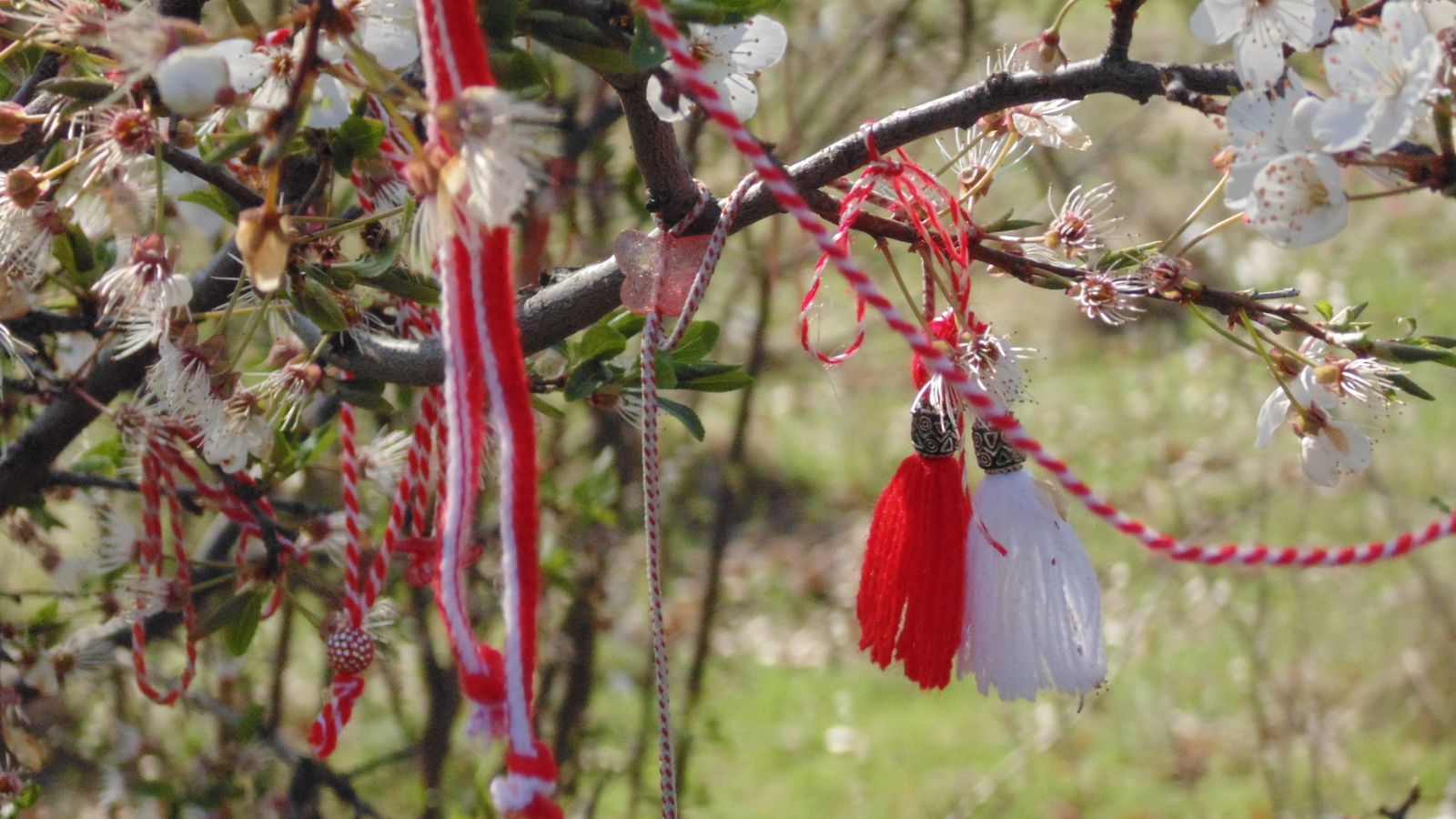
Martenitsa and Baba Marta
Every 1 March, Bulgarians tie red and white threads on each other's wrists and pin them to their coats. The charm is the martenitsa, and the day belongs to Baba Marta, Grandma March, whose moods decide the weather. This guide covers what the martenitsa means, how long to wear it, what to do with it after, and where to buy one in Sofia.
What is a martenitsa?
A martenitsa (plural martenitsi) is a small adornment of red and white yarn, twisted or braided together, usually in wool or cotton. Bulgarians give them to family, friends and colleagues on 1 March, Baba Marta Day, and wear them as a wish for good health and an easy passage from winter to spring.
The simplest form is a bracelet of two twisted threads, tied around the wrist. The best known is a pair of small yarn dolls, Pizho and Penda. Modern martenitsi take many more forms, often with colored beads and other decoration.
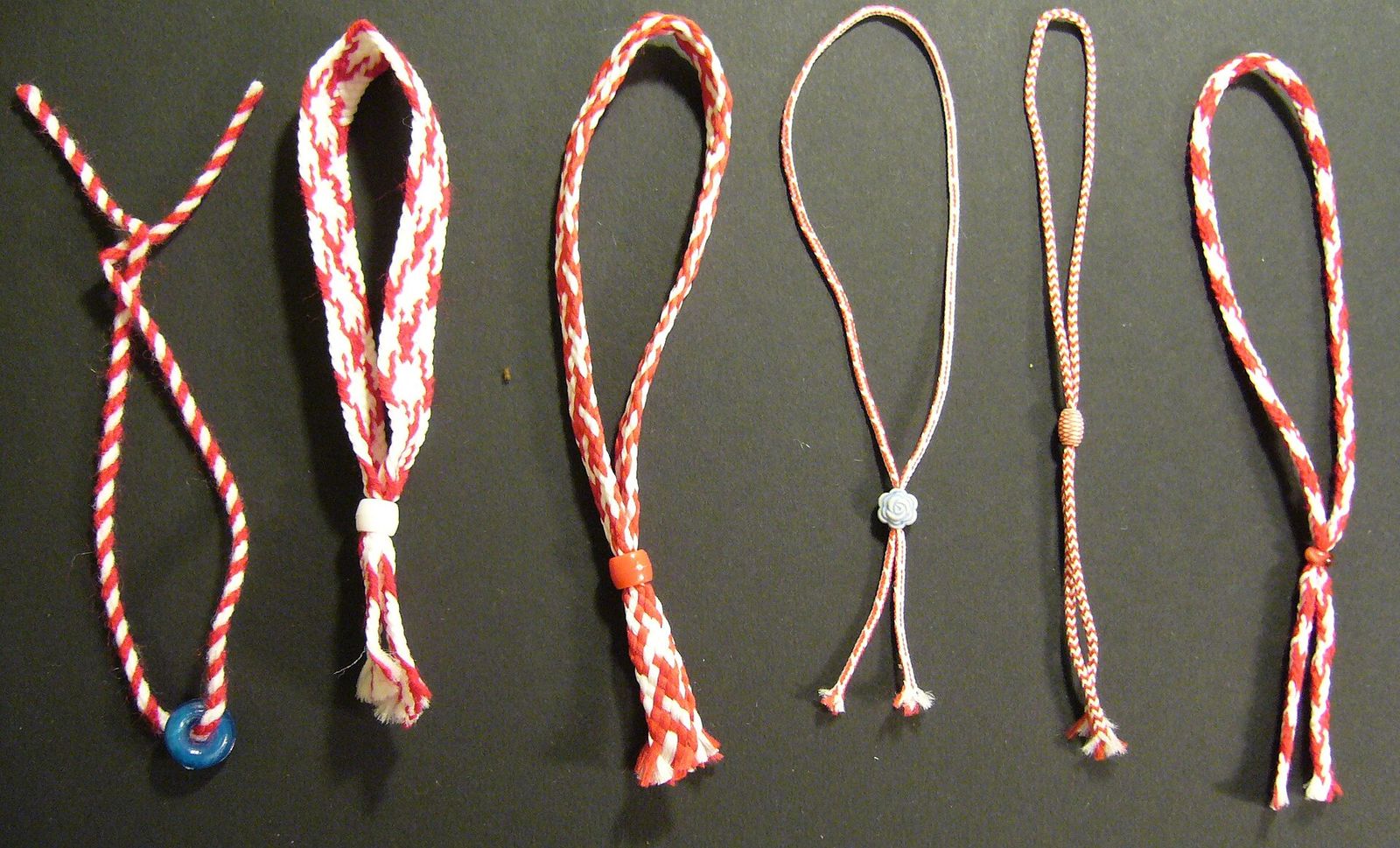
People wear them pinned to a coat or jacket, tied around the wrist or hung around the neck. By the evening of 1 March a Bulgarian child can easily have six or eight of them, and children like to compete over who has the most. In the mountain villages people also tie martenitsi on the house, the children and the animals.
Who is Baba Marta?
Baba Marta means Grandma March. In Bulgarian folklore she is an old woman who brings the end of winter, and her mood is the month's weather. When she smiles, the sun comes out. When she is angry, March sends frost and snow, and March in Bulgaria can do both in the same week. She is the only month that Bulgarians picture as a woman.
The stories differ from village to village. In most of them she has two brothers, January and February, called Golyam Sechko and Malak Sechko, and they put her in a bad temper. In one version they drank her wine. In another, she shakes out her mattress, and the feathers that fly out fall on the earth as the last snow of the year.
Wearing her red and white colors is a way of asking Baba Marta for mercy: be kind, let winter go, bring the spring. The first stork or swallow back from the south is the sign that she has calmed down and is about to retire.
What the red and white mean
| Color | What it stands for |
|---|---|
| Red | Life, health and birth; the stronger sun of spring; the female side |
| White | Purity, long life, cleansing; the melting snow of winter; the male side |
| Red and white together | Balance and renewal: winter giving way to spring, and a wish for health all year |
Long before the martenitsa took its present shape, red and colored threads were tied on children and young people to keep evil spirits and witchcraft away.
Pizho and Penda, the martenitsa dolls
Pizho and Penda are the classic martenitsa pair: two small dolls made of yarn, joined by a twisted cord. Pizho is the boy, mostly white. Penda is the girl, mostly red, and you can tell her by her skirt.
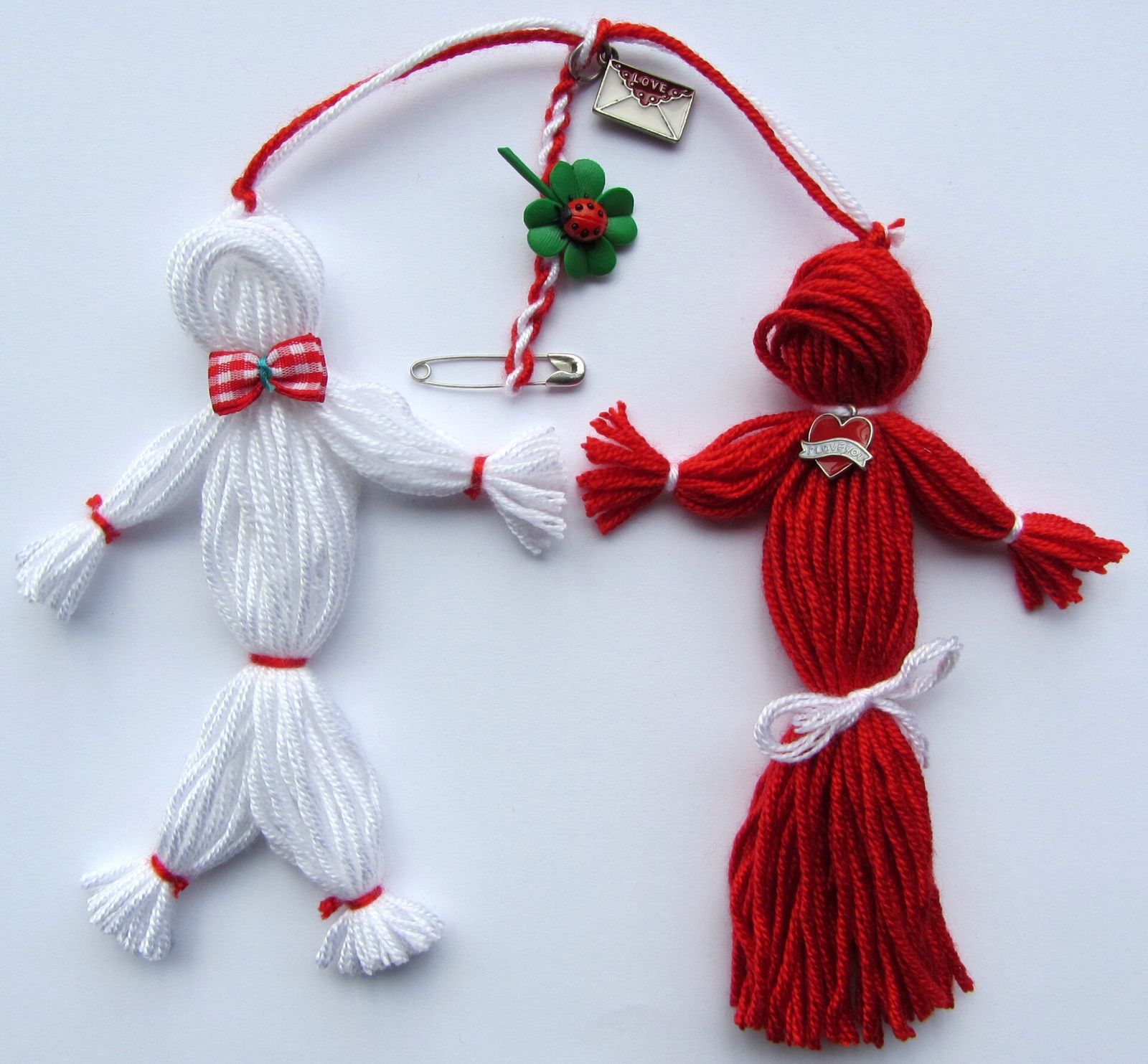
The two dolls stand for the male and female sides of life and the balance between them.
How Bulgarians celebrate 1 March
The rule is simple: a martenitsa is a gift. Parents give them to children, grandparents to grandchildren, friends to friends. Colleagues swap them at work, teachers give them to pupils and pupils give them back. Traditionally the women of the family made them by hand for everyone at home.
Whatever you wear should come from someone else. You buy martenitsi to give away, and a decoration for your own home is the exception. If nobody gives you one, any Bulgarian friend will fix that the moment they see your bare wrist.
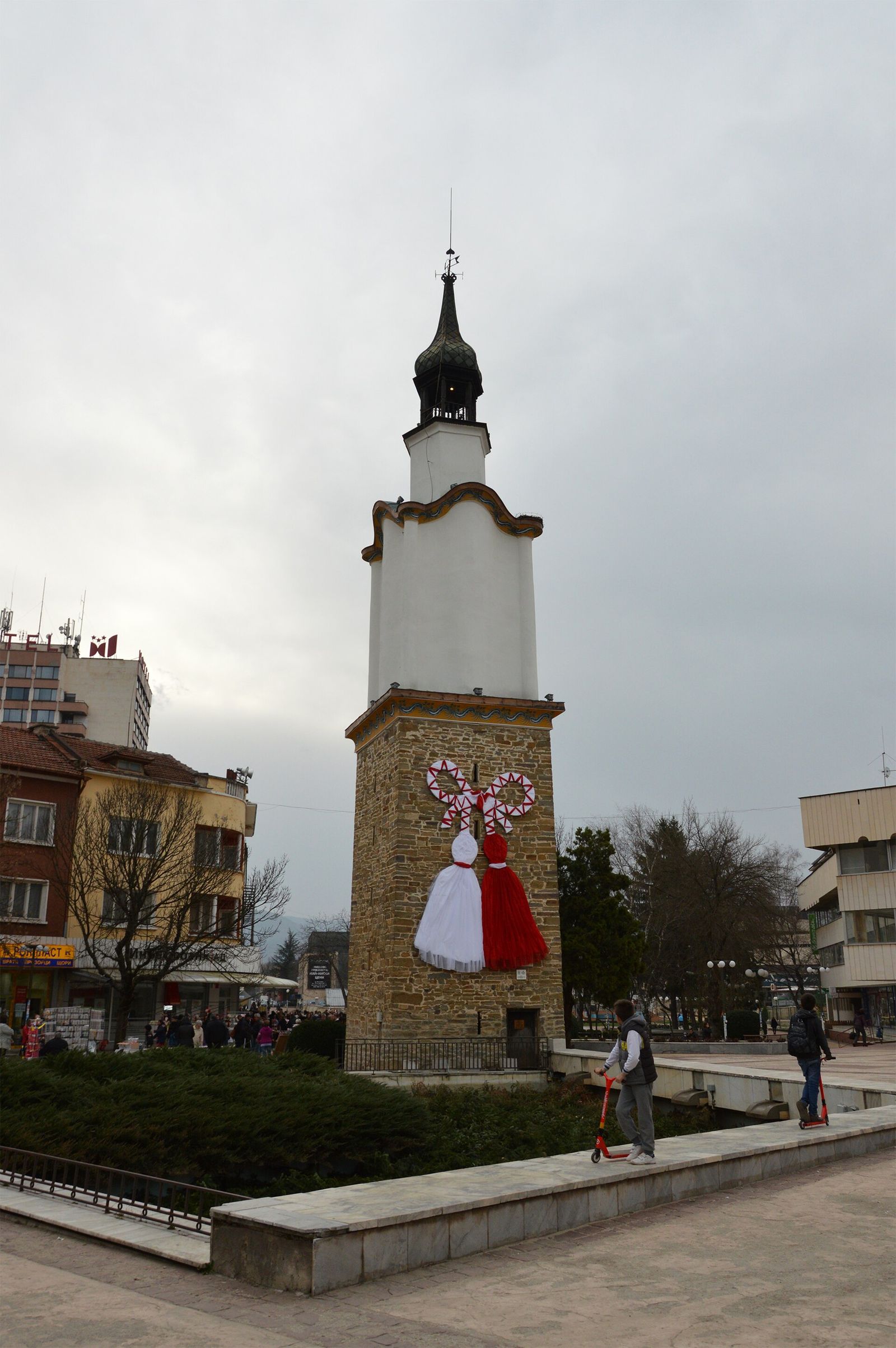
Towns dress up too: the town of Botevgrad hangs a giant Pizho and Penda on its clock tower. Old regional customs survive in places. In Troyan, women tie red wool on the fruit trees and on the horns of the cattle. Grandmothers around Haskovo dress in red on the day, and in Razgrad wives tie red cloth on the fruit trees at sunrise.
In the old days, where you wore it said something about you. Unmarried women wore their martenitsa on the left arm and married women on the right.
The Orthodox church marks 1 March as the feast of St Evdokia, which has no link to Baba Marta, so the day carries a saint's feast and a folk custom at once, much like the name days in Bulgarian culture.
How long you wear a martenitsa
You wear your martenitsa until you see the first sign of spring: a stork, a swallow or a tree in blossom. Then you take it off and tie it to a blossoming tree, ideally a fruit tree, to pass on the health and luck it gave you. That is why the trees in Sofia's parks and courtyards are hung with red and white from mid to late March.
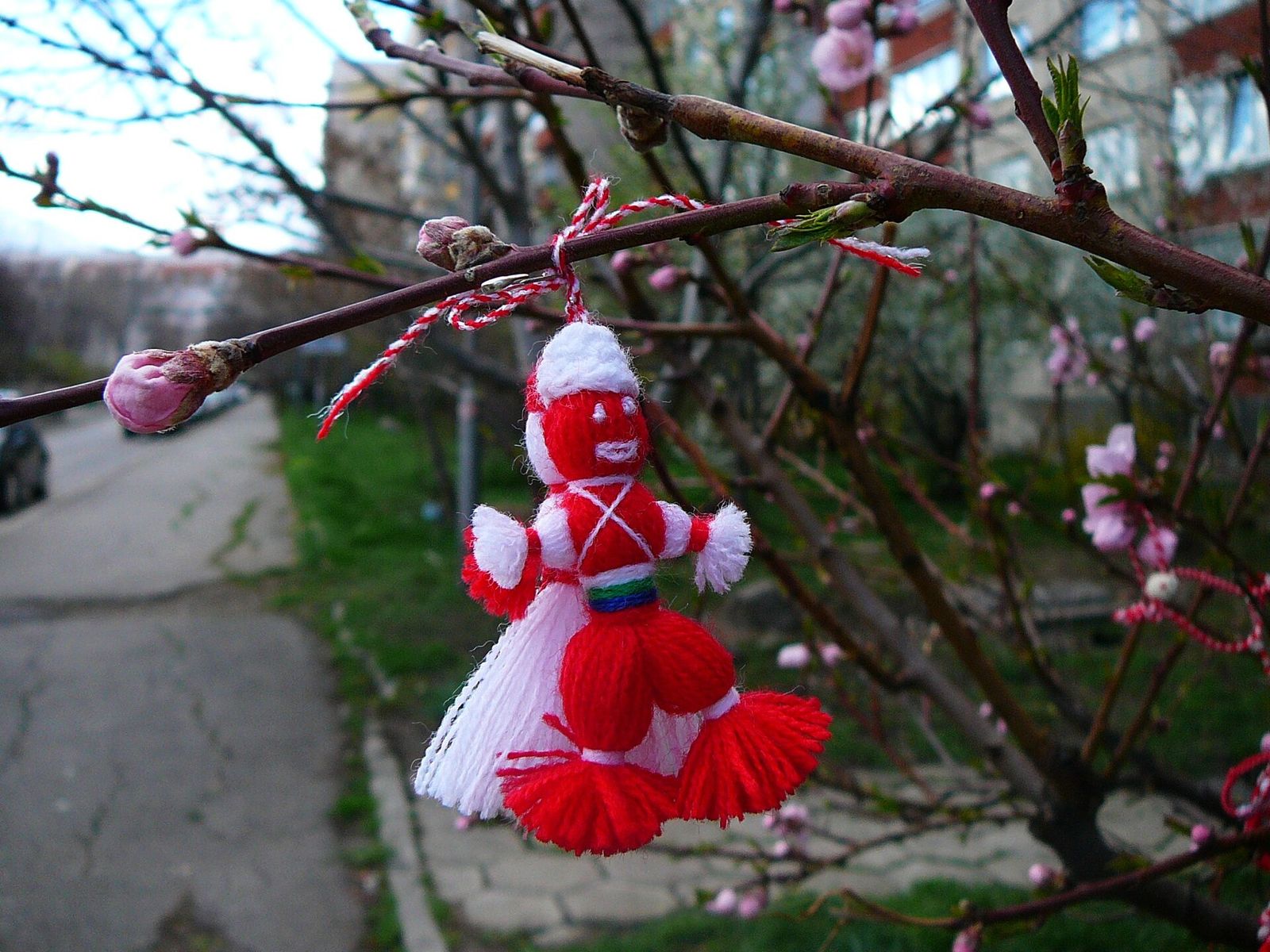
Some families put the martenitsa under a stone instead. The next morning you lift the stone and look at what lives closest to it. A worm or a larva means a healthy year, an ant means success that takes hard work, and a spider means a year of bad luck.
How long that takes depends on the spring and on where you are. If you have seen none by the end of March, it is fine to take it off then.
Where to buy a martenitsa in Sofia
From about the last week of February, temporary stalls go up near metro stations and along the pedestrian streets. In Sofia you will find them on Vitosha Boulevard and near Sveta Nedelya Square, with prices in three bands.
| Kind | Price |
|---|---|
| Mass-made thread bracelet or small doll pair | About €0.25 to €1.50 |
| Better designs, and handmade pieces from the craft fairs | About €2 to €7.50 |
| Handmade by a skilled maker | About €8 to €30 |
I'd buy a handful of the cheap bracelets to give away and one nicer handmade piece as a keepsake. A martenitsa is one of the lightest and cheapest Bulgarian souvenirs to carry home.
With people I have just met, I'd hand the martenitsa over and let them put it on themselves, and keep the tying for family and friends. If someone ties one on you, the polite thing under Bulgarian etiquette is to wear it until your stork or blossoming tree.
The legends behind the martenitsa
The most famous story ties the martenitsa to the founding of Bulgaria. Khan Asparuh, who founded the Bulgarian state in 681, sent doves with white threads to carry news of his victory over the Byzantines at Ongal. On the way the threads were stained with blood, and the red and white thread became the first martenitsa. The story comes from an early 20th-century telling, and it links a spring charm to the start of Bulgarian history.
The custom itself is older. It goes back to the pagan farming rites of the Balkans, and scholars have suggested Thracian, Greek or Roman origins. In the early Roman calendar, 1 March was New Year's Day.
Martenitsa outside Bulgaria
Bulgaria shares the custom with its neighbors, each with its own name.
| Country | Name | Day |
|---|---|---|
| Bulgaria | Martenitsa | 1 March |
| North Macedonia | Martinka | 1 March |
| Romania and Moldova | Mărțișor | 1 March |
| Greece | Martis | 1 March |
| Albania | Verore | 14 March, the old 1 March of the Julian calendar |
In 2017 UNESCO added the "Cultural practices associated to the 1st of March" to its list of intangible heritage, as a joint listing for Bulgaria, North Macedonia, Romania and Moldova. Bulgarian communities in southeastern Serbia, around Bosilegrad and Dimitrovgrad, keep Baba Marta as well.
When to be in Bulgaria for Baba Marta
1 March falls at the very start of spring, when Sofia is still cool, with average highs of about 9°C. The best time to visit Sofia for warm weather comes later, but a trip in late February or early March gives you the martenitsa stalls, the red and white wrists on the metro and, a few weeks on, the trees hung with threads.
It also makes a neat pair with the winter traditions. The masked kukeri come out in January, and the martenitsa follows on 1 March, two of the festivals and holidays in Bulgaria that mark the turn from winter to spring. Two days later, on 3 March, Bulgaria celebrates Liberation Day, its national holiday.
Key takeaways
- A martenitsa is a red and white yarn charm that Bulgarians give each other on 1 March for health.
- Baba Marta, Grandma March, is the moody old woman of folklore whose temper sets the March weather.
- Someone gives you your martenitsa; you wear it until you see a stork, a swallow or a tree in blossom.
- Then you tie it to a blossoming tree, or put it under a stone to read the year ahead.
- In Sofia, stalls on Vitosha Boulevard and around Sveta Nedelya sell simple ones from about €0.25.
Frequently asked questions
Why do Bulgarians wear a martenitsa?
Bulgarians wear a martenitsa as a wish for health and a good year as winter turns to spring. The red and white threads are also an old protection against bad luck and the sharp moods of Baba Marta, Grandma March.
What is Baba Marta?
Baba Marta is both a folk figure and a holiday. She is Grandma March, an old woman whose moods decide the March weather, and Baba Marta Day on 1 March is when Bulgarians exchange martenitsi and greet each other with Chestita Baba Marta.
What is the history of Baba Marta?
The custom comes from pre-Christian spring rites of the Balkans, with possible Thracian and Roman roots; in the early Roman calendar 1 March was New Year's Day. A popular Bulgarian legend links the first martenitsa to Khan Asparuh, founder of the Bulgarian state in 681.
When do you take off a martenitsa?
You take it off when you see your first stork, swallow or blossoming tree, which is usually some time in March. If you have seen none by the end of March, take it off then, and tie it to a blossoming tree or put it under a stone.
Can you buy a martenitsa for yourself?
By tradition, no: the martenitsa you wear should be a gift, and the ones you buy are for giving away. Decorations for your own home are the exception, and nobody will mind a visitor who buys a souvenir to take home.
What do you do with a martenitsa after you take it off?
Most people tie it to a blossoming tree, ideally a fruit tree, to pass its luck on. Some put it under a stone and check the next morning what creature is closest to it, which is said to tell what kind of year is coming.
Is a martenitsa the same as a Mărțișor?
They are close relatives. Romania and Moldova give the red and white Mărțișor on 1 March with very similar customs, and UNESCO listed the traditions together in 2017, along with Bulgaria and North Macedonia.
Where can I buy a martenitsa in Sofia?
From the last week of February, street stalls sell them near metro stations, on Vitosha Boulevard and near Sveta Nedelya Square, with simple bracelets from about €0.25.
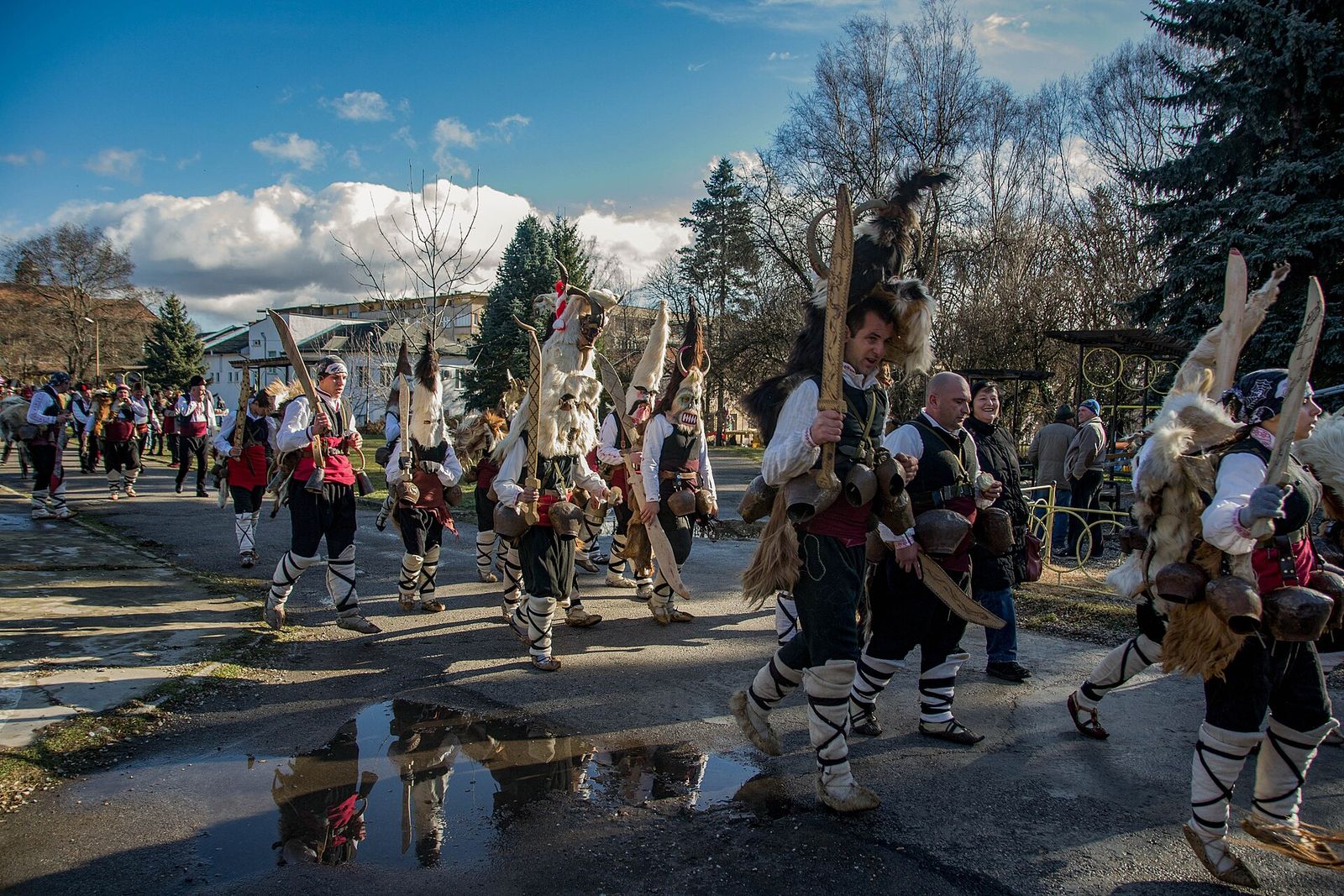
Bulgarian Culture and Traditions: A Visitor's Guide
Bulgaria gave the world Cyrillic, and has kukeri, fire-dancers and a nod that means no. Here is what to know.
Read the guide
Bulgarian Phrases for Travelers: The Words I'd Learn First
Bulgarian is written in Cyrillic and read the way it looks. Here are the phrases I would learn before a trip to Sofia.
Read the guide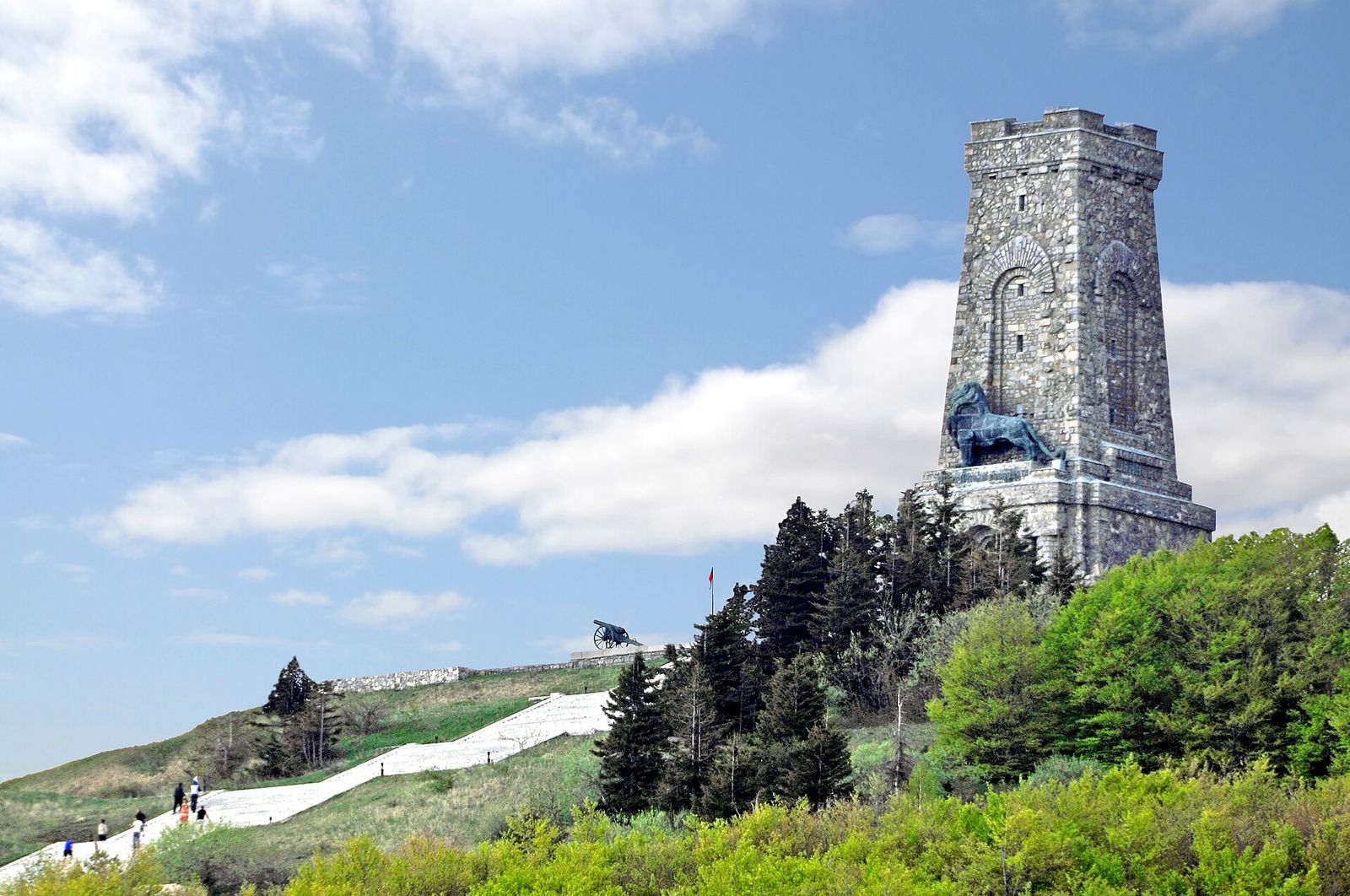
A Short History of Bulgaria
Bulgaria has kept its name since 681. Here is its history era by era, and where each chapter still stands in Sofia.
Read the guide