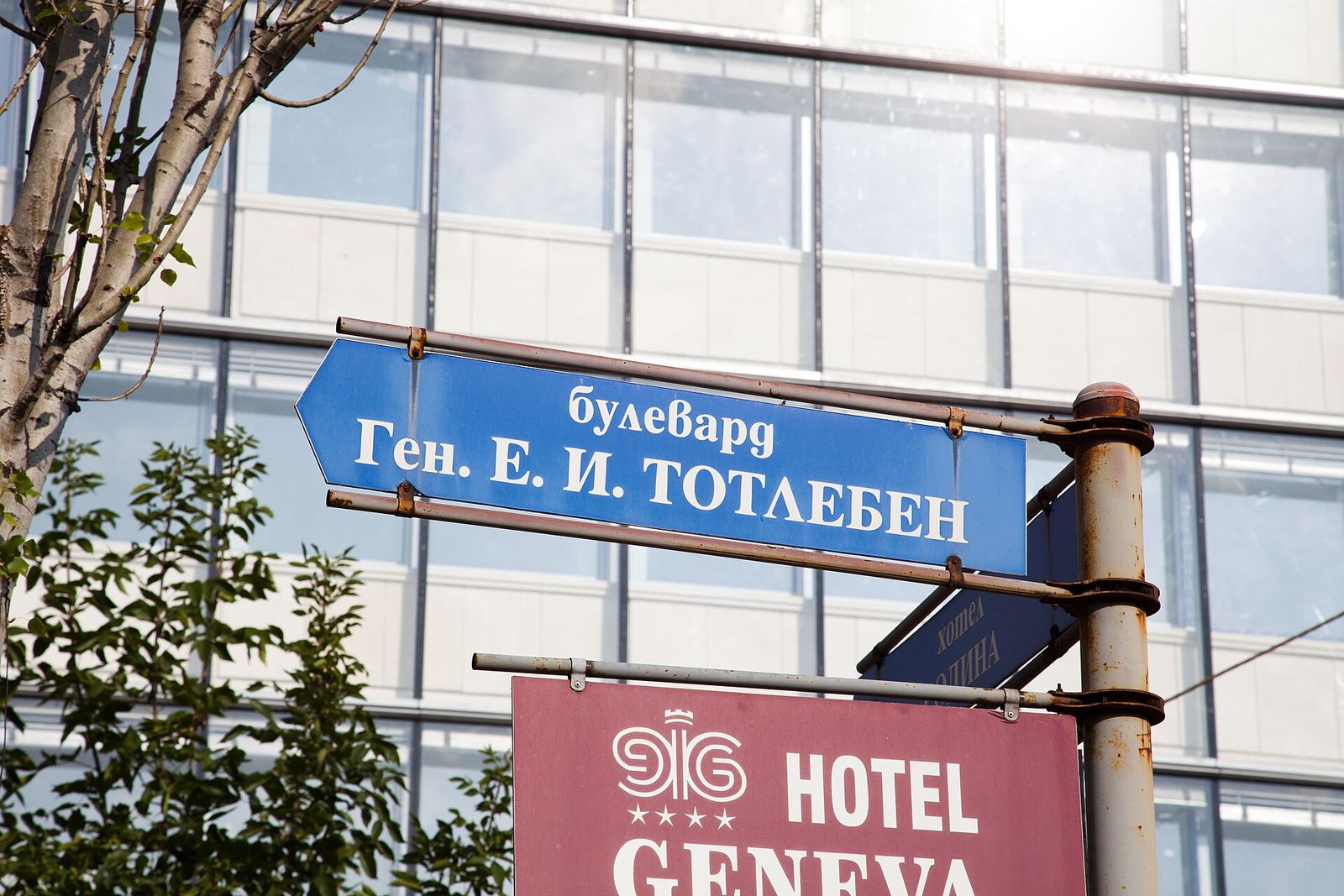
The Cyrillic Alphabet in Bulgaria
Bulgaria is where Cyrillic was born, at the end of the 9th century, and its 30 letters cover every street sign, menu and metro map in Sofia. This guide gives you each letter with its sound and a word you will see on your first day, the letters that trick English speakers, how Bulgarian Cyrillic differs from Russian, and what happens on 24 May, the holiday Bulgarians give their alphabet.
The Bulgarian alphabet at a glance
Cyrillic is the official writing system of Bulgarian. Modern Bulgarian uses 30 letters: six vowels and 24 consonant letters or signs. The good news for a visitor is that Bulgarian is almost fully phonetic. Each letter keeps its sound nearly every time, so once you know the letters you can sound out any word, even one you have never heard.
А, К, М, О and Т work much like their English twins, and Е is close. Most of the rest are new shapes, and a handful are traps. I'd learn the traps first, because they are the ones that make a sign read as nonsense.
All 30 letters and how they sound
This is the full alphabet in order, with the closest English sound and a word you are likely to see in Sofia in your first 24 hours.
| Letter | Sounds like | A word you will see |
|---|---|---|
| А а | a in father | Аптека, apteka (pharmacy) |
| Б б | b in boy | Банка, banka (bank) |
| В в | v in van | Вход, vhod (entrance) |
| Г г | g in go | Гара, gara (train station) |
| Д д | d in dog | Добър ден, dobar den (good day) |
| Е е | e in bed | Евро, evro (euro) |
| Ж ж | s in treasure | Жени, zheni (women) |
| З з | z in zoo | Затворено, zatvoreno (closed) |
| И и | ee in see | Изход, izhod (exit) |
| Й й | y in yes | Чай, chay (tea) |
| К к | k in kite | Каса, kasa (ticket desk or till) |
| Л л | l in lamp | Летище, letishte (airport) |
| М м | m in moon | Метро, metro (metro) |
| Н н | n in no | Не, ne (no) |
| О о | o in for | Отворено, otvoreno (open) |
| П п | p in pen | Пазар, pazar (market) |
| Р р | rolled r | Ресторант, restorant (restaurant) |
| С с | s in sun | София, Sofiya (Sofia) |
| Т т | t in top | Театър, teatar (theater) |
| У у | oo in moon | Улица, ulitsa (street) |
| Ф ф | f in fun | Фурна, furna (bakery) |
| Х х | h, like ch in loch | Хляб, hlyab (bread) |
| Ц ц | ts in cats | Цена, tsena (price) |
| Ч ч | ch in chair | Чешма, cheshma (drinking fountain) |
| Ш ш | sh in shoe | Шопска, shopska (the salad) |
| Щ щ | sht in fresh tea | Поща, poshta (post office) |
| Ъ ъ | u in but | България, Bulgaria |
| Ь ь | softens the letter before it | Шофьор, shofyor (driver) |
| Ю ю | you | Юг, yug (south) |
| Я я | ya in yard | Бояна, Boyana |
Ь is the odd one out. It has no sound of its own and adds a light y to the letter before it, as in шофьор. Two sounds take two letters in Bulgarian: дж for the j in jam, and дз for dz.
The six false friends
The hardest part of the alphabet is your own muscle memory. Six Bulgarian letters look like Latin letters and make a different sound:
- В is v, as in Вход (vhod, entrance).
- Н is n, as in Не (ne, no).
- Р is r, as in Ресторант (restorant).
- С is s, as in София (Sofiya).
- Х is h, as in Хотел (hotel).
- У is oo, as in Улица (ulitsa, street).
The new shapes are easier than they look, because each one is a single sound. Ж looks like a bug and sounds like the s in pleasure. Ч looks like the number 4 and is ch. Ш looks like a trident and is sh. Щ is Ш with a small tail, and in Bulgarian it is a hard sh plus t: дъщеря, dashterya, is daughter. Я looks like a backwards R and says ya.
Ъ, the most Bulgarian letter
Ъ is called er golyam, the big er, and it is a full vowel in Bulgarian. It sounds like the u in turn, burn or under, a short sound from the back of the throat. The most famous word with it is the country's own name, България, said "Buh-lgaria".
Ъ is also why place names look different on maps. Bulgaria's official transliteration writes Ъ as a, so Търново becomes Tarnovo, and Veliko Tarnovo is the medieval capital you will see on every bus timetable. The same system writes Щ as sht, Ц as ts, Ж as zh, Й as y, Ю as yu and Я as ya. That gives you Sofiya on official signs, Tsar Osvoboditel for the boulevard of the Tsar Liberator, and Shishman for Tsar Shishman Street.
How Bulgarian Cyrillic differs from Russian
Bulgarian uses 30 letters and Russian uses 33. Bulgarian has no Ё, Ы or Э. Ъ is a full vowel in Bulgarian, while in Russian it is a hard sign with no sound of its own. Bulgarian Щ is a crisp "sht", so the word for night, нощ, is said "nosht".
Reading street signs, menus and doors in Sofia
Street signs in Sofia give the name in Cyrillic. Learn three abbreviations and most signs open up: ул. is улица (ulitsa, street), бул. is булевард (bulevard, boulevard) and пл. is площад (ploshtad, square). Once you can sound out бул. Витоша, you will find Vitosha Boulevard on any sign.
Station names on the Sofia metro are good practice: Сердика is Serdika, the stop for the Largo, and НДК is NDK, the stop for the National Palace of Culture.
| On the sign | Say it | It means |
|---|---|---|
| Вход | vhod | Entrance |
| Изход | izhod | Exit |
| Отворено | otvoreno | Open |
| Затворено | zatvoreno | Closed |
| Бутни | butni | Push |
| Дърпай | darpay | Pull |
| Тоалетна | toaletna | Toilet |
| Мъже / Жени | mazhe / zheni | Men / Women |
| Каса | kasa | Ticket desk or till |
| Спирка | spirka | Stop (bus or tram) |
| Аптека | apteka | Pharmacy |
| Меню | menyu | Menu |
Menus are where reading pays off fastest. Баница is banitsa, кебапче is kebapche, шопска салата is shopska salata, ракия is rakiya, бира is bira and вино is vino. Most of Bulgarian food is easy to order once you can sound out the dish names, and пазар (pazar, market) is the word to look for on the way to Zhenski Pazar, the Women's Market.
Bulgarians say yes and no with da (да) and ne (не), and both are worth reading as well as hearing, because the head gestures can run the other way from what you expect. That part of Bulgarian etiquette catches out almost every visitor.
Where Cyrillic came from
Two brothers, Saints Cyril and Methodius, created the first Slavic alphabet, Glagolitic, in the 9th century. After their deaths, their disciples were welcomed in Bulgaria, where literary schools grew up at Preslav and at Ohrid. At the end of the 9th century and the start of the 10th, writers at the Preslav Literary School developed a second script with the support of Tsar Simeon I. It took most of its letters from Greek, added signs from Glagolitic for Slavic sounds, and was named after Saint Cyril.
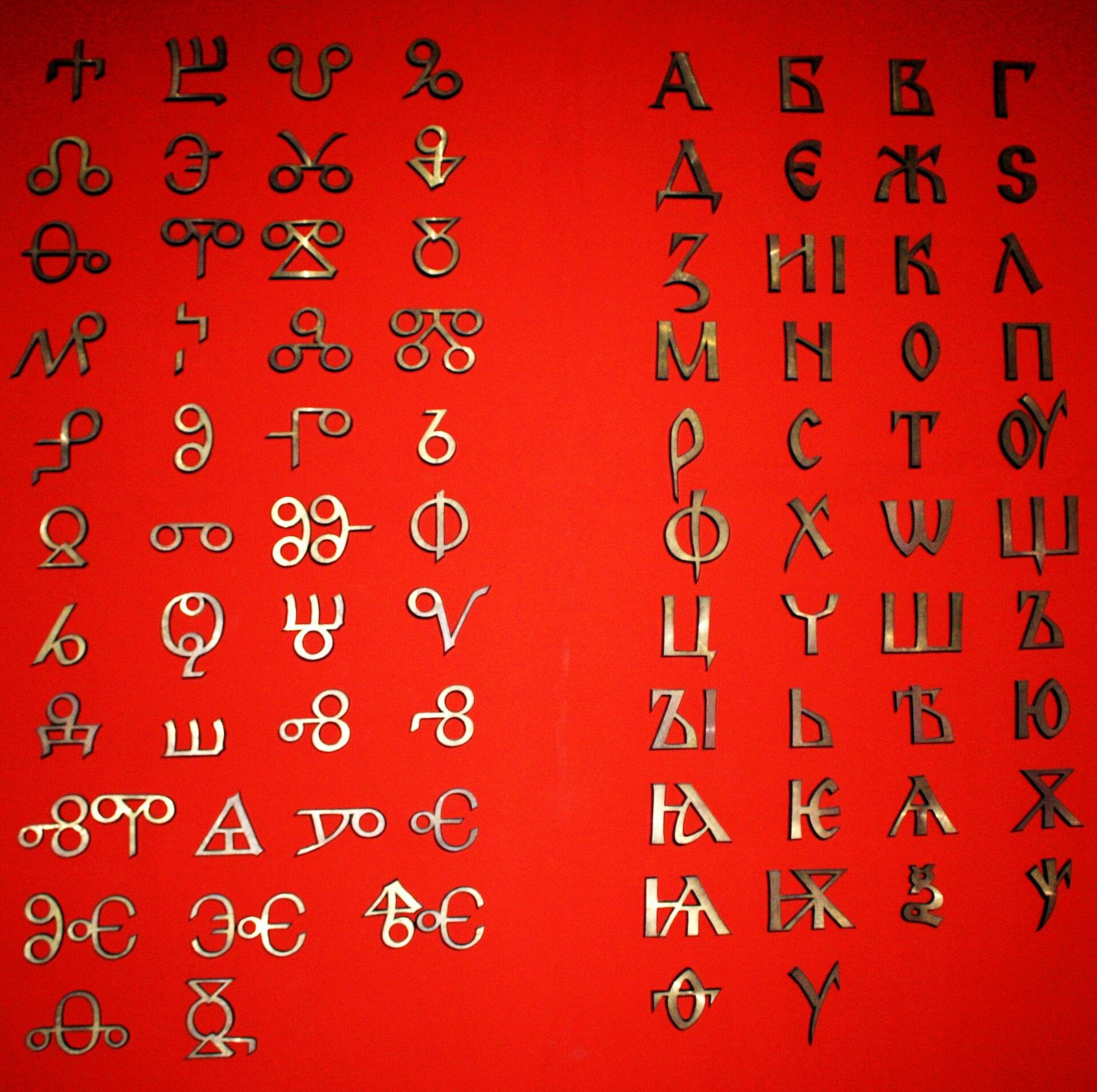
Cyrillic was in official use in Bulgaria from 893, the year Simeon the Great took the throne, and his reign became the golden age of the First Empire in the history of Bulgaria.
The modern alphabet is younger. Marin Drinov's 32-letter version took hold in the 1870s, and the spelling reform of 1945 removed two old letters, yat (Ѣ) and the big yus (Ѫ), which left the 30 letters used today.
When Bulgaria joined the European Union on 1 January 2007, Cyrillic became the EU's third official script after Latin and Greek. Nineteen years later, on 1 January 2026, the country took the euro, and since then money in Bulgaria has been counted in евро, evro.
24 May: the day of the Bulgarian alphabet
24 May is the Day of the Holy Brothers Cyril and Methodius, of the Bulgarian Alphabet, Education and Culture and of Slavonic Literature, the full name it has carried since 2020. Bulgarians mostly call it the day of the alphabet, and it is the holiday I like best.
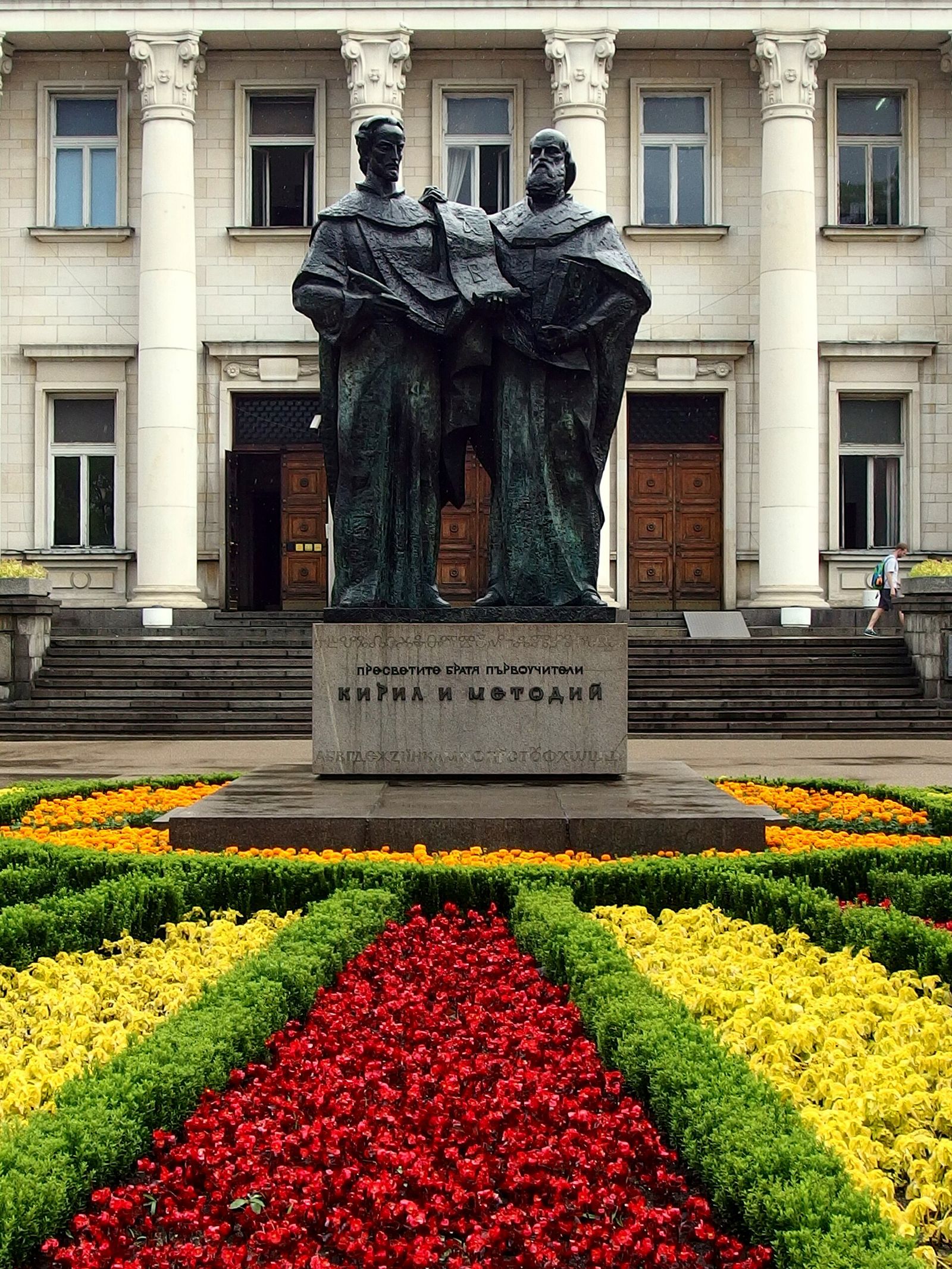
The first alphabet day was held in Plovdiv on 11 May 1851, by the old calendar, started by Nayden Gerov during the National Revival, and 24 May has been an official public holiday since 1990.
In Sofia the day centers on the statue of the two brothers in front of the Sts Cyril and Methodius National Library, put up in 1972. A ceremony there opens with a water blessing by the patriarch, and people lay flowers at the monument. Pupils, students and teachers march through the center, many in school uniform and carrying flowers. In 2026 the procession passed the Bulgarian Academy of Sciences, Sofia University and the National Library and ended at Alexander Nevsky Cathedral, with a concert by students from schools across the city.
Offices and schools close for the day, and 24 May sits with the martenitsa and the kukeri among Bulgaria's festivals and holidays.
Where to see the alphabet in Sofia
The statue at the National Library is the obvious first stop, and it is worth seeing on any day of the year. A few more places show the letters off:
- The National Historical Museum in Boyana has a display that sets Glagolitic and early Cyrillic letters side by side. It is out of the center, so I'd pair the National Historical Museum with Boyana Church.
- The Seven Saints Church, Sveti Sedmochislenitsi, is dedicated to Cyril, Methodius and five of their disciples, the men behind the script, and it is one of Sofia's best churches to step into.
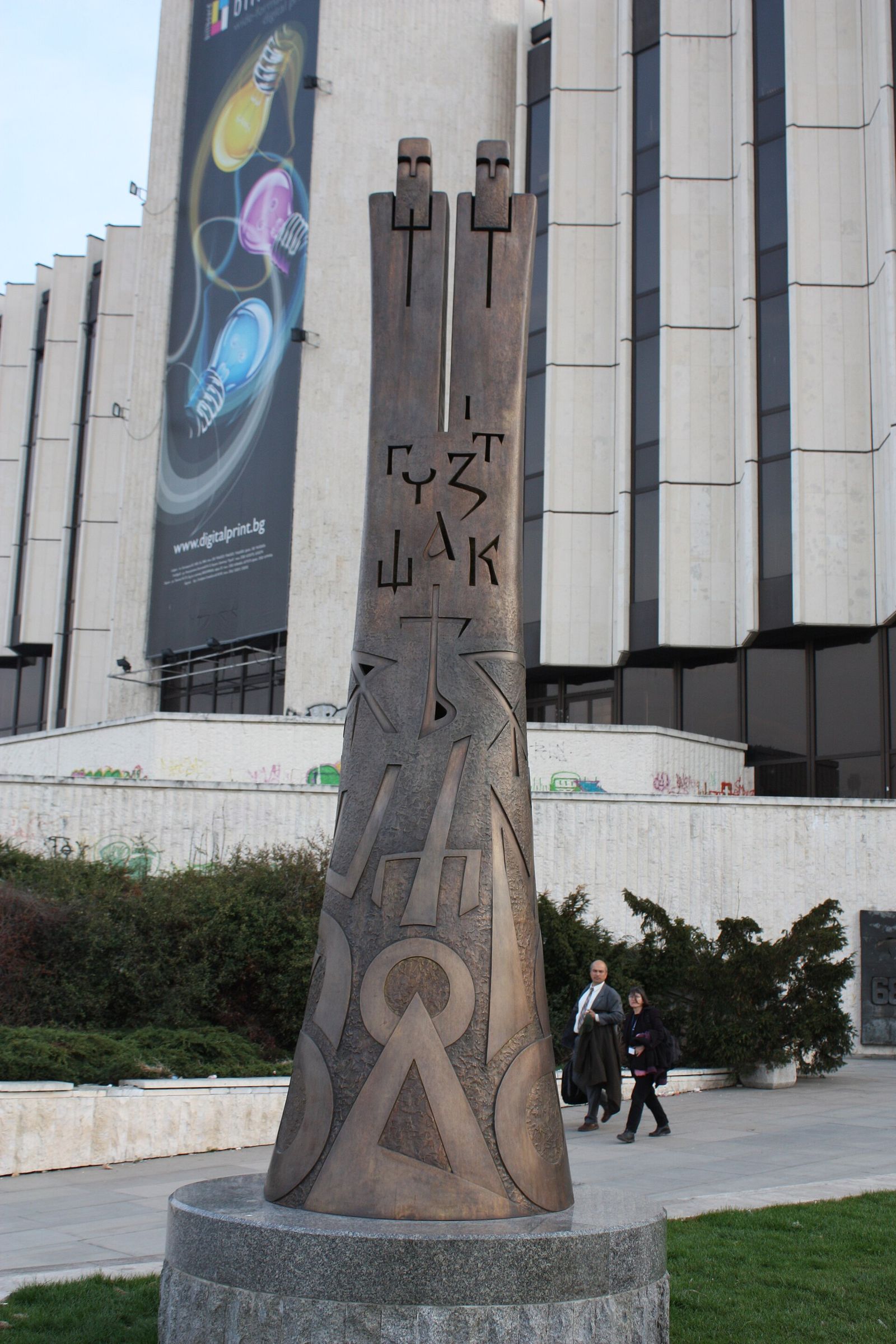
- The park at NDK has a tall sculpture of the two brothers in front of the National Palace of Culture, with Glagolitic letters cut into it.
- The antiques stalls by Alexander Nevsky sell old metal signs in Cyrillic, and a street sign or a shop plate from the flea market at Alexander Nevsky is the souvenir I'd pick for anyone who reads letters for fun.
Once the letters stick, the Bulgarian phrases worth learning first are short: zdraveyte (hello), blagodarya (thank you), molya (please) and smetkata, molya (the bill, please).
Key takeaways
- The Bulgarian alphabet has 30 letters and is almost fully phonetic, so you can read signs after an afternoon of practice.
- Learn the false friends first: В v, Н n, Р r, С s, Х h, У oo.
- Ъ sounds like the u in "but" and is written as a in Latin, which is why it is Tarnovo and not Tirnovo.
- Cyrillic was created at the Preslav Literary School in the First Bulgarian Empire, and it has been an official EU script since 2007.
- 24 May is the national holiday of the alphabet, with flowers at the Cyril and Methodius statue in front of the National Library.
Frequently asked questions
How many letters are in the Bulgarian alphabet?
There are 30 letters in the Bulgarian alphabet: six vowels and 24 consonant letters or signs. The count dates from the spelling reform of 1945, which removed two older letters.
Is Cyrillic based on Greek?
Mostly, yes. Cyrillic took most of its letters from the Greek alphabet and added signs from Glagolitic, the earlier Slavic script, for sounds Greek did not have.
Is the Bulgarian alphabet the same as the Russian one?
They are close but not the same. Bulgarian uses 30 letters and Russian 33, Bulgarian has no Ё, Ы or Э, and Ъ and Щ sound different in the two languages.
Which language is closest to Bulgarian?
Macedonian is the closest language to Bulgarian, and Bulgarians understand it easily. Serbian and Croatian come next, and Russian shares much of the vocabulary and the alphabet.
Is Bulgarian a hard language to learn?
The alphabet is the easy part, because Bulgarian is spelled the way it sounds. For a trip you only need to read signs and menus and learn a dozen phrases.
Is Bulgarian harder than Russian?
For reading, no: Bulgarian has three fewer letters than Russian and is spelled almost exactly as it sounds. The alphabets are similar enough that learning one gets you most of the way to reading the other.
How do Bulgarians say hi?
Bulgarians say zdravey (здравей) to one friend, zdraveyte (здравейте) to an older person or a group, and zdrasti (здрасти) casually. Dobar den (добър ден), good day, works in any shop or office.
What is celebrated on 24 May in Bulgaria?
24 May celebrates Saints Cyril and Methodius, the Bulgarian alphabet, education and culture. It is a national holiday, with processions of students and flowers at the brothers' statue in front of the National Library in Sofia.
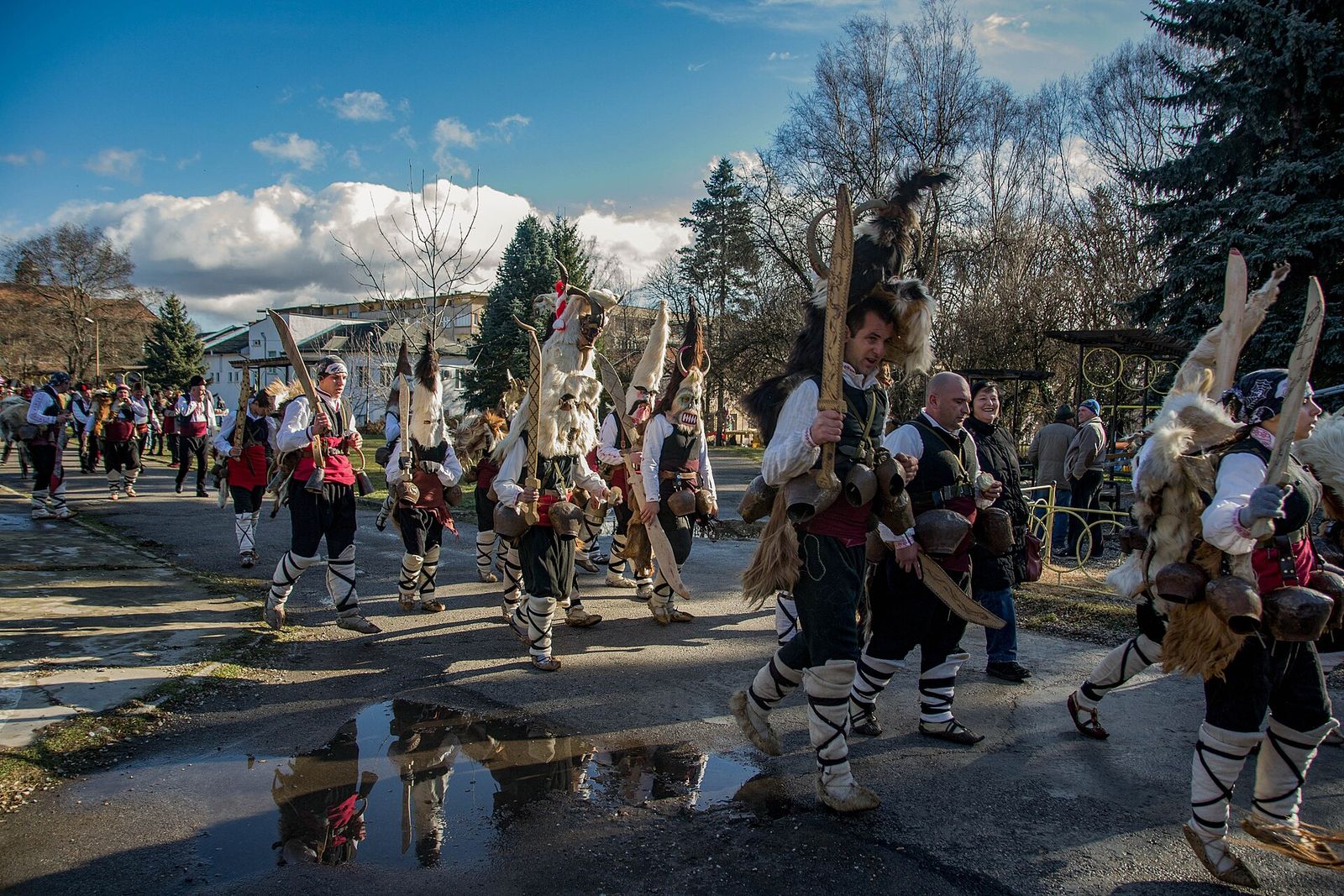
Bulgarian Culture and Traditions: A Visitor's Guide
Bulgaria gave the world Cyrillic, and has kukeri, fire-dancers and a nod that means no. Here is what to know.
Read the guide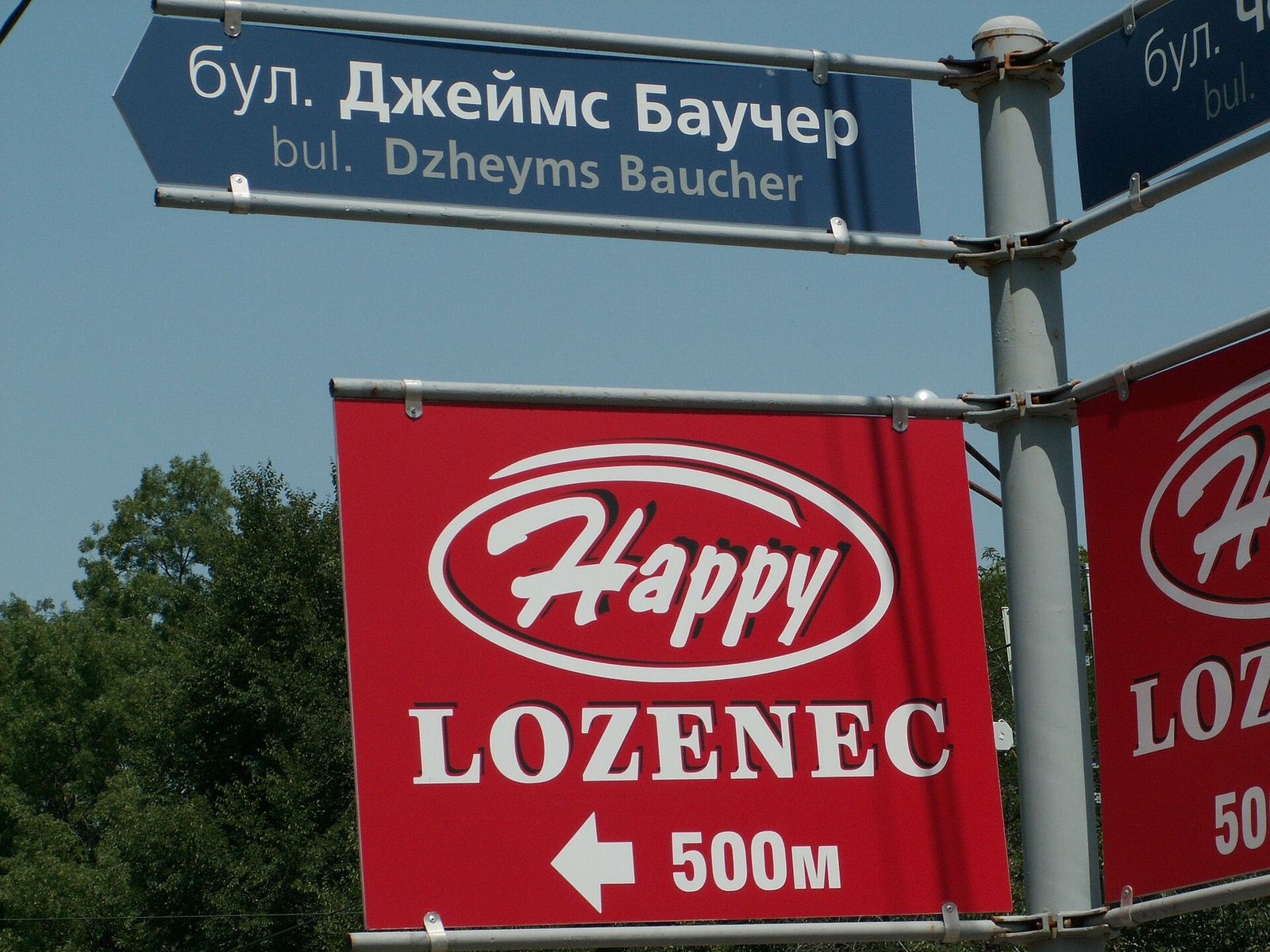
Bulgarian Phrases for Travelers: The Words I'd Learn First
Bulgarian is written in Cyrillic and read the way it looks. Here are the phrases I would learn before a trip to Sofia.
Read the guide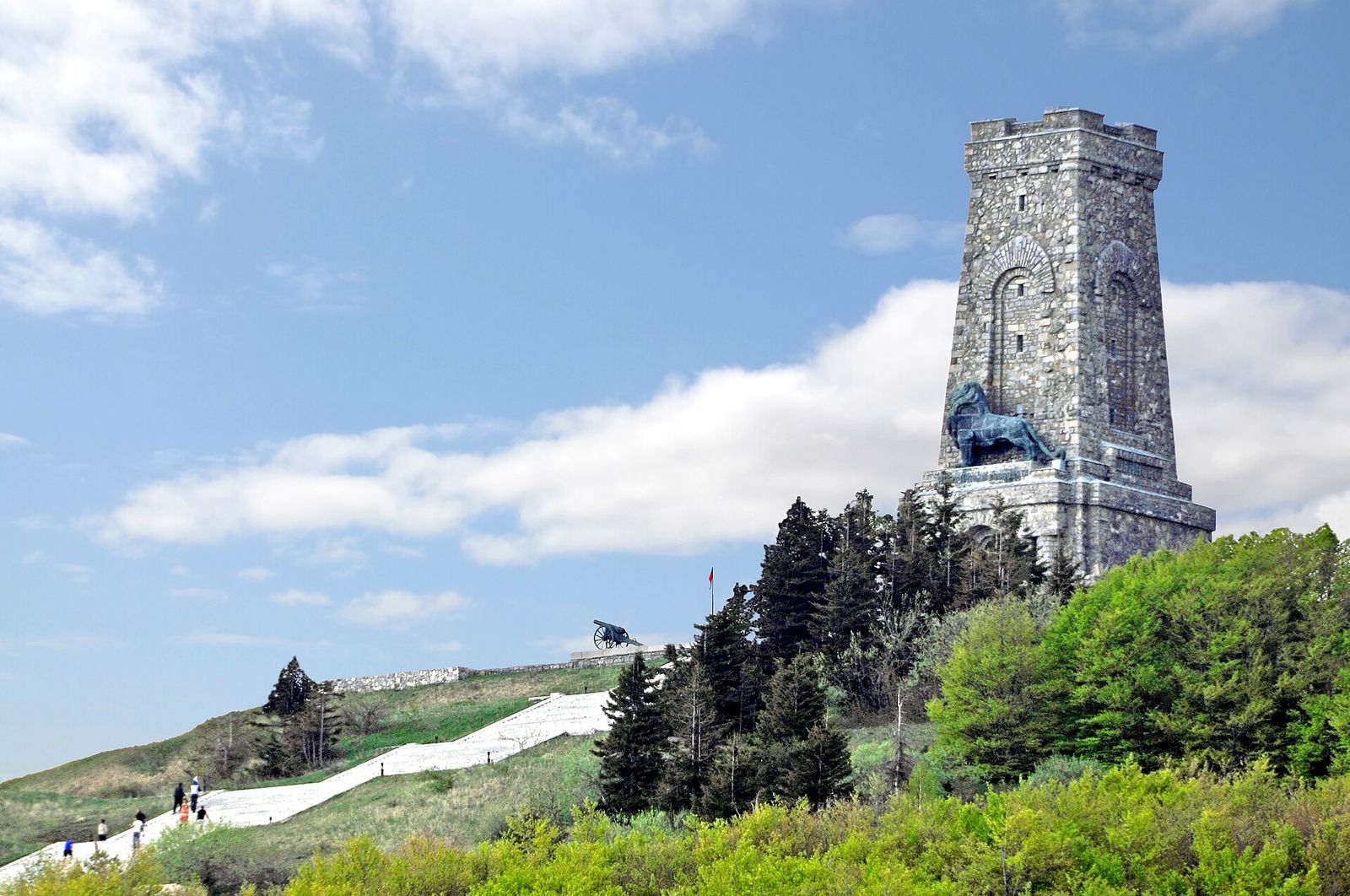
A Short History of Bulgaria
Bulgaria has kept its name since 681. Here is its history era by era, and where each chapter still stands in Sofia.
Read the guide