National Palace of Culture (NDK) in Sofia: A Visitor's Guide
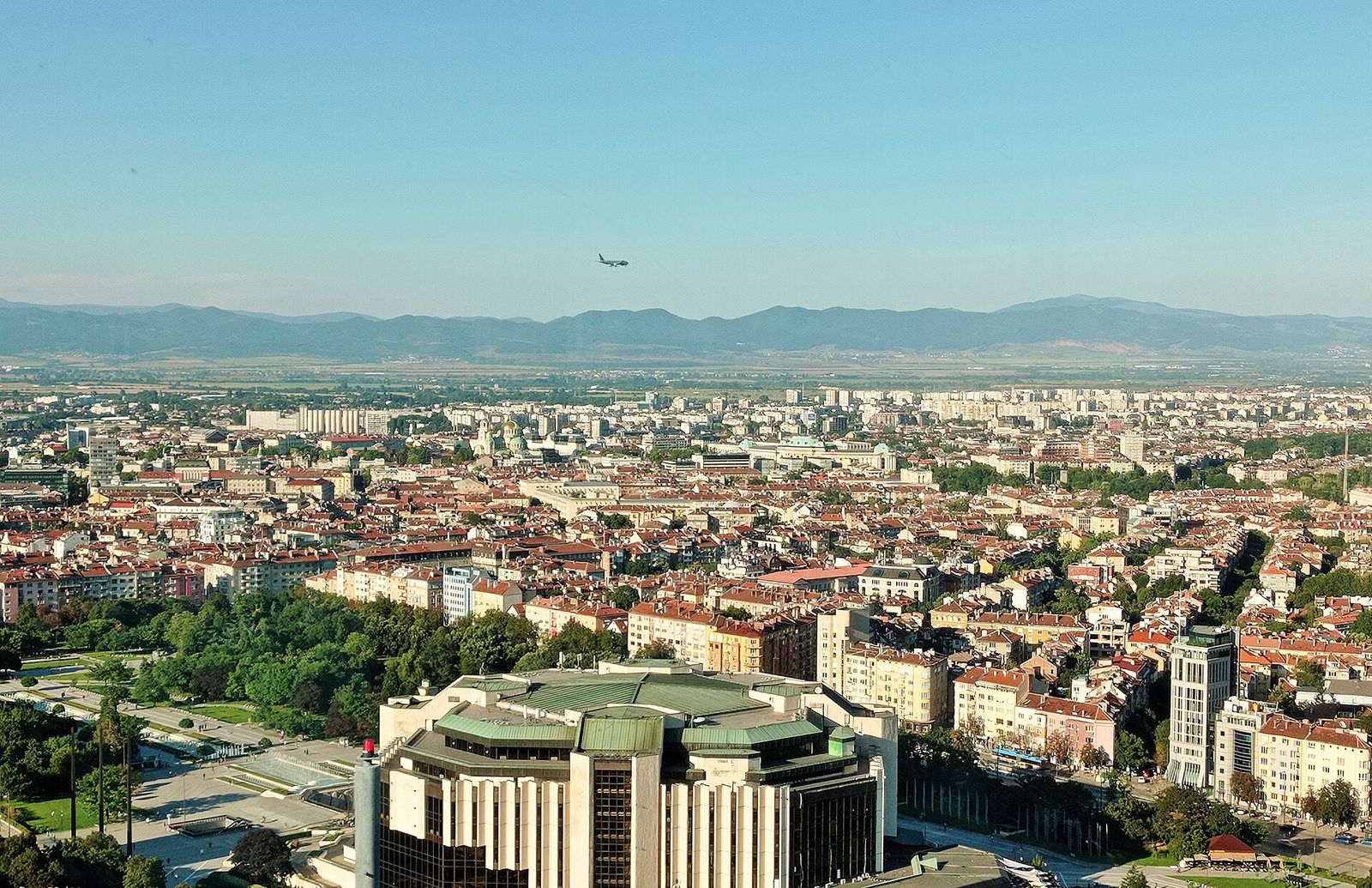
The National Palace of Culture, which everyone in Sofia calls NDK, is the huge eight-sided building at the south end of Vitosha Boulevard. It opened in 1981 for the 1,300th anniversary of the Bulgarian state and is still the country's biggest venue for concerts, festivals and conferences. Its park is free. This guide covers what NDK is, its history, the art inside, the events worth a ticket and how to see it.
NDK at a glance
NDK stands on Bulgaria Square, at the point where Vitosha Boulevard ends and Bulgaria Boulevard starts its run south toward the mountain.
What NDK is and what the name means
NDK stands for Natsionalen dvorets na kulturata, the National Palace of Culture, and locals say the three letters: En-De-Ka. It is a working congress and culture center, the largest in Southeastern Europe.
More than 300 events a year take place here, with about one million guests. The program mixes symphony concerts, film festivals, book fairs and congresses. It also houses the National Book Center, the Peroto Literary Club and the Azaryan Theater.
The history of NDK
The palace was the idea of Lyudmila Zhivkova, the daughter of Todor Zhivkov, who led communist Bulgaria from the 1950s until 1989. The goal was a national center for culture, ready in time for the 1,300th anniversary of the founding of the Bulgarian state.
Building work ran from 1978 to 1981, about three years, and NDK opened on 31 March 1981. Until 1990 it carried the name of the woman behind it: the Lyudmila Zhivkova People's Palace of Culture. The design came from a team led by the architect Alexander Barov with Ivan Kanazirev, while Atanas Agura designed the square and Valentina Atanassova the park.
In the 1990s, after the political changes of 1989, NDK lost much of its property, including commercial space and car parks. Since 2011 it has been run as a commercial company, still owned by the state.
In 2005, the International Association of Congress Centres named it the best congress center in the world. A renovation in 2016 and 2017 prepared it for Bulgaria's presidency of the Council of the European Union in the first half of 2018, with the big meetings held in Hall 3. In 2026, NDK marked its 45th anniversary with a gala concert in Hall 1, featuring the Sofia Philharmonic and the singer Lili Ivanova.
The building: size and design
NDK's functional area is 123,000 square meters, spread over eight floors above ground, four panoramic terraces and three underground levels, on a footprint of 18,300 square meters.
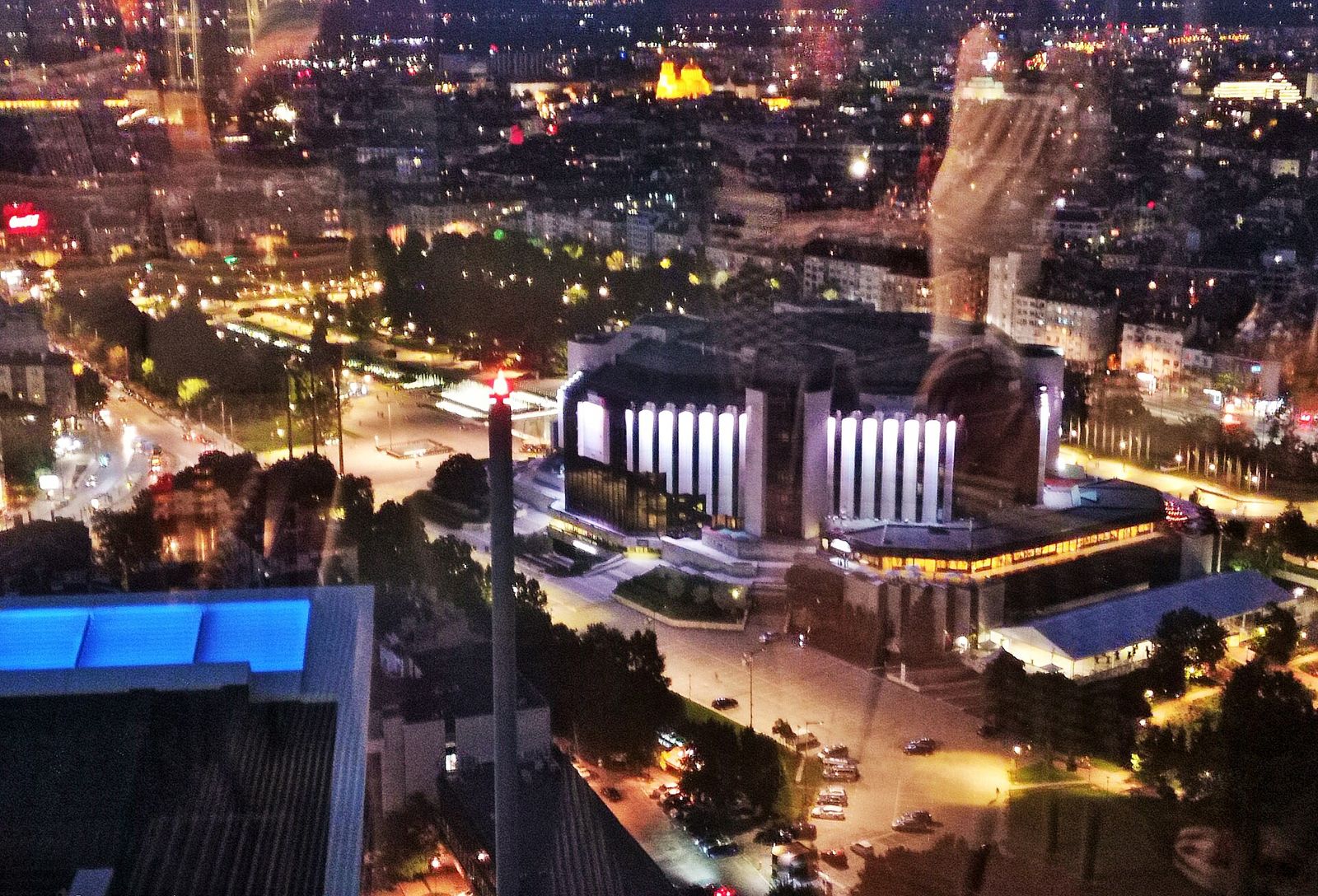
The shape is a low, angular block of stone and glass with an eight-sided plan, set on a raised platform above the park. The octagon repeats as a motif inside, and the palette of the interior is deep and dark.
Look up at the main facade for the stylized bronze sun by Georgi Chapkanov, the symbol of the palace, made in the style of Bulgarian woodcarving from the National Revival period. The logo, a phoenix, is the work of the graphic designer Stefan Kanchev.
The art inside NDK
NDK holds more than 80 monumental works made for the building by Bulgarian artists of the second half of the 20th century: paintings, murals, mosaics, sculpture, woodcarving and metalwork. Among the artists are Dechko Uzunov, Svetlin Roussev and Marin Varbanov. Together, the halls and foyers work as a museum of late 20th-century Bulgarian art.
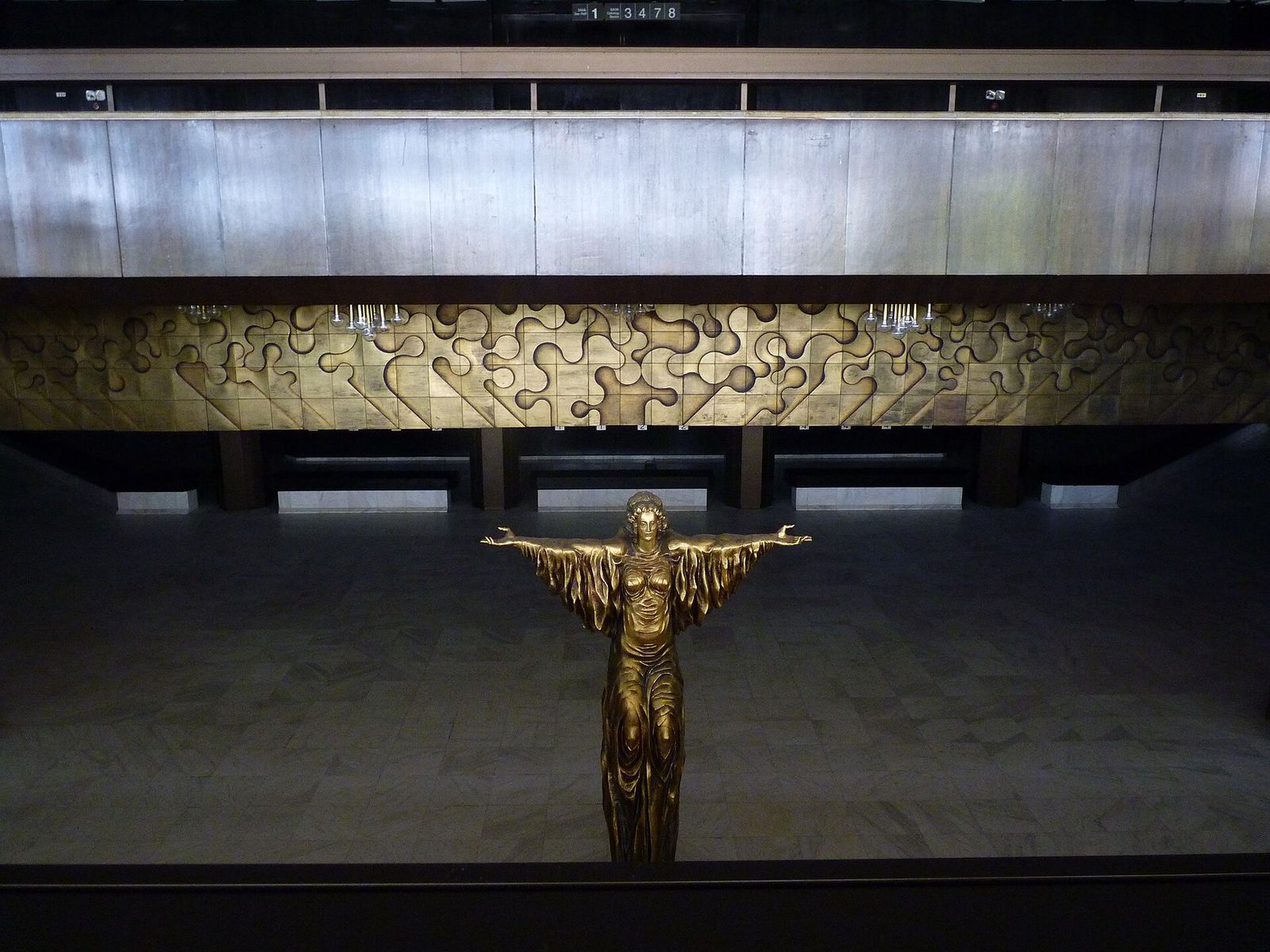
The piece most people photograph is Revival, also called Mother Bulgaria, a gilded figure with arms spread wide by the sculptor Dimitar Boykov. It stands in the lobby, under a long golden relief. Many of the murals line the main foyers and corridors on the way to the halls, so a concert ticket doubles as a ticket to the art.
Can you go inside NDK?
Yes, but mostly with a ticket for something happening inside. NDK does not sell a sightseeing ticket, and the halls and many foyers open only for the event you have booked.
There are three ways in without a concert. The ticket center sits on the east side, toward Fridtjof Nansen Street, to the left of the main entrance as you come from the square. On the same east side, an outdoor flight of stairs leads up to the Peroto Literary Club, a quiet cafe lined with bookshelves, and among the cafes in Sofia it is the one I'd pick for an hour with a book. Exhibitions and fairs in the foyers are the third.
Concerts, films and festivals at NDK
NDK has more than a dozen halls. Hall 1, the largest, seats 3,380 people and takes the big concerts, galas and premieres. Hall 3 seats 1,200, the Azaryan Theater, opened in 2015, seats 504, and the Lumiere Cinema seats 370.
Over the years NDK has hosted Herbert von Karajan, Montserrat Caballé, Andrea Bocelli, Sting, Joe Cocker, Mark Knopfler and James Brown, and touring companies from the Bolshoi to La Scala. Tickets for most events sell through the NDK ticket center and Eventim.
| Festival | When | What it is |
|---|---|---|
| Kinomania | Every November, since 1987 | Film festival |
| New Year Music Festival | Ending on 1 January | Music festival, held since 1986 |
| Sofia International Film Festival | March | International film festival |
| Salon des Arts | Yearly | Arts festival |
| International Book Fair | Spring and autumn | Publishers and book stalls |
The opera and theater in Sofia have their own houses in the center, and NDK takes the big touring concerts and galas that need 3,000 seats.
The park, fountains and terraces
The park in front of NDK is the part almost every visitor sees, and it costs nothing. Bulgaria Square stretches out from the palace with long water channels, fountains, flower beds, lawns and benches, and it is open day and night.
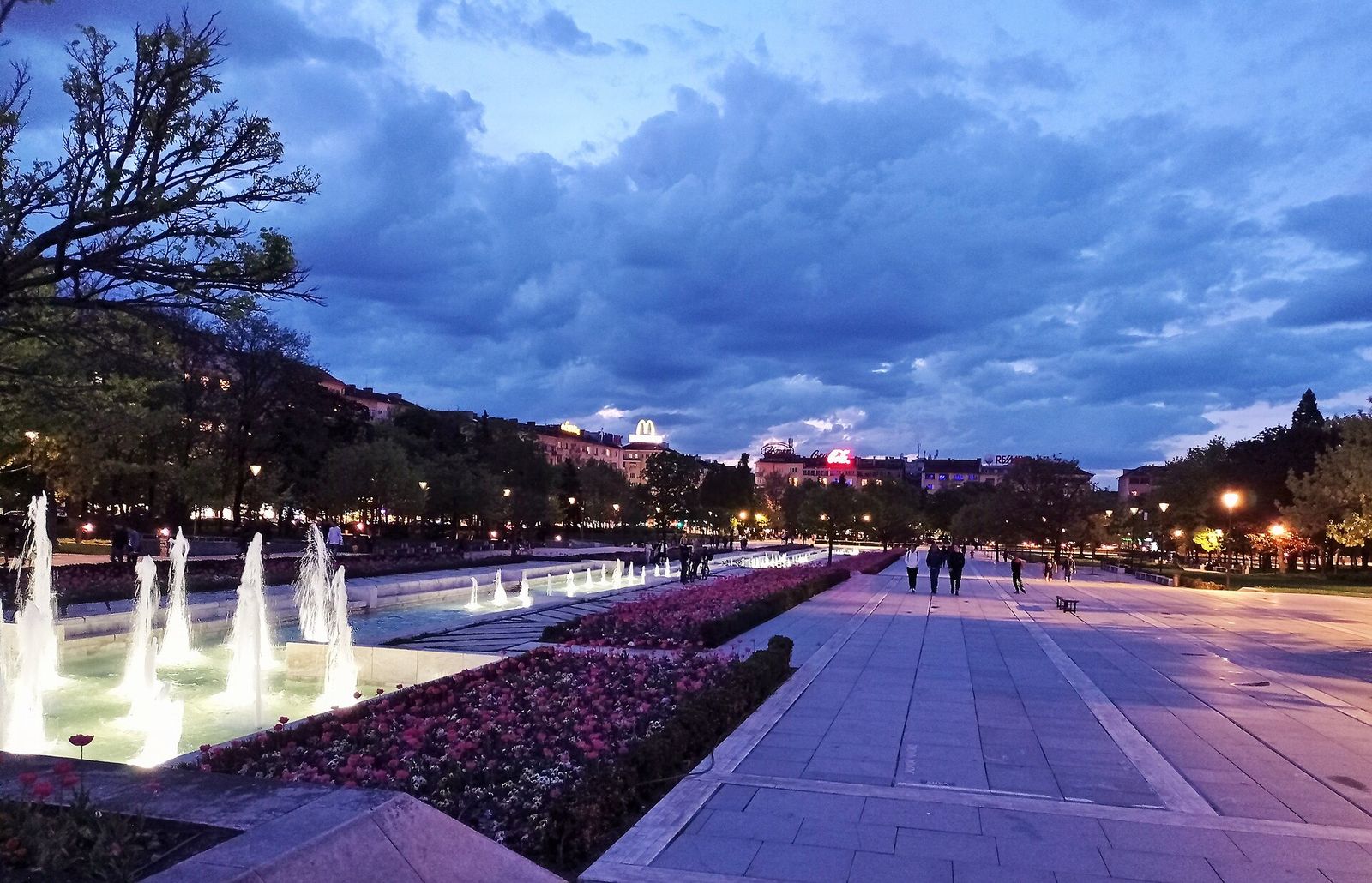
In 2022 the square got drinking fountains for people and pets. From 20 November to 28 December in 2026, Sofia Christmas Fest, the bigger of the two main markets of Christmas and New Year in Sofia, fills the park with food stalls, a Ferris wheel and an ice rink.
From the terraces you look straight down Bulgaria Boulevard toward Vitosha, with the mountain closing the view. It is the best city-to-mountain view in the center, and the NDK gardens rank among the best viewpoints in Sofia for that reason.
The 1300 Years of Bulgaria monument
For decades, the park held a second landmark: the monument to 1300 Years of Bulgaria, a huge concrete and metal sculpture unveiled in 1981 with the palace. Over the years it decayed and was covered in graffiti, and its future was argued over for years.
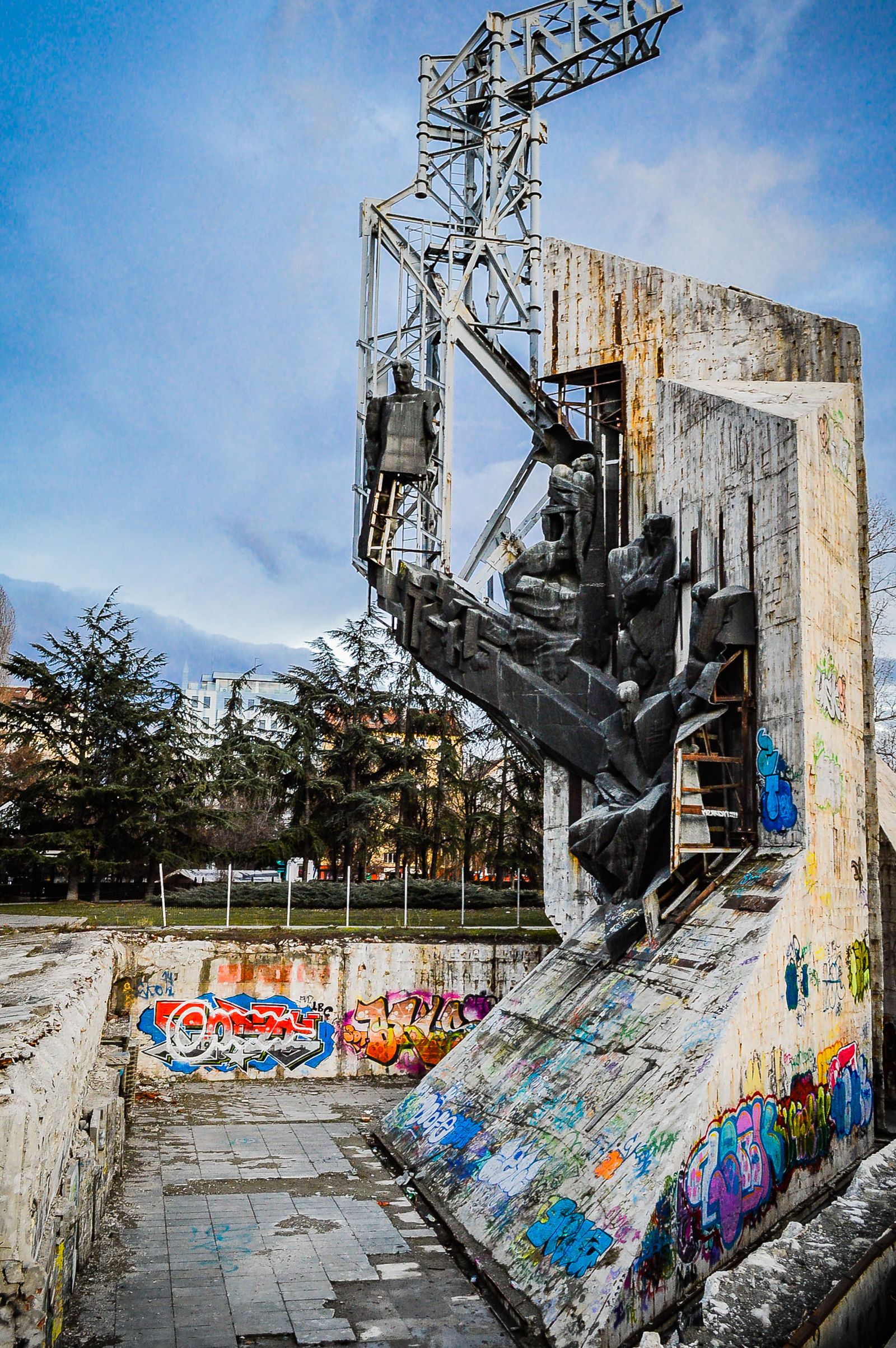
Dismantling work began in 2017, and the monument is gone today.
How to get to NDK
NDK is on two metro lines. NDK station on line M2 sits right by the park, and NDK II on line M3 is the transfer station beside it. A single Sofia metro ride costs €0.80, tapped with a contactless card.
On foot, walk the length of Vitosha Boulevard from St Nedelya Square, just under 2 km, past the shops and cafe terraces, and NDK appears at the far end.
What is near NDK
NDK sits where Vitosha Boulevard ends, with two hotels, a museum and two music venues a few minutes away on foot.
| Place | How far | What it is |
|---|---|---|
| Vitosha Boulevard | Starts at the park | Sofia's main shopping and cafe street |
| Sofia Live Club and Mixtape 5 | In the underpass | Live music and club nights |
| Grand Hotel Millennium | Behind NDK | 30-floor tower with Ozone Skybar on the 29th floor |
| Hilton Sofia | Opposite NDK | Big hotel on the edge of South Park |
| Earth and Man museum | A short walk | Minerals, gemstones and meteorites, €4 |
| South Park | Begins at the NDK gardens | The park locals use most, with playgrounds and Vitosha views |
Ozone, on the 29th floor of the Grand Hotel Millennium, is the highest bar in Bulgaria, and of the rooftop bars in Sofia it has the widest view over the city toward Vitosha. Earth and Man, a mineral museum near NDK, costs €4, opens Tuesday to Sunday from 10 AM to 6 PM and makes a good hour with older children.
Below the square, the underpass by NDK holds Sofia Live Club and Mixtape 5, two of the anchors of live music in Sofia, and both open in the evening.
Is NDK worth visiting?
Yes, as a stop at the end of Vitosha Boulevard, and as a building worth a closer look if you like modern architecture or 20th-century history. Without an event, 30 to 45 minutes covers it.
Who it suits best:
- Anyone walking Vitosha Boulevard. The park is the natural end of the walk, and it costs nothing.
- Fans of modernist and communist-era architecture. NDK is the landmark building of late communist Sofia, inside and out.
- Concert and film lovers. For a first night inside, I'd pick a concert at the New Year Music Festival.
- Families. The fountains and the wide square give children room to run in the middle of the city.
Keep it short if:
- You are visiting in August, when the program slows down noticeably.
- You came for the 1300 Years monument, which has gone.
The park is one of the free things to do in Sofia that work at any hour, and I'd time it for the end of a walk down the boulevard.
Key takeaways
- NDK opened in 1981 for the 1,300th anniversary of the Bulgarian state and is the largest congress center in Southeastern Europe.
- The park and fountains are free and open 24 hours, and the halls open for ticketed events.
- Hall 1 seats 3,380, and the festivals include Kinomania in November and the New Year Music Festival.
- More than 80 works of art, including the gilded Revival sculpture, fill the foyers.
- NDK and NDK II metro stations sit by the park, at the south end of Vitosha Boulevard.
Frequently asked questions
What is the National Palace of Culture?
It is Sofia's big congress and culture center, opened in 1981 and known as NDK. It hosts concerts, film festivals, conferences, exhibitions and book fairs, more than 300 events a year.
Can you go inside the National Palace of Culture?
Yes, with a ticket for a concert, film or event inside. The ticket center, the Peroto Literary Club cafe and exhibitions in the foyers are open to everyone, but the halls are not open for sightseeing.
How much does it cost to visit NDK?
The park and fountains are free at any hour. Inside, you pay only for the event you book, and prices depend on the show.
What does NDK stand for?
NDK stands for Natsionalen dvorets na kulturata, Bulgarian for National Palace of Culture. Locals say the letters out loud: En-De-Ka.
When was NDK built?
It was built from 1978 to 1981 and opened on 31 March 1981, in time for the 1,300th anniversary of the Bulgarian state. Until 1990 it was named after Lyudmila Zhivkova, who came up with the idea.
Who designed the National Palace of Culture?
A team led by the architect Alexander Barov designed the building, together with Ivan Kanazirev. Atanas Agura designed the square in front, and Valentina Atanassova the park.
How do I get to NDK?
Take the metro to NDK station on line M2 or NDK II on line M3, both beside the park. On foot, walk the length of Vitosha Boulevard from St Nedelya Square, just under 2 km.
What happened to the monument in front of NDK?
The 1300 Years of Bulgaria monument, unveiled in 1981, fell into disrepair and was taken down starting in 2017.
25 Best Things to Do in Sofia in 2026
Sofia packs 2,000 years into a walkable center. The 25 sights, museums, foods and day trips I'd put first, with prices.
Read the guide
Alexander Nevsky Cathedral in Sofia: A Visitor's Guide
Sofia's gold-domed landmark is free to enter. Here is its story, what to see inside, the crypt museum and when to go.
Read the guide
Boyana Church: Visiting Sofia's UNESCO Frescoes
A tiny UNESCO church under Vitosha with frescoes from 1259. Tickets, time slots, the bus out and what to find inside.
Read the guide