Opera and Theatre in Sofia
Sofia is known for a national opera with seats from about €10, and for a national theater that has stood on the City Garden since 1907. This guide covers the Sofia Opera and Ballet and the Ivan Vazov National Theatre: what is on, what tickets cost in 2026, the language question, what to wear and how I'd plan the evening.
Opera and theatre in Sofia at a glance
Sofia's national opera house and its national theater both stand in the old center, a short walk apart. For a visitor who does not speak Bulgarian, the opera and the ballet are the easy choice, because music and dance need no translation and the operas carry English surtitles.
| Stage | Where | Best for | Language |
|---|---|---|---|
| Sofia Opera and Ballet | Knyaz Aleksandar Dondukov Blvd | Opera, ballet, galas | Original language, Bulgarian and English surtitles |
| Ivan Vazov National Theatre | City Garden, Dyakon Ignatiy St | Plays and the building itself | Bulgarian, English surtitles on some shows |
| NDK, Hall 1 | South end of Vitosha Blvd | Big concerts and touring galas | Depends on the show |
| Sofia Puppet Theatre | Gurko Street | Families with small children | Bulgarian |
| Roman Theatre, Plovdiv | Plovdiv Old Town | Opera under the sky in summer | Original language |
The Sofia Opera and Ballet
The Sofia Opera began in 1890, when the first opera company in Bulgaria formed as part of a drama troupe in the new capital. It folded within two years for lack of money. The Bulgarian Opera Society started again in 1908, and its first full production, Leoncavallo's Pagliacci, followed in 1909.
In 1922 the company became a national institution and took the name National Opera. Its ballet company gave its first performance in 1928. The opera stopped for a while after the bombing of Sofia in 1944, then came back with more state money than before.
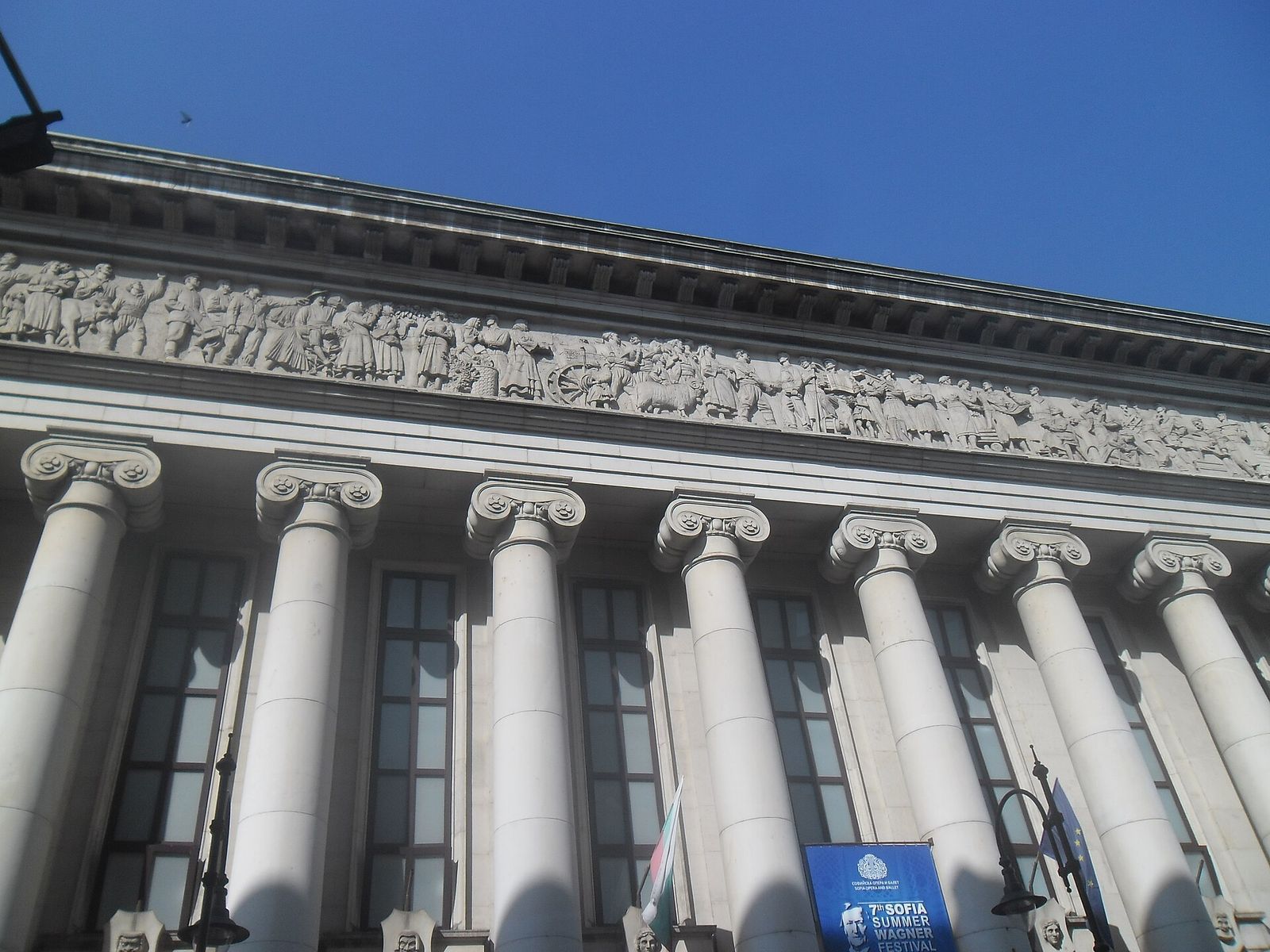
The house you visit today was designed in 1921 and built mostly between 1947 and its opening in 1953. It is a heavy stone building with a long colonnade and a sculpted frieze along the top, standing on Dondukov Boulevard a few minutes' walk from Alexander Nevsky Cathedral. Inside are a ground floor and three balconies.
Several of Bulgaria's best-known singers started their careers here. The basses Nicolai Ghiaurov and Nicola Ghiuselev and the soprano Ghena Dimitrova all began in the National Opera's company before singing at the big houses abroad.
What's on at the Sofia Opera
The season runs from autumn to early summer, roughly September or October to June, with something on most evenings. The program mixes the Italian and French classics the house has long favored with full-length ballets and gala concerts. In July and August the company is mostly away, with summer performances outside the city.
Wagner is the surprise. Since 2010, under its director Plamen Kartaloff, the Sofia Opera has built up a Ring cycle sung by all-Bulgarian casts, and in 2018 it performed the complete cycle in both Sofia and Moscow. Its Sofia Wagner Festival was a finalist at the International Opera Awards in 2026, and the Ring was back on its stage that year.
Big names still come through. The tenor Jose Cura made his debut on this stage on 28 October 2026 as Cavaradossi in Tosca, and on 17 November a gala marks 90 years since the birth of Nicola Ghiuselev.
Sofia Opera tickets and prices
Tickets start at about €10, and the best seats on a regular night cost about €25 to €30. Galas and nights with famous guests cost more. At those prices, I'd put a night here on any first trip to Sofia.
The easiest way to buy is on the opera's own website, which has an English version. You create an account, choose the performance, then choose your seat on a plan of the hall. Clicking a seat shows you the view of the stage from it, which takes the guesswork out of the cheap seats. You can buy up to 8 tickets for one performance in one order.
Payment online is by Visa or Mastercard, and American Express is not accepted. Your tickets arrive by email as a PDF to print and a ticket for your phone. The foyer bar takes cash only, so bring a few euros, and cash in Bulgaria is cheapest from the ATMs of the big Bulgarian banks.
The box office is on the right-hand side of the building as you face it from the street. It takes cash and cards, and it is the better choice if you want to ask questions before you pick a show.
Dress code, language and house rules
The official line is that formal dress is recommended. In practice the audience ranges from jeans to dresses and jackets, and smart casual fits in on any night. If you packed only jeans and sneakers, you can still go, and you will not be the only one.
Operas are sung in the language the libretto was written in, so Carmen is in French and Tosca is in Italian. Surtitles in Bulgarian and English run above the stage. Ballet needs no translation at all, which makes it the safest pick if you are unsure.
Phones stay off and cameras down during the performance, and the curtain call is the moment for photos. The coat check is free. The interval lasts about 20 minutes, and the foyer bar sells sparkling wine, wine and snacks. Children under 5 are not admitted to operas or ballets.
Ivan Vazov National Theatre
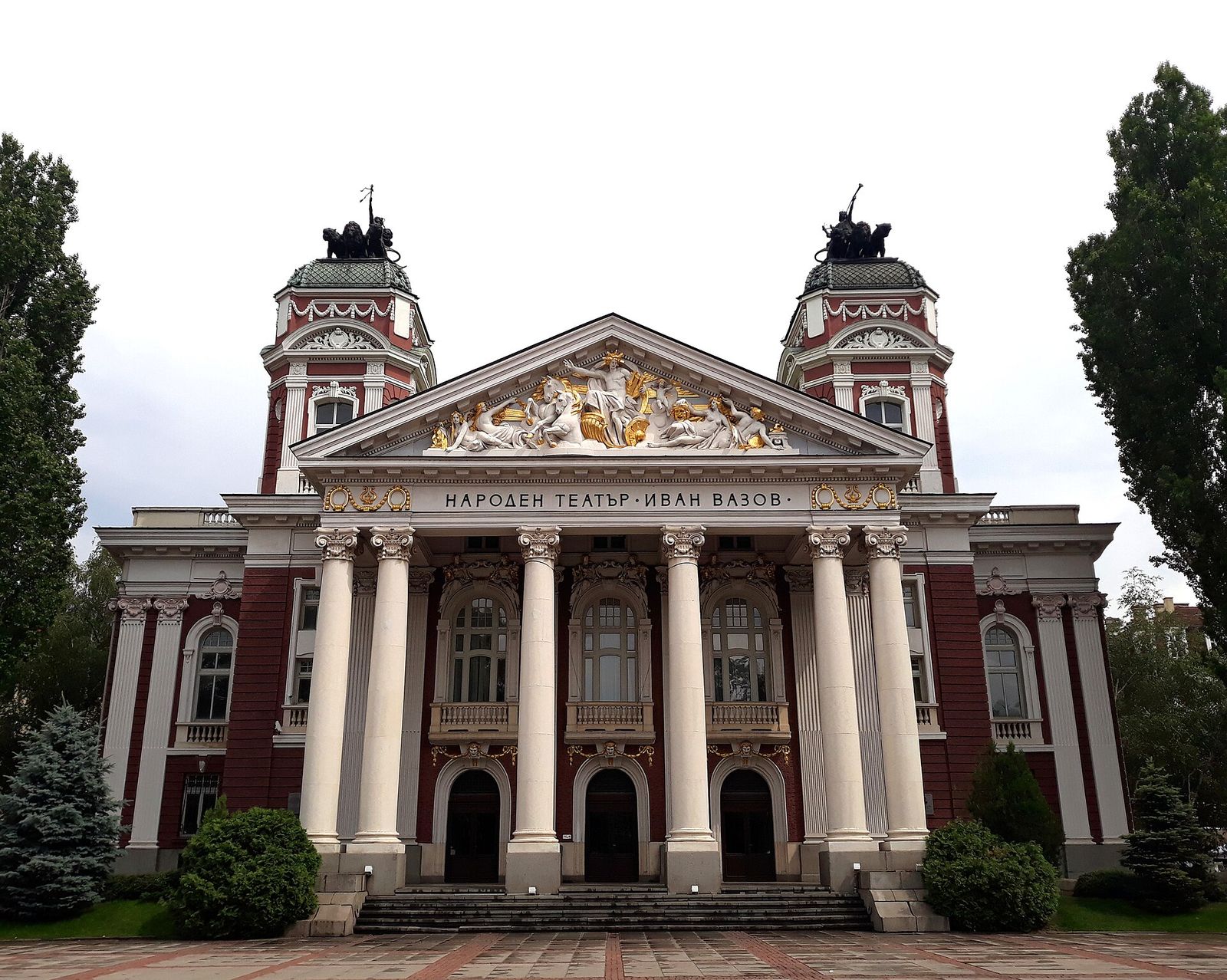
The Ivan Vazov National Theatre is the country's main stage for drama. The company was founded in 1904, and its building opened on 3 January 1907, designed by Fellner and Helmer, the Viennese architects behind many of Central Europe's grand theaters of the time.
A fire badly damaged the theater in 1923, and it was rebuilt by 1929 under the German architect Martin Dulfer. Another reconstruction followed in the 1970s. It was called simply the National Theatre until 1962, when it took the name of Ivan Vazov, the writer Bulgarians call the patriarch of their literature. The building also appeared on the old 50 lev banknote.
The facade is the reason most visitors stop. Six columns hold up a pediment with Apollo and the muses in gold, and the red and white walls face the City Garden from 5 Dyakon Ignatiy Street. Serdika metro station is a short walk away. Behind the facade are a main stage and two smaller ones.
Most plays here are in Bulgarian, and only some productions carry English surtitles, so check the program on the theater's website before you buy. Tickets are sold at the box office and online. Locals dress smartly for evening shows, and casual is fine for a matinee. The interior is only open with a ticket, so if no show suits you, the facade and the garden are free at any hour.
The City Garden in front is where Sofia sits down between errands, with chess players on the benches facing the theater. Of all Sofia's parks, it has the view I'd pick, straight at the columns, and in December the German Christmas market fills the paths in front of the theater during Christmas in Sofia.
Other stages: NDK, puppets and summer opera
The National Palace of Culture, NDK, takes the shows that need a really big room. Its Hall 1 seats 3,380 people for touring concerts, galas and premieres, and the smaller Azaryan Theater seats 504.
For small children, the stage to know is the Sofia Puppet Theatre on Gurko Street. Its shows are in Bulgarian, and it makes a rainy-day plan for Sofia with kids who are too young for the opera.
In summer the opera moves outdoors. The Roman Theatre in Plovdiv, built under Emperor Trajan, still hosts opera and concerts on summer evenings, and a Plovdiv day trip can end with a show if you check the last bus or train first. The Sofia Opera has also taken summer performances to Melnik and to the Belogradchik Rocks in the northwest, where the stage sits among the rock towers below the fortress.
Bulgaria's own music plays in other rooms. Bulgarian folk music and dance, with gaida bagpipes and rhythms in 7/8 and 9/8, is heard live in Sofia's mehanas and at festivals.
How I'd plan a night at the opera
Eat before you go. An opera night runs three hours or more, so an evening show lets out late, and I'd rather eat early than hunt for an open kitchen afterwards. I'd book a table for 5 PM within walking distance of Dondukov Boulevard, and the center has plenty of good restaurants in Sofia for an early dinner.
Walk if you are staying in the center, since the opera is close to most central hotels. Trams 20 and 22 stop right outside at the National Opera stop, trolleybus 9 stops at Alexander Nevsky Square, and the metro stations SU St. Kliment Ohridski and Serdika are both within walking distance.
Of Sofia's rooftop bars, Sense is the one I'd pick after a dressed-up night. If you are heading home instead, order a car through a taxi company's app or phone line, because taxis in Sofia are cheap but copycat cars wait outside busy venues.
Snow outside, Puccini inside and a glass of red wine after is how I'd spend at least one night of Sofia in winter.
Who the Sofia Opera suits
- First-time opera-goers. Prices are low enough that it costs little to find out whether you like it, and the English surtitles tell you the story.
- Couples on a city break. An early dinner, the opera and a drink at Sense after make a dressed-up evening for two.
- Wagner fans. The Sofia Wagner Festival is the date to plan a trip around.
- Ballet lovers. The late-2026 program has two full-length ballets, Giselle and Pride and Prejudice.
- Travelers in winter. It fills the long, dark evenings from December to February.
Skip it if:
- You are traveling with children under 5, who are not admitted.
- You are in Sofia in July or August, when the company is mostly away.
Key takeaways
- The Sofia Opera and Ballet runs from autumn to early summer, with tickets from about €10 and the best seats at about €25 to €30.
- Operas are in their original language with Bulgarian and English surtitles, and ballet needs no translation.
- Book online on the opera's website, pay by Visa or Mastercard, and arrive 15 minutes early.
- The Ivan Vazov National Theatre, opened in 1907, is mostly in Bulgarian; see the facade for free and check the program for surtitled shows.
Frequently asked questions
Is the Sofia Opera good?
Yes. It is Bulgaria's national company, singers such as Nicolai Ghiaurov and Ghena Dimitrova started their careers there, and it stages a full Wagner Ring with Bulgarian casts. Its Wagner Festival was a finalist at the International Opera Awards in 2026.
How much are Sofia Opera tickets?
Tickets start at about €10, and the best seats on a regular night cost about €25 to €30. Galas and nights with famous guest singers cost more.
Does the Sofia Opera have English subtitles?
Yes. Operas are sung in their original language, with surtitles in Bulgarian and English above the stage, so you can follow the plot without knowing Bulgarian.
What should I wear to the Sofia Opera?
Smart casual is the safe choice. Formal dress is recommended, but the audience ranges from jeans to dresses and jackets, and you can still go in casual clothes.
Can I see a play in English at the Ivan Vazov National Theatre?
Sometimes. Plays are performed in Bulgarian, and only some productions carry English surtitles, so check the theater's program before you buy a ticket.
Can children go to the Sofia Opera?
Children aged 5 and over can go, and children under 5 are not admitted to operas or ballets. For younger children, the Sofia Puppet Theatre on Gurko Street is the better choice.
When is the Sofia Opera season?
The season runs from autumn to early summer, roughly September or October to June. In July and August the company mostly performs at summer festivals outside the city.
Bulgarian Culture and Traditions: A Visitor's Guide
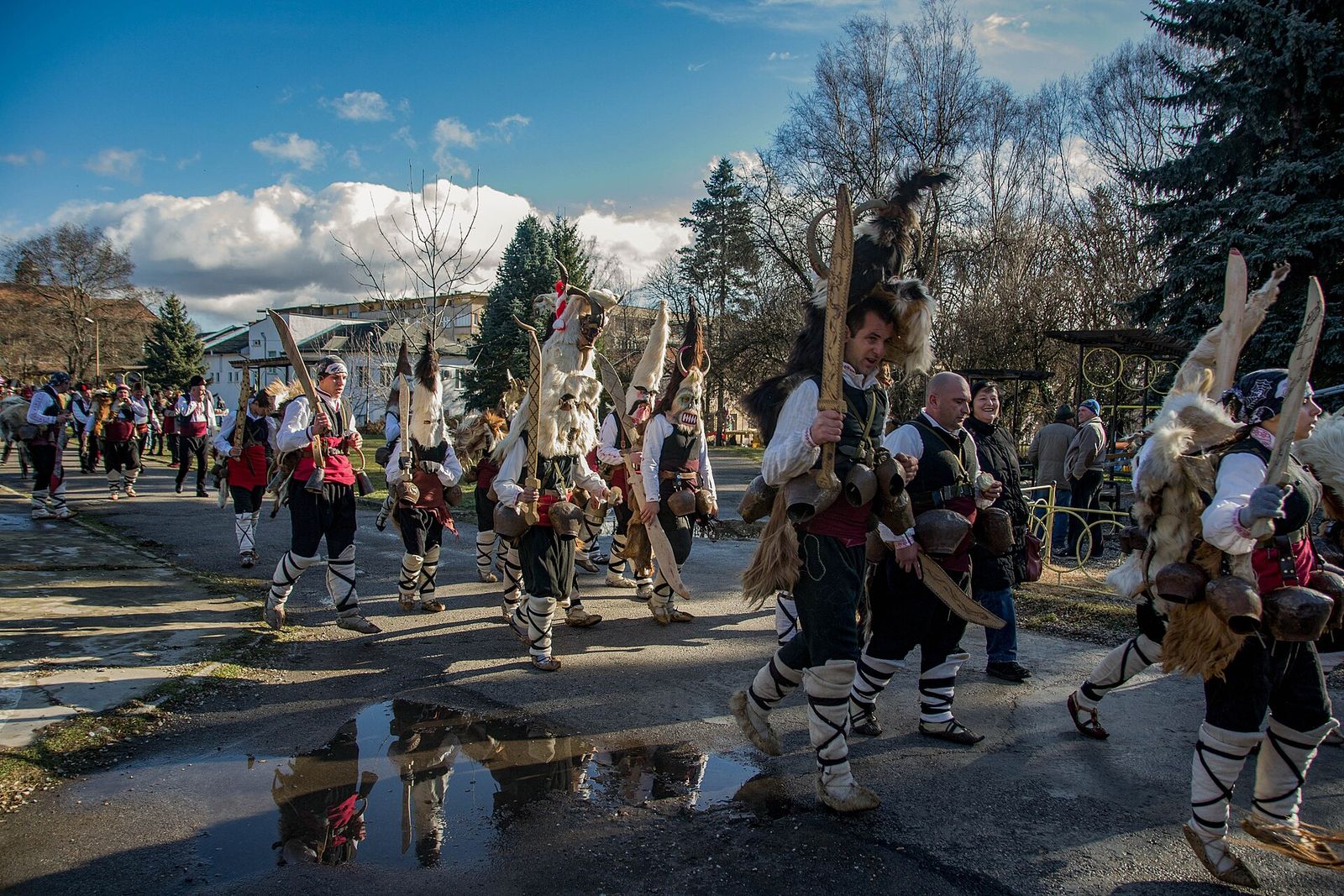
Bulgaria gave the world Cyrillic, and has kukeri, fire-dancers and a nod that means no. Here is what to know.
Read the guide
Bulgarian Phrases for Travelers: The Words I'd Learn First
Bulgarian is written in Cyrillic and read the way it looks. Here are the phrases I would learn before a trip to Sofia.
Read the guide
A Short History of Bulgaria
Bulgaria has kept its name since 681. Here is its history era by era, and where each chapter still stands in Sofia.
Read the guide